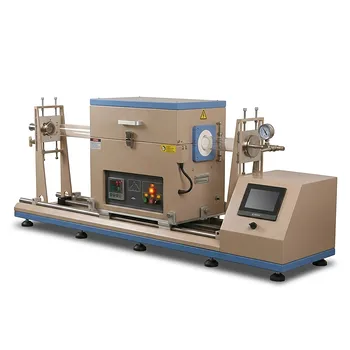
Why is a tube furnace required for the topological transformation of CoFe-LDH into CoFe bimetallic phosphide? Guide
Updated 3 months ago
The transformation of CoFe-LDH into CoFe bimetallic phosphide hinges on two critical factors: precise thermal management and a strictly oxygen-free chemical environment.
A tube furnace is required because it facilitates a controlled gas-solid phase reaction by maintaining specific temperatures (typically 250°C–350°C) while protecting the sample under a continuous flow of inert gas, such as Argon. This environment ensures that phosphine gas ($PH_3$), generated from the decomposition of a phosphorus source, reacts thoroughly with the metal precursor without allowing the metal components to oxidize or the structural framework to collapse.
The tube furnace acts as a specialized reactor that synchronizes the thermal decomposition of reagents with anaerobic gas-solid diffusion. This process allows for the chemical substitution of atoms—converting hydroxides to phosphides—while preserving the original physical architecture of the material.
The Role of Atmospheric Control and Isolation
Preventing Metal Oxidation
At the high temperatures required for phosphidation, cobalt and iron are highly susceptible to oxidation if even trace amounts of oxygen are present. A tube furnace provides a sealed environment that can be purged with Argon (Ar), ensuring the final product is a pure bimetallic phosphide rather than an undesirable metal oxide.
Regulating Valence States
The ability to maintain a strict inert atmosphere allows researchers to regulate the valence state distribution of the cobalt and iron ions. This control is vital for the material’s electronic properties, as it ensures the metal ions reach the specific oxidation states required for high catalytic activity.
Managing the Gas-Solid Phase Reaction
Facilitating Directional Gas Flow
In a tube furnace, the phosphorus source (typically sodium hypophosphite) is placed upstream and the CoFe-LDH precursor downstream. As the furnace heats, the phosphorus source decomposes into phosphine gas ($PH_3$), which is carried by the inert gas flow directly over the precursor to ensure uniform contact.
Enabling Solid-Phase Phosphidation
The tube furnace provides the isothermal heating zone necessary for the $PH_3$ gas to penetrate the solid layers of the CoFe-LDH. This enables a topological transformation, where phosphorus atoms replace oxygen/hydroxide groups within the crystal lattice without destroying the precursor's nanosheet or mesoporous structure.
Precise Thermal Field Requirements
Maintaining Structural Fidelity
CoFe-LDH precursors often possess delicate morphology, such as nanosheets, which are essential for their performance. The precise temperature control of a tube furnace (often with specific heating rates like 2°C/min) ensures that the dehydration and phase transformation occur gradually enough to prevent the physical collapse of these structures.
Uniform Heating for Phase Purity
The "tube" design creates a highly uniform thermal field around the sample. This uniformity is critical to ensure that the entire batch of CoFe-LDH reaches the activation energy for phosphidation simultaneously, preventing a mixture of partially reacted hydroxides and over-reacted bulk materials.
Understanding the Trade-offs and Risks
Safety and Toxic Byproducts
The primary trade-off in this process is the generation of phosphine gas ($PH_3$), which is highly toxic and flammable. While the tube furnace is excellent for containing the reaction, it requires a robust exhaust scrubbing system to neutralize the gas before it is released into the environment.
Scalability vs. Uniformity
While tube furnaces provide superior control for laboratory-scale synthesis, scaling the process can be difficult. As the volume of the precursor increases, ensuring that the gas-solid interface remains consistent across all particles becomes a significant engineering challenge, often requiring specialized rotary tube furnaces.
How to Apply This to Your Project
Guidelines for Successful Transformation
- If your primary focus is Phase Purity: Ensure the tube furnace is purged with Argon for at least 30 minutes before heating to remove all residual oxygen.
- If your primary focus is Structural Preservation: Use a slow heating rate (e.g., 2°C - 5°C per minute) to allow for gradual dehydration and atomic substitution.
- If your primary focus is Maximum Phosphidation: Place the phosphorus source in a separate, slightly cooler zone upstream to ensure a steady, continuous supply of $PH_3$ throughout the heating cycle.
By mastering the atmospheric and thermal variables within the tube furnace, you can achieve a complete chemical conversion while retaining the high-surface-area architecture of the original CoFe-LDH.
Summary Table:
| Key Requirement | Tube Furnace Function | Outcome for CoFe-LDH |
|---|---|---|
| Atmospheric Control | Sealed chamber with Argon flow | Prevents oxidation & ensures pure bimetallic phosphide |
| Thermal Field | Isothermal heating zones | Maintains structural nanosheet fidelity |
| Reaction Path | Facilitates gas-solid diffusion | Enables uniform topological transformation via PH3 |
| Safety | Robust containment & exhaust | Manages toxic Phosphine gas byproducts safely |
Master Your Material Synthesis with THERMUNITS
To achieve the delicate topological transformation of materials like CoFe-LDH, precision is non-negotiable. THERMUNITS is a leading manufacturer of high-temperature laboratory equipment for material science and industrial R&D. We offer a comprehensive range of thermal processing solutions tailored for researchers and manufacturers who demand phase purity and structural integrity.
Our Solutions Include:
- Tube & Rotary Furnaces: Perfect for gas-solid reactions and controlled phosphidation.
- Advanced Systems: CVD/PECVD, Vacuum Induction Melting (VIM), and Hot Press furnaces.
- Specialized Equipment: Muffle, Atmosphere, and Dental furnaces, plus high-quality Thermal Elements.
Unlock the full potential of your material research with our expert thermal technology. Contact us today to find your custom heat treatment solution!
References
- Junyan Liu, L. J. Wang. CoFe bimetallic phosphide fabricated by topological transformation strategy for efficient electrooxidation of benzyl alcohol. DOI: 10.15251/djnb.2024.193.1159
Mentioned Products
- Vertical 1700C Vacuum and Atmosphere Tube Furnace with 80mm Alumina Tube
- Compact High Temperature 1600C Tube Furnace with 50mm Alumina Tube and Vacuum Flanges for Material Sintering
- 900°C Max Rotary Tube Furnace with 8 Inch 310S Alloy Tube and Optional Multi Zone Heating for Industrial Material Calcination
- Split Vertical Tube Furnace with 1200C Quartz Tube and Stainless Steel Vacuum Flanges for Rapid Thermal Processing
- High Temperature 1700C Tube Furnace with High Vacuum Turbomolecular Pump System and Multi Channel Mass Flow Controller Gas Mixer
People Also Ask
- How is an industrial-grade vertical tube furnace utilized in smelting leaching residues? Enhance Metal Recovery Efficiency
- What is the function of a laboratory-grade vertical tube furnace in fast pyrolysis? Optimize Composite Research.
- How does a vertical tube furnace facilitate thermoelectric alloy melting? Precision synthesis for material homogeneity.
- Why is a thermocouple sensor indispensable for monitoring the vertical tube furnace during gallium oxide nanowire production? Optimize VLS Growth
- What are the advantages of using a vertical tube furnace for crucible experiments simulating steel-slag interactions?

Tech Team · ThermUnits
Last updated on Jun 03, 2026
Related Products

Vertical 1700C Vacuum and Atmosphere Tube Furnace with 80mm Alumina Tube

Compact High Temperature 1600C Tube Furnace with 50mm Alumina Tube and Vacuum Flanges for Material Sintering
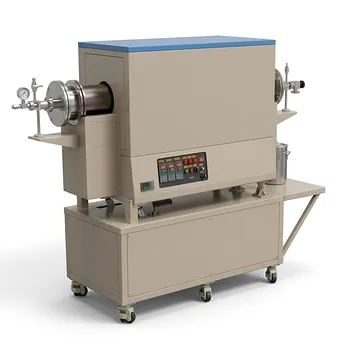
900°C Max Rotary Tube Furnace with 8 Inch 310S Alloy Tube and Optional Multi Zone Heating for Industrial Material Calcination
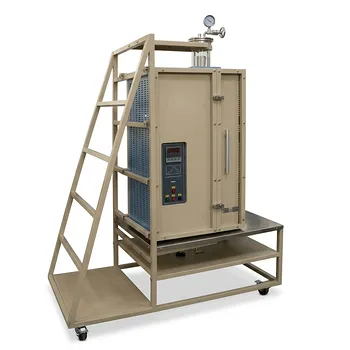
Split Vertical Tube Furnace with 1200C Quartz Tube and Stainless Steel Vacuum Flanges for Rapid Thermal Processing

High Temperature 1700C Tube Furnace with High Vacuum Turbomolecular Pump System and Multi Channel Mass Flow Controller Gas Mixer
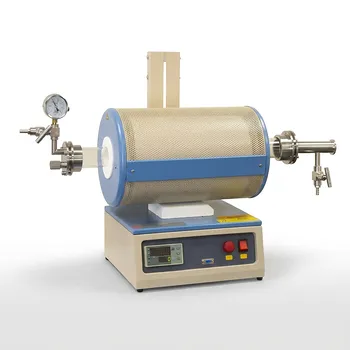
1100C Tube Furnace with Vacuum Flange and Programmable Temperature Controller for Material Science and Industrial Heat Treatment
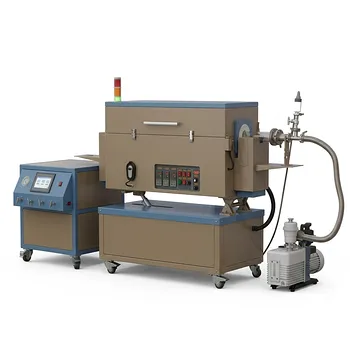
5 Inch Three Zone Rotary Tube Furnace with Integrated Gas Delivery System and 1200C Capability for Advanced Material CVD Processing
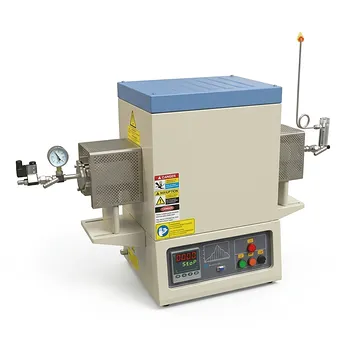
1700C Hydrogen Gas Tube Furnace with 60mm Alumina Process Tube and Integrated Hydrogen Safety Detector
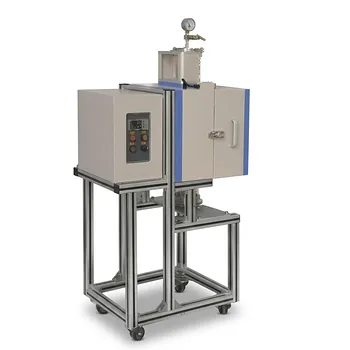
1200°C 5 Inch Vertical Quartz Tube Furnace with Stainless Steel Vacuum Flanges
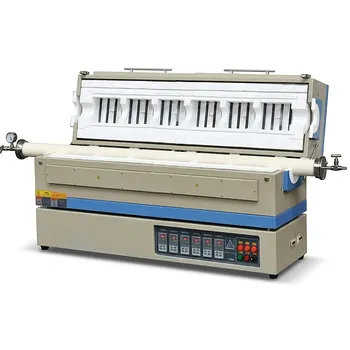
High Temperature 1700C Six Zone Split Tube Furnace with Alumina Tube and Water Cooled Flanges
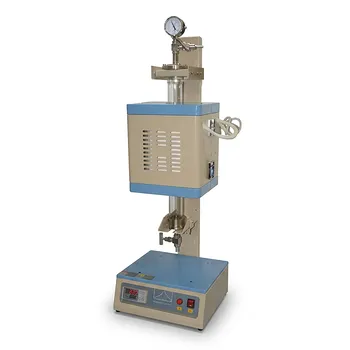
Compact Vertical Split Quartz Tube Furnace with Stainless Steel Vacuum Flanges for Rapid Thermal Quenching and Controlled Atmosphere Material Processing

High Temperature 1700C Benchtop Tube Furnace with 5 Inch Heating Zone High Purity Alumina Tube and Vacuum Sealing Flanges
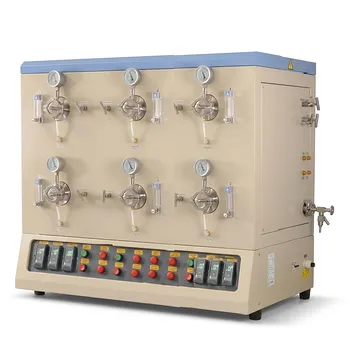
1200C High Throughput Multi Channel Tube Furnace with 50mm Quartz Tubes for Annealing and Material Phase Diagram Research

1800C High Temperature Compact Vacuum Tube Furnace with 60mm OD Alumina Tube and Kanthal MoSi2 Heating Elements
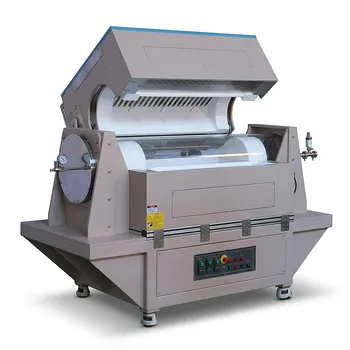
Three Zone Tube Furnace with 11 Inch or 15 Inch Quartz Tube and Hinged Flanges for Vacuum Atmosphere Heat Treatment

High Temperature 1700C Vertical Tube Furnace for Powder Spherification and Material Sintering
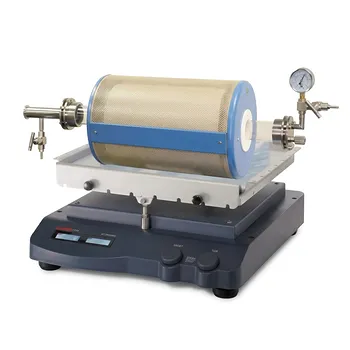
High Temperature Rocking Tube Furnace with Quartz Tube and Vacuum Flange for Materials Synthesis
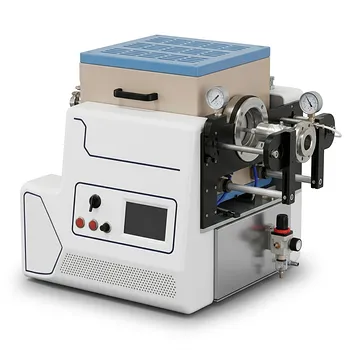
High Temperature Automated 5 Inch Tube Furnace for Autonomous Material Research and Advanced Laboratory R&D
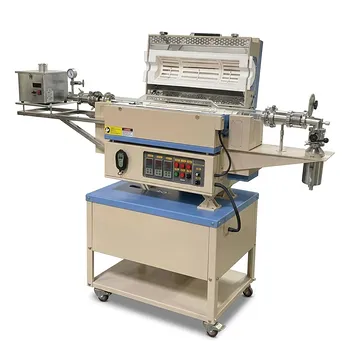
5 Inch Rotary Tube Furnace with Automatic Feeding and Receiving System 1200C Three Zone CVD Powder Processing