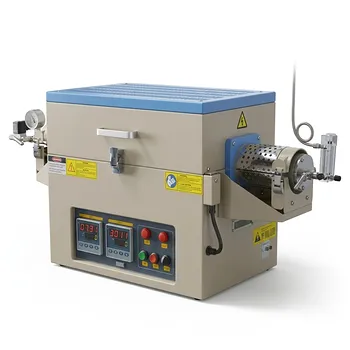
Why is an atmosphere control furnace required for hydrogen reduction of nickel catalysts? Maximize Catalytic Performance
Updated 3 months ago
The atmosphere control furnace is the essential tool for transforming inert nickel oxide into catalytically active metallic nickel. It provides a strictly oxygen-free, hydrogen-rich environment required to reduce nickel oxide (NiO) or nickel precursors to metallic nickel ($Ni^0$) at precise temperatures. This activation is non-negotiable for cracking methane C-H bonds and ensuring the catalyst possesses the correct particle size and distribution for chemical reactions.
An atmosphere control furnace enables the precise chemical reduction of nickel ions into active metallic nanoparticles while preventing unwanted oxidation and thermal degradation. This controlled environment is the determining factor in a catalyst's activity, selectivity, and long-term stability.
The Chemical Necessity of Reduction
Activation of Catalytic Sites
Nickel-based catalysts are typically synthesized in an oxide state ($NiO$), which is catalytically inactive for most hydrocarbon reactions. The atmosphere furnace uses a reducing gas—often a mixture like 5% $H_2$ in $N_2$ or $Ar$—to strip oxygen from the nickel. This converts the material into metallic nickel ($Ni^0$), which provides the specific electronic structure needed to crack methane carbon-hydrogen bonds.
Precision Gas Management
Maintaining a strictly oxygen-free environment is critical during this transition. Even trace amounts of oxygen can lead to the re-oxidation of the nickel or cause dangerous reactions with the hydrogen gas. The furnace ensures a constant, regulated flow of reducing agents to ensure that the reduction occurs uniformly throughout the entire catalyst bed.
Achieving Specific Phase Transformations
In complex catalysts, such as those with perovskite or spinel structures, nickel ions are often embedded within a crystal lattice. The furnace provides the high temperatures (often 650°C to 800°C) and specific atmospheres required to "exsolve" or pull these ions to the surface. This process creates anchored metallic nanoparticles that are more resistant to being washed away or moved during a reaction.
Structural Control and Stability
Preventing Sintering and Aggregation
One of the primary risks of high-temperature treatment is sintering, where nickel particles clump together, reducing the available surface area. An atmosphere control furnace allows for precise temperature ramp rates and gas concentrations. This control ensures that nickel particles remain highly dispersed and small, maximizing the number of active sites available for the reaction.
Creating Microporous Structures
As nickel oxide is reduced to metallic nickel, the loss of oxygen atoms causes a volume contraction within the material. When managed correctly in a controlled furnace, this contraction introduces microporous structures and increases surface roughness. These physical changes enhance the catalyst's surface area and improve its bonding strength to the substrate.
Determining Particle Size Distribution
The specific hydrogen concentration and duration of the heat treatment dictate the final particle size distribution. In specialized applications like the growth of nanowires, the furnace must be used to ensure the catalyst particles match the required dimensions for the Vapor-Liquid-Solid (VLS) growth mechanism. Inconsistent atmosphere control leads to unpredictable particle sizes and failed synthesis.
Understanding the Trade-offs
Reduction Temperature vs. Surface Area
There is a constant tension between higher temperatures, which ensure complete reduction of nickel oxide, and lower temperatures, which preserve high surface area. If the furnace temperature is too high, the nickel particles will sinter; if it is too low, the catalyst remains partially oxidized and underperforms.
Hydrogen Safety vs. Reduction Efficiency
Using pure hydrogen would provide the fastest reduction, but it poses significant explosion risks and can lead to overly rapid particle growth. Most protocols use a diluted hydrogen mixture (5%) to balance safety and process stability. This necessitates longer dwell times in the furnace to ensure the core of the catalyst is fully treated.
How to Apply This to Your Project
Making the Right Choice for Your Goal
- If your primary focus is maximum catalytic activity: Prioritize a furnace with high-precision gas flow controllers to maintain a consistent $H_2$ concentration, ensuring the highest possible dispersion of $Ni^0$ nanoparticles.
- If your primary focus is long-term stability: Focus on the temperature ramping capabilities of the furnace to carefully manage the "exsolution" of nickel from the support lattice, which creates more durable, anchored active sites.
- If your primary focus is methane dry reforming (DRM): Ensure your furnace can reach and stabilize at 700-800°C under a reducing atmosphere to fully activate the dual-function materials required for this reaction.
Precise control over the reduction atmosphere is the bridge between a dormant chemical precursor and a high-performance industrial catalyst.
Summary Table:
| Feature | Function in Reduction | Benefit to Catalyst |
|---|---|---|
| Reducing Atmosphere | Converts NiO to metallic Ni0 | Activates sites for methane C-H bond cracking |
| Oxygen-Free Control | Prevents re-oxidation & safety risks | Ensures uniform and pure phase transformation |
| Precision Ramping | Limits particle sintering/clumping | Maintains high surface area and dispersion |
| Thermal Stability | Facilitates nanoparticle exsolution | Creates anchored, durable, and stable active sites |
Achieve Unmatched Catalyst Precision with THERMUNITS
Thermal processing is the heart of catalyst activation. At THERMUNITS, we specialize in high-temperature laboratory equipment designed for the rigorous demands of material science and industrial R&D. Our Atmosphere Control Furnaces and Tube Furnaces provide the gas precision and temperature uniformity necessary to transform inert precursors into high-performance catalysts.
Our comprehensive range includes Muffle, Vacuum, Atmosphere, Tube, Rotary, and Hot Press furnaces, CVD/PECVD systems, Dental Furnaces, electric rotary kilns, and Vacuum Induction Melting (VIM) furnaces. We deliver the thermal stability required to control particle size and prevent sintering in your most sensitive chemical processes.
Ready to optimize your hydrogen reduction pretreatment?
Contact THERMUNITS Today for a Professional Consultation and Quote
References
- İlke Ilıcak Bayraktar, Halit Eren Figen. Investigation of Partial Oxidation of Methane at Different Reaction Parameters by Adding Ni to CeO2 and ZrO2 Supported Cordierite Monolith Catalyst. DOI: 10.3390/pr12071463
Mentioned Products
- Rapid Thermal Processing Furnace 1100C Atmosphere Controlled Bottom Loading RTP System for Wafer Annealing and Catalysis Research
- 1200C Hydrogen Atmosphere Box Furnace with 5 Heated Sides and 64L Chamber
- 1650C High Temperature Atmosphere Controlled Box Furnace with 65L Chamber for Advanced Material Sintering and Industrial Heat Treatment
- High Temperature Oxygen and Inert Atmosphere Controlled Furnace 8 Liter 1700C Sintering System for Advanced Materials RD
- 1200°C Atmosphere Controlled Automatic Bottom Loading Furnace with 6 Inch Quartz Tube
People Also Ask
- What role does a SiC-coated graphite susceptor play in H2Se selenization? Boost RTP Thermal Uniformity & Film Purity.
- What are the functional advantages of an RTP system for surface deposition? Enhance Heterojunction Interface Integrity
- Why is an atmosphere-controlled annealing furnace required for the post-treatment of synthesized KTiOPO4 thin films? KTP
- What are the advantages of RTPR for Pd1/PU catalyst synthesis? Achieve superior single-atom dispersion and stability.
- Why is 1100°C in situ annealing required after LZO and DTO deposition? Achieve High-Quality Thin Film Synthesis

Tech Team · ThermUnits
Last updated on Jun 02, 2026
Related Products
Rapid Thermal Processing Furnace 1100C Atmosphere Controlled Bottom Loading RTP System for Wafer Annealing and Catalysis Research
1200C Hydrogen Atmosphere Box Furnace with 5 Heated Sides and 64L Chamber
1650C High Temperature Atmosphere Controlled Box Furnace with 65L Chamber for Advanced Material Sintering and Industrial Heat Treatment
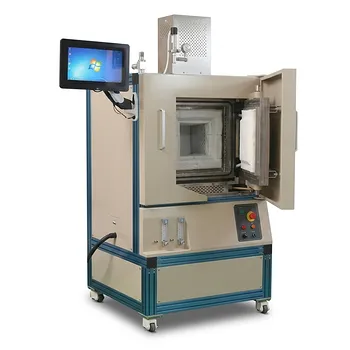
High Temperature Oxygen and Inert Atmosphere Controlled Furnace 8 Liter 1700C Sintering System for Advanced Materials RD
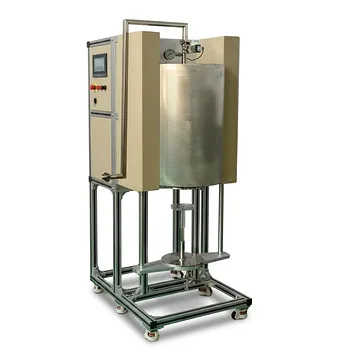
1200°C Atmosphere Controlled Automatic Bottom Loading Furnace with 6 Inch Quartz Tube

Compact Vertical Split Quartz Tube Furnace with Stainless Steel Vacuum Flanges for Rapid Thermal Quenching and Controlled Atmosphere Material Processing
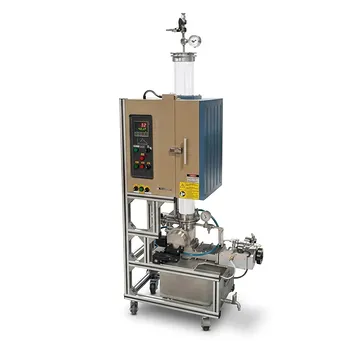
1200C High Temperature Atmosphere Controlled Vertical Quenching Tube Furnace with 4 Inch Quartz Tube
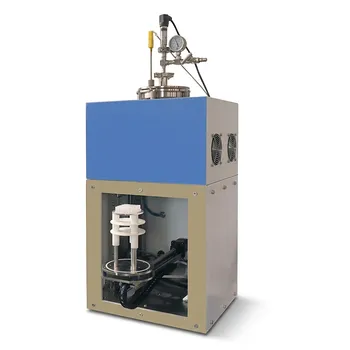
Rapid Thermal Processing RTP Atmosphere Controlled Bottom Loading Furnace 1100C High Throughput 50C per Second Heating Rate
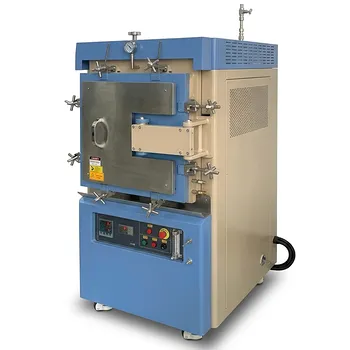
Atmosphere Controlled Muffle Furnace 1700C Maximum Temperature 80L High Capacity Vacuum Inert Gas Box Furnace
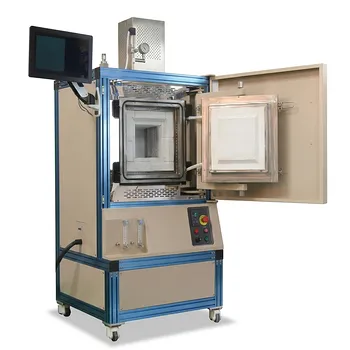
High Temperature Hydrogen Atmosphere Box Furnace 1650C Max Reducing Environment Material Synthesis System 8x8x8 Chamber
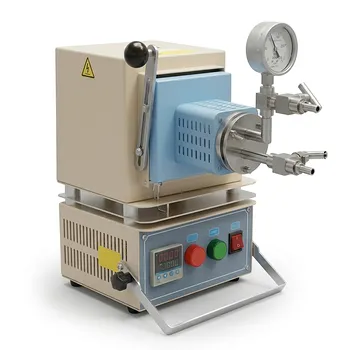
Compact Hybrid Muffle and Tube Furnace for 1000C Controlled Atmosphere Laboratory Material Sintering
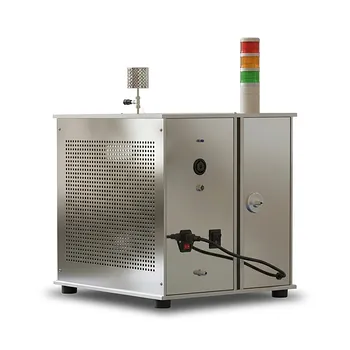
Automatic Flammable Gas Control and Disposal Device for Hydrogen Atmosphere Furnaces
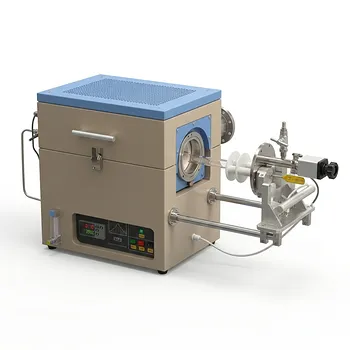
Compact Atmosphere Controlled Rapid Thermal Processing RTP Furnace with 4 Inch ID Quartz Tube 1100C
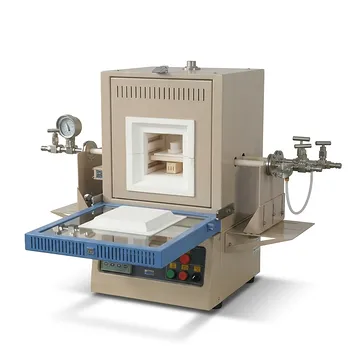
1700C Compact Hybrid Furnace with Dual Layer Box Sintering and Controlled Atmosphere Alumina Tubes
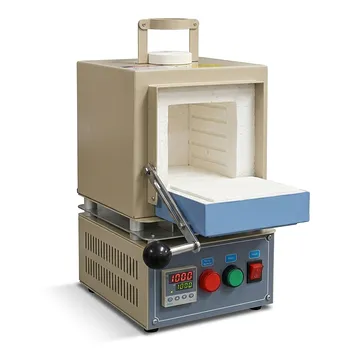
Compact 1000C Muffle Furnace with Programmable Controller and 2 Inch Top Port for Vacuum and Atmosphere Material Research
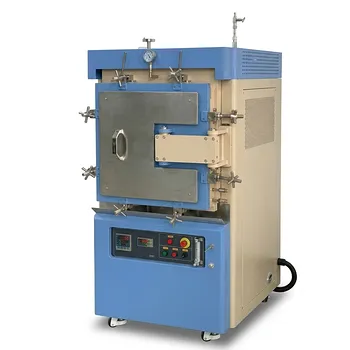
High Temperature Economic Hydrogen Gas Box Furnace 1600C Atmosphere Controlled Thermal Processing System 65L Capacity
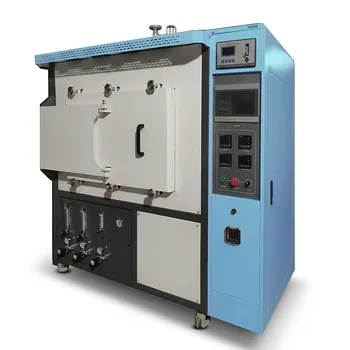
Roller Table Atmosphere Furnace 1500C High Temperature Battery Material Sintering System 112L Capacity
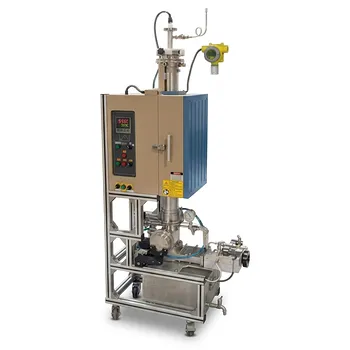
High Temperature 1000C Hydrogen Vertical Quenching Furnace with 4 Inch Stainless Steel Tube
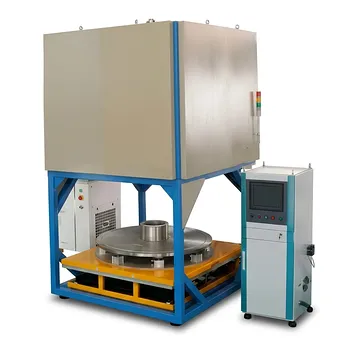
1400C Bottom Loaded Inert Gas Atmosphere Box Furnace with 125L Capacity and Precision Hydraulic Lift