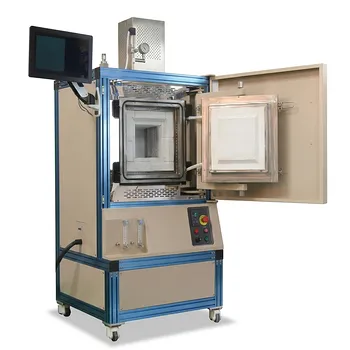
Why is an atmosphere control tube furnace required for Fe3C carbide preparation? Ensure Phase Purity & Precision
Updated 3 months ago
Atmosphere control is the single most critical factor in $Fe_3C$ carbide synthesis. An atmosphere control tube furnace is required to create a strictly oxygen-free, inert environment—typically using high-purity Argon or Nitrogen—during high-temperature carbonization. This controlled setting prevents the oxidation of iron components and the combustion of the carbon source, ensuring that precursors are precisely converted into high-purity $Fe_3C$ phases with a uniform carbon coating.
Core Takeaway: The atmosphere control tube furnace facilitates $Fe_3C$ synthesis by isolating the reaction from oxygen, which prevents the formation of unwanted metal oxides and ensures the stable thermal decomposition of organic precursors into a functional carbon framework.
The Necessity of an Anaerobic Environment
Prevention of Metal Oxidation
At the high temperatures required for carbonization (often exceeding 500°C–800°C), iron is highly reactive with oxygen. Without a tube furnace to exclude oxygen, the iron components would convert into iron oxides rather than $Fe_3C$ carbides, effectively ruining the material's magnetic and catalytic properties.
Preservation of the Carbon Skeleton
An inert atmosphere prevents the oxidative burnout of the carbon source, such as biomass or Metal-Organic Frameworks (MOFs). By maintaining an anaerobic environment, the furnace ensures the organic components undergo pyrolysis and dehydration rather than combustion, maximizing the carbon yield and maintaining the structural integrity of the coating.
Achieving High-Purity Phase Transformation
Conversion of MOF Precursors
To produce high-purity $Fe_3C$, the metal-organic precursors must be converted under stable thermal conditions. The tube furnace provides a continuous flow of inert gas that carries away volatile byproducts, allowing the iron and carbon to react in a controlled ratio to form the cementite ($Fe_3C$) phase.
Facilitating Selective Reduction
In many synthesis routes, metal ions must be reduced to their active metallic or carbide states. The atmosphere control system allows for the introduction of specific gases that enable the in-situ reduction of iron, which is essential for the growth of secondary structures like carbon nanotubes (CNTs) or specialized pore networks.
Precision Control and Structural Integrity
Managing Thermal Decomposition
Tube furnaces equipped with PID control systems allow for multi-stage heating programs. This precision prevents thermal overshoot, ensuring that the precursors undergo uniform pyrolysis and self-assemble into stable three-dimensional architectures rather than collapsing due to rapid temperature spikes.
Regulation of Pore Structure
The inert environment is vital when using chemical etching agents like potassium hydroxide (KOH) or templates like zinc oxide. Atmosphere control ensures these agents can precisely act on the carbon framework to construct hierarchical pore structures (micropores and mesopores) without the interference of atmospheric oxygen.
Understanding the Trade-offs
Gas Purity and Flow Rate
The effectiveness of the process depends heavily on the purity of the inert gas (e.g., 99.999% purity). Using lower-grade gas or having an inconsistent flow rate can introduce trace oxygen, leading to surface oxidation or "hot spots" that yield non-uniform carbide phases.
Costs and Seal Integrity
While tube furnaces offer superior atmosphere control, they require meticulous seal maintenance. Any leak in the vacuum flanges or tube gaskets during high-temperature runs can lead to catastrophic sample loss or the formation of hazardous oxides, making regular pressure testing a necessity.
How to Apply This to Your Project
Making the Right Choice for Your Goal
To achieve the best results in $Fe_3C$ preparation, tailor your furnace operations to your specific experimental needs:
- If your primary focus is Phase Purity: Use a high-purity Argon flow and a slow heating rate to ensure complete and uniform conversion of iron precursors into the carbide phase.
- If your primary focus is Surface Area: Integrate a multi-stage heating program with an activation agent under a strict Nitrogen environment to maximize the formation of micropores.
- If your primary focus is Scalability: Prioritize a furnace with a large "constant temperature zone" and automated gas flow regulators to maintain consistency across larger batches.
By mastering the atmosphere within the tube furnace, you transform a simple heating process into a precision engineering tool for advanced carbide materials.
Summary Table:
| Key Feature | Role in $Fe_3C$ Synthesis | Benefit to Material Quality |
|---|---|---|
| Inert Atmosphere | Excludes oxygen (Argon/Nitrogen) | Prevents iron oxidation & carbon combustion |
| Phase Control | Facilitates stable pyrolysis | Ensures high-purity cementite ($Fe_3C$) phase |
| PID Temperature Control | Multi-stage heating programs | Prevents thermal overshoot & structural collapse |
| Gas Flow Regulation | Removes volatile byproducts | Enables selective reduction & pore engineering |
Elevate Your Material Research with THERMUNITS
Are you looking to achieve superior phase purity in your $Fe_3C$ carbides or advanced material synthesis? THERMUNITS is a leading manufacturer of high-temperature laboratory equipment specifically designed for material science and industrial R&D.
We offer a comprehensive range of thermal processing solutions tailored to your needs, including:
- Tube & Atmosphere Furnaces (Perfect for controlled carbonization)
- Vacuum, Muffle, & Rotary Furnaces
- CVD/PECVD Systems for thin-film and nanotube growth
- Vacuum Induction Melting (VIM) & Hot Press Furnaces
- Dental Furnaces & Electric Rotary Kilns
Don't let oxidation compromise your results. Partner with THERMUNITS to access precise, reliable, and high-performance heat treatment equipment.
Contact Our Experts Today to Find Your Solution
References
- Muhammad Abdul, Yanyan Luo. Facile synthesis of Co<sub>3</sub>Te<sub>4</sub>–Fe<sub>3</sub>C for efficient overall water-splitting in an alkaline medium. DOI: 10.1039/d4na00930d
Mentioned Products
- Compact Hybrid Muffle and Tube Furnace for 1000C Controlled Atmosphere Laboratory Material Sintering
- Compact Vertical Split Quartz Tube Furnace with Stainless Steel Vacuum Flanges for Rapid Thermal Quenching and Controlled Atmosphere Material Processing
- 1200C High Temperature Atmosphere Controlled Vertical Quenching Tube Furnace with 4 Inch Quartz Tube
- 1200°C Atmosphere Controlled Automatic Bottom Loading Furnace with 6 Inch Quartz Tube
- 1650C High Temperature Atmosphere Controlled Box Furnace with 65L Chamber for Advanced Material Sintering and Industrial Heat Treatment
People Also Ask
- Why is an atmosphere-controlled tube furnace required for the pre-sulfidation of NiMo/gamma-Al2O3 catalysts?
- Why is an atmosphere-controlled tube furnace required for 800 °C CNF annealing? Essential for Oxidative Protection.
- Why is an atmosphere-controlled tube furnace required for [email protected]/C preparation? Key for Purity & Structure
- Why is an atmosphere-controlled tube furnace required for single-atom sensor calcination? Ensure Atomic Dispersion.
- What is the function of a controlled atmosphere tube furnace in LiGa alloying? Achieving High-Purity Thermal Synthesis

Tech Team · ThermUnits
Last updated on Jun 03, 2026
Related Products
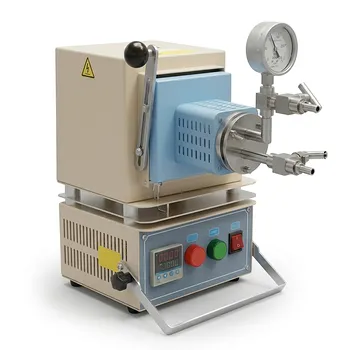
Compact Hybrid Muffle and Tube Furnace for 1000C Controlled Atmosphere Laboratory Material Sintering

Compact Vertical Split Quartz Tube Furnace with Stainless Steel Vacuum Flanges for Rapid Thermal Quenching and Controlled Atmosphere Material Processing
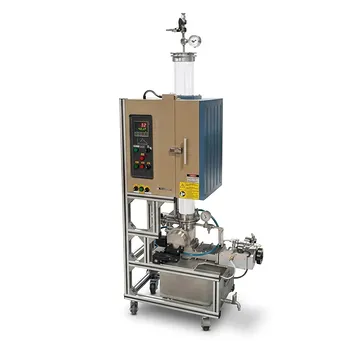
1200C High Temperature Atmosphere Controlled Vertical Quenching Tube Furnace with 4 Inch Quartz Tube
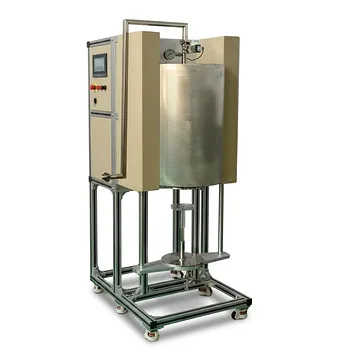
1200°C Atmosphere Controlled Automatic Bottom Loading Furnace with 6 Inch Quartz Tube
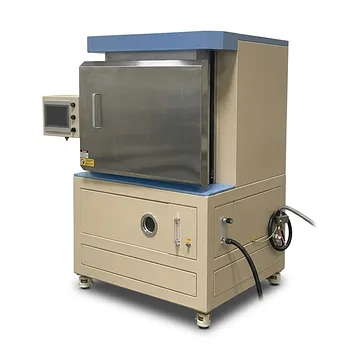
1650C High Temperature Atmosphere Controlled Box Furnace with 65L Chamber for Advanced Material Sintering and Industrial Heat Treatment
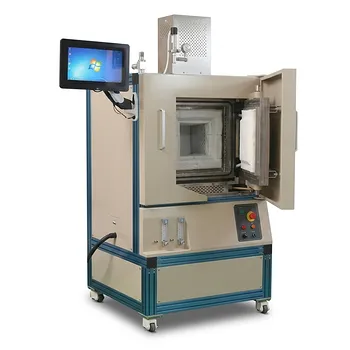
High Temperature Oxygen and Inert Atmosphere Controlled Furnace 8 Liter 1700C Sintering System for Advanced Materials RD
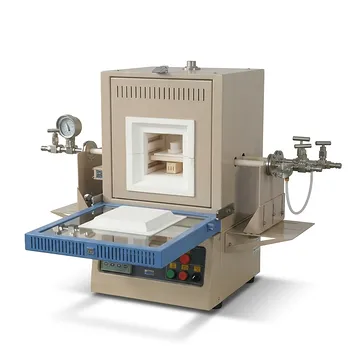
1700C Compact Hybrid Furnace with Dual Layer Box Sintering and Controlled Atmosphere Alumina Tubes
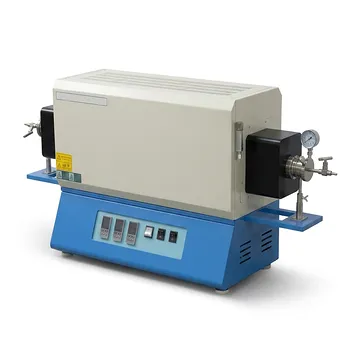
High Temperature Three Temperature Zone Tube Furnace for Advanced Material Science Sintering and Chemical Vapor Deposition Applications
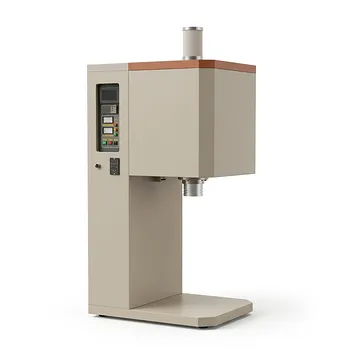
Vertical Openable Tube Furnace 0-1700c High Temperature Laboratory System for CVD and Vacuum Heat Treatment
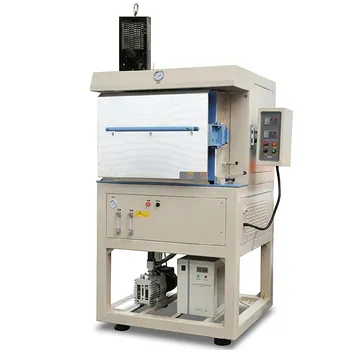
1200C Hydrogen Atmosphere Box Furnace with 5 Heated Sides and 64L Chamber
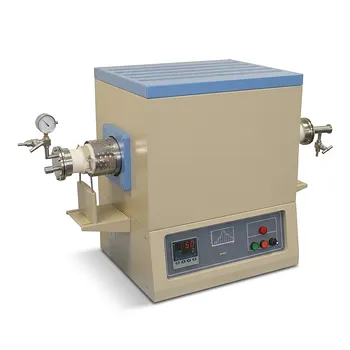
1700C High Temperature Alumina Tube Furnace with 18 Inch Heated Zone and Vacuum Sealing Flanges
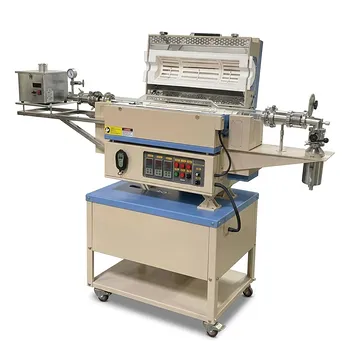
5 Inch Rotary Tube Furnace with Automatic Feeding and Receiving System 1200C Three Zone CVD Powder Processing

Vertical 1700C Vacuum and Atmosphere Tube Furnace with 80mm Alumina Tube
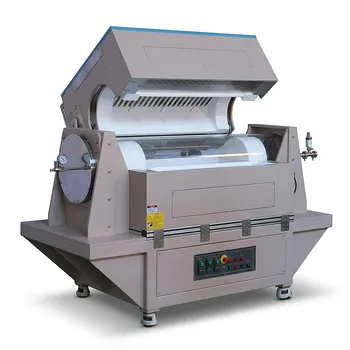
Three Zone Tube Furnace with 11 Inch or 15 Inch Quartz Tube and Hinged Flanges for Vacuum Atmosphere Heat Treatment
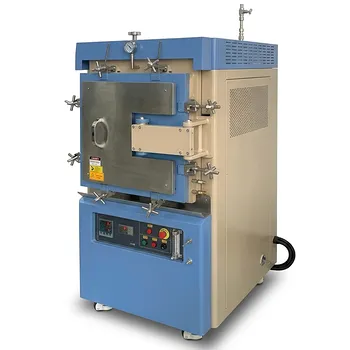
Atmosphere Controlled Muffle Furnace 1700C Maximum Temperature 80L High Capacity Vacuum Inert Gas Box Furnace
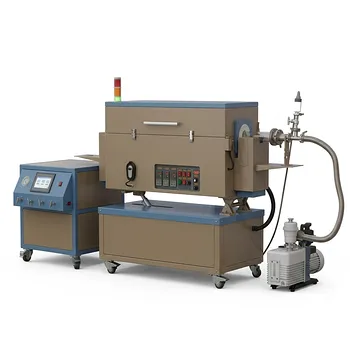
5 Inch Three Zone Rotary Tube Furnace with Integrated Gas Delivery System and 1200C Capability for Advanced Material CVD Processing

High Temperature 1700C Vertical Tube Furnace for Powder Spherification and Material Sintering

High Temperature 1700C Tube Furnace with High Vacuum Turbomolecular Pump System and Multi Channel Mass Flow Controller Gas Mixer
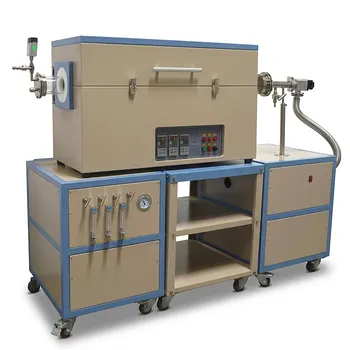
Three Zone Quartz Tube Furnace with 3 Channel Gas Mixer Vacuum Pump and Anti Corrosive Vacuum Gauge