Why is an atmosphere-controlled tube furnace necessary for the preparation of biochar used in nitrogen absorption applications?
Updated 3 months ago
The necessity of an atmosphere-controlled tube furnace lies in its ability to isolate the thermal process from oxygen while precisely regulating the chemical environment. This equipment ensures that biomass undergoes pyrolysis—the thermal decomposition of organic material—rather than simple combustion, which would otherwise turn the material into ash. By controlling gas composition, heating rates, and dwell times, the furnace allows for the engineering of specific pore structures and surface chemistries essential for effective nitrogen absorption.
Core Takeaway: An atmosphere-controlled tube furnace is required to prevent biomass combustion and to precisely engineer the high surface area and specific functional groups necessary for nitrogen absorption applications.
Preventing Oxidative Combustion
The Role of Inert Gas Displacement
At the high temperatures required for biochar production (typically 500°C to 900°C), biomass will naturally catch fire if oxygen is present. An atmosphere-controlled furnace uses high-purity nitrogen or argon to displace oxygen, creating a protective environment.
This isolation is critical to ensuring the material undergoes carbonization rather than aerobic combustion. Without this control, the carbon yield would be significantly reduced, and the structural integrity of the resulting biochar would be destroyed.
Preservation of Modification Components
Many biochars used for nitrogen absorption are modified with elements like iron or silicon to enhance their chemical properties. An oxygen-free environment prevents these modifiers from undergoing unintended oxidation.
Maintaining these components in their intended chemical state ensures the biochar retains its reductive capabilities and magnetic characteristics. This is vital for specialized absorption and recovery processes.
Engineering the Pore Structure
Precise Control of Isothermal Durations
The ability of biochar to absorb nitrogen is directly linked to its specific surface area and the complexity of its microporous structures. A tube furnace provides a stable thermal field that ensures the heat is distributed uniformly across the sample.
By maintaining precise isothermal durations, the furnace allows for the uniform cracking of organic matter. This creates the intricate "carbon skeleton" needed to provide ample sites for nitrogen molecules to bond.
Managing Heating Rates for Kinetic Performance
The speed at which biomass reaches its peak temperature, such as a controlled rate of 10 °C/min, dictates the final pore distribution. Rapid, uncontrolled heating can cause pore collapse or uneven structural development.
Atmosphere control allows for the introduction of activating gases like carbon dioxide (CO2). When used under specific thermal conditions, CO2 reacts with the carbon to "etch" more pores into the material, significantly improving the kinetic performance of nitrogen absorption.
Precise Chemical Tuning
Regulating Aromatization and Functional Groups
The absorption of nitrogen often depends on the functional groups (chemical "hooks") on the biochar's surface. A tube furnace allows researchers to regulate the degree of aromatization by fine-tuning the temperature and gas flow.
This level of control ensures that the biochar has the correct distribution of oxygen-containing or nitrogen-containing groups. These groups facilitate the chemical attraction between the biochar and the nitrogen species being targeted.
Utilizing Chemical Activators
In many high-performance applications, activators like KOH are mixed with the biomass. The tube furnace provides the stable, high-temperature environment required for the redox reaction between the activator and carbon atoms.
This chemical activation, conducted in a strictly controlled atmosphere, is what produces the high-density microporous structures required for advanced absorption and capacitive deionization.
Understanding the Trade-offs
Equipment Complexity and Cost
While atmosphere-controlled furnaces offer superior precision, they require gas handling systems and vacuum pumps. This increases the operational complexity compared to simple muffle furnaces or traditional kilns.
Gas Consumption and Safety
Maintaining a continuous flow of industrial-grade nitrogen or CO2 can be expensive over long production cycles. Additionally, the process generates syngas and volatile organic compounds (VOCs) that must be safely vented or treated to prevent health and safety risks.
How to Apply This to Your Project
Selecting the Right Parameters
- If your primary focus is maximizing surface area: Utilize a controlled CO2 atmosphere during the isothermal phase to act as a physical activating agent.
- If your primary focus is preserving mineral modifiers: Ensure a strictly inert nitrogen flow is maintained from the start of the heating cycle until the furnace has cooled below 100°C.
- If your primary focus is consistent absorption kinetics: Use a slow, linear heating rate (e.g., 5-10 °C/min) to prevent structural flaws in the carbon skeleton.
By leveraging the precision of an atmosphere-controlled tube furnace, you transform biomass from a raw waste product into a highly engineered technical material optimized for nitrogen capture.
Summary Table:
| Feature | Atmosphere-Controlled Tube Furnace | Impact on Biochar Performance |
|---|---|---|
| Oxygen Level | Displacement via Inert Gas (N2/Ar) | Prevents combustion; ensures 100% carbonization. |
| Thermal Precision | Stable Isothermal Fields & Controlled Ramp | Uniform pore structure & high specific surface area. |
| Chemical Tuning | Introduction of Activating Gases (CO2) | Enhances functional groups for nitrogen bonding. |
| Modifier Stability | Non-oxidizing environment | Preserves iron/silicon modifiers for specialized use. |
| Heating Rate | Precise Kinetic Control (e.g., 10°C/min) | Prevents pore collapse; optimizes absorption kinetics. |
Elevate Your Material Research with THERMUNITS
Precision is the difference between ash and high-performance biochar. THERMUNITS is a leading manufacturer of high-temperature laboratory equipment, providing the exact thermal environments required for material science and industrial R&D.
Whether you need an Atmosphere-Controlled Tube Furnace, Vacuum Furnace, CVD/PECVD systems, or Rotary Kilns, our solutions are engineered for reliability and scientific accuracy. We empower researchers to achieve superior pore engineering and chemical activation.
Ready to optimize your thermal processing? Contact our technical team today to find the perfect furnace for your nitrogen absorption or carbonization project!
References
- Zhongyuan Liu, Jiatai Zhao. Experimental and Kinetic Study of Biochar in N-Absorption Reaction of Chemical Looping Ammonia Generation. DOI: 10.3390/pr12122870
Mentioned Products
- Compact Vertical Split Quartz Tube Furnace with Stainless Steel Vacuum Flanges for Rapid Thermal Quenching and Controlled Atmosphere Material Processing
- 1200°C Atmosphere Controlled Automatic Bottom Loading Furnace with 6 Inch Quartz Tube
- Compact Hybrid Muffle and Tube Furnace for 1000C Controlled Atmosphere Laboratory Material Sintering
- High Temperature Tilting Rotary Tubular Furnace for Continuous Powder Thermal Processing and Controlled Atmosphere Sintering
- 1700C Compact Hybrid Furnace with Dual Layer Box Sintering and Controlled Atmosphere Alumina Tubes
People Also Ask
- Why integrate a vertical split tube furnace with hydraulic loading for HSECC? Essential for In-Situ Fire Simulation.
- What is the role of a split vertical tube furnace during flash sintering of 8YSZ and 20SDC? Master Ultra-Fast R&D
- What is the primary engineering purpose for using a customized ventilation hood when operating a split tube furnace? RCF Safety
- Why is a quartz tube furnace necessary for phosphorus-doped MoS2/GO preparation? Ensure Purity & Precise Synthesis
- What is the primary function of a Quartz Tube Furnace in ZnO VLS growth? Master High-Precision Nanowire Synthesis

Tech Team · ThermUnits
Last updated on Jun 02, 2026
Related Products

Compact Vertical Split Quartz Tube Furnace with Stainless Steel Vacuum Flanges for Rapid Thermal Quenching and Controlled Atmosphere Material Processing
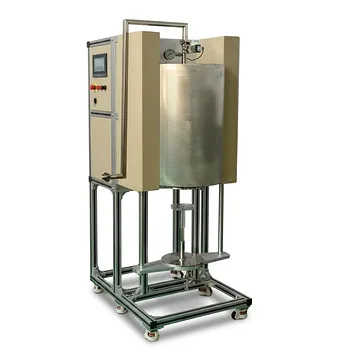
1200°C Atmosphere Controlled Automatic Bottom Loading Furnace with 6 Inch Quartz Tube
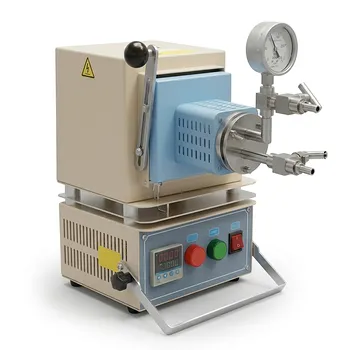
Compact Hybrid Muffle and Tube Furnace for 1000C Controlled Atmosphere Laboratory Material Sintering
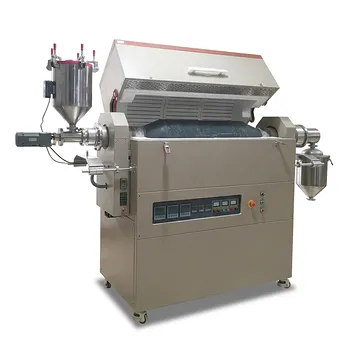
High Temperature Tilting Rotary Tubular Furnace for Continuous Powder Thermal Processing and Controlled Atmosphere Sintering
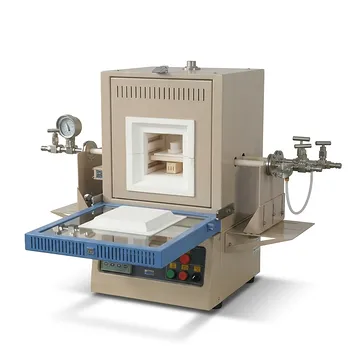
1700C Compact Hybrid Furnace with Dual Layer Box Sintering and Controlled Atmosphere Alumina Tubes
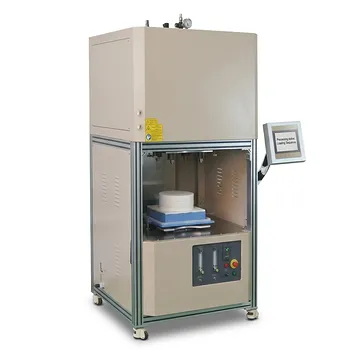
High Temperature Vertical Atmosphere Controlled Furnace with Automatic Bottom Loading and 1700°C Capacity for Advanced Material Research

Vertical 1700C Vacuum and Atmosphere Tube Furnace with 80mm Alumina Tube
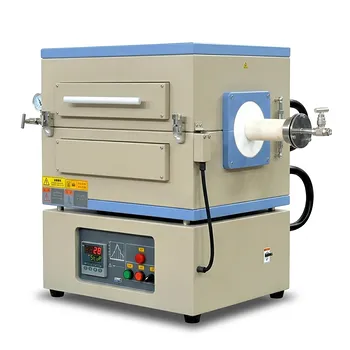
1500°C Split Tube Furnace with Alumina Tube and Vacuum Sealing Flanges for Material Research
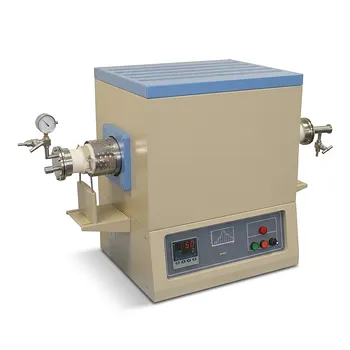
1700C High Temperature Alumina Tube Furnace with 18 Inch Heated Zone and Vacuum Sealing Flanges
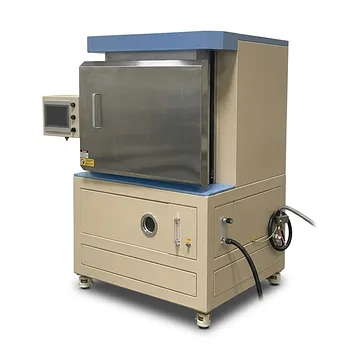
1650C High Temperature Atmosphere Controlled Box Furnace with 65L Chamber for Advanced Material Sintering and Industrial Heat Treatment
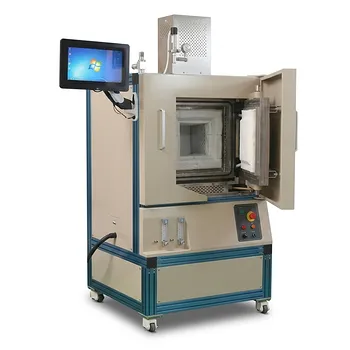
High Temperature Oxygen and Inert Atmosphere Controlled Furnace 8 Liter 1700C Sintering System for Advanced Materials RD
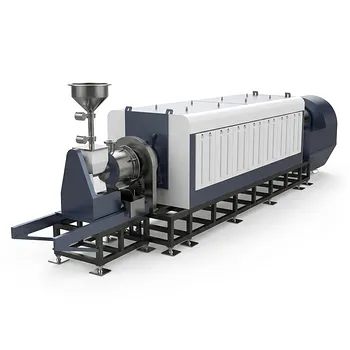
Electric Rotary Kiln Small Rotary Furnace Biomass Pyrolysis Plant
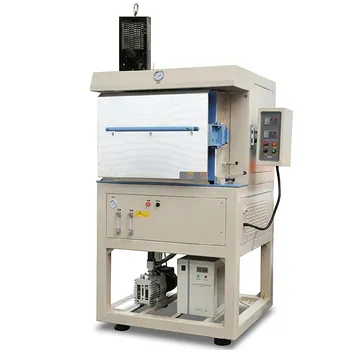
1200C Hydrogen Atmosphere Box Furnace with 5 Heated Sides and 64L Chamber
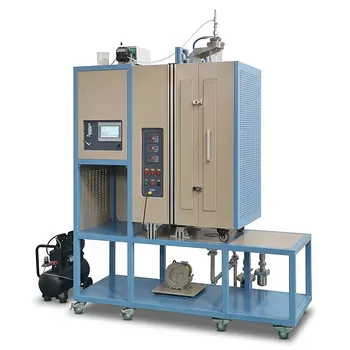
1500C Three Zone Vertical Pyrolysis Furnace for Nanoparticle Synthesis and Advanced Oxide Coating
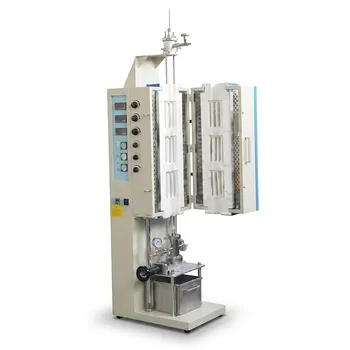
High Temperature Dual Zone Tube Furnace for Material Science Research and Professional Thermal Processing
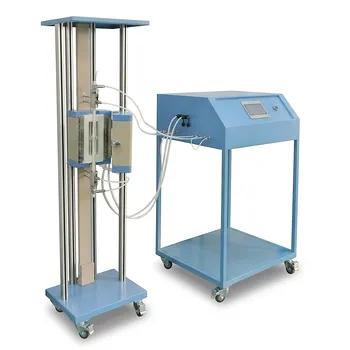
High Temperature Vertical Tube Furnace for Small Solid Oxide Fuel Cell Testing with Four Channel Gas Control

High Temperature 1700C Vertical Tube Furnace for Powder Spherification and Material Sintering

High Temperature Automated 5 Inch Tube Furnace for Autonomous Material Research and Advanced Laboratory R&D
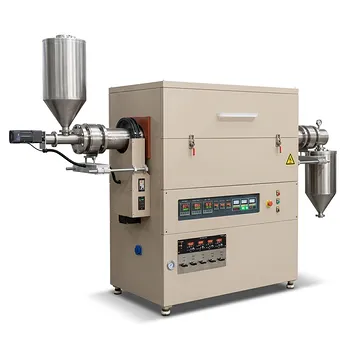
High Temperature Tilting Rotary Tube Furnace with Integrated Mass Flow Control and Multi Zone Heating
