Why is an atmosphere tube furnace required during the pre-carbonization stage of coal-based hard carbon synthesis?
Updated 3 months ago
The atmosphere tube furnace is the fundamental tool for coal-based hard carbon synthesis because it creates a strictly controlled, oxygen-free environment necessary for in-situ templating. During the pre-carbonization stage at 700°C, the furnace maintains an inert gas flow—typically argon or nitrogen—to facilitate the decomposition of coal and basic zinc carbonate. This process ensures the formation of a zinc oxide (ZnO) hard template within the coal matrix while preventing the carbon material from undergoing oxidative combustion.
Core Takeaway: An atmosphere tube furnace is required to prevent material oxidation and manage the precise thermal decomposition of chemical precursors. It transforms the mixture into a stable carbon skeleton by facilitating the formation of internal templates that regulate the final pore structure.
Facilitating In-Situ Template Formation
The Role of Basic Zinc Carbonate Decomposition
At 700°C, basic zinc carbonate undergoes a specific chemical transformation that requires a stable thermal environment. The furnace enables this precursor to release carbon dioxide and generate zinc oxide (ZnO) directly within the coal matrix. This "in-situ" formation is critical because the ZnO acts as a hard template, supporting the primary pore structure as the coal begins its transition into hard carbon.
Regulating the Primary Pore Structure
The tube furnace allows for the precise embedding of these ZnO templates throughout the carbon framework. By maintaining a steady temperature field and gas flow, the furnace ensures that the resulting pore structure is uniform and well-regulated. Without this controlled environment, the template formation would be inconsistent, leading to poor structural integrity in the final hard carbon product.
Preventing Oxidative Degradation
Eliminating High-Temperature Combustion
Carbon materials are highly reactive with oxygen at temperatures exceeding 500°C. The atmosphere tube furnace uses a continuous flow of high-purity inert gas (like Argon or Nitrogen) to displace all oxygen from the heating chamber. This prevents the coal-based precursor from undergoing oxidative burnout, which would otherwise turn the valuable carbon sample into ash.
Maximizing Carbon Yield and Purity
By providing a strictly anaerobic environment, the furnace ensures that only dehydration and carbonization reactions occur. This maximizes the carbon yield by preventing the loss of carbon atoms to CO2 gas through combustion. Furthermore, the sealed environment of a tube furnace prevents external contaminants from entering, ensuring the purity of the carbon skeleton.
Precision Control of the Chemical Environment
Maintaining Gas Flow Dynamics
Unlike standard furnaces, a tube furnace allows for the constant movement of gases over the sample. This flow carries away gaseous byproducts of decomposition, such as water vapor and CO2, which might otherwise interfere with the chemical equilibrium of the carbonization process. This dynamic atmosphere is essential for the complete thermal decomposition of the organic components in coal.
Ensuring Temperature Field Uniformity
The design of the tube furnace provides superior sealing and temperature uniformity across the sample boat. This uniformity is vital for the rearrangement of carbon structures, ensuring that the entire batch of coal reaches the required 700°C simultaneously. This consistency results in a predictable and repeatable precursor for the subsequent high-temperature activation stages.
Understanding the Trade-offs
While atmosphere tube furnaces are essential, they come with specific operational challenges. The reliance on high-purity gas cylinders increases the cost per run and requires strict safety protocols for handling pressurized tanks. Additionally, if the sealing gaskets or tube connections are compromised even slightly, oxygen ingress can ruin an entire batch, making meticulous maintenance a prerequisite for success.
Applying This Technology to Your Synthesis
Making the Right Choice for Your Goal
To achieve the best results in your hard carbon synthesis, tailor your furnace settings to your specific material objectives.
- If your primary focus is maximizing pore volume: Use a steady flow of Argon to ensure the ZnO template forms completely without any oxidative interference.
- If your primary focus is structural consistency: Prioritize a slow temperature ramp rate within the tube furnace to allow for the orderly rearrangement of the carbon skeleton.
- If your primary focus is cost-effective scaling: Ensure the tube furnace is loaded to its optimal capacity to minimize the volume of inert gas required per gram of precursor.
By masterfully controlling the atmosphere and thermal profile, you secure the structural foundation necessary for high-performance coal-based hard carbon.
Summary Table:
| Feature | Function in Pre-carbonization | Key Benefit |
|---|---|---|
| Inert Atmosphere | Displaces oxygen using Argon or Nitrogen | Prevents oxidative burnout and maximizes carbon yield |
| In-situ Templating | Facilitates decomposition of basic zinc carbonate | Creates a stable ZnO hard template for pore regulation |
| Dynamic Gas Flow | Removes CO2 and water vapor byproducts | Ensures chemical equilibrium and high purity of the skeleton |
| Thermal Uniformity | Precise 700°C heating across the sample | Ensures consistent rearrangement of the carbon structure |
Elevate Your Material Research with THERMUNITS
Precise atmospheric control is the difference between high-performance hard carbon and simple ash. THERMUNITS is a leading manufacturer of high-temperature laboratory equipment dedicated to material science and industrial R&D. We provide the specialized tools you need for advanced synthesis, including:
- Atmosphere & Vacuum Tube Furnaces for precise inert gas processing.
- CVD/PECVD Systems for advanced thin-film and carbon research.
- Muffle, Rotary, and Hot Press Furnaces for diverse heat treatment needs.
- Vacuum Induction Melting (VIM) and professional Thermal Elements.
Ready to optimize your carbonization yield and pore structure? Contact our technical experts today to find the perfect thermal processing solution for your laboratory.
References
- Wen-Yu Qian, Xing‐Long Wu. Breakage of the dense structure of coal precursors increases the plateau capacity of hard carbon for sodium storage. DOI: 10.1039/d4sc06549b
Mentioned Products
- 1750°C High Temperature Benchtop Vacuum Atmosphere Tube Furnace with Kanthal Super 1800 Heating Elements and 60mm Alumina Processing Tube
- Vertical 1700C Vacuum and Atmosphere Tube Furnace with 80mm Alumina Tube
- 1200°C Atmosphere Controlled Automatic Bottom Loading Furnace with 6 Inch Quartz Tube
- 1200C Hybrid Muffle and Tube Furnace for Material Research with Dual Atmosphere Control Quartz Tubes
- Compact Hybrid Muffle and Tube Furnace for 1000C Controlled Atmosphere Laboratory Material Sintering
People Also Ask
- What core functions does a high-temperature vacuum tube furnace provide? Optimize np-CuSn Sintering & Joint Integrity
- What is the role of a high-temperature tube furnace in the calcination process of ZnO/In2O3 nanocomposites?
- What role does a high-temperature tube furnace play in the sulfidation heat treatment of CoS@C/MXene nanocomposites? Guide
- Why is a high-temperature tube furnace required for CuAlO2 heat treatment? Master Phase Transformation Today
- What role does a high-temperature tube furnace play in executing nitrogen absorption kinetic experiments? Expert Insights

Tech Team · ThermUnits
Last updated on Jun 02, 2026
Related Products

1750°C High Temperature Benchtop Vacuum Atmosphere Tube Furnace with Kanthal Super 1800 Heating Elements and 60mm Alumina Processing Tube

Vertical 1700C Vacuum and Atmosphere Tube Furnace with 80mm Alumina Tube
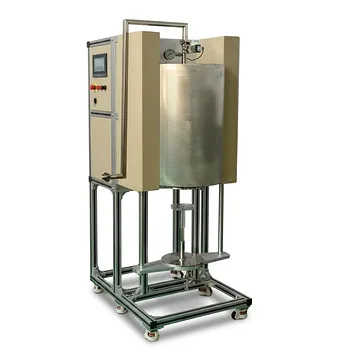
1200°C Atmosphere Controlled Automatic Bottom Loading Furnace with 6 Inch Quartz Tube
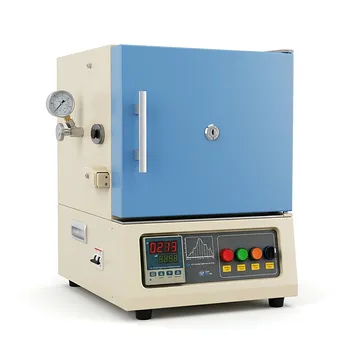
1200C Hybrid Muffle and Tube Furnace for Material Research with Dual Atmosphere Control Quartz Tubes
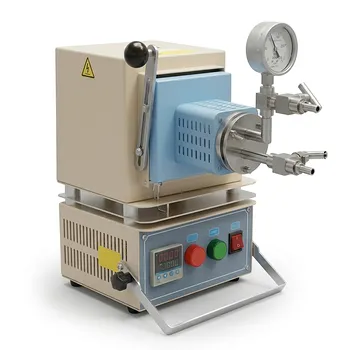
Compact Hybrid Muffle and Tube Furnace for 1000C Controlled Atmosphere Laboratory Material Sintering
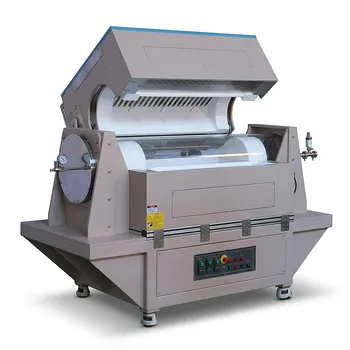
Three Zone Tube Furnace with 11 Inch or 15 Inch Quartz Tube and Hinged Flanges for Vacuum Atmosphere Heat Treatment
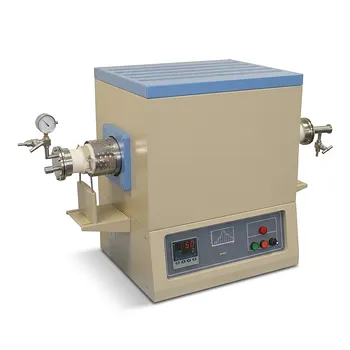
1700C High Temperature Alumina Tube Furnace with 18 Inch Heated Zone and Vacuum Sealing Flanges
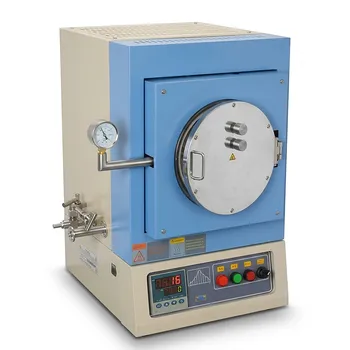
1100°C High Temperature Quartz Chamber Furnace 8 Inch OD with 7.6 Liter Capacity and Vacuum Atmosphere Capability
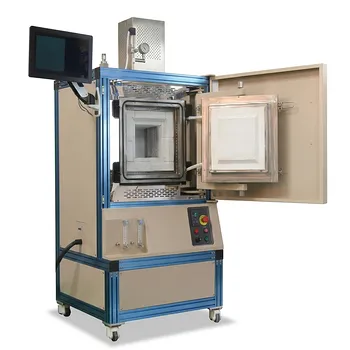
High Temperature Hydrogen Atmosphere Box Furnace 1650C Max Reducing Environment Material Synthesis System 8x8x8 Chamber

High Temperature 1700C Vertical Tube Furnace for Powder Spherification and Material Sintering

Compact High Temperature 1600C Tube Furnace with 50mm Alumina Tube and Vacuum Flanges for Material Sintering

High Temperature 1700C Six Zone Split Tube Furnace with Alumina Tube and Water Cooled Flanges

1800C High Temperature Compact Vacuum Tube Furnace with 60mm OD Alumina Tube and Kanthal MoSi2 Heating Elements
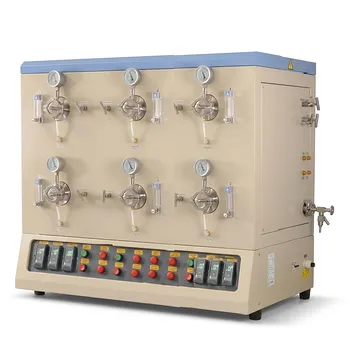
1200C High Throughput Multi Channel Tube Furnace with 50mm Quartz Tubes for Annealing and Material Phase Diagram Research

High Temperature 1700C Tube Furnace with High Vacuum Turbomolecular Pump System and Multi Channel Mass Flow Controller Gas Mixer

1100C Tube Furnace with Vacuum Flange and Programmable Temperature Controller for Material Science and Industrial Heat Treatment
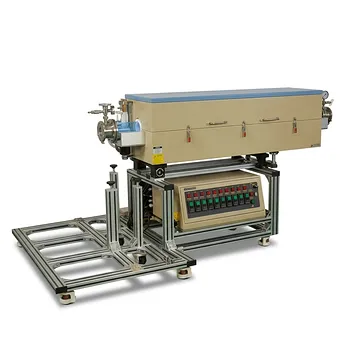
Ten Zone Multi Orientation Laboratory Tube Furnace for 1200C High Temperature Gradient Thermal Processing
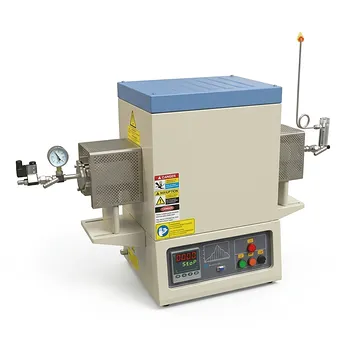
1700C Hydrogen Gas Tube Furnace with 60mm Alumina Process Tube and Integrated Hydrogen Safety Detector

High Temperature Automated 5 Inch Tube Furnace for Autonomous Material Research and Advanced Laboratory R&D
