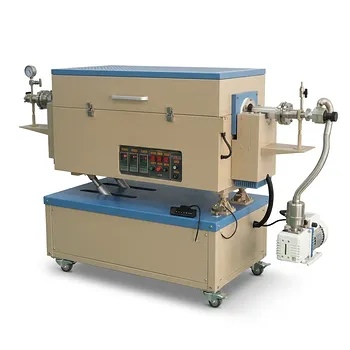
Why is an industrial-grade tube furnace suitable for long-term oxidation experiments of high-entropy alloys at 1000°C?
Updated 3 months ago
Industrial-grade tube furnaces are the gold standard for high-temperature material characterization. They provide the unique combination of thermal stability, precise atmosphere control, and long-term reliability required to simulate the extreme environments high-entropy alloys (HEAs) face. At 1000°C, these furnaces eliminate temperature fluctuations and environmental contamination, ensuring that the resulting oxidation kinetic data is both accurate and reproducible over hundreds or even thousands of hours.
An industrial-grade tube furnace offers the precise thermal and atmospheric regulation necessary to accurately model the long-term oxidation behavior of complex alloys. By maintaining a stable 1000°C environment, it enables researchers to calculate reliable oxidation rate constants and observe the evolution of complex oxide scales over extended durations.
Ensuring Thermal Precision and Stability
Constant Temperature Maintenance
At 1000°C, even minor temperature fluctuations can significantly alter oxidation rates and the resulting microstructures. Industrial-grade tube furnaces utilize integrated precision temperature control systems to minimize these fluctuations, ensuring the environment remains constant throughout the test.
Reliability Over Extended Durations
Long-term experiments, often lasting between 300 and 1,000 hours, require equipment that can run continuously without degradation. These furnaces are designed for such "aging" tests, allowing researchers to monitor the stability of HEAs and high-entropy ceramics under sustained thermal stress.
Reliability of Kinetic Data
A stable high-temperature environment is essential for the accurate calculation of the oxidation rate constant (Kp) based on parabolic rate laws. Without this stability, the data gathered on how an alloy's mass changes over time would be too "noisy" to provide meaningful scientific insights.
Control Over the Reaction Environment
Atmospheric Versatility and Purity
The sealed design of a tube furnace allows for the introduction of specific atmospheres, such as pure oxygen, synthetic air, or inert gases like nitrogen. This is critical for studying how different gas compositions drive the transition of metal atoms into oxide states.
Simulating Real-World Service Conditions
By controlling the gas flow and temperature, these furnaces effectively simulate the actual service environments of high-temperature components, such as gas turbine parts. This allows for a quantitative evaluation of how materials will perform in industrial applications.
Precise Reaction Start Times
Some industrial furnaces allow for atmosphere switching, where a sample is heated in an inert gas before rapidly introducing a reactive gas. This capability precisely defines the starting time of oxidation, which is a critical factor when studying kinetic behavior in specific transition zones.
Facilitating Complex Material Analysis
Oxide Film Evolution Patterns
Because the furnace can maintain 1000°C for hundreds of hours, researchers can study the gradual evolution of oxide film patterns. This includes observing how multi-principal cations occupy specific lattice sites to form protective spinel structures.
Stability in Corrosive Environments
Tube furnaces can be used to study accelerated oxidation mechanisms induced by external factors, such as salt layers in fluorination studies. The horizontal configuration allows oxygen to easily penetrate sample crucibles, mimicking the complex corrosion-oxidation cycles found in industrial chemical processing.
Monitoring Electrical and Structural Drift
In addition to physical oxidation, these furnaces are used to evaluate electrical stability by monitoring resistance drift over hundreds of hours. This helps prove the material’s potential for long-term use in extreme environments where both structural and functional integrity are required.
Understanding the Trade-offs
Thermal Gradient Limitations
While the center of a tube furnace is highly stable, there is often a thermal gradient toward the ends of the tube. Researchers must ensure that samples are placed strictly within the "hot zone" to avoid inaccurate temperature readings.
Sample Size and Throughput
The narrow geometry of the tube limits the size and number of samples that can be tested simultaneously. Large components or high-volume batches may require a different furnace architecture, such as a box furnace, though often at the cost of atmospheric precision.
Cooling Rate Control
The heavy insulation required for 1000°C stability means these furnaces cool down slowly. If an experiment requires "quenching" or rapid cooling to preserve a high-temperature state, additional modifications or specific furnace types may be necessary.
Making the Right Choice for Your Goal
To maximize the effectiveness of your oxidation study, consider the specific requirements of your HEA research:
- If your primary focus is oxidation kinetics: Prioritize a furnace with high-precision PID controllers to ensure the $K_p$ values are derived from a perfectly isothermal environment.
- If your primary focus is atmospheric sensitivity: Ensure the tube furnace features high-quality vacuum flanges and mass flow controllers for precise gas-switching capabilities.
- If your primary focus is long-term durability (500+ hours): Select an industrial-grade model rated for continuous use at temperatures 100–200°C higher than your target to ensure the heating elements are not overstressed.
The industrial-grade tube furnace remains the most reliable tool for bridging the gap between laboratory HEA synthesis and real-world industrial application.
Summary Table:
| Key Feature | Benefit for HEA Oxidation Research | Impact on Data Accuracy |
|---|---|---|
| Thermal Stability | Maintains precise 1000°C for 300-1000+ hours | Reliable oxidation rate constants ($K_p$) |
| Atmosphere Control | Precise regulation of O2, Air, or Inert gases | Accurate modeling of service environments |
| Sealed Tube Design | Prevents environmental contamination | Pure oxide film evolution patterns |
| Industrial Reliability | Designed for continuous high-temp aging tests | Minimal drift in long-term kinetic studies |
Elevate Your Material Research with THERMUNITS
Precision is non-negotiable in high-temperature material science. THERMUNITS is a leading manufacturer of high-performance laboratory equipment, providing the thermal stability and atmospheric control required for advanced HEA and industrial R&D.
Our comprehensive range of thermal solutions includes:
- Furnaces: Tube, Muffle, Vacuum, Atmosphere, Rotary, and Hot Press Furnaces.
- Advanced Systems: CVD/PECVD systems, Dental Furnaces, and Vacuum Induction Melting (VIM) furnaces.
- Components: Electric rotary kilns and high-quality thermal elements.
Ensure your oxidation experiments yield world-class data with equipment built for long-term reliability. Contact our technical team today to discuss your specific heat treatment requirements!
References
- Anne Bastin, Richard Kearsey. Long‐Term High‐Temperature Oxidation of Al <sub>10</sub> CoCrFeNi <sub>30</sub> High‐Entropy Alloy. DOI: 10.1002/adem.202400650
Mentioned Products
- Continuous Feeding Rotary Tube Furnace for Industrial Powder Heat Treatment and Material Research
- 900°C Max Rotary Tube Furnace with 8 Inch 310S Alloy Tube and Optional Multi Zone Heating for Industrial Material Calcination
- 1100C Tube Furnace with Vacuum Flange and Programmable Temperature Controller for Material Science and Industrial Heat Treatment
- Compact High Temperature 1600C Tube Furnace with 50mm Alumina Tube and Vacuum Flanges for Material Sintering
- Vertical 1700C Vacuum and Atmosphere Tube Furnace with 80mm Alumina Tube
People Also Ask
- How does a rotary tube furnace improve the processing of granular materials? Enhance Uniformity and Reaction Kinetics
- Why use a rotary tube furnace for FACS carbonization? Ensure uniform morphology and prevent sphere agglomeration.
- In what ways do rotary tube furnaces enhance chemical and specialty mineral processing? Drive Precision and Uniformity.
- Why is the precise optimization of residence time essential in the catalyst calcination process? Maximize Your Yields.
- What are the primary types of industrial rotary furnaces and functions? Expert Guide to Rotary Kiln & Hearth Systems

Tech Team · ThermUnits
Last updated on Jun 03, 2026
Related Products
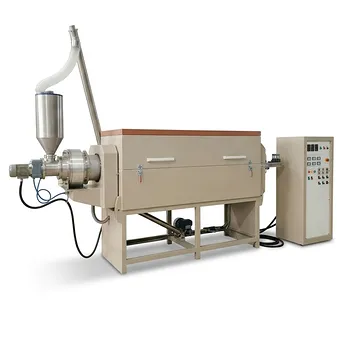
Continuous Feeding Rotary Tube Furnace for Industrial Powder Heat Treatment and Material Research
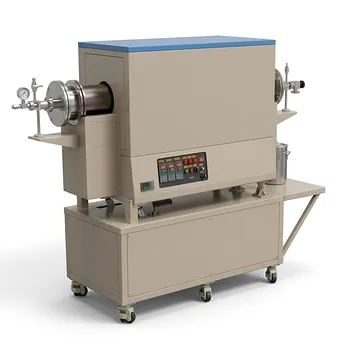
900°C Max Rotary Tube Furnace with 8 Inch 310S Alloy Tube and Optional Multi Zone Heating for Industrial Material Calcination

1100C Tube Furnace with Vacuum Flange and Programmable Temperature Controller for Material Science and Industrial Heat Treatment

Compact High Temperature 1600C Tube Furnace with 50mm Alumina Tube and Vacuum Flanges for Material Sintering

Vertical 1700C Vacuum and Atmosphere Tube Furnace with 80mm Alumina Tube

High Temperature Tube Furnace 1500C with Sliding Flanges and 50mm OD for Rapid Thermal Processing Fast Heating and Cooling

High Temperature 1700C Tube Furnace with High Vacuum Turbomolecular Pump System and Multi Channel Mass Flow Controller Gas Mixer

High Temperature 1700C Vertical Tube Furnace for Powder Spherification and Material Sintering

1800C High Temperature Compact Vacuum Tube Furnace with 60mm OD Alumina Tube and Kanthal MoSi2 Heating Elements

1700C Hydrogen Gas Tube Furnace with 60mm Alumina Process Tube and Integrated Hydrogen Safety Detector

High Temperature 1700C Six Zone Split Tube Furnace with Alumina Tube and Water Cooled Flanges

1200C High Throughput Multi Channel Tube Furnace with 50mm Quartz Tubes for Annealing and Material Phase Diagram Research
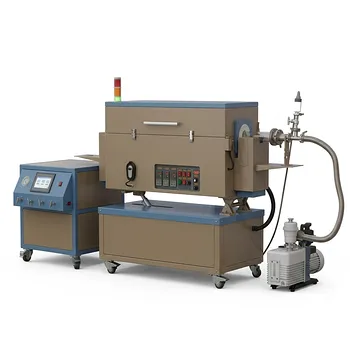
5 Inch Three Zone Rotary Tube Furnace with Integrated Gas Delivery System and 1200C Capability for Advanced Material CVD Processing

High Temperature 1700C Benchtop Tube Furnace with 5 Inch Heating Zone High Purity Alumina Tube and Vacuum Sealing Flanges

High Temperature Automated 5 Inch Tube Furnace for Autonomous Material Research and Advanced Laboratory R&D

1200°C 5 Inch Vertical Quartz Tube Furnace with Stainless Steel Vacuum Flanges
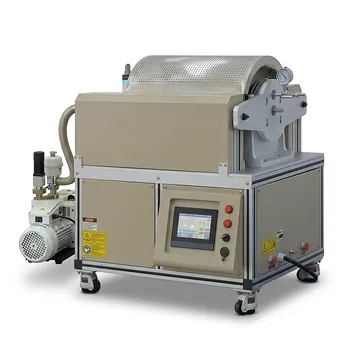
Automated 1200 C Tube Furnace for AI Material Research with 6 Inch OD and Sliding Flange
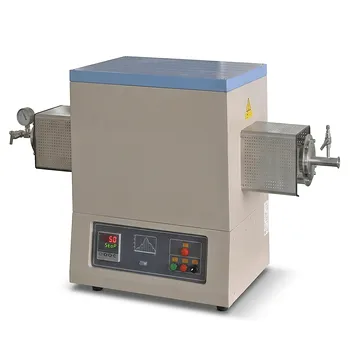
High Temperature 1700C Tube Furnace with 4 Inch OD Alumina Tube and Vacuum Sealing Flanges

Three Zone Tube Furnace with 11 Inch or 15 Inch Quartz Tube and Hinged Flanges for Vacuum Atmosphere Heat Treatment