Why is an industrial high-temperature tube furnace required at 1100°C for Crumpled Graphene? Ensure Stability & Conductivity
Updated 3 months ago
The industrial high-temperature tube furnace is the fundamental tool for synthesizing stable, high-performance Crumpled Graphene supports. At 1100°C, the furnace provides the critical thermal energy required to simultaneously strip away oxygen-containing functional groups, restore the graphene lattice's electrical conductivity, and "lock" the crumpled morphology in place through permanent plastic deformation.
This high-intensity thermal process transforms non-conductive Graphene Oxide into a robust, conductive framework. The furnace serves as a controlled reactor that prevents structural collapse while ensuring the material's chemical purity and mechanical stability.
Achieving Chemical Purity and Electrical Restoration
Complete Deoxygenation at 1100°C
The primary function of heating to 1100°C is the complete removal of oxygen-containing functional groups, such as hydroxyl, epoxy, and carboxyl groups. While lower temperatures can achieve partial reduction, this extreme heat ensures that these impurities are fully liberated as gases.
Restoration of the Graphitization Degree
The high-temperature environment facilitates the repair of the graphene lattice, allowing carbon atoms to rearrange into their natural hexagonal structure. This process restores the electrical conductivity of the material, which is otherwise inhibited by the defects found in Graphene Oxide.
Thermodynamic Repair of Defects
In an argon-protected environment, the furnace provides the necessary thermodynamic conditions to heal the carbon framework. This lattice repair is essential for creating high-quality graphene that can withstand subsequent chemical processing or metal atom anchoring.
Physical Transformation and Structural Stability
Induced Plastic Deformation
A unique requirement for "crumpled" structures is the need for plastic deformation. At 1100°C, the carbon sheets become sufficiently pliable to undergo permanent structural changes that "set" their crumpled shape.
Preventing Structural Collapse
Without this high-temperature treatment, crumpled structures may remain elastic and prone to unfolding or collapsing during later processing stages. The tube furnace ensures that the complex geometry remains stable, preserving the high specific surface area of the material.
Gas-Driven Exfoliation
The rapid decomposition of oxygen groups at these temperatures creates gas expansion pressure between the layers. This instantaneous pressure helps overcome van der Waals forces, assisting in the physical exfoliation of the layers into few-layered reduced graphene oxide.
Precision Control and Atmospheric Integrity
Maintaining an Oxygen-Free Environment
An industrial tube furnace provides a sealed, stable argon atmosphere that is critical at 1100°C. Prevailing oxygen at these temperatures would result in the immediate combustion and loss of the graphene sample.
Uniformity of Thermal Treatment
High-precision control systems ensure the furnace adheres to strict heating rates and holding times. This precision is vital for the uniform distribution of the thermal energy, ensuring that the entire batch of Crumpled Graphene achieves the same degree of reduction and structural integrity.
Integration of Sub-Process Elements
The furnace environment allows for the management of multi-component gases and vacuum pressures. This versatility supports secondary goals, such as removing residual polymer masks or preparing the surface for the integration of doping atoms like nitrogen or antimony.
Understanding the Trade-offs
While 1100°C is required for peak performance, there are inherent risks and trade-offs in this high-temperature process:
- Lattice Damage Risk: Excessive duration at these temperatures can occasionally introduce secondary defects if the heating rate is not strictly controlled.
- Operational Cost: Maintaining industrial furnaces at 1100°C requires significant energy and high-grade consumables (like quartz or alumina tubes) that can withstand thermal shock.
- Atmospheric Purity: Any leak in the argon supply at 1100°C will result in the total degradation of the carbon material via oxidation.
How to Apply This to Your Project
Choosing Your Process Parameters
- If your primary focus is Maximum Conductivity: Ensure the furnace remains at or above 1100°C for the full duration recommended to maximize the graphitization degree.
- If your primary focus is Morphology Retention: Utilize the plastic deformation threshold of the furnace to "lock" your crumpled structures before moving to liquid-phase processing.
- If your primary focus is Surface Doping: Use the high-precision controls of the tube furnace to stabilize the temperature (e.g., at 825°C or 950°C) as required for specific elements like antimony or nitrogen after the initial 1100°C reduction.
The industrial tube furnace acts as the "thermal forge" that reconciles chemical purity with structural permanence in the production of high-performance graphene supports.
Summary Table:
| Process Objective | Impact at 1100°C | Graphene Support Benefit |
|---|---|---|
| Deoxygenation | Full removal of hydroxyl, epoxy, and carboxyl groups | High chemical purity & gas-driven exfoliation |
| Lattice Repair | Rearrangement of carbon atoms into hexagonal structures | Restored electrical conductivity & defect healing |
| Morphology Lock | Induced permanent plastic deformation | Prevents structural collapse or unfolding |
| Atmosphere Integrity | Stable, sealed Argon-protected environment | Prevents material combustion and oxidation |
| Thermal Uniformity | Precise heating rates and holding times | Consistent quality across the entire batch |
Elevate Your Graphene Research with THERMUNITS Thermal Solutions
Optimizing the thermal reduction of Crumpled Graphene requires more than just high heat—it demands extreme atmospheric precision and uniform temperature control. THERMUNITS is a leading manufacturer of high-temperature laboratory equipment designed specifically for material science and industrial R&D.
We provide a comprehensive range of thermal processing solutions tailored to your specific research needs, including:
- Precision Tube Furnaces (ideal for 1100°C graphene reduction)
- Vacuum & Atmosphere Furnaces for oxygen-free processing
- CVD/PECVD Systems for advanced carbon synthesis
- Muffle, Rotary, and Hot Press Furnaces
- Vacuum Induction Melting (VIM) & Specialty Dental Furnaces
Ready to achieve superior structural stability and conductivity in your materials? Contact our technical experts today to find the perfect industrial furnace configuration for your laboratory or production line.
References
- Won‐Young Lee, Myeongjin Kim. Atomically Dispersed Platinum Supported on Crumpled Graphene Supports for Highly Efficient Hydrogen Evolution Reaction. DOI: 10.1155/2024/8700573
Mentioned Products
- Multi Position Tube Furnace 1100C for Laboratory Material Research and Advanced Industrial Thermal Processing
- 1100C Tube Furnace with Vacuum Flange and Programmable Temperature Controller for Material Science and Industrial Heat Treatment
- Automated Sliding Tube Furnace for Fast Heating and Cooling 2 Inch OD 1100C Max
- 5 Inch Two Zone Rotary Tube Furnace 1100C for Powder CVD and Material Synthesis
- 1100°C Vertical Laboratory Furnace for DIY Tubular Reactors with PID Temperature Controller
People Also Ask
- Why use a tube furnace for oxygen annealing LaCrO3/LaMnO3? Optimize Phase Transition & Magnetic Performance.
- What key role does a laboratory high-temperature tube furnace play in the production of carbon nanofibers? Guide
- How is a laboratory high-temperature tube furnace utilized to research the products of aluminothermic reduction? Advanced Metallurgical Solutions
- What is the role of a laboratory tube furnace in the carbonization process of porous carbon foam (PCF)? Master 3D Synthesis
- What role does a laboratory tube furnace play in the pyrolysis and carbonization of biomass? Optimize Thermal Research.

Tech Team · ThermUnits
Last updated on Jun 02, 2026
Related Products
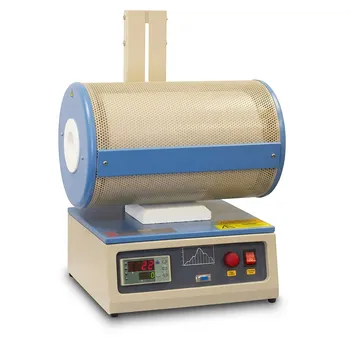
Multi Position Tube Furnace 1100C for Laboratory Material Research and Advanced Industrial Thermal Processing

1100C Tube Furnace with Vacuum Flange and Programmable Temperature Controller for Material Science and Industrial Heat Treatment
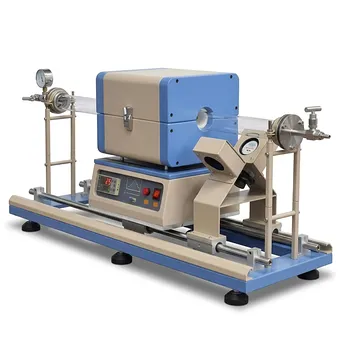
Automated Sliding Tube Furnace for Fast Heating and Cooling 2 Inch OD 1100C Max
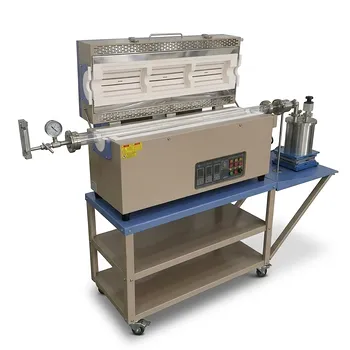
5 Inch Two Zone Rotary Tube Furnace 1100C for Powder CVD and Material Synthesis
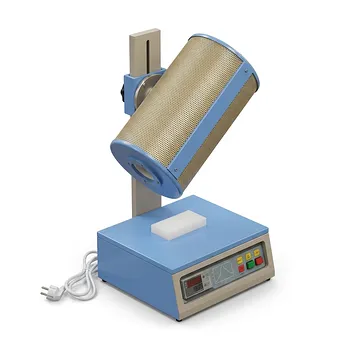
1100°C Vertical Laboratory Furnace for DIY Tubular Reactors with PID Temperature Controller
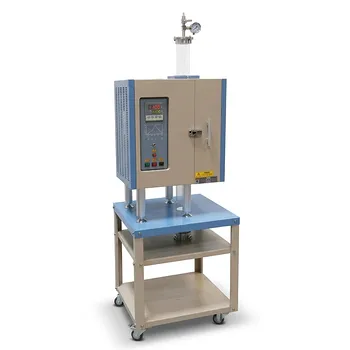
1100°C Split Vertical Tube Furnace with 80mm Quartz Tube and Stainless Steel Vacuum Flanges
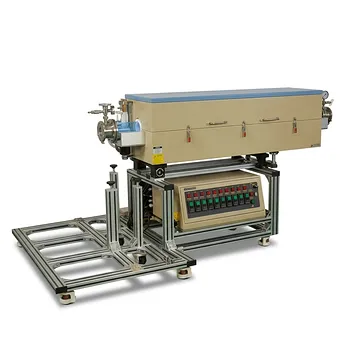
Ten Zone Multi Orientation Laboratory Tube Furnace for 1200C High Temperature Gradient Thermal Processing
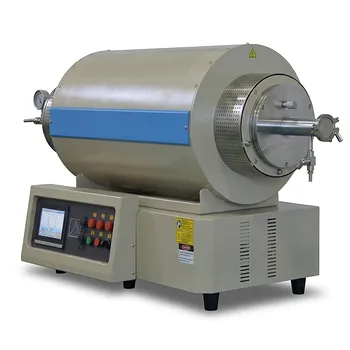
1200C Max Three Zone Tube Furnace 6 Inch OD Max with Tube and Flange

1200°C 5 Inch Vertical Quartz Tube Furnace with Stainless Steel Vacuum Flanges

Compact High Temperature 1600C Tube Furnace with 50mm Alumina Tube and Vacuum Flanges for Material Sintering

High Temperature Tube Furnace 1500C with Sliding Flanges and 50mm OD for Rapid Thermal Processing Fast Heating and Cooling
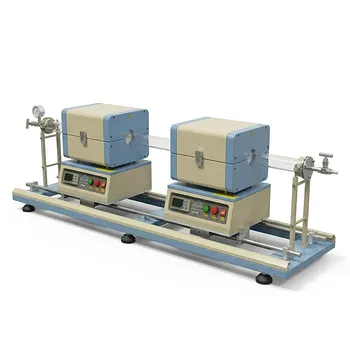
1200C Max Dual Sliding Tube Furnace with 50 mm Tube Flanges for CVD

1800C High Temperature Compact Vacuum Tube Furnace with 60mm OD Alumina Tube and Kanthal MoSi2 Heating Elements
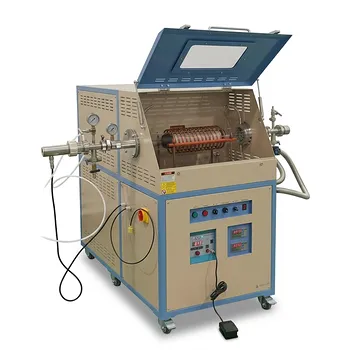
Ultra High Temperature 2300C Induction Heated Graphite Tube Furnace with Infrared Control
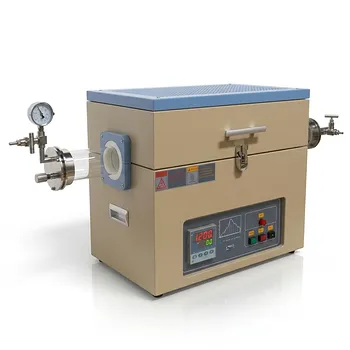
High Temperature 1200C Split Tube Furnace with Optional Quartz Tube Sizes and Vacuum Sealing Flanges for Material Science Research
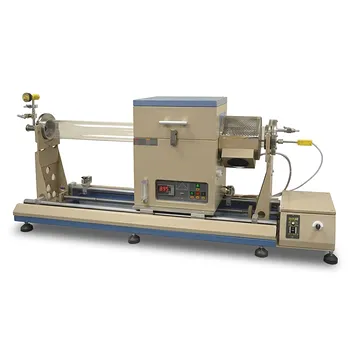
900 ºC Max Sliding RTP Tube Furnace with Rapid IR Heating and 4 Inch OD Quartz Tube

High Temperature Automated 5 Inch Tube Furnace for Autonomous Material Research and Advanced Laboratory R&D

High Temperature 1700C Benchtop Tube Furnace with 5 Inch Heating Zone High Purity Alumina Tube and Vacuum Sealing Flanges
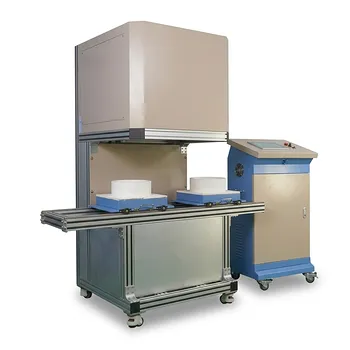
High Temperature Bottom Loading Vertical Furnace 1700C Dual Stage Sample Processing System 18L Large Capacity Thermal Treatment Equipment