Why is high-purity nitrogen (N2) introduced during activation in a tube furnace? Ensure Yield and Material Integrity
Updated 3 months ago
High-purity nitrogen (N2) is continuously introduced to create and maintain a strictly inert atmosphere within the tube furnace. This flow effectively displaces oxygen from the furnace chamber, preventing the oxidative combustion or "burn-off" of materials at high temperatures. By isolating the reaction from air, nitrogen ensures that processes like carbonization and pore-forming occur correctly, maximizing the quality and yield of the final product.
The continuous flow of nitrogen serves as both a protective shield and a transport medium. It prevents material loss through oxidation while simultaneously removing volatile by-products that could otherwise interfere with the reaction equilibrium or damage the equipment.
The Role of Oxygen Displacement
Prevention of Oxidative Combustion
At the high temperatures required for activation (often 500°C to 900°C), carbonaceous materials and biomass react violently with oxygen. Continuous nitrogen flow ensures that aerobic combustion or "ashing" does not occur. This isolation allows the material to undergo thermal decomposition without being consumed by fire.
Preservation of the Carbon Skeleton
To produce high-quality activated carbon or biochar, the internal carbon framework must remain intact. Nitrogen prevents non-selective oxidation, which would otherwise degrade the material's structural integrity. This controlled environment is essential for the systematic reconstruction of the carbon skeleton.
Protection of Reduced Metals and Catalysts
In processes involving metal reduction or catalyst preparation, nitrogen prevents secondary oxidation. It ensures that reduced metals, such as antimony or lead, do not revert to oxides. This maintains the purity of the active phase and the desired chemical state of the sample.
Facilitating Reaction Dynamics
Removal of Volatile By-products
Thermal activation generates significant amounts of volatile organic compounds and gases. A continuous nitrogen stream acts as a sweeping agent, carrying these by-products out of the hot zone. This prevents the accumulation of tars and gases that could interfere with the reaction equilibrium.
Equipment and Sample Protection
Volatile by-products can be corrosive or may re-deposit on the sample as it cools. By transporting these vapors to a downstream collection system, nitrogen protects the tube furnace walls and heating elements from damage. It also ensures the final sample remains free of unwanted surface contaminants.
Functioning as a Carrier Gas
In specific chemical vapor reactions, nitrogen serves as a uniform transport medium. It distributes sublimated elements, such as phosphorus or sulfur, evenly across the sample surface. This homogeneity is critical for achieving stable morphology and consistent chemical properties in the final product.
Understanding the Trade-offs
The Risk of Flow Rate Imbalance
Maintaining the correct flow rate is a delicate balance. If the flow is too low, oxygen may diffuse back into the chamber, causing partial oxidation. Conversely, if the flow is too high, it may cause unwanted cooling of the sample or carry away fine particles, reducing the total yield.
The Necessity of High Purity
The "high-purity" aspect of the nitrogen is non-negotiable for sensitive applications. Even trace amounts of moisture or oxygen in industrial-grade nitrogen can cause surface oxidation at 900°C. This can compromise the development of the pore structure and reduce the adsorption performance of the final material.
How to Apply This to Your Process
Making the Right Choice for Your Goal
- If your primary focus is maximizing surface area: Ensure a steady, medium flow of nitrogen to facilitate pore development without allowing oxygen-induced "widening" or destruction of the pores.
- If your primary focus is chemical vapor deposition or doping: Use nitrogen as a carrier gas at a precisely controlled velocity to ensure the even distribution of reactants across the entire sample bed.
- If your primary focus is high-yield biochar production: Prioritize the "pre-purge" phase to ensure all oxygen is displaced before the temperature reaches the ignition point of your biomass.
A controlled, inert environment is the fundamental requirement for transforming raw organic precursors into high-performance functional materials.
Summary Table:
| Function | Description | Key Benefit |
|---|---|---|
| Oxygen Displacement | Creates an inert atmosphere by removing air | Prevents oxidative combustion and ashing |
| Structural Preservation | Protects the carbon skeleton and reduced metals | Ensures high-quality biochar and catalyst purity |
| By-product Removal | Sweeps away volatile organic compounds/tars | Protects equipment and prevents contamination |
| Carrier Medium | Transports sublimated elements or reactants | Achieves uniform morphology and stable properties |
Optimize Your Thermal Activation with THERMUNITS
Achieving the perfect inert atmosphere is critical for material science and industrial R&D. As a leading manufacturer, THERMUNITS provides high-precision thermal processing solutions including Tube, Vacuum, Atmosphere, and Rotary Furnaces, as well as advanced CVD/PECVD systems.
Whether you are producing activated carbon, developing catalysts, or researching metal reduction, our equipment ensures the strictly controlled environments your process demands.
Ready to enhance your lab’s efficiency and product yield?
Contact our technical experts today to find the ideal furnace for your application!
References
- Amina Tahreen, Zahangir Alam. MORINGA OLEIFERA (MO) SEED SHELL BASED ADSORBENT FOR POTENTIAL CO2 CAPTURE: A CHARACTERIZATION STUDY. DOI: 10.22452/mjs.vol43sp1.7
Mentioned Products
- Vertical 1700C Vacuum and Atmosphere Tube Furnace with 80mm Alumina Tube
- Compact High Temperature 1600C Tube Furnace with 50mm Alumina Tube and Vacuum Flanges for Material Sintering
- 900°C Max Rotary Tube Furnace with 8 Inch 310S Alloy Tube and Optional Multi Zone Heating for Industrial Material Calcination
- Split Vertical Tube Furnace with 1200C Quartz Tube and Stainless Steel Vacuum Flanges for Rapid Thermal Processing
- High Temperature 1700C Tube Furnace with High Vacuum Turbomolecular Pump System and Multi Channel Mass Flow Controller Gas Mixer
People Also Ask
- How is an industrial-grade vertical tube furnace utilized in smelting leaching residues? Enhance Metal Recovery Efficiency
- What is the function of a laboratory-grade vertical tube furnace in fast pyrolysis? Optimize Composite Research.
- How does a vertical tube furnace facilitate thermoelectric alloy melting? Precision synthesis for material homogeneity.
- Why is a thermocouple sensor indispensable for monitoring the vertical tube furnace during gallium oxide nanowire production? Optimize VLS Growth
- What are the advantages of using a vertical tube furnace for crucible experiments simulating steel-slag interactions?

Tech Team · ThermUnits
Last updated on Jun 03, 2026
Related Products

Vertical 1700C Vacuum and Atmosphere Tube Furnace with 80mm Alumina Tube

Compact High Temperature 1600C Tube Furnace with 50mm Alumina Tube and Vacuum Flanges for Material Sintering
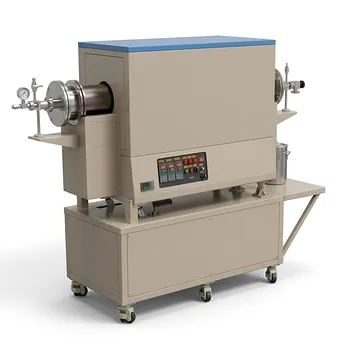
900°C Max Rotary Tube Furnace with 8 Inch 310S Alloy Tube and Optional Multi Zone Heating for Industrial Material Calcination
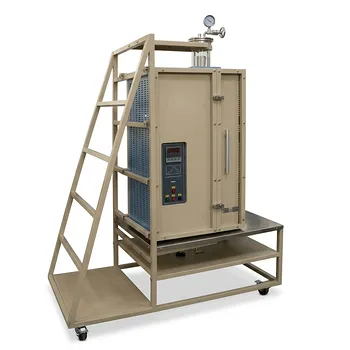
Split Vertical Tube Furnace with 1200C Quartz Tube and Stainless Steel Vacuum Flanges for Rapid Thermal Processing

High Temperature 1700C Tube Furnace with High Vacuum Turbomolecular Pump System and Multi Channel Mass Flow Controller Gas Mixer

1100C Tube Furnace with Vacuum Flange and Programmable Temperature Controller for Material Science and Industrial Heat Treatment

5 Inch Three Zone Rotary Tube Furnace with Integrated Gas Delivery System and 1200C Capability for Advanced Material CVD Processing

1200°C 5 Inch Vertical Quartz Tube Furnace with Stainless Steel Vacuum Flanges

1700C Hydrogen Gas Tube Furnace with 60mm Alumina Process Tube and Integrated Hydrogen Safety Detector

High Temperature 1700C Six Zone Split Tube Furnace with Alumina Tube and Water Cooled Flanges

Compact Vertical Split Quartz Tube Furnace with Stainless Steel Vacuum Flanges for Rapid Thermal Quenching and Controlled Atmosphere Material Processing

High Temperature 1700C Benchtop Tube Furnace with 5 Inch Heating Zone High Purity Alumina Tube and Vacuum Sealing Flanges

1200C High Throughput Multi Channel Tube Furnace with 50mm Quartz Tubes for Annealing and Material Phase Diagram Research

Three Zone Tube Furnace with 11 Inch or 15 Inch Quartz Tube and Hinged Flanges for Vacuum Atmosphere Heat Treatment

1800C High Temperature Compact Vacuum Tube Furnace with 60mm OD Alumina Tube and Kanthal MoSi2 Heating Elements

High Temperature 1700C Vertical Tube Furnace for Powder Spherification and Material Sintering
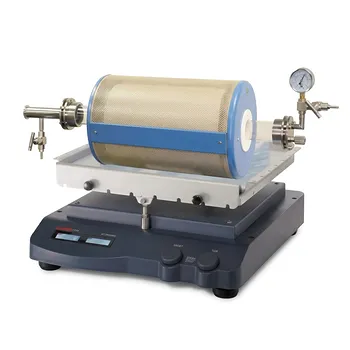
High Temperature Rocking Tube Furnace with Quartz Tube and Vacuum Flange for Materials Synthesis

High Temperature Automated 5 Inch Tube Furnace for Autonomous Material Research and Advanced Laboratory R&D
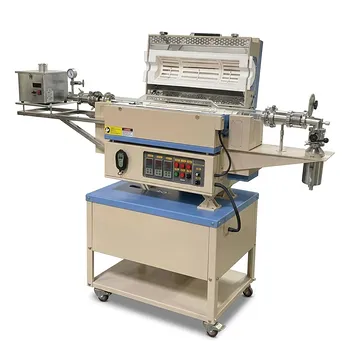
5 Inch Rotary Tube Furnace with Automatic Feeding and Receiving System 1200C Three Zone CVD Powder Processing