Why is high-temperature annealing in a tube furnace necessary for magnetic particles? Key to In Situ Crystallization
Updated 3 months ago
High-temperature annealing in a tube furnace is the critical catalyst that transforms precursor iron ions into functional magnetite nanoparticles directly on the fibers of nonwoven fabrics. This specific thermal treatment, typically conducted at 400°C within a reducing atmosphere (such as hydrogen and argon), ensures the iron ions undergo a chemical transformation and grow in situ into well-crystallized nanoparticles that provide essential magnetic properties.
Core Takeaway: Annealing serves as a controlled chemical reactor that facilitates the precise crystallization of magnetic particles while managing the fabric's electromagnetic profile through impedance matching. Without this specific environment, the material would lack the crystalline structure necessary for magnetic loss and functional performance.
The Mechanism of In Situ Crystallization
Transformation of Iron Ions
The process begins with iron ions adsorbed onto the fiber surfaces of the nonwoven fabric. The high-temperature environment of the tube furnace provides the thermal energy required to trigger a chemical transformation of these ions.
Regulated Grain Growth
As the temperature reaches levels like 400°C, these ions do not just change chemically; they begin to aggregate and grow into well-crystallized nanoparticles. This in situ growth ensures that the magnetic particles are deeply integrated with the fabric substrate rather than just sitting on the surface.
Developing Magnetic Loss Characteristics
The primary goal of this crystallization is to impart magnetic loss characteristics to the fabric. These characteristics are essential for the material's ability to interact with and dissipate electromagnetic energy.
The Role of the Controlled Atmosphere
Preventing Unwanted Oxidation
A tube furnace is uniquely suited for this task because it can maintain a reducing atmosphere, often using a mixture of hydrogen and argon. This environment prevents the iron from oxidizing into non-magnetic or less effective forms, safeguarding the structural integrity of the nanoparticles.
Ensuring Consistency and Purity
The precisely controlled temperature field within a tube furnace ensures that the entire batch of nonwoven fabric experiences uniform heat. This consistency is vital for maintaining stable physical and chemical parameters across the large surface area of the fabric.
Atmospheric Tuning for Phase Stability
By adjusting the vacuum or gas flow, researchers can prevent contamination. This ensures that the final product maintains a stable phase structure, which is critical for the long-term reliability of the magnetic fabric.
Electromagnetic Impedance Matching
Achieving Functional Performance
One of the deepest needs for high-temperature annealing is to adjust the electromagnetic impedance matching of the material. This determines how effectively the fabric can absorb or reflect electromagnetic waves.
Tuning Particle Size and Density
The duration and temperature of the annealing process directly influence the size and distribution of the magnetite particles. Precise control allows engineers to "tune" the fabric to specific frequencies or shielding requirements.
Enhancing Structural Cohesion
The thermal treatment helps bond the nanoparticles to the nonwoven fibers. This prevents the magnetic particles from shedding or degrading during subsequent mechanical use, ensuring the fabric remains functional over its lifespan.
Understanding the Trade-offs and Risks
Thermal Degradation of the Substrate
The most significant challenge is the thermal tolerance of the nonwoven fabric. If the annealing temperature is too high, the polymer fibers of the fabric may melt, become brittle, or lose their mechanical strength.
Balancing Crystallinity and Particle Size
While higher temperatures generally lead to better crystallization, they can also cause excessive grain growth. If the particles become too large, the soft magnetic properties may degrade, leading to increased coercivity and reduced efficiency.
Energy and Complexity Costs
High-temperature vacuum or atmosphere annealing is an energy-intensive process that requires specialized equipment. The complexity of maintaining a hydrogen-argon mix at 400°C increases production costs compared to simpler coating methods.
How to Apply This to Your Project
Making the Right Choice for Your Goal
To achieve the best results when modifying nonwoven fabrics with magnetic particles, your approach should be dictated by your final performance requirements.
- If your primary focus is Maximum Magnetic Absorption: Prioritize a precise 400°C soak in a strong reducing atmosphere to ensure the highest possible crystallinity of magnetite.
- If your primary focus is Maintaining Fabric Flexibility: Optimize for the shortest possible annealing time (soaking time) to trigger crystallization without over-heating the polymer fibers.
- If your primary focus is Electromagnetic Shielding (EMI): Focus on the cooling rate post-annealing to control the internal stresses and phase stability of the nanoparticles.
The success of magnetic fabric modification depends entirely on using the tube furnace as a precision tool to balance chemical transformation against the physical limitations of the fabric substrate.
Summary Table:
| Feature | Mechanism | Key Benefit |
|---|---|---|
| In Situ Crystallization | Transforms iron ions at 400°C | Creates functional magnetite nanoparticles |
| Reducing Atmosphere | H2/Ar gas flow | Prevents oxidation and ensures chemical purity |
| Impedance Matching | Particle size/density tuning | Optimizes electromagnetic wave absorption |
| Uniform Thermal Field | Precise temperature control | Ensures consistent magnetic properties across fabric |
| Structural Cohesion | Thermal bonding | Prevents particle shedding during mechanical use |
Elevate Your Material Research with THERMUNITS Precision
Are you looking to master the precision of in situ crystallization for your next breakthrough in magnetic materials? THERMUNITS is a leading manufacturer of high-temperature laboratory equipment designed specifically for material science and industrial R&D.
We provide a comprehensive range of thermal processing solutions to meet the most demanding requirements, including:
- Advanced Furnaces: Muffle, Vacuum, Atmosphere, Tube, Rotary, and Hot Press models.
- Specialized Systems: CVD/PECVD systems, Vacuum Induction Melting (VIM) furnaces, and Electric Rotary Kilns.
- Laboratory Essentials: Dental Furnaces, Thermal Elements, and custom heat treatment equipment.
Our equipment ensures the precise atmosphere control and temperature uniformity necessary for modifying nonwoven fabrics and other sensitive substrates. Ready to optimize your thermal processes? Contact our experts today to find the perfect solution for your laboratory or production line.
References
- Xinwei Tang, Tianxi Liu. Hierarchical Polyimide Nonwoven Fabric with Ultralow-Reflectivity Electromagnetic Interference Shielding and High-Temperature Resistant Infrared Stealth Performance. DOI: 10.1007/s40820-024-01590-3
Mentioned Products
- Vertical 1700C Vacuum and Atmosphere Tube Furnace with 80mm Alumina Tube
- Compact High Temperature 1600C Tube Furnace with 50mm Alumina Tube and Vacuum Flanges for Material Sintering
- 900°C Max Rotary Tube Furnace with 8 Inch 310S Alloy Tube and Optional Multi Zone Heating for Industrial Material Calcination
- Split Vertical Tube Furnace with 1200C Quartz Tube and Stainless Steel Vacuum Flanges for Rapid Thermal Processing
- High Temperature 1700C Tube Furnace with High Vacuum Turbomolecular Pump System and Multi Channel Mass Flow Controller Gas Mixer
People Also Ask
- How is an industrial-grade vertical tube furnace utilized in smelting leaching residues? Enhance Metal Recovery Efficiency
- What is the function of a laboratory-grade vertical tube furnace in fast pyrolysis? Optimize Composite Research.
- How does a vertical tube furnace facilitate thermoelectric alloy melting? Precision synthesis for material homogeneity.
- Why is a thermocouple sensor indispensable for monitoring the vertical tube furnace during gallium oxide nanowire production? Optimize VLS Growth
- What are the advantages of a Vertical Tube Furnace for iron coke testing? | Achieve High-Precision CRI Analysis

Tech Team · ThermUnits
Last updated on Jun 03, 2026
Related Products

Vertical 1700C Vacuum and Atmosphere Tube Furnace with 80mm Alumina Tube

Compact High Temperature 1600C Tube Furnace with 50mm Alumina Tube and Vacuum Flanges for Material Sintering
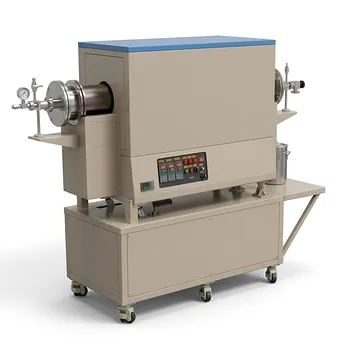
900°C Max Rotary Tube Furnace with 8 Inch 310S Alloy Tube and Optional Multi Zone Heating for Industrial Material Calcination
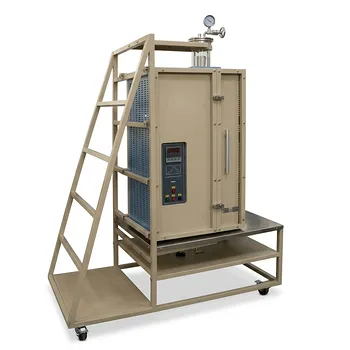
Split Vertical Tube Furnace with 1200C Quartz Tube and Stainless Steel Vacuum Flanges for Rapid Thermal Processing

High Temperature 1700C Tube Furnace with High Vacuum Turbomolecular Pump System and Multi Channel Mass Flow Controller Gas Mixer

1100C Tube Furnace with Vacuum Flange and Programmable Temperature Controller for Material Science and Industrial Heat Treatment

5 Inch Three Zone Rotary Tube Furnace with Integrated Gas Delivery System and 1200C Capability for Advanced Material CVD Processing

1200°C 5 Inch Vertical Quartz Tube Furnace with Stainless Steel Vacuum Flanges

1700C Hydrogen Gas Tube Furnace with 60mm Alumina Process Tube and Integrated Hydrogen Safety Detector

High Temperature 1700C Six Zone Split Tube Furnace with Alumina Tube and Water Cooled Flanges

Compact Vertical Split Quartz Tube Furnace with Stainless Steel Vacuum Flanges for Rapid Thermal Quenching and Controlled Atmosphere Material Processing

High Temperature 1700C Benchtop Tube Furnace with 5 Inch Heating Zone High Purity Alumina Tube and Vacuum Sealing Flanges

1200C High Throughput Multi Channel Tube Furnace with 50mm Quartz Tubes for Annealing and Material Phase Diagram Research

1800C High Temperature Compact Vacuum Tube Furnace with 60mm OD Alumina Tube and Kanthal MoSi2 Heating Elements

Three Zone Tube Furnace with 11 Inch or 15 Inch Quartz Tube and Hinged Flanges for Vacuum Atmosphere Heat Treatment

High Temperature 1700C Vertical Tube Furnace for Powder Spherification and Material Sintering
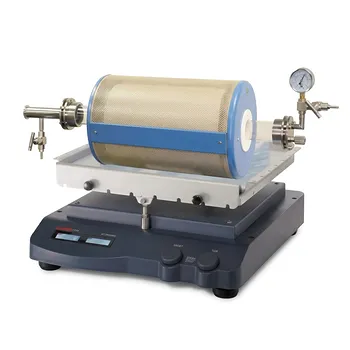
High Temperature Rocking Tube Furnace with Quartz Tube and Vacuum Flange for Materials Synthesis

High Temperature Automated 5 Inch Tube Furnace for Autonomous Material Research and Advanced Laboratory R&D
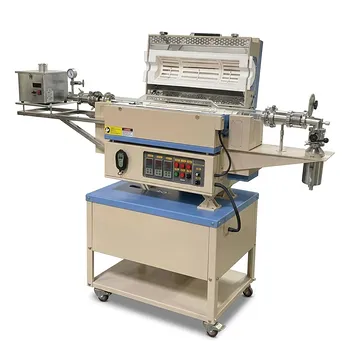
5 Inch Rotary Tube Furnace with Automatic Feeding and Receiving System 1200C Three Zone CVD Powder Processing