Why is high-temperature inert atmosphere protection in a tube furnace critical for CNFs? Ensure Structural Integrity
Updated 3 months ago
Inert atmosphere protection is the fundamental requirement for carbonization, as it prevents the immediate oxidative combustion of carbon nanofibers at high temperatures. In a tube furnace, a high-purity argon or nitrogen environment ensures that the polymer precursor transforms into a stable carbon skeleton rather than burning away, while simultaneously allowing sacrificial components like PMMA to decompose and create essential multi-channel hollow structures.
Core Takeaway: High-temperature inert protection is critical because it isolates the material from oxygen, enabling controlled thermal decomposition that preserves the fiber’s structural integrity while carving out the internal channels necessary for high-performance applications like selenium storage.
The Prevention of Oxidative Combustion
Maintaining Structural Integrity
At temperatures reaching 800°C to 900°C, carbon and its organic precursors react violently with oxygen. Without a strictly controlled inert atmosphere, the nanofibers would undergo oxidative combustion, turning into ash and carbon dioxide before the desired structure can form.
Protecting the Carbon Skeleton
The tube furnace uses a continuous flow of high-purity gas to displace oxygen completely. This allows the polymer skeleton to undergo carbonization—a process of removing non-carbon elements—while keeping the resulting graphitized carbon and any embedded metal nanoparticles intact.
Facilitating Structural Evolution and Porosity
Thermal Decomposition of Sacrificial Polymers
The creation of multi-channel nanofibers relies on the decomposition of pore-forming agents like PMMA. In an inert environment, these components escape as gases without reacting with the surrounding carbon, leaving behind a lotus-root-like hollow structure.
Creating Space for Active Materials
These internal channels are essential for increasing storage space for materials like selenium or providing a high specific surface area. The inert atmosphere ensures these channels remain open and the internal pore walls do not collapse or oxidize during the transition.
Promoting Graphitization and Conductivity
The stable thermal environment of the tube furnace facilitates the rearrangement of carbon atoms. This leads to a higher degree of graphitization, which is critical for achieving the high electrical conductivity required for battery electrodes or electromagnetic wave absorption.
Precise Chemical Control and Doping
Retention of Heteroatoms
Using specific inert gases like nitrogen can help maintain or introduce heteroatom content (such as nitrogen or sulfur) within the carbon matrix. These dopants are vital for creating active sites that improve the chemical reactivity and electrochemical performance of the nanofibers.
Uniform Distribution of Metallic Species
An oxygen-free environment prevents the oxidation of metal precursors, ensuring they reduce into metal nanoparticles or heterojunctions. The tube furnace's uniform thermal field ensures these active sites are distributed evenly throughout the multi-channel substrate.
Understanding the Trade-offs
The Risk of Gas Impurity
Even trace amounts of oxygen in the gas supply can lead to surface etching or partial loss of the fiber’s mass. Using low-purity argon can result in "pitted" nanofibers that lack the mechanical strength or the precise multi-channel geometry required.
Heating Rate and Gas Flow Dynamics
If the heating rate is too fast or the gas flow is insufficient to carry away decomposition products, internal pressure can rupture the channels. Conversely, excessively high flow rates may cause temperature fluctuations, leading to non-uniform carbonization across the sample.
How to Apply This to Your Project
Optimizing Your Carbonization Protocol
To achieve a high-quality multi-channel structure, your furnace settings must align with your specific material goals.
- If your primary focus is Selenium storage: Use high-purity argon at 800°C with a slow heating rate to ensure the PMMA decomposes cleanly into a lotus-root-like structure.
- If your primary focus is Electrical Conductivity: Prioritize higher temperatures (above 900°C) and longer soaking times to maximize the graphitization of the carbon skeleton.
- If your primary focus is Heteroatom Doping: Utilize a nitrogen atmosphere during the 1000°C to 1500°C phase to help maintain nitrogen content within the carbon matrix.
By strictly controlling the inert environment, you transform a simple polymer precursor into a complex, high-performance multi-channel nanomaterial.
Summary Table:
| Key Feature | Role in CNF Preparation | Benefit to Material Performance |
|---|---|---|
| Oxygen Exclusion | Prevents oxidative combustion at 800-900°C | Preserves the carbon skeleton & structural integrity |
| Decomposition Control | Allows sacrificial agents (PMMA) to escape | Creates the "lotus-root" multi-channel structure |
| Thermal Stability | Facilitates carbon atom rearrangement | Maximizes graphitization and electrical conductivity |
| Atmosphere Doping | Controls heteroatom (N, S) retention | Increases active sites for electrochemical reactivity |
| Gas Flow Dynamics | Removes decomposition byproducts | Prevents channel rupture and ensures uniform carbonization |
Elevate Your Material Research with THERMUNITS Precision
Achieving the perfect multi-channel carbon nanofiber structure requires absolute control over your thermal environment. At THERMUNITS, we specialize in providing high-performance laboratory equipment designed for the rigorous demands of material science and industrial R&D.
Whether you are focusing on selenium storage, battery electrodes, or advanced catalysts, our comprehensive range of equipment ensures your success:
- Tube & Atmosphere Furnaces: Perfect for precise inert gas control and carbonization.
- CVD/PECVD Systems: For advanced chemical vapor deposition needs.
- Specialized Solutions: Including Vacuum, Muffle, Rotary, and High-Vacuum Induction Melting (VIM) furnaces.
Ready to optimize your heat treatment protocol? Our technical experts are here to help you select the ideal system for your specific research goals.
Contact THERMUNITS Today to Get a Quote
References
- Yang Zheng, Yong Wang. Molybdenum single-atoms decorated multi-channel carbon nanofibers for advanced lithium-selenium batteries. DOI: 10.3389/fchem.2024.1416059
Mentioned Products
- Vertical 1700C Vacuum and Atmosphere Tube Furnace with 80mm Alumina Tube
- Compact High Temperature 1600C Tube Furnace with 50mm Alumina Tube and Vacuum Flanges for Material Sintering
- 900°C Max Rotary Tube Furnace with 8 Inch 310S Alloy Tube and Optional Multi Zone Heating for Industrial Material Calcination
- Split Vertical Tube Furnace with 1200C Quartz Tube and Stainless Steel Vacuum Flanges for Rapid Thermal Processing
- High Temperature 1700C Tube Furnace with High Vacuum Turbomolecular Pump System and Multi Channel Mass Flow Controller Gas Mixer
People Also Ask
- How is an industrial-grade vertical tube furnace utilized in smelting leaching residues? Enhance Metal Recovery Efficiency
- What is the function of a laboratory-grade vertical tube furnace in fast pyrolysis? Optimize Composite Research.
- How does a vertical tube furnace facilitate thermoelectric alloy melting? Precision synthesis for material homogeneity.
- Why is a thermocouple sensor indispensable for monitoring the vertical tube furnace during gallium oxide nanowire production? Optimize VLS Growth
- What are the advantages of using a vertical tube furnace for crucible experiments simulating steel-slag interactions?

Tech Team · ThermUnits
Last updated on Jun 03, 2026
Related Products

Vertical 1700C Vacuum and Atmosphere Tube Furnace with 80mm Alumina Tube

Compact High Temperature 1600C Tube Furnace with 50mm Alumina Tube and Vacuum Flanges for Material Sintering
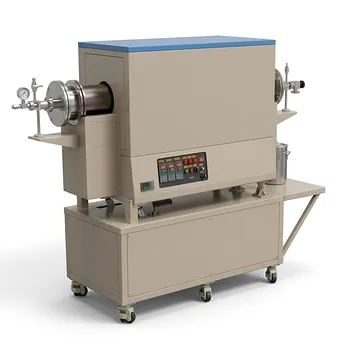
900°C Max Rotary Tube Furnace with 8 Inch 310S Alloy Tube and Optional Multi Zone Heating for Industrial Material Calcination
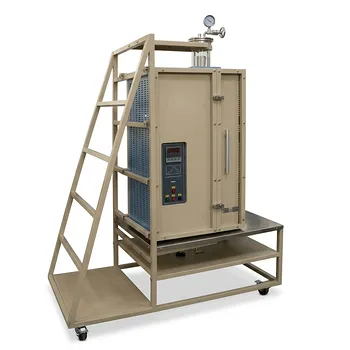
Split Vertical Tube Furnace with 1200C Quartz Tube and Stainless Steel Vacuum Flanges for Rapid Thermal Processing

High Temperature 1700C Tube Furnace with High Vacuum Turbomolecular Pump System and Multi Channel Mass Flow Controller Gas Mixer

1100C Tube Furnace with Vacuum Flange and Programmable Temperature Controller for Material Science and Industrial Heat Treatment
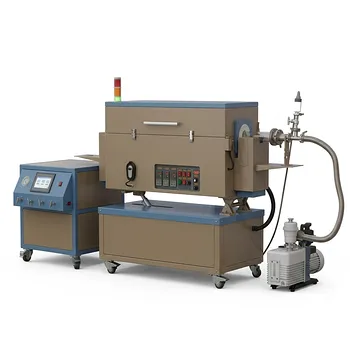
5 Inch Three Zone Rotary Tube Furnace with Integrated Gas Delivery System and 1200C Capability for Advanced Material CVD Processing

1700C Hydrogen Gas Tube Furnace with 60mm Alumina Process Tube and Integrated Hydrogen Safety Detector

1200°C 5 Inch Vertical Quartz Tube Furnace with Stainless Steel Vacuum Flanges

High Temperature 1700C Six Zone Split Tube Furnace with Alumina Tube and Water Cooled Flanges

Compact Vertical Split Quartz Tube Furnace with Stainless Steel Vacuum Flanges for Rapid Thermal Quenching and Controlled Atmosphere Material Processing

High Temperature 1700C Benchtop Tube Furnace with 5 Inch Heating Zone High Purity Alumina Tube and Vacuum Sealing Flanges

1200C High Throughput Multi Channel Tube Furnace with 50mm Quartz Tubes for Annealing and Material Phase Diagram Research

Three Zone Tube Furnace with 11 Inch or 15 Inch Quartz Tube and Hinged Flanges for Vacuum Atmosphere Heat Treatment

1800C High Temperature Compact Vacuum Tube Furnace with 60mm OD Alumina Tube and Kanthal MoSi2 Heating Elements

High Temperature 1700C Vertical Tube Furnace for Powder Spherification and Material Sintering
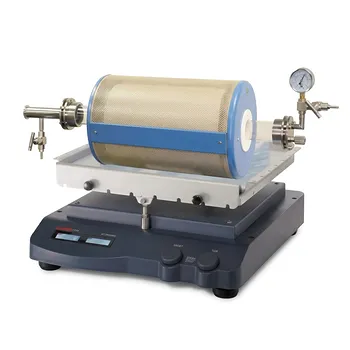
High Temperature Rocking Tube Furnace with Quartz Tube and Vacuum Flange for Materials Synthesis

High Temperature Automated 5 Inch Tube Furnace for Autonomous Material Research and Advanced Laboratory R&D
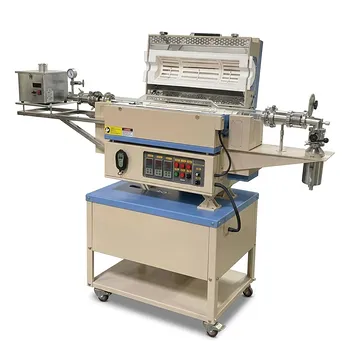
5 Inch Rotary Tube Furnace with Automatic Feeding and Receiving System 1200C Three Zone CVD Powder Processing