Why is high temp stability critical for sodium aging experiments on W18Cr4V steel? Achieve Precision Research.
Updated 3 months ago
Temperature stability is the cornerstone of experimental validity. For nitrided W18Cr4V steel in sodium aging tests, high stability—typically within ±3°C—is required to ensure the repeatability of nitrogen diffusion rates. This precision allows researchers to accurately simulate the 540°C environment of a sodium-cooled fast reactor and determine how the material will truly behave over time.
Core Takeaway: High-precision thermal control isolates the internal microstructural changes of the steel from external experimental variables. By maintaining a steady thermal field, researchers ensure that aging data reflects genuine material degradation rather than fluctuations in the testing environment.
The Impact of Thermal Consistency on Diffusion
Maintaining Kinetic Consistency
Nitrogen diffusion within sodium and argon environments is highly sensitive to temperature changes. Even minor fluctuations can cause erratic diffusion rates, leading to inconsistent results that fail to represent the material's true properties.
Ensuring Repeatability
A stable thermal field ensures that the movement of nitrogen atoms remains predictable across different test batches. This repeatability is essential for building a reliable database on how nitrided W18Cr4V steel ages in high-temperature environments.
Simulating Extreme Reactor Environments
Replicating 540°C Operating Windows
Sodium-cooled fast reactors operate at sustained temperatures, often around 540°C. A tube furnace must mimic this environment perfectly to provide data that is applicable to real-world nuclear safety and engineering.
Long-Term Stability for Accurate Assessments
Aging experiments often last for hundreds or even thousands of hours. High-precision furnaces prevent "thermal drift" over these long durations, ensuring the aging behavior observed is a result of time, not temperature spikes.
Isolating Internal Microstructural Evolution
Preventing Surface-Level Interference
Precise control over the heating environment helps prevent unwanted chemical reactions, such as surface oxidation or decarburization. This is critical because it ensures that changes in the steel's strength or hardness are caused by internal factors like grain coarsening rather than surface degradation.
Focusing on Internal Mechanisms
By eliminating external noise, researchers can focus on the microstructural evolution of the W18Cr4V steel. This includes observing dislocation movements and phase transformations that dictate the long-term reliability of the alloy in a reactor core.
Understanding the Trade-offs
Precision vs. Complexity
Achieving a ±3°C stability range requires sophisticated PID controllers and high-quality heating elements. While this increases the complexity and cost of the experimental setup, using lower-grade equipment introduces "noise" that can render the entire aging study invalid.
Atmospheric Interaction
Maintaining temperature is only half the battle; the atmosphere (Argon or Vacuum) must also be strictly controlled. A stable temperature in a poorly sealed furnace can still lead to impurity penetration, which mimics aging but is actually just contamination.
How to Apply This to Your Research
To ensure the integrity of your sodium aging experiments on nitrided steels, focus on the following technical priorities:
- If your primary focus is Regulatory Compliance: Prioritize furnaces with certified ±3°C stability and data logging to prove the thermal history of the sample meets nuclear simulation standards.
- If your primary focus is Microstructural Analysis: Invest in high-vacuum or high-purity inert gas systems to ensure that surface oxidation does not mask the internal evolution of the W18Cr4V grain structure.
- If your primary focus is Long-Term Durability: Select heating elements rated for continuous operation (1,000+ hours) to avoid mid-experiment failures that would reset your aging timeline.
Precise thermal control transforms a simple heating process into a rigorous scientific simulation of a nuclear environment.
Summary Table:
| Key Factor | Impact on Aging Experiments | Critical Technical Requirement |
|---|---|---|
| Thermal Stability | Ensures consistent nitrogen diffusion rates | ±3°C PID Temperature Control |
| Atmosphere Control | Prevents surface oxidation/decarburization | High-Purity Argon or Vacuum Sealing |
| Cycle Durability | Supports 1,000+ hour reactor simulations | Industrial-Grade Heating Elements |
| Microstructure Focus | Isolates internal grain coarsening effects | Uniform Heating Zone Design |
Elevate Your Nuclear Material Research with THERMUNITS Precision
In high-stakes material science and industrial R&D, experimental validity depends on thermal consistency. THERMUNITS is a leading manufacturer specializing in high-temperature laboratory equipment designed to meet the rigorous standards of nuclear simulations and metallurgical analysis.
Our advanced Tube, Vacuum, and Atmosphere Furnaces provide the ultra-stable environment required for precise sodium aging experiments on W18Cr4V steel. By choosing THERMUNITS, you benefit from:
- Unmatched Precision: Advanced PID controllers to maintain the strict ±3°C windows required for kinetic consistency.
- Comprehensive Solutions: From Muffle and Rotary furnaces to CVD/PECVD systems and Vacuum Induction Melting (VIM), we cover every thermal processing need.
- Reliability for Long-Term Studies: Equipment engineered for continuous operation, ensuring your 1,000-hour aging cycles remain uninterrupted.
Ready to secure the accuracy of your heat treatment data?
Contact THERMUNITS Today to consult with our experts and find the ideal thermal solution for your laboratory.
References
- Xiaogang Fu, Shasha Lv. A Study on the Aging Behavior of Nitrided W18Cr4V Steel in High-Temperature Sodium. DOI: 10.3390/met14030357
Mentioned Products
- Vertical 1700C Vacuum and Atmosphere Tube Furnace with 80mm Alumina Tube
- Compact High Temperature 1600C Tube Furnace with 50mm Alumina Tube and Vacuum Flanges for Material Sintering
- 900°C Max Rotary Tube Furnace with 8 Inch 310S Alloy Tube and Optional Multi Zone Heating for Industrial Material Calcination
- Split Vertical Tube Furnace with 1200C Quartz Tube and Stainless Steel Vacuum Flanges for Rapid Thermal Processing
- High Temperature 1700C Tube Furnace with High Vacuum Turbomolecular Pump System and Multi Channel Mass Flow Controller Gas Mixer
People Also Ask
- How is an industrial-grade vertical tube furnace utilized in smelting leaching residues? Enhance Metal Recovery Efficiency
- What is the function of a laboratory-grade vertical tube furnace in fast pyrolysis? Optimize Composite Research.
- How does a vertical tube furnace facilitate thermoelectric alloy melting? Precision synthesis for material homogeneity.
- Why is a thermocouple sensor indispensable for monitoring the vertical tube furnace during gallium oxide nanowire production? Optimize VLS Growth
- What are the advantages of using a vertical tube furnace for crucible experiments simulating steel-slag interactions?

Tech Team · ThermUnits
Last updated on Jun 02, 2026
Related Products

Vertical 1700C Vacuum and Atmosphere Tube Furnace with 80mm Alumina Tube

Compact High Temperature 1600C Tube Furnace with 50mm Alumina Tube and Vacuum Flanges for Material Sintering
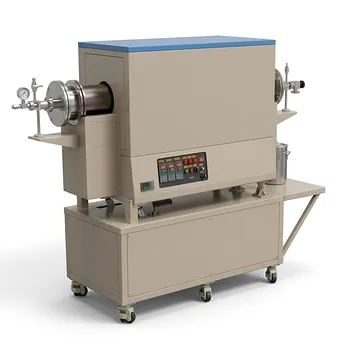
900°C Max Rotary Tube Furnace with 8 Inch 310S Alloy Tube and Optional Multi Zone Heating for Industrial Material Calcination
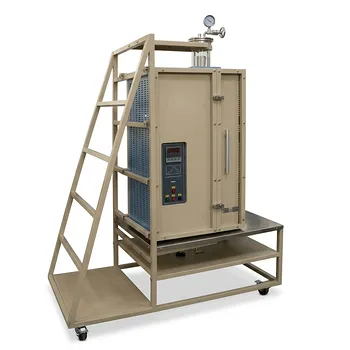
Split Vertical Tube Furnace with 1200C Quartz Tube and Stainless Steel Vacuum Flanges for Rapid Thermal Processing

High Temperature 1700C Tube Furnace with High Vacuum Turbomolecular Pump System and Multi Channel Mass Flow Controller Gas Mixer

1100C Tube Furnace with Vacuum Flange and Programmable Temperature Controller for Material Science and Industrial Heat Treatment
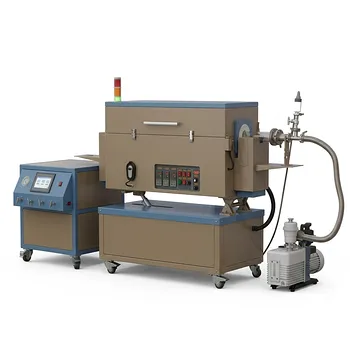
5 Inch Three Zone Rotary Tube Furnace with Integrated Gas Delivery System and 1200C Capability for Advanced Material CVD Processing
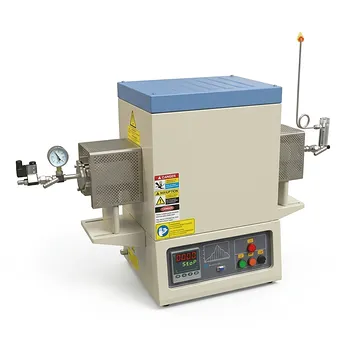
1700C Hydrogen Gas Tube Furnace with 60mm Alumina Process Tube and Integrated Hydrogen Safety Detector
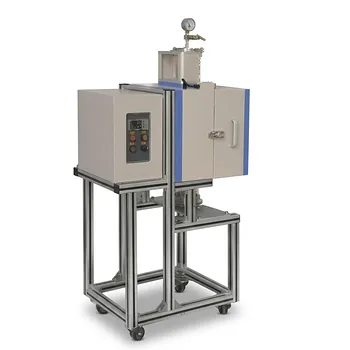
1200°C 5 Inch Vertical Quartz Tube Furnace with Stainless Steel Vacuum Flanges
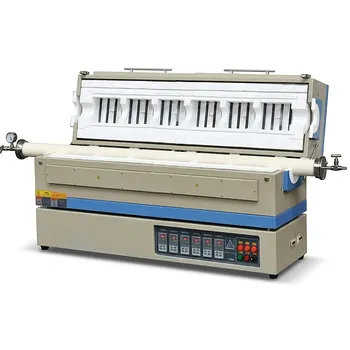
High Temperature 1700C Six Zone Split Tube Furnace with Alumina Tube and Water Cooled Flanges

Compact Vertical Split Quartz Tube Furnace with Stainless Steel Vacuum Flanges for Rapid Thermal Quenching and Controlled Atmosphere Material Processing

High Temperature 1700C Benchtop Tube Furnace with 5 Inch Heating Zone High Purity Alumina Tube and Vacuum Sealing Flanges
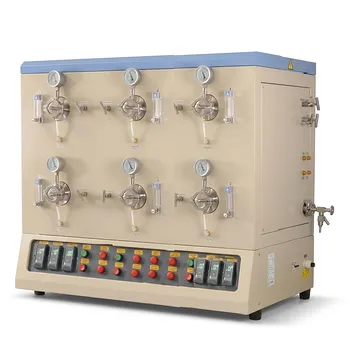
1200C High Throughput Multi Channel Tube Furnace with 50mm Quartz Tubes for Annealing and Material Phase Diagram Research
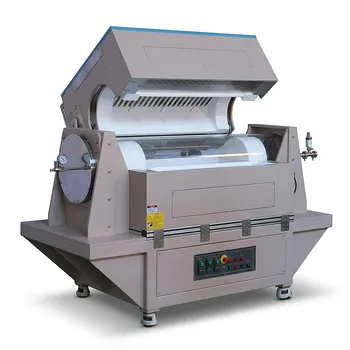
Three Zone Tube Furnace with 11 Inch or 15 Inch Quartz Tube and Hinged Flanges for Vacuum Atmosphere Heat Treatment

1800C High Temperature Compact Vacuum Tube Furnace with 60mm OD Alumina Tube and Kanthal MoSi2 Heating Elements

High Temperature 1700C Vertical Tube Furnace for Powder Spherification and Material Sintering
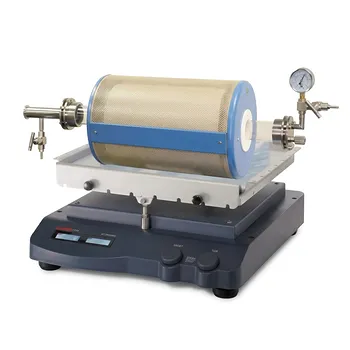
High Temperature Rocking Tube Furnace with Quartz Tube and Vacuum Flange for Materials Synthesis

High Temperature Automated 5 Inch Tube Furnace for Autonomous Material Research and Advanced Laboratory R&D
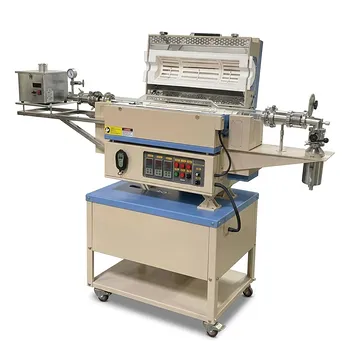
5 Inch Rotary Tube Furnace with Automatic Feeding and Receiving System 1200C Three Zone CVD Powder Processing