Why is high-vacuum sealing of the quartz tube mandatory for the CVT growth of FexTaSe2? Key to Crystal Purity
Updated 3 months ago
High-vacuum sealing is the non-negotiable foundation for $Fe_xTaSe_2$ crystal growth. This process is mandatory to eliminate atmospheric oxygen and moisture that would otherwise oxidize the reactive transition metal precursors at high temperatures. Furthermore, it creates the low-pressure environment required for the iodine transport agent to sublimate and facilitate the gas-phase diffusion necessary for crystal formation.
High-vacuum encapsulation ensures a chemically pure, closed-system environment that prevents oxidation and maintains the precise stoichiometry required for high-quality $Fe_xTaSe_2$ single crystals. By removing residual gases, the process enables an efficient iodine transport cycle and preserves the material's intrinsic electronic properties.
Preventing Chemical Degradation and Contamination
Eliminating Atmospheric Reactants
At the high temperatures required for CVT (often nearing 900°C), iron (Fe) and tantalum (Ta) powders become highly reactive. High-vacuum sealing, typically achieving levels better than $10^{-3}$ Pa, removes oxygen and water vapor that would cause immediate oxidation of these metals.
Protecting the Crystal Lattice
Without a rigorous vacuum, oxygen atoms can integrate into the lattice as impurities or form separate oxide phases. This contamination disrupts the intrinsic transport properties of the material, such as carrier mobility, which are highly sensitive to defects.
Ensuring Chemical Inertness
The use of high-purity quartz tubes provides a stable reaction vessel that can withstand high heat. The vacuum environment ensures that the reagents only react with each other and the transport agent, rather than the external environment.
Facilitating the Iodine Transport Mechanism
Enabling Sublimation and Diffusion
The iodine transport agent must transition into a gas phase to carry the solid precursors from the source zone to the growth zone. A vacuum provides the necessary free space for the sublimation and gas-phase diffusion of these molecules.
Establishing Vapor Pressure Equilibrium
A sealed vacuum environment allows the system to reach a specific vapor pressure equilibrium. This stable internal pressure is vital for achieving precise chemical stoichiometry and producing high-phase-purity powders.
Maintaining a Pure Gas-Phase Cycle
The growth of high-quality single crystals relies on a pure gas-phase cycle. Any residual air would interfere with the kinetic movement of the iodine-metal complexes, leading to stunted crystal growth or poor crystallinity.
Preserving Stoichiometric Integrity
Controlling the Enclosed Space
$Fe_xTaSe_2$ requires a very specific ratio of iron intercalated into the tantalum diselenide structure. The hermetically sealed quartz tube prevents the loss of volatile components like selenium, ensuring the final crystal matches the intended chemical formula.
Stability Over Long Durations
CVT processes often run for hundreds of hours to produce large single crystals. A high-vacuum seal maintains environmental stability throughout these extended periods, preventing gradual contamination from the outside air.
Common Pitfalls and Technical Trade-offs
Insufficient Vacuum Levels
Using a "soft" vacuum (insufficiently low pressure) is a common mistake that leads to surface oxidation of the precursors. This often results in the growth of polycrystalline clusters rather than the desired large-scale single crystals.
Reagent-to-Volume Ratios
While a vacuum is necessary, the internal pressure increases significantly as reagents sublimate at high temperatures. If the amount of material or transport agent is too high for the tube volume, the internal pressure can exceed the mechanical strength of the quartz, leading to tube failure.
Thermal Gradient Management
A vacuum environment facilitates efficient gas transport, but the quality of the crystal still depends on the temperature gradient between the two ends of the tube. Precise control of the vacuum must be paired with accurate furnace calibration to avoid "back-transport" or parasitic nucleation.
How to Apply This to Your Project
Recommendations Based on Research Goals
- If your primary focus is phase purity: Ensure your vacuum system reaches at least $10^{-3}$ Pa before sealing to eliminate all traces of moisture.
- If your primary focus is electronic property measurement: Use ultra-high purity starting materials (99.999%+) and maximize the vacuum level to reduce point defects that limit carrier mobility.
- If your primary focus is maximizing crystal size: Optimize the amount of iodine transport agent relative to the vacuum volume to ensure steady-state diffusion throughout the growth cycle.
The mastery of high-vacuum encapsulation is the single most critical step in transitioning from failed polycrystalline attempts to the successful growth of high-performance $Fe_xTaSe_2$ single crystals.
Summary Table:
| Factor | Role in CVT Growth Process | Impact on Crystal Quality |
|---|---|---|
| Vacuum Level | Removes atmospheric oxygen and moisture | Prevents oxidation of reactive precursors |
| Encapsulation | Seals volatile components like Selenium | Maintains precise stoichiometric integrity |
| Gas Diffusion | Provides free space for sublimation | Facilitates efficient iodine transport cycle |
| Environment | Creates a chemically pure closed system | Minimizes lattice defects and impurities |
Elevate Your Material Research with THERMUNITS Precision
Achieving the perfect high-vacuum environment is just the first step in successful crystal growth. THERMUNITS is a leading manufacturer of advanced high-temperature laboratory equipment specifically designed for material science and industrial R&D.
We provide a comprehensive range of thermal processing solutions to support your $Fe_xTaSe_2$ and TMDC synthesis, including:
- High-Vacuum & Atmosphere Furnaces for rigorous contamination control.
- Tube and Rotary Furnaces for uniform precursor preparation.
- CVD/PECVD Systems and Vacuum Induction Melting (VIM) for advanced thin-film and alloy research.
- Muffle, Dental, and Hot Press Furnaces for diverse heat treatment needs.
Our equipment ensures the precise temperature gradients and environmental stability required for high-performance research. Contact us today to optimize your lab’s efficiency!
References
- Qianqian Feng, Guang‐hua Guo. Magnetic properties of Fe intercalation FexTaSe2. DOI: 10.3389/fphy.2024.1371171
Mentioned Products
- Split Chamber CVD Tube Furnace with Vacuum Station Chemical Vapor Deposition System Machine
- Multi Heating Zones CVD Tube Furnace System for Precision Chemical Vapor Deposition and Advanced Material Synthesis
- Compact Vertical Split Quartz Tube Furnace with Stainless Steel Vacuum Flanges for Rapid Thermal Quenching and Controlled Atmosphere Material Processing
- Three Zone Quartz Tube Furnace with 3 Channel Gas Mixer Vacuum Pump and Anti Corrosive Vacuum Gauge
- Three Zone Tube Furnace with 11 Inch or 15 Inch Quartz Tube and Hinged Flanges for Vacuum Atmosphere Heat Treatment
People Also Ask
- Why is a Tube Furnace typically utilized for CVD? Achieve Precision in Graphene and 2D Material Synthesis
- What is the function of CVD furnaces in graphene prep? Enhancing Photodetector Charge Transport
- Why use CVD and a tube furnace for Pd3P0.95/NC catalyst phosphidation? Ensure high phase purity and performance.
- CVD Tube Furnace Advantages for Pd-P Catalyst Durability: Precision Control for 40,000+ Cycles
- How does a Chemical Vapor Deposition (CVD) tube furnace facilitate synchronized nitridation? Precision Nano-Engineering.

Tech Team · ThermUnits
Last updated on Jun 02, 2026
Related Products
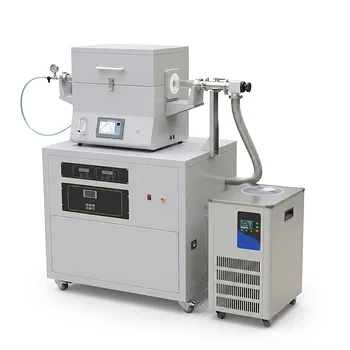
Split Chamber CVD Tube Furnace with Vacuum Station Chemical Vapor Deposition System Machine
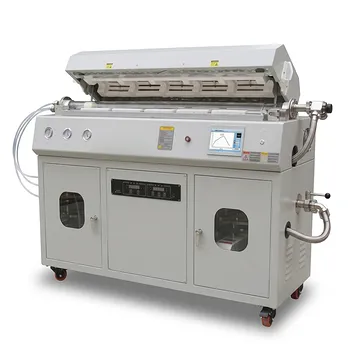
Multi Heating Zones CVD Tube Furnace System for Precision Chemical Vapor Deposition and Advanced Material Synthesis

Compact Vertical Split Quartz Tube Furnace with Stainless Steel Vacuum Flanges for Rapid Thermal Quenching and Controlled Atmosphere Material Processing
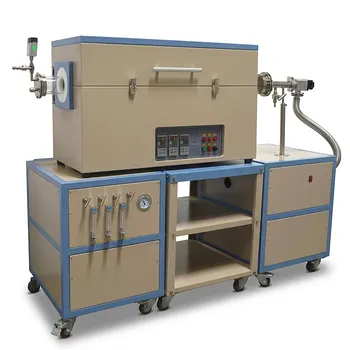
Three Zone Quartz Tube Furnace with 3 Channel Gas Mixer Vacuum Pump and Anti Corrosive Vacuum Gauge
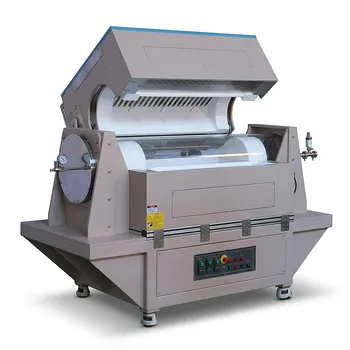
Three Zone Tube Furnace with 11 Inch or 15 Inch Quartz Tube and Hinged Flanges for Vacuum Atmosphere Heat Treatment
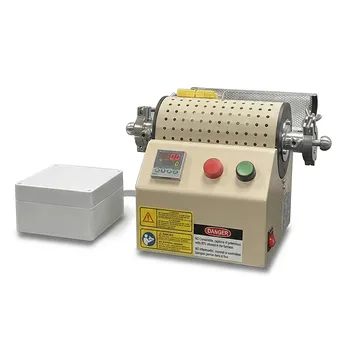
1000C Mini Tube Furnace with 20mm Quartz Tube and Vacuum Flanges for Material Science Research and Controlled Atmosphere Small Sample Processing

1200°C 5 Inch Vertical Quartz Tube Furnace with Stainless Steel Vacuum Flanges
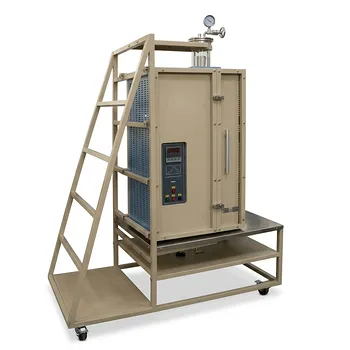
Split Vertical Tube Furnace with 1200C Quartz Tube and Stainless Steel Vacuum Flanges for Rapid Thermal Processing
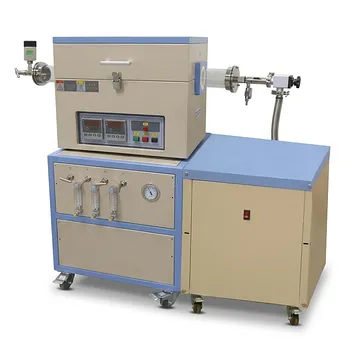
Dual Zone Quartz Tube Furnace with 80mm Diameter 1200C Max Temperature 3 Channel Gas Mixer and Vacuum Pump System
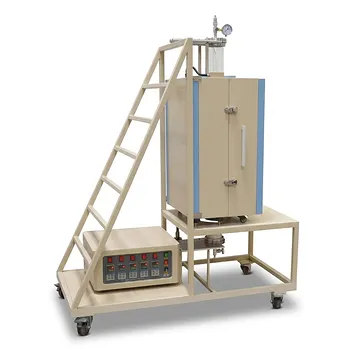
Five Zone Split Vertical Tube Furnace 1200C Max with 4 Inch Quartz Tube and Stainless Steel Vacuum Flanges
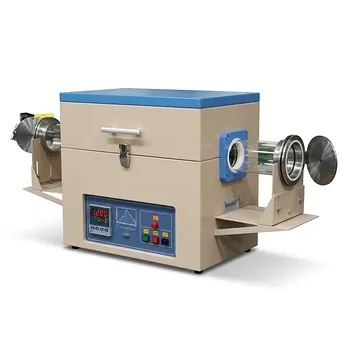
High Temperature 1200C Split Tube Furnace with Hinged Vacuum Flanges and 4 Inch Quartz Tube for Laboratory Research
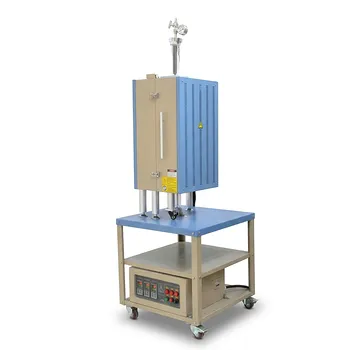
1200C Three Zone Vertical Tube Furnace with 2 Inch Quartz Tube and Vacuum Flanges
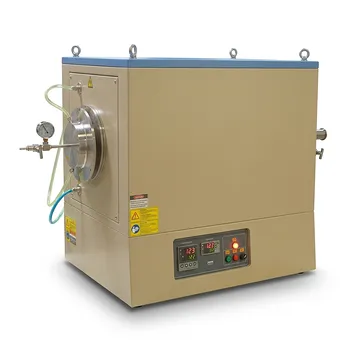
1100°C Large Diameter Quartz Tube Furnace with 24 Inch Heating Zone and Water Cooled Flanges
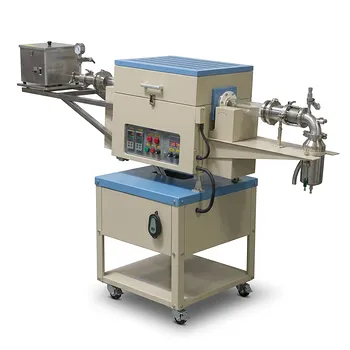
Two Zone Rotary CVD Furnace with Automatic Feeding and Receiving System for Powder Processing

High Temperature Automated 5 Inch Tube Furnace for Autonomous Material Research and Advanced Laboratory R&D

1100°C High Temperature Quartz Chamber Furnace 8 Inch OD with 7.6 Liter Capacity and Vacuum Atmosphere Capability
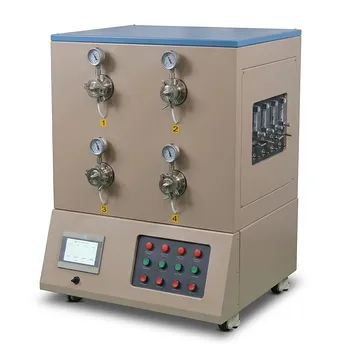
High Throughput 1200C Four Channel Tube Furnace with 3 Inch Quartz Tubes for Multi Zone Annealing and Material Research
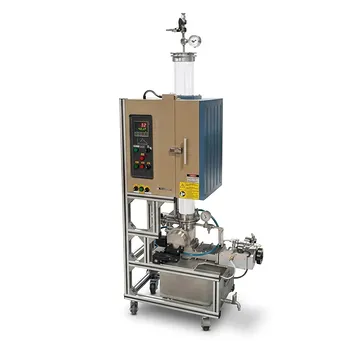
1200C High Temperature Atmosphere Controlled Vertical Quenching Tube Furnace with 4 Inch Quartz Tube