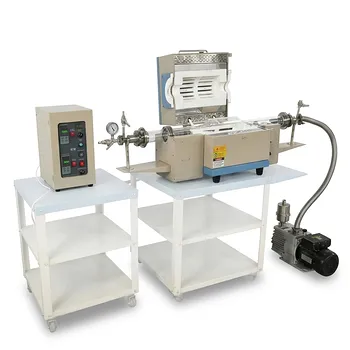
Why use Ar+H2 during Ag2Se annealing in a tube furnace? Prevent Oxidation & Optimize Thermoelectric Performance
Updated 3 months ago
The introduction of an Ar+H2 reducing atmosphere is essential to prevent the oxidation of Silver Selenide (Ag2Se) and maintain its precise chemical composition during high-temperature annealing. This specific environment ensures the material retains the semiconductor characteristics necessary for high electrical conductivity and an optimized Seebeck coefficient, which are the primary drivers of thermoelectric efficiency.
A reducing atmosphere acts as both a defensive shield and a corrective agent, preventing oxygen-induced degradation while preserving the silver-to-selenium ratio. This dual-action process is critical for maintaining the stoichiometric integrity required for efficient heat-to-electricity conversion.
Preserving the Chemical Integrity of Ag2Se
Preventing High-Temperature Oxidation
At the elevated temperatures required for annealing, Ag2Se is highly susceptible to reacting with ambient oxygen. Argon (Ar) acts as an inert carrier gas to displace air, while Hydrogen (H2) serves as a reducing agent that actively neutralizes trace oxygen. This prevents the formation of non-conductive oxide layers that would otherwise degrade the material's performance.
Maintaining Stoichiometric Balance
The efficiency of a thermoelectric device depends on its stoichiometry, or the exact ratio of silver to selenium atoms. A reducing environment prevents the chemical degradation of the compound, ensuring that the carrier concentration remains within the optimal range. Without this control, the material may lose its intended semiconductor properties and fail to produce a significant Seebeck effect.
Removing Surface Contaminants
Similar to its role in treating other advanced materials, hydrogen works with thermal energy to remove oxygen-containing functional groups and surface impurities. By "cleaning" the grain boundaries during the annealing process, the atmosphere ensures that the final Ag2Se structure is chemically pure. This purity is vital for minimizing the internal resistance of the thermoelectric device.
Optimizing Thermoelectric Performance
Enhancing Electrical Conductivity
By preventing the formation of insulating oxide barriers between the material's grains, the Ar+H2 mixture facilitates superior charge carrier mobility. This results in the high electrical conductivity required for a high power factor. High conductivity allows the device to transport electrical charge efficiently once a temperature gradient is applied.
Optimizing the Seebeck Coefficient
The Seebeck coefficient, which measures the magnitude of an induced thermoelectric voltage, is highly sensitive to the material's electronic structure. Maintaining the ideal stoichiometry through a reducing atmosphere ensures the density of states remains optimized. This prevents the material from becoming "too metallic" or "too insulating," either of which would collapse the Seebeck voltage.
Structural Stability and Phase Control
Precise atmosphere control facilitates the required phase transformation and prevents the emergence of secondary, unwanted phases. Just as reducing atmospheres are used to inhibit the oxidation of iron or copper in other applications, they ensure Ag2Se remains in its high-performance crystalline phase. This structural consistency is essential for long-term device stability.
Understanding the Trade-offs
The Risk of Over-Reduction
While a reducing environment is necessary, an excessive concentration of hydrogen can lead to over-reduction. If the environment is too aggressive, it may cause the silver to precipitate out of the compound or create selenium vacancies. This imbalance can flip the material's doping type or lead to structural brittleness.
Safety and Equipment Requirements
Using hydrogen at high temperatures introduces significant safety risks, including the potential for combustion or explosion if the system leaks. This necessitates the use of specialized tube furnaces with high-precision gas mixing and monitoring systems. Furthermore, hydrogen can sometimes cause embrittlement in certain metallic components of the furnace or the device electrodes.
How to Apply This to Your Project
Refining Your Annealing Strategy
- If your primary focus is Maximum Conductivity: Utilize a higher H2 concentration (typically up to 5%) to ensure all surface oxides are thoroughly reduced, facilitating seamless grain boundaries.
- If your primary focus is Stoichiometric Precision: Use a lower H2 concentration (1-2%) in a high-purity Argon carrier to provide a milder reducing environment that prevents silver precipitation.
- If your primary focus is Long-term Device Stability: Ensure the annealing temperature is precisely controlled in conjunction with the Ar+H2 flow to prevent the formation of volatile selenium species.
Maintaining a strictly controlled reducing environment is the foundational step in transforming raw Silver Selenide into a high-performance thermoelectric component.
Summary Table:
| Key Function | Role of Ar+H2 Reducing Atmosphere | Thermoelectric Benefit |
|---|---|---|
| Oxidation Control | Ar displaces air; H2 neutralizes trace oxygen. | Prevents non-conductive oxide layer formation. |
| Stoichiometry | Preserves the exact Silver-to-Selenium ratio. | Ensures optimal carrier concentration & Seebeck effect. |
| Grain Purity | Removes oxygen-containing functional groups. | Enhances electrical conductivity and charge mobility. |
| Phase Stability | Inhibits secondary phases and metal precipitation. | Guarantees long-term structural and device stability. |
Elevate Your Material Research with THERMUNITS
As a leading manufacturer of high-temperature laboratory equipment, THERMUNITS provides the precision thermal solutions required for advanced material science and industrial R&D. Our specialized Tube, Vacuum, and Atmosphere furnaces are engineered to handle sensitive reducing environments like Ar+H2, ensuring your Ag2Se devices achieve maximum thermoelectric efficiency.
From CVD/PECVD systems to Vacuum Induction Melting (VIM) and Hot Press furnaces, we offer a comprehensive range of equipment designed for stoichiometric precision and safety.
Ready to optimize your heat treatment process?
Contact our expert team today to find the perfect furnace for your laboratory needs!
References
- Yan Liu, Wan Jiang. Fully inkjet-printed Ag2Se flexible thermoelectric devices for sustainable power generation. DOI: 10.1038/s41467-024-46183-1
Mentioned Products
- 1200C High Throughput Multi Channel Tube Furnace with 50mm Quartz Tubes for Annealing and Material Phase Diagram Research
- High Temperature 1700C 4 Channel Tube Furnace 1 Inch Alumina Tube for Hi-Throughput Annealing
- High Throughput 1200C Four Channel Tube Furnace with 3 Inch Quartz Tubes for Multi Zone Annealing and Material Research
- 1200C High Temperature 5 Inch Sliding Tube Furnace for Rapid Thermal Processing RTP and Wafer Annealing
- Double Temperature Zone Double Cover Tube Furnace for High Temperature CVD and Vacuum Annealing
People Also Ask
- Why is high-purity alumina selected for sample trays? Key to High-Throughput Sintering Success
- How does a high-throughput tube furnace achieve precise sulfurization? Expert Control for CoS2–Co(OH)F Nanostructures
- How does the precise temperature control of a tube furnace influence the formation of V2AlC MAX phase? Expert Insights.
- What is the function of argon gas flow within a tube furnace during the selenization of MOFs? Essential Process Guide
- What is the effect of introducing camphor as a carbon source in a tube furnace CVD? Boost CNT Density and Growth

Tech Team · ThermUnits
Last updated on Jun 03, 2026
Related Products
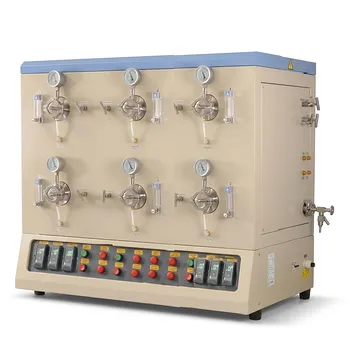
1200C High Throughput Multi Channel Tube Furnace with 50mm Quartz Tubes for Annealing and Material Phase Diagram Research
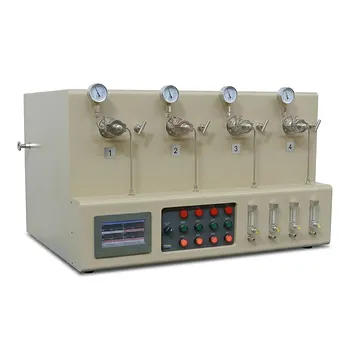
High Temperature 1700C 4 Channel Tube Furnace 1 Inch Alumina Tube for Hi-Throughput Annealing
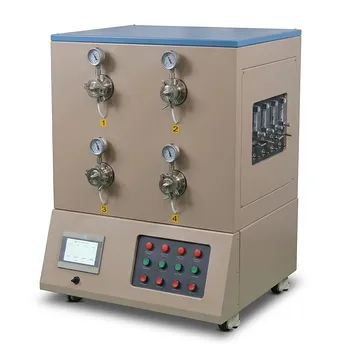
High Throughput 1200C Four Channel Tube Furnace with 3 Inch Quartz Tubes for Multi Zone Annealing and Material Research
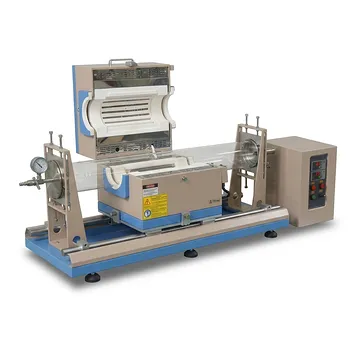
1200C High Temperature 5 Inch Sliding Tube Furnace for Rapid Thermal Processing RTP and Wafer Annealing
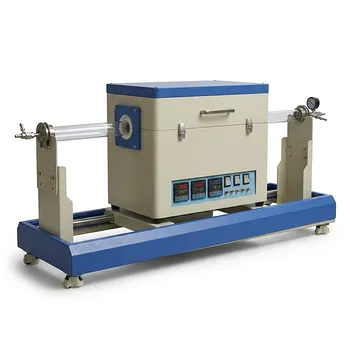
Double Temperature Zone Double Cover Tube Furnace for High Temperature CVD and Vacuum Annealing
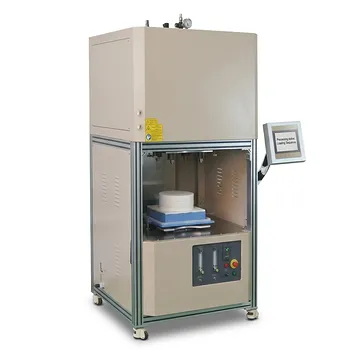
High Temperature Vertical Atmosphere Controlled Furnace with Automatic Bottom Loading and 1700°C Capacity for Advanced Material Research
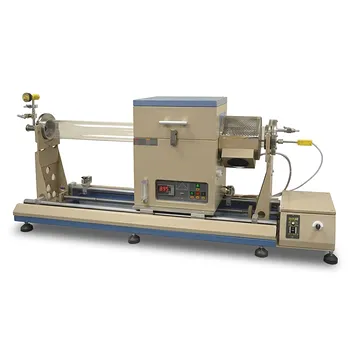
900 ºC Max Sliding RTP Tube Furnace with Rapid IR Heating and 4 Inch OD Quartz Tube
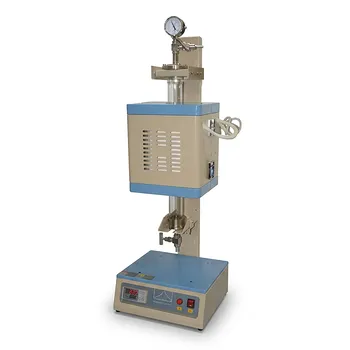
Compact Vertical Split Quartz Tube Furnace with Stainless Steel Vacuum Flanges for Rapid Thermal Quenching and Controlled Atmosphere Material Processing
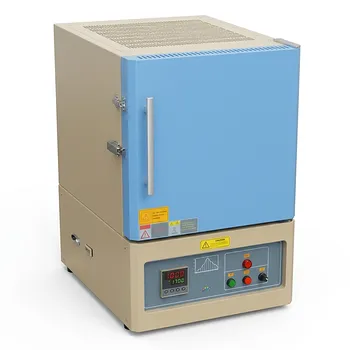
Large Bench Top 1700C High Temperature Muffle Furnace with 19L Chamber for Advanced Material Sintering and Annealing

Compact High Temperature 1600C Tube Furnace with 50mm Alumina Tube and Vacuum Flanges for Material Sintering

Vertical 1700C Vacuum and Atmosphere Tube Furnace with 80mm Alumina Tube

High Temperature 1700C Vertical Tube Furnace for Powder Spherification and Material Sintering
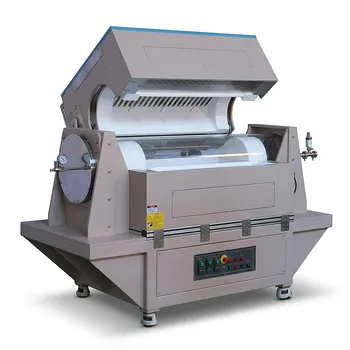
Three Zone Tube Furnace with 11 Inch or 15 Inch Quartz Tube and Hinged Flanges for Vacuum Atmosphere Heat Treatment

High Temperature 1700C Benchtop Tube Furnace with 5 Inch Heating Zone High Purity Alumina Tube and Vacuum Sealing Flanges

1800C High Temperature Compact Vacuum Tube Furnace with 60mm OD Alumina Tube and Kanthal MoSi2 Heating Elements
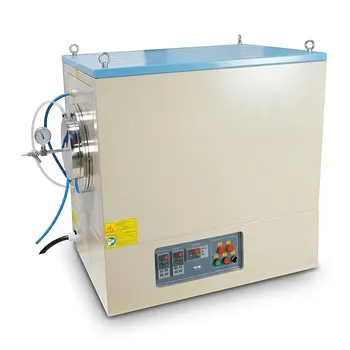
Dual Zone Tube Furnace 1100C with 11 Inch Quartz Tube and Vacuum Flanges for 8 Inch Wafer Processing
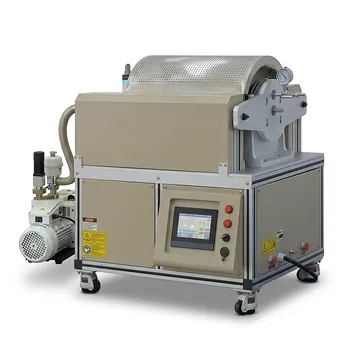
Automated 1200 C Tube Furnace for AI Material Research with 6 Inch OD and Sliding Flange
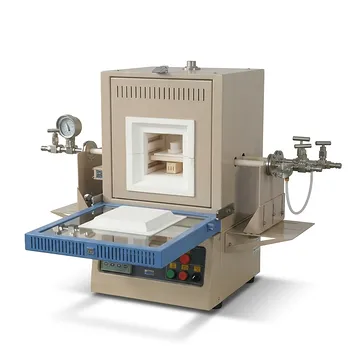
1700C Compact Hybrid Furnace with Dual Layer Box Sintering and Controlled Atmosphere Alumina Tubes
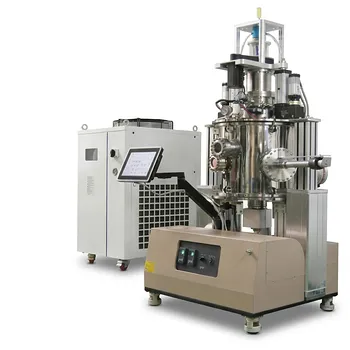
950C Rapid Thermal Processing Furnace for 12 Inch Wafer CSS Coating with Rotating Substrate Holder