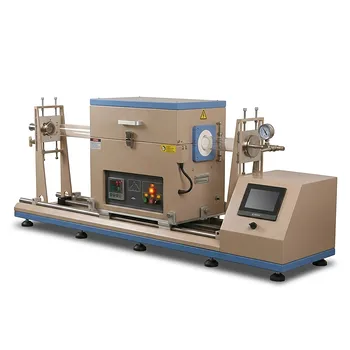
Why control tube furnace heating at 2°C/min for Mo-doped cobalt phosphide? Ensure Structural & Phase Integrity.
Updated 3 months ago
Strict control of the heating rate is the cornerstone of structural integrity and phase purity in complex catalyst synthesis. During the phosphorization of Mo-doped cobalt phosphide, a slow heating rate of 2 °C/min ensures that phosphorus vapor penetrates the material uniformly and reacts progressively. This precision prevents the structural collapse of delicate nanocages and minimizes internal stresses that would otherwise degrade the material's electrocatalytic performance.
Precise thermal management balances the speed of phosphorus diffusion with the rate of chemical transformation, ensuring the catalyst maintains its high-surface-area morphology and optimal grain size.
Preserving Morphological Stability
Prevention of Internal Thermal Stress
Rapid temperature increases create significant internal thermal gradients within the material. These gradients generate mechanical stress that can lead to structural distortion or micro-cracking.
By maintaining a slow ramp of 2 °C/min, heat transfer remains uniform throughout the sample. This allows the material to expand and adjust to phase changes without losing its physical shape.
Protection of Nanocage Architectures
The hollow nanocage structure of Mo-doped cobalt phosphide is highly sensitive to sudden thermal shifts. A controlled heating rate prevents the structural collapse that often occurs when internal pressures or rapid gas evolution overpower the material's framework.
Consistent, slow heating ensures that the delicate walls of the nanocages remain intact. This preservation of morphology is critical for maximizing the exposed surface area available for catalysis.
Optimizing Diffusion and Reaction Kinetics
Gradual Phosphorus Vapor Penetration
Phosphorization requires phosphorus vapor to migrate into the pores of the hollow nanocages. If the temperature rises too quickly, the surface may react and seal before the interior is fully converted.
A slow heating rate allows for progressive penetration, ensuring that the molybdenum and cobalt species are transformed uniformly. This results in a more homogenous chemical composition across the entire catalyst.
Precise Phase Transformation
Controlled heating provides the necessary time for atomic diffusion and orderly phase transitions. This prevents the formation of undesirable by-products or "impurity phases" that can occur during uncontrolled, rapid reactions.
By allowing the reaction to proceed at a steady pace, the system achieves a higher degree of crystallinity. This orderly rearrangement is vital for creating the specific inverse spinel or phosphide structures required for high efficiency.
Enhancing Electrocatalytic Activity
Management of Grain Size
Excessive heating rates often trigger uncontrolled grain growth, where smaller particles merge into larger, less active masses. A slow, programmed ramp helps in reducing grain size, which significantly increases the number of active sites.
Smaller grains provide a higher surface-to-volume ratio. This directly correlates to the enhanced electrocatalytic activity observed in Mo-doped cobalt phosphide compared to bulkier, rapidly heated alternatives.
Balanced Decomposition and Outgassing
During the heating process, moisture and organic precursors must be removed. A slow heating rate ensures that gaseous decomposition products escape gradually through the pores.
Rapid outgassing can lead to "explosive" structural failure or localized overheating. Controlling this rate ensures that the amorphous surface flexibility and structural integrity are maintained throughout the calcination process.
Understanding the Trade-offs
The Risks of Rapid Heating
While faster heating rates (e.g., >10 °C/min) reduce processing time, they often result in fiber melting, agglomeration, or lattice distortion. These defects create a "bottleneck" for ions and electrons, drastically reducing the efficiency of the catalyst.
The Cost of Excessive Slowness
Conversely, an unnecessarily slow heating rate can lead to excessive energy consumption and potential thermal aging of the material. However, in the case of Mo-doped cobalt phosphide, the risk of structural collapse far outweighs the minor increase in processing time.
How to Apply This to Your Project
Making the Right Choice for Your Goal
To achieve the best results in your synthesis, tailor your heating profile to the specific requirements of your precursor material.
- If your primary focus is maximizing active surface area: Use a strictly controlled, slow ramp (1–2 °C/min) to prevent grain growth and preserve delicate nanocage structures.
- If your primary focus is phase purity and crystallinity: Incorporate isothermal holds at key transition temperatures to allow for complete diffusion and stable phase formation.
- If your primary focus is preventing structural cracks: Ensure the heating rate is slow enough to allow all moisture and organic binders to outgas completely before reaching the final calcination temperature.
Strict adherence to a slow, programmed heating rate transforms a chaotic chemical reaction into a precise molecular assembly, ensuring your final catalyst reaches its full theoretical performance.
Summary Table:
| Factor | Benefit of 2 °C/min Rate | Risk of Rapid Heating (>10 °C/min) |
|---|---|---|
| Morphology | Preserves delicate nanocage structures | Structural collapse and distortion |
| Diffusion | Uniform phosphorus vapor penetration | Surface sealing and incomplete reaction |
| Phase Purity | Orderly atomic rearrangement | Formation of undesirable by-products |
| Grain Size | Controlled growth, more active sites | Agglomeration and reduced surface area |
| Stability | Gradual outgassing of precursors | Internal stress and micro-cracking |
Optimize Your Catalyst Synthesis with THERMUNITS Precision
Achieving a precise 2 °C/min ramp rate is critical for the structural integrity of advanced materials like Mo-doped cobalt phosphide. THERMUNITS, a leading manufacturer of high-temperature laboratory equipment, provides the thermal stability your R&D requires. From Tube Furnaces and CVD/PECVD systems to Vacuum Induction Melting (VIM) and Atmosphere Furnaces, our solutions ensure uniform heat distribution and exact programmed control.
How THERMUNITS Empowers Your Research:
- Precision Control: Advanced PID controllers for stable, slow ramp rates essential for nanocage preservation.
- Versatile Range: Specialized Muffle, Rotary, and Hot Press furnaces tailored for material science and industrial R&D.
- Reliable Performance: Durable thermal elements and high-purity insulation for consistent experimental results.
Ready to elevate your laboratory's heat treatment capabilities? Contact THERMUNITS today to consult with our experts on the perfect furnace for your specific application.
References
- Mohammad Atiqur Rahman, Shinya Hayami. Engineering Zeolitic-Imidazolate-Framework-Derived Mo-Doped Cobalt Phosphide for Efficient OER Catalysts. DOI: 10.1021/acsomega.4c00403
Mentioned Products
- Vertical 1700C Vacuum and Atmosphere Tube Furnace with 80mm Alumina Tube
- Compact High Temperature 1600C Tube Furnace with 50mm Alumina Tube and Vacuum Flanges for Material Sintering
- 900°C Max Rotary Tube Furnace with 8 Inch 310S Alloy Tube and Optional Multi Zone Heating for Industrial Material Calcination
- Split Vertical Tube Furnace with 1200C Quartz Tube and Stainless Steel Vacuum Flanges for Rapid Thermal Processing
- High Temperature 1700C Tube Furnace with High Vacuum Turbomolecular Pump System and Multi Channel Mass Flow Controller Gas Mixer
People Also Ask
- How is an industrial-grade vertical tube furnace utilized in smelting leaching residues? Enhance Metal Recovery Efficiency
- What is the function of a laboratory-grade vertical tube furnace in fast pyrolysis? Optimize Composite Research.
- How does a vertical tube furnace facilitate thermoelectric alloy melting? Precision synthesis for material homogeneity.
- Why is a thermocouple sensor indispensable for monitoring the vertical tube furnace during gallium oxide nanowire production? Optimize VLS Growth
- What are the advantages of using a vertical tube furnace for crucible experiments simulating steel-slag interactions?

Tech Team · ThermUnits
Last updated on Jun 02, 2026
Related Products

Vertical 1700C Vacuum and Atmosphere Tube Furnace with 80mm Alumina Tube

Compact High Temperature 1600C Tube Furnace with 50mm Alumina Tube and Vacuum Flanges for Material Sintering
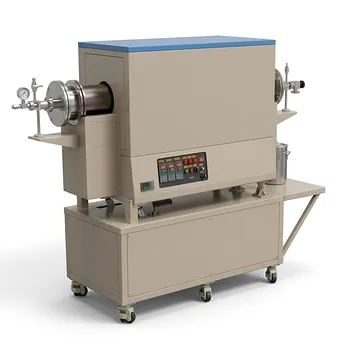
900°C Max Rotary Tube Furnace with 8 Inch 310S Alloy Tube and Optional Multi Zone Heating for Industrial Material Calcination
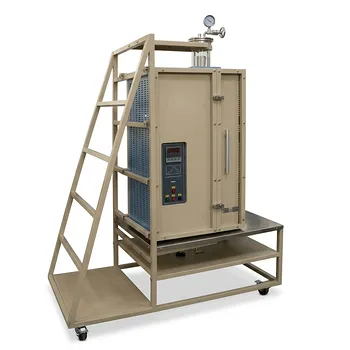
Split Vertical Tube Furnace with 1200C Quartz Tube and Stainless Steel Vacuum Flanges for Rapid Thermal Processing

High Temperature 1700C Tube Furnace with High Vacuum Turbomolecular Pump System and Multi Channel Mass Flow Controller Gas Mixer

1100C Tube Furnace with Vacuum Flange and Programmable Temperature Controller for Material Science and Industrial Heat Treatment
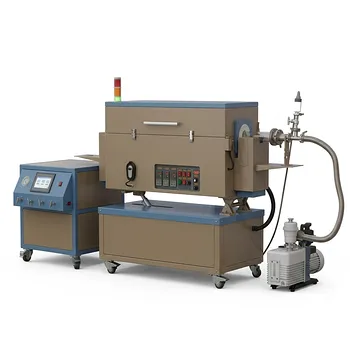
5 Inch Three Zone Rotary Tube Furnace with Integrated Gas Delivery System and 1200C Capability for Advanced Material CVD Processing
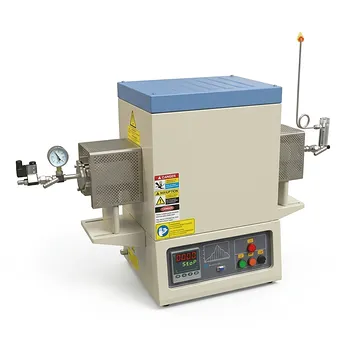
1700C Hydrogen Gas Tube Furnace with 60mm Alumina Process Tube and Integrated Hydrogen Safety Detector
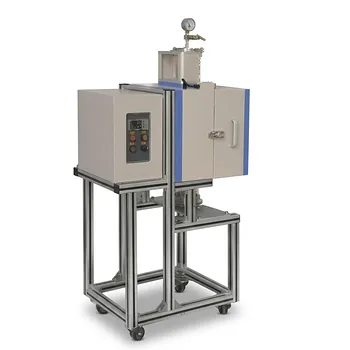
1200°C 5 Inch Vertical Quartz Tube Furnace with Stainless Steel Vacuum Flanges

High Temperature 1700C Six Zone Split Tube Furnace with Alumina Tube and Water Cooled Flanges

Compact Vertical Split Quartz Tube Furnace with Stainless Steel Vacuum Flanges for Rapid Thermal Quenching and Controlled Atmosphere Material Processing

High Temperature 1700C Benchtop Tube Furnace with 5 Inch Heating Zone High Purity Alumina Tube and Vacuum Sealing Flanges
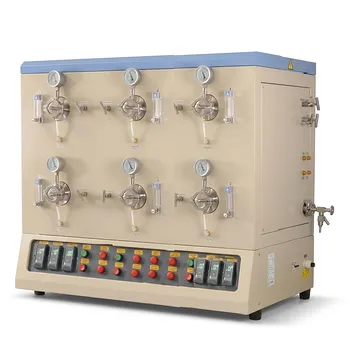
1200C High Throughput Multi Channel Tube Furnace with 50mm Quartz Tubes for Annealing and Material Phase Diagram Research
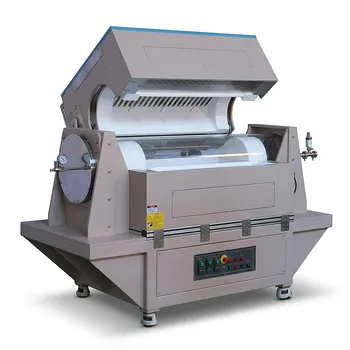
Three Zone Tube Furnace with 11 Inch or 15 Inch Quartz Tube and Hinged Flanges for Vacuum Atmosphere Heat Treatment

1800C High Temperature Compact Vacuum Tube Furnace with 60mm OD Alumina Tube and Kanthal MoSi2 Heating Elements

High Temperature 1700C Vertical Tube Furnace for Powder Spherification and Material Sintering
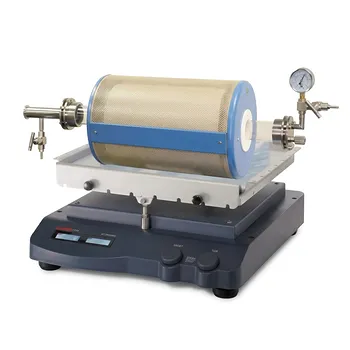
High Temperature Rocking Tube Furnace with Quartz Tube and Vacuum Flange for Materials Synthesis

High Temperature Automated 5 Inch Tube Furnace for Autonomous Material Research and Advanced Laboratory R&D
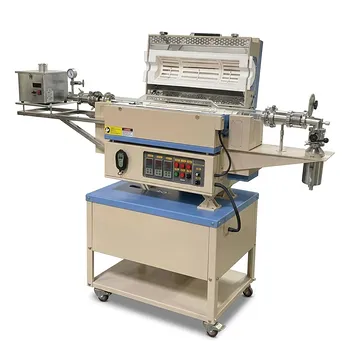
5 Inch Rotary Tube Furnace with Automatic Feeding and Receiving System 1200C Three Zone CVD Powder Processing