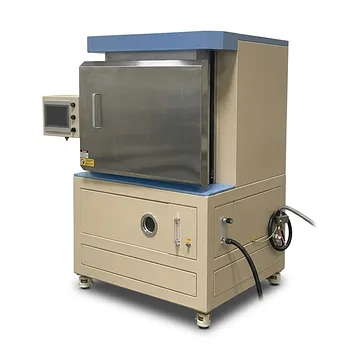
Why use a tube furnace with hydrogen for NAB alloys? Achieve Superior Solution Treatment & Pure β' Martensite.
Updated 3 months ago
Solution treatment of Nickel-Aluminum Bronze (NAB) alloys demands extreme environmental control to ensure structural integrity. Utilizing a tube furnace with a reductive hydrogen atmosphere at 900°C is necessary because it prevents surface oxidation and the loss of critical alloying elements. These specific conditions are required to successfully transform the alloy into a pure $\beta'$ martensite phase during the subsequent quenching process.
Core Takeaway: A hydrogen-rich reductive atmosphere acts as a chemical shield that preserves the alloy's composition and surface quality at high temperatures. This controlled environment is the only way to ensure the material reaches the precise state required for high-performance phase transformation.
Ensuring Chemical and Surface Integrity
Inhibition of Surface Oxidation
At the high solution treatment temperature of 900°C, NAB alloys are highly reactive and prone to forming thick oxide scales in the presence of oxygen. A reductive hydrogen atmosphere actively counteracts this by creating a chemical environment that prevents oxygen from bonding with the metal surface.
This process ensures the surface remains metallic and "active," which is a principle also used in treating nickel powders to enhance particle adhesion. Without this protection, oxidation would compromise the alloy's surface properties and hinder subsequent manufacturing steps.
Prevention of Active Element Loss
High-temperature environments can cause the "volatilization" or loss of essential alloying elements, which alters the material's intended chemistry. The sealed, controlled environment of a tube furnace maintains a stable partial pressure that keeps these active elements within the metal matrix.
By preserving the exact chemical balance, the furnace ensures that the alloy retains its intended mechanical and corrosion-resistant properties. This level of precision is impossible in open-air or poorly regulated heating environments.
Achieving Superior Microstructural Results
Creating the Path to $\beta'$ Martensite
The primary goal of solution treatment is to prepare the internal structure of the NAB alloy for quenching. The highly uniform temperature field provided by the tube furnace ensures that the entire sample reaches a consistent state of equilibrium.
Only when the alloy is held in this uniform, protected state at 900°C can it successfully transform into pure $\beta'$ martensite upon quenching. This martensitic structure is the vital precursor needed for the alloy to achieve its final strength and durability.
Elimination of Compositional Segregation
Much like the processes used in vacuum furnaces for other specialized alloys, the stable heat of a tube furnace helps eliminate compositional segregation. It promotes a homogeneous distribution of elements throughout the sample.
This homogenization ensures that the alloy reacts predictably during heat treatment, preventing the formation of unwanted impurity phases that could weaken the final product.
Understanding the Trade-offs and Risks
Safety and Equipment Complexity
Using a hydrogen atmosphere introduces significant safety requirements, as hydrogen is highly flammable and requires specialized handling protocols. Tube furnaces must be perfectly sealed and equipped with gas monitoring systems to prevent leaks or combustion.
While highly effective, these systems represent a higher capital investment compared to standard air-circulating furnaces. The complexity of managing gas flow and maintaining a pure atmosphere adds a layer of operational difficulty.
Atmosphere Selection: Reductive vs. Neutral
While a neutral atmosphere (like pure Argon) can prevent oxidation, it does not offer the "reductive" cleaning power of hydrogen. Hydrogen can actually remove existing surface oxides, whereas neutral gases simply prevent new ones from forming.
However, for certain alloys, hydrogen embrittlement can be a concern if the process is not carefully managed. Selecting the correct gas mixture (such as H2/Ar or H2/N2) is a critical balance between chemical protection and material safety.
How to Apply This to Your Project
Making the Right Choice for Your Goal
- If your primary focus is maximum surface purity: Utilize a high-concentration hydrogen mixture to actively reduce any existing surface oxides during the heating cycle.
- If your primary focus is phase transformation accuracy: Prioritize a tube furnace with a long "hot zone" to ensure a highly uniform temperature field, which is critical for consistent $\beta'$ martensite formation.
- If your primary focus is cost-effective oxidation control: Consider using a high-purity Argon flow if the alloy does not require active reduction, as this simplifies safety protocols while still providing a neutral environment.
The precise synergy between a stable 900°C thermal field and a reductive hydrogen shield is what ultimately defines the success of NAB alloy solution treatment.
Summary Table:
| Key Requirement | Benefit / Function | Expected Outcome |
|---|---|---|
| 900°C Reductive Atmosphere | Prevents surface oxidation and cleans oxides | Pristine, metallic surface integrity |
| Controlled Tube Environment | Maintains stable partial pressure | Prevention of alloying element loss |
| Uniform Thermal Field | Promotes homogeneous heat distribution | Pure $\beta'$ martensite transformation |
| Hydrogen Shielding | Creates a chemical barrier against oxygen | Preserved mechanical & corrosion properties |
Optimize Your Research with THERMUNITS Thermal Solutions
Achieving the precise microstructural results required for Nickel-Aluminum Bronze (NAB) alloys demands equipment with uncompromising atmospheric control. THERMUNITS is a leading manufacturer of high-temperature laboratory equipment for material science and industrial R&D. We empower your research with a comprehensive range of thermal processing solutions, including:
- Tube and Vacuum Furnaces for precise atmosphere control.
- CVD/PECVD Systems and Atmosphere Furnaces.
- Muffle, Rotary, and Hot Press Furnaces.
- Vacuum Induction Melting (VIM) and Dental Furnaces.
Whether you are performing solution treatments or advanced material synthesis, our equipment ensures uniform heating and chemical stability. Contact us today to discuss your heat treatment requirements and let our experts help you find the ideal furnace for your laboratory.
References
- Ivana Marković, Jasmina Petrović. Changes in the martensitic b' phase in the nickel aluminum bronze during aging. DOI: 10.5937/ioc24281m
Mentioned Products
- High Temperature Hydrogen Atmosphere Box Furnace 1650C Max Reducing Environment Material Synthesis System 8x8x8 Chamber
- 1100C Hydrogen Gas Atmosphere Tube Furnace with 5 Inch Fused Quartz Tube and Integrated Safety Monitoring System
- Three Zone Hydrogen Gas Tube Furnace with 82mm Superalloy Tube and Dual Hydrogen Detectors 1200C High Temperature Material Processing System
- 1700C Hydrogen Gas Tube Furnace with 60mm Alumina Process Tube and Integrated Hydrogen Safety Detector
- 1500C Compact Hydrogen Gas Tube Furnace with 2 Inch Alumina Tube and Hydrogen Detector
People Also Ask
- What is the role of a high-temperature box furnace in the solid-state synthesis of Europium-doped M3MgSi2O8 phosphors?
- What is the role of a high-temperature box furnace in Na3MnZr(PO4)3 synthesis? Engineering High-Performance NASICON.
- What role does an industrial-grade high-temperature furnace play in C2F sintering? Achieve Pure Phase and High Strength
- How does a high-temp box furnace aid rare-earth oxysulfide phosphor synthesis? Enhance Purity & Luminescence
- Why is a high-temperature box furnace required for 1250°C ferrite calcination? Ensure Precise Phase Transformation.

Tech Team · ThermUnits
Last updated on Jun 02, 2026
Related Products
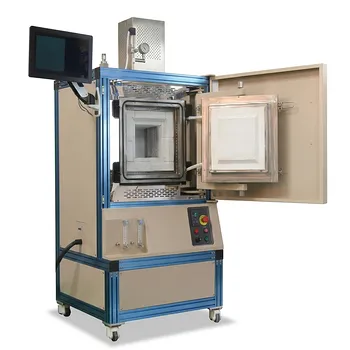
High Temperature Hydrogen Atmosphere Box Furnace 1650C Max Reducing Environment Material Synthesis System 8x8x8 Chamber
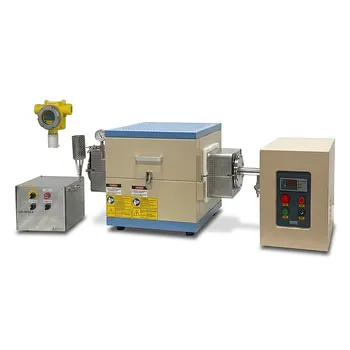
1100C Hydrogen Gas Atmosphere Tube Furnace with 5 Inch Fused Quartz Tube and Integrated Safety Monitoring System
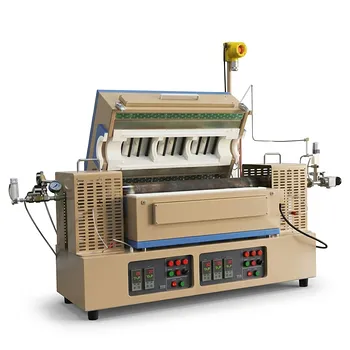
Three Zone Hydrogen Gas Tube Furnace with 82mm Superalloy Tube and Dual Hydrogen Detectors 1200C High Temperature Material Processing System
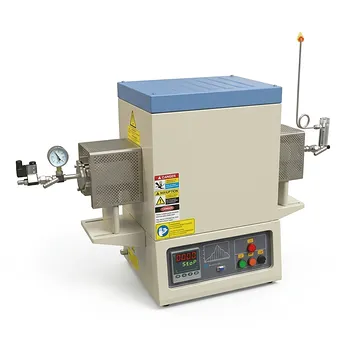
1700C Hydrogen Gas Tube Furnace with 60mm Alumina Process Tube and Integrated Hydrogen Safety Detector
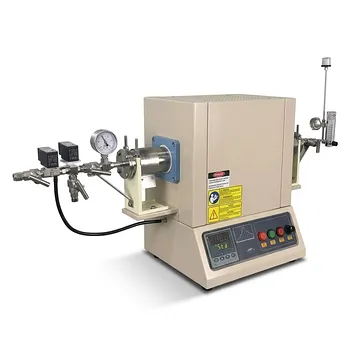
1500C Compact Hydrogen Gas Tube Furnace with 2 Inch Alumina Tube and Hydrogen Detector
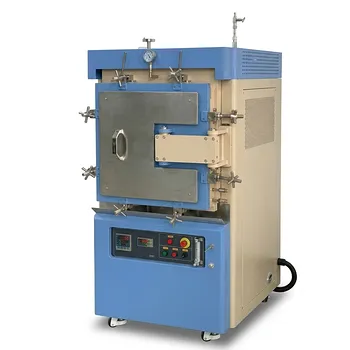
High Temperature Economic Hydrogen Gas Box Furnace 1600C Atmosphere Controlled Thermal Processing System 65L Capacity
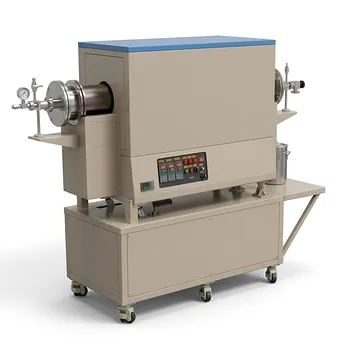
900°C Max Rotary Tube Furnace with 8 Inch 310S Alloy Tube and Optional Multi Zone Heating for Industrial Material Calcination
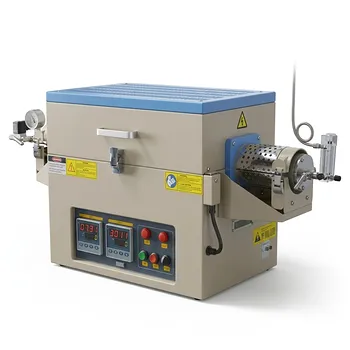
1100C Dual Zone Hydrogen Gas Tube Furnace with Quartz Tube and Integrated H2 Leak Detection System
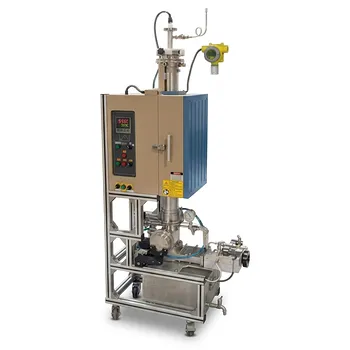
High Temperature 1000C Hydrogen Vertical Quenching Furnace with 4 Inch Stainless Steel Tube
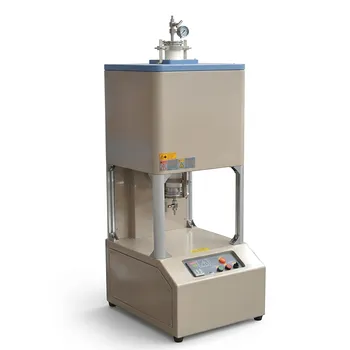
Vertical 1700C Vacuum and Atmosphere Tube Furnace with 80mm Alumina Tube
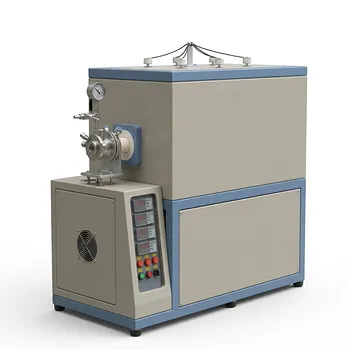
High Temperature 1700C Three Zone Tube Furnace with Alumina Tube 50mm 60mm 80mm OD for Material Research and Industrial Heat Treatment
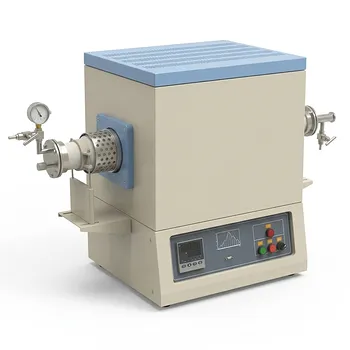
1750°C High Temperature Benchtop Vacuum Atmosphere Tube Furnace with Kanthal Super 1800 Heating Elements and 60mm Alumina Processing Tube
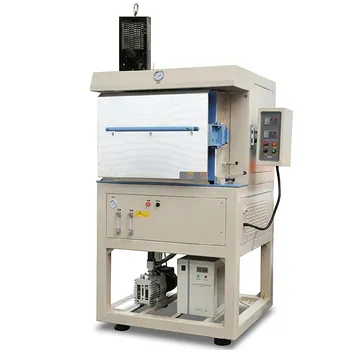
1200C Hydrogen Atmosphere Box Furnace with 5 Heated Sides and 64L Chamber

1100C Tube Furnace with Vacuum Flange and Programmable Temperature Controller for Material Science and Industrial Heat Treatment
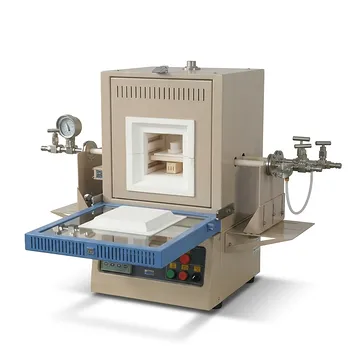
1700C Compact Hybrid Furnace with Dual Layer Box Sintering and Controlled Atmosphere Alumina Tubes
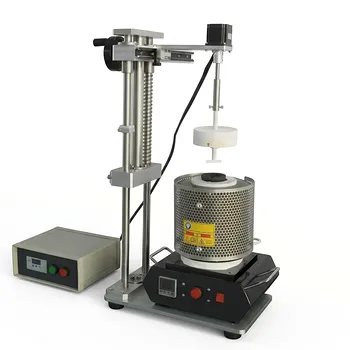
1100C Crucible Melting Furnace with Stirring Function for Glovebox and Air Sensitive Alloy Research
1200C Max 6 Channel High Cleanliness Hydrogen Furnace for High Throughput Annealing

Compact High Temperature 1600C Tube Furnace with 50mm Alumina Tube and Vacuum Flanges for Material Sintering
High Temperature 1700C Six Zone Split Tube Furnace with Alumina Tube and Water Cooled Flanges