Why is it necessary to use a tube furnace for NMC811 sintering? Precision Oxygen Control for High-Nickel Stability
Updated 3 months ago
Precise environmental control is the only way to stabilize the high-nickel architecture. The use of a tube furnace for NMC811 synthesis is mandatory because it provides the high oxygen partial pressure required to maintain nickel in its trivalent state (Ni³⁺) and the thermal stability needed to prevent lithium/nickel cation mixing. Without these exact conditions, the material collapses into a disordered state, leading to poor capacity and limited cycle life.
Core Takeaway: For NMC811, the tube furnace acts as a chemical reactor that uses oxygen flow and tight temperature windows to force nickel into a stable layered structure ($R\bar{3}m$), preventing the structural defects that naturally occur in high-nickel cathodes.
The Critical Role of Oxygen Atmosphere
Suppressing Lithium/Nickel Cation Mixing
In high-nickel materials, Ni²⁺ ions (0.69 Å) have an ionic radius nearly identical to Li⁺ ions (0.76 Å). Without a high-purity oxygen atmosphere, nickel ions will migrate into lithium sites, blocking the diffusion channels for lithium ions and permanently reducing the material's capacity.
Maintaining Nickel Valency (Ni³⁺)
A continuous flow of oxygen provides the high oxygen partial pressure necessary to stabilize nickel in its trivalent (Ni³⁺) state. If the environment is oxygen-deficient, nickel tends to reduce to the divalent state (Ni²⁺), which triggers the formation of the undesirable rock-salt phase.
Inhibiting Oxygen Vacancies
High-temperature sintering naturally encourages the loss of lattice oxygen, which creates vacancies that destabilize the crystal structure. A controlled oxygen environment inhibits this reduction tendency, ensuring that lattice oxygen remains stable and the material retains its electrochemical activity.
Thermal Precision and Phase Transformation
Multi-Stage Temperature Control
Synthesizing NMC811 is not a single-step process; it requires precise transitions, such as pre-heating at 450 °C and high-temperature sintering between 740 °C and 900 °C. A high-precision tube furnace ensures the material spends the exact amount of time needed at each phase to complete full lithiation.
Achieving High Crystallinity
Precision temperature control allows for the formation of a layered hexagonal structure within the $R\bar{3}m$ space group. This orderly arrangement of nickel, manganese, and cobalt cations is essential for creating the long-range order needed for high-performance battery applications.
Accelerating Interface Kinetics
During the brief window of high-temperature synthesis, the combination of heat and oxygen flow accelerates interface reaction kinetics. This ensures the precursor and lithium source react completely, resulting in high-purity single-crystal or polycrystalline materials with minimal structural defects.
Understanding the Trade-offs and Pitfalls
The Risk of Over-Sintering
While high temperatures are necessary for crystallinity, exceeding the optimal range (often above 900 °C) can lead to excessive grain growth or the decomposition of the layered structure. Precise control is required to balance the kinetic energy needed for the reaction against the thermodynamic stability of the material.
Consequences of Atmospheric Leaks
Even minor leaks in a furnace tube can introduce moisture or ambient air, which disrupts the chemical stoichiometry. Any moisture present during sintering can lead to the formation of lithium hydroxides or carbonates on the surface, which are detrimental to the slurry-making process and final cell performance.
Pressure and Flow Rate Dynamics
Simply having oxygen is not enough; the flow rate must be consistent. Inconsistent flow can create "dead zones" within the tube where oxygen partial pressure drops, leading to localized cation mixing and non-uniform batches of cathode material.
How to Optimize Your Sintering Process
When configuring your tube furnace for NMC811 lithiation, your settings should align with your specific material objectives:
- If your primary focus is Maximum Energy Density: Prioritize a high-purity oxygen flow (99.9%+) and a stable sintering temperature between 800°C and 900°C to ensure a high-crystallinity $R\bar{3}m$ structure.
- If your primary focus is Cycle Life Stability: Use a multi-stage ramp-up (including a 450 °C soak) to ensure complete lithiation and minimize the formation of rock-salt phase impurities.
- If your primary focus is Single-Crystal Growth: Extend the sintering time at peak temperature while maintaining a strictly controlled oxygen atmosphere to facilitate long-range cation ordering.
By mastering the synergy between oxygen partial pressure and thermal stability, you can effectively overcome the inherent instabilities of high-nickel cathode materials.
Summary Table:
| Parameter | Role in NMC811 Sintering | Critical Benefit |
|---|---|---|
| Oxygen Atmosphere | Maintains Ni³⁺ valency | Prevents Li/Ni cation mixing & rock-salt phase |
| Temperature Control | Precision range (740°C - 900°C) | Forms stable layered $R\bar{3}m$ crystal structure |
| Atmosphere Flow | Consistent oxygen partial pressure | Ensures batch uniformity and prevents "dead zones" |
| Multi-Stage Heating | 450°C pre-heat to high sintering | Maximizes interface kinetics and full lithiation |
Elevate Your Battery Material Research with THERMUNITS
Achieving the perfect stoichiometry for high-nickel cathodes requires uncompromising thermal precision. THERMUNITS is a leading manufacturer of high-temperature laboratory equipment specifically designed for material science and industrial R&D.
Our advanced Tube Furnaces and Atmosphere Furnaces provide the airtight integrity and precise oxygen flow control necessary to prevent cation mixing in NMC811 synthesis. Beyond battery research, we offer a comprehensive range of thermal solutions, including:
- Furnaces: Muffle, Vacuum, Tube, Rotary, Hot Press, and Dental Furnaces.
- Advanced Systems: CVD/PECVD systems, electric rotary kilns, and vacuum induction melting (VIM) furnaces.
- Support: High-quality Thermal Elements and custom heat treatment equipment.
Don't let atmospheric leaks or temperature fluctuations compromise your material's capacity. Partner with THERMUNITS to secure the stability of your high-performance materials.
Contact our experts today for a customized quote
References
- Marco Joes Lüther, Johannes Kasnatscheew. Systematic “Apple‐to‐Apple” Comparison of Single‐Crystal and Polycrystalline Ni‐Rich Cathode Active Materials: From Comparable Synthesis to Comparable Electrochemical Conditions. DOI: 10.1002/sstr.202400119
Mentioned Products
- Vertical 1700C Vacuum and Atmosphere Tube Furnace with 80mm Alumina Tube
- Compact High Temperature 1600C Tube Furnace with 50mm Alumina Tube and Vacuum Flanges for Material Sintering
- 900°C Max Rotary Tube Furnace with 8 Inch 310S Alloy Tube and Optional Multi Zone Heating for Industrial Material Calcination
- Split Vertical Tube Furnace with 1200C Quartz Tube and Stainless Steel Vacuum Flanges for Rapid Thermal Processing
- High Temperature 1700C Tube Furnace with High Vacuum Turbomolecular Pump System and Multi Channel Mass Flow Controller Gas Mixer
People Also Ask
- How is an industrial-grade vertical tube furnace utilized in smelting leaching residues? Enhance Metal Recovery Efficiency
- What is the function of a laboratory-grade vertical tube furnace in fast pyrolysis? Optimize Composite Research.
- How does a vertical tube furnace facilitate thermoelectric alloy melting? Precision synthesis for material homogeneity.
- Why is a thermocouple sensor indispensable for monitoring the vertical tube furnace during gallium oxide nanowire production? Optimize VLS Growth
- What are the advantages of using a vertical tube furnace for crucible experiments simulating steel-slag interactions?

Tech Team · ThermUnits
Last updated on Jun 03, 2026
Related Products

Vertical 1700C Vacuum and Atmosphere Tube Furnace with 80mm Alumina Tube

Compact High Temperature 1600C Tube Furnace with 50mm Alumina Tube and Vacuum Flanges for Material Sintering
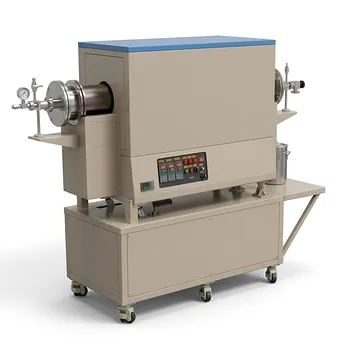
900°C Max Rotary Tube Furnace with 8 Inch 310S Alloy Tube and Optional Multi Zone Heating for Industrial Material Calcination
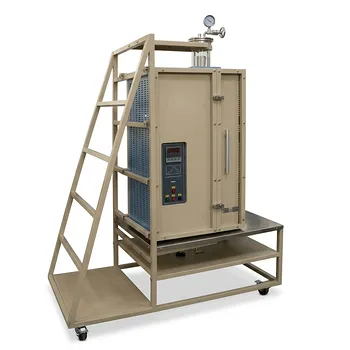
Split Vertical Tube Furnace with 1200C Quartz Tube and Stainless Steel Vacuum Flanges for Rapid Thermal Processing

High Temperature 1700C Tube Furnace with High Vacuum Turbomolecular Pump System and Multi Channel Mass Flow Controller Gas Mixer

1100C Tube Furnace with Vacuum Flange and Programmable Temperature Controller for Material Science and Industrial Heat Treatment
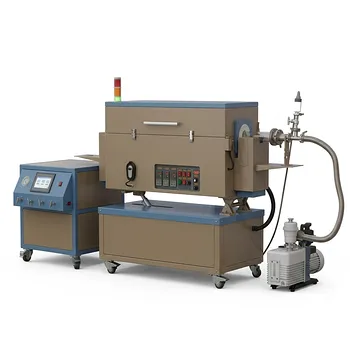
5 Inch Three Zone Rotary Tube Furnace with Integrated Gas Delivery System and 1200C Capability for Advanced Material CVD Processing

1200°C 5 Inch Vertical Quartz Tube Furnace with Stainless Steel Vacuum Flanges

High Temperature 1700C Six Zone Split Tube Furnace with Alumina Tube and Water Cooled Flanges

1700C Hydrogen Gas Tube Furnace with 60mm Alumina Process Tube and Integrated Hydrogen Safety Detector

Compact Vertical Split Quartz Tube Furnace with Stainless Steel Vacuum Flanges for Rapid Thermal Quenching and Controlled Atmosphere Material Processing

High Temperature 1700C Benchtop Tube Furnace with 5 Inch Heating Zone High Purity Alumina Tube and Vacuum Sealing Flanges

1200C High Throughput Multi Channel Tube Furnace with 50mm Quartz Tubes for Annealing and Material Phase Diagram Research
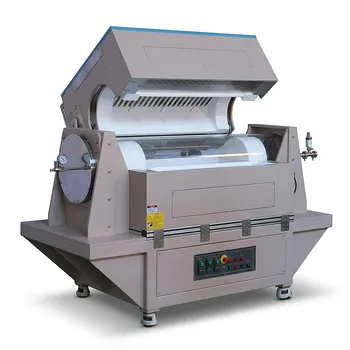
Three Zone Tube Furnace with 11 Inch or 15 Inch Quartz Tube and Hinged Flanges for Vacuum Atmosphere Heat Treatment

1800C High Temperature Compact Vacuum Tube Furnace with 60mm OD Alumina Tube and Kanthal MoSi2 Heating Elements

High Temperature 1700C Vertical Tube Furnace for Powder Spherification and Material Sintering
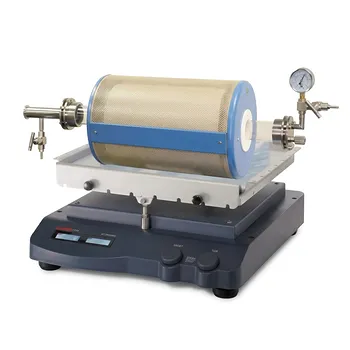
High Temperature Rocking Tube Furnace with Quartz Tube and Vacuum Flange for Materials Synthesis

High Temperature Automated 5 Inch Tube Furnace for Autonomous Material Research and Advanced Laboratory R&D
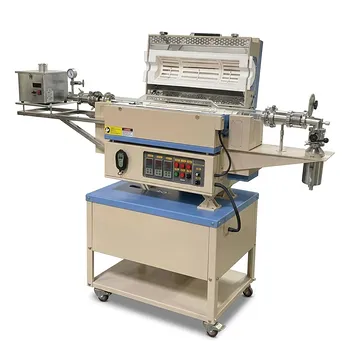
5 Inch Rotary Tube Furnace with Automatic Feeding and Receiving System 1200C Three Zone CVD Powder Processing