Why is precise atmosphere control in a tube furnace critical for SAC pyrolysis? Achieve Perfect Atomic Dispersion
Updated 3 months ago
Precise atmosphere control is the foundational requirement for synthesizing single-atom catalysts (SACs) because it eliminates oxygen to prevent the oxidative aggregation of metal atoms and the aerobic combustion of carbon supports. By maintaining a strictly inert or reducing environment, the furnace ensures that metal precursors remain isolated and uniformly anchored within the substrate lattice rather than clustering into inactive nanoparticles.
Core Takeaway: Atmosphere control transforms a standard heating process into a precision synthesis environment by protecting the structural integrity of the carbon matrix and ensuring that metal atoms remain individually dispersed as high-purity active centers.
Preserving the Structural Integrity of the Substrate
Prevention of Aerobic Combustion
At the high temperatures required for pyrolysis (often exceeding 600°C to 1000°C), carbon-based precursors and biomass will undergo aerobic combustion if even trace amounts of oxygen are present. Precise atmosphere control replaces air with inert gases like argon or nitrogen, ensuring the carbon undergoes controlled aromatization rather than burning away.
Protection of Pore Architecture
The catalytic efficiency of SACs depends heavily on the pore structure of the microbial-derived or synthetic carbon substrates. Maintaining a stable, oxygen-free environment prevents the degradation of these microscopic channels, which are essential for mass transport during catalytic reactions.
Maintaining Atomic Dispersion and Purity
Preventing Metal Aggregation
Without a strict inert atmosphere, trace metal atoms (such as iron or platinum) tend to oxidize and migrate at high temperatures, forming large particles or clusters. Precise control ensures these elements are "frozen" in place, uniformly anchored onto the substrate in a single-atom state.
Synthesis of Specific Active Phases
Atmosphere control allows for the introduction of specific vapors, such as phosphorus or nitrogen, to react with the precursors. This enables the formation of high-purity phases like iron phosphide (FeP) or nitrogen-doped lattices, which are critical for the catalyst's specific chemical functionality.
Thermodynamic Anchoring
The high-temperature energy provided by the furnace allows metal atoms to overcome activation energy barriers. An inert atmosphere ensures this energy is used for thermodynamic anchoring onto defect sites rather than being lost to external chemical corrosion or unwanted oxidation.
Engineering the Chemical Environment
Controlled Doping and Ligand Detachment
Precise gas flow regulation facilitates the nitrogen doping of graphene structures and the detachment of specific ligands from metal nanosheets. This allows researchers to adjust the charge distribution of the metal centers with extreme precision, ensuring the results are a product of the reaction design rather than environmental contamination.
Regulating Heating Rates and Vaporization
Modern tube furnaces allow for specific heating rates (e.g., 5°C/min to 30°C/min) while maintaining a continuous gas flow. This synchronized control is vital for the vaporization of templates (like zinc) and the simultaneous polycondensation of the carbon-nitrogen lattice.
Understanding the Trade-offs and Pitfalls
Gas Purity vs. Cost
While argon provides a superior inert environment, its cost is higher than nitrogen. However, using lower-purity gases can introduce trace moisture or oxygen, which may lead to the formation of metal oxide impurities that poison the catalyst.
Sealing Integrity and Vacuum Quality
Even with a constant gas flow, poor sealing performance of the tube furnace can allow atmospheric leakage. A high-precision system must often utilize a vacuum pump to fully evacuate the chamber before introducing inert gases to ensure a truly oxygen-limited environment.
Flow Rate Sensitivity
If the flow rate of the protective gas is too low, it may fail to effectively displace byproduct gases. Conversely, an excessively high flow rate can lead to thermal gradients or the unintended removal of volatile precursors before they can anchor to the substrate.
Applying Atmosphere Control to Your Synthesis
Recommendations Based on Research Goals
- If your primary focus is preventing metal aggregation: Use high-purity argon with a pre-annealing vacuum cycle to ensure a completely oxygen-free environment for atomic anchoring.
- If your primary focus is biomass-derived carbon: Prioritize precise regulation of gas flow rates to manage the aromatization degree and prevent the combustion of delicate pore structures.
- If your primary focus is lattice doping: Select a furnace that allows for the integration of reactive gas mixtures (like H2/Ar or nitrogen precursors) during the high-temperature phase.
Mastering the atmospheric conditions within a tube furnace is the decisive factor in transitioning from bulk material synthesis to the successful engineering of true single-atom catalysts.
Summary Table:
| Parameter | Critical Role in SAC Pyrolysis | Key Benefit |
|---|---|---|
| Oxygen Elimination | Prevents aerobic combustion & oxidation | Preserves carbon support & prevents clustering |
| Inert/Reducing Gas | Creates controlled aromatization environment | Ensures uniform atomic anchoring on substrate |
| Vacuum Pre-cycle | Removes residual air and moisture | Eliminates trace impurities and metal oxides |
| Flow Rate Control | Manages byproduct removal & heat stability | Protects pore architecture & active phases |
Elevate Your Material Synthesis with THERMUNITS Precision Thermal Solutions
Achieving true single-atom dispersion requires more than just heat; it demands absolute atmospheric integrity. THERMUNITS is a leading manufacturer of high-performance high-temperature laboratory equipment designed for material science and industrial R&D. Our advanced tube furnaces provide the vacuum-tight sealing and precise gas flow control necessary to prevent metal aggregation and ensure the structural purity of your catalysts.
From pioneering SAC pyrolysis to industrial-scale heat treatment, we offer a comprehensive range of solutions:
- Atmosphere & Tube Furnaces: Perfect for controlled gas environments and CVD/PECVD systems.
- Specialized Equipment: Vacuum Induction Melting (VIM), Hot Press, and Electric Rotary Kilns.
- Versatile Lab Tools: Muffle, Dental, and various high-temperature thermal elements.
Ready to optimize your research outcomes with world-class thermal engineering?
Contact our technical experts today to find the ideal furnace for your laboratory’s unique requirements.
References
- Xiaofeng Xiao, Feng Zhao. Topological transformation of microbial proteins into iron single-atom sites for selective hydrogen peroxide electrosynthesis. DOI: 10.1038/s41467-024-55041-z
Mentioned Products
- Vertical 1700C Vacuum and Atmosphere Tube Furnace with 80mm Alumina Tube
- Compact High Temperature 1600C Tube Furnace with 50mm Alumina Tube and Vacuum Flanges for Material Sintering
- 900°C Max Rotary Tube Furnace with 8 Inch 310S Alloy Tube and Optional Multi Zone Heating for Industrial Material Calcination
- Split Vertical Tube Furnace with 1200C Quartz Tube and Stainless Steel Vacuum Flanges for Rapid Thermal Processing
- High Temperature 1700C Tube Furnace with High Vacuum Turbomolecular Pump System and Multi Channel Mass Flow Controller Gas Mixer
People Also Ask
- How is an industrial-grade vertical tube furnace utilized in smelting leaching residues? Enhance Metal Recovery Efficiency
- What is the function of a laboratory-grade vertical tube furnace in fast pyrolysis? Optimize Composite Research.
- How does a vertical tube furnace facilitate thermoelectric alloy melting? Precision synthesis for material homogeneity.
- Why is a thermocouple sensor indispensable for monitoring the vertical tube furnace during gallium oxide nanowire production? Optimize VLS Growth
- What are the advantages of using a vertical tube furnace for crucible experiments simulating steel-slag interactions?

Tech Team · ThermUnits
Last updated on Jun 02, 2026
Related Products

Vertical 1700C Vacuum and Atmosphere Tube Furnace with 80mm Alumina Tube

Compact High Temperature 1600C Tube Furnace with 50mm Alumina Tube and Vacuum Flanges for Material Sintering
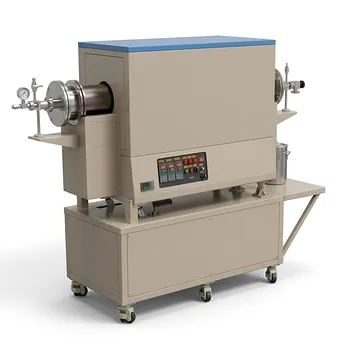
900°C Max Rotary Tube Furnace with 8 Inch 310S Alloy Tube and Optional Multi Zone Heating for Industrial Material Calcination
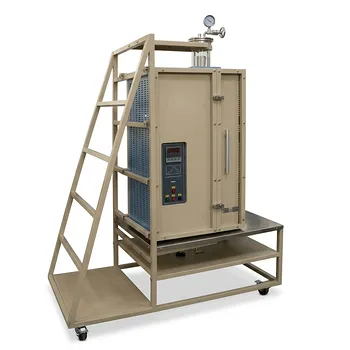
Split Vertical Tube Furnace with 1200C Quartz Tube and Stainless Steel Vacuum Flanges for Rapid Thermal Processing

High Temperature 1700C Tube Furnace with High Vacuum Turbomolecular Pump System and Multi Channel Mass Flow Controller Gas Mixer

1100C Tube Furnace with Vacuum Flange and Programmable Temperature Controller for Material Science and Industrial Heat Treatment
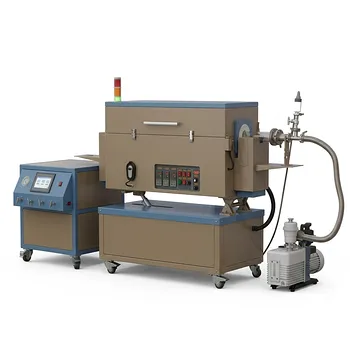
5 Inch Three Zone Rotary Tube Furnace with Integrated Gas Delivery System and 1200C Capability for Advanced Material CVD Processing
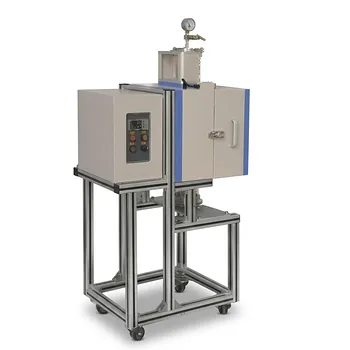
1200°C 5 Inch Vertical Quartz Tube Furnace with Stainless Steel Vacuum Flanges
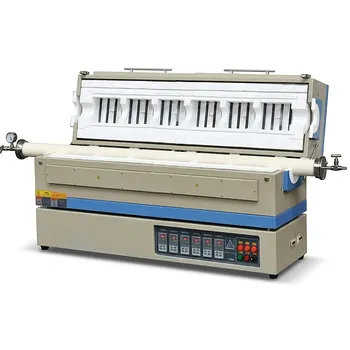
High Temperature 1700C Six Zone Split Tube Furnace with Alumina Tube and Water Cooled Flanges
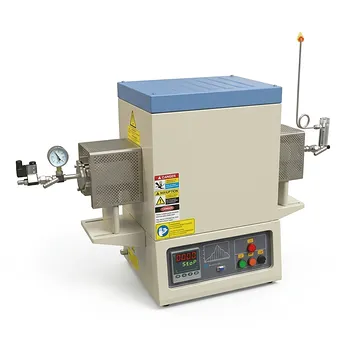
1700C Hydrogen Gas Tube Furnace with 60mm Alumina Process Tube and Integrated Hydrogen Safety Detector

Compact Vertical Split Quartz Tube Furnace with Stainless Steel Vacuum Flanges for Rapid Thermal Quenching and Controlled Atmosphere Material Processing

High Temperature 1700C Benchtop Tube Furnace with 5 Inch Heating Zone High Purity Alumina Tube and Vacuum Sealing Flanges
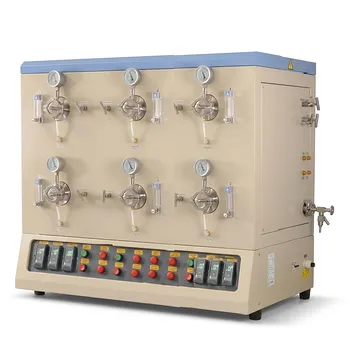
1200C High Throughput Multi Channel Tube Furnace with 50mm Quartz Tubes for Annealing and Material Phase Diagram Research
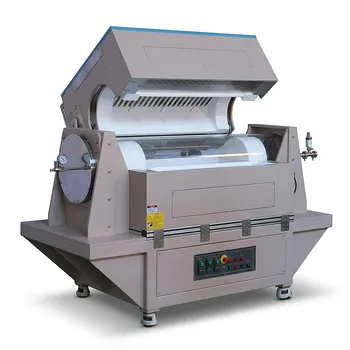
Three Zone Tube Furnace with 11 Inch or 15 Inch Quartz Tube and Hinged Flanges for Vacuum Atmosphere Heat Treatment

1800C High Temperature Compact Vacuum Tube Furnace with 60mm OD Alumina Tube and Kanthal MoSi2 Heating Elements

High Temperature 1700C Vertical Tube Furnace for Powder Spherification and Material Sintering
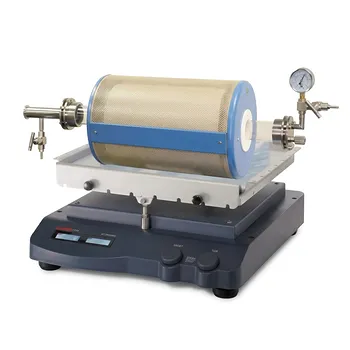
High Temperature Rocking Tube Furnace with Quartz Tube and Vacuum Flange for Materials Synthesis

High Temperature Automated 5 Inch Tube Furnace for Autonomous Material Research and Advanced Laboratory R&D
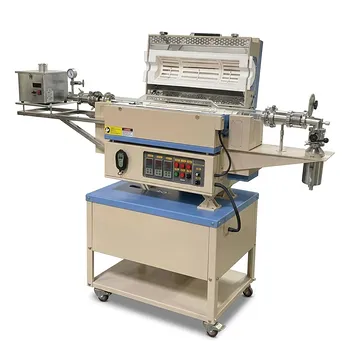
5 Inch Rotary Tube Furnace with Automatic Feeding and Receiving System 1200C Three Zone CVD Powder Processing