Why is temperature field mapping with thermocouples necessary for tube furnace experiments? Optimize Precision & Results
Updated 3 months ago
Temperature field mapping is critical because the nominal temperature set on a furnace controller rarely reflects the actual thermal conditions experienced by a sample. Accurate mapping with high-precision thermocouples establishes the exact axial temperature profile, allowing researchers to identify the isothermal zone and calculate the temperature gradients necessary for precise theoretical modeling and repeatable material synthesis.
Core Takeaway: Temperature field mapping transforms a tube furnace from a generic heating tool into a precision instrument by quantifying the spatial temperature variations that directly dictate reaction kinetics, phase transformations, and experimental reproducibility.
Defining the Thermal Environment
Locating the Isothermal Zone
In any tube furnace, the temperature is not uniform across the entire length of the tube. Mapping identifies the isothermal zone, which is the specific region where the thermal field is most stable and uniform.
Placing a sample outside of this verified zone can lead to unintended thermal gradients, which compromise the repeatability of the experiment and make it difficult to compare results across different equipment.
Quantifying the Axial Gradient
The efficiency of processes like zone melting is determined by the crystallization front velocity. This velocity is a direct product of the axial temperature gradient and the cooling rate.
Without precise mapping data at different axial positions, it is impossible to build accurate theoretical models or evaluate the effectiveness of element separation in purified materials.
Validating Material Transformations and Kinetics
Managing Endothermic and Exothermic Transitions
Real-time monitoring with thermocouples allows researchers to observe chemical milestones, such as limestone decomposition. Because decarbonization is strongly endothermic, a temperature plateau occurs within the material layer.
Mapping identifies the end of this plateau, signaling complete decarbonization. This prevents "over-calcination," where excessive heat damages the quality of the resulting quicklime.
Controlling Temperature-Dependent Growth
In processes like Vapor-Liquid-Solid (VLS) growth or the production of activated carbon, even minor fluctuations can alter vapor pressure and pore size distribution. High-precision feedback ensures the furnace maintains constant thermodynamic conditions.
Thermocouples also monitor the temperature recovery time when a cold sample is inserted into a preheated furnace. This ensures the material undergoes the intended thermal cycle rather than an unpredictable ramp-up.
Engineering and Efficiency Considerations
Assessing Heat Transfer and Insulation
By capturing data from both the interior melting chamber and the exterior furnace walls, technical personnel can calculate conductive heat transfer. This data is essential for evaluating the effectiveness of insulation materials like ceramic fiber.
Mapping helps identify heat loss ratios, which are used to optimize furnace structural designs. This leads to better fuel utilization and improved energy efficiency in industrial-scale operations.
Overcoming Thermal Inertia
Certain materials, such as coal powder, exhibit significant thermal inertia, meaning the internal temperature lags behind the furnace environment. Dual thermocouples allow for a comparison between the ambient furnace temperature and the actual temperature of the sample core.
This synchronized data collection is vital for validating pyrolysis mathematical models. It ensures that heating times are long enough to produce uniform quality across the entire sample.
Understanding the Trade-offs
The Risk of Point-Source Errors
While thermocouples provide high-precision data, they only measure the temperature at a specific point. If a thermocouple is slightly misaligned or loses contact with a surface, the resulting data may suggest a thermal stability that does not actually exist across the entire sample.
Interference and Contamination
Inserting multiple thermocouples into a reaction zone can sometimes disturb the laminar flow of gases or introduce trace contaminants. Researchers must balance the need for more data points with the risk of physically or chemically altering the experimental environment.
How to Apply Mapping to Your Project
Making the Right Choice for Your Goal
To maximize the value of your tube furnace experiments, tailor your mapping strategy to your specific objective:
- If your primary focus is material purity (e.g., Zone Melting): Use multi-point thermocouples to calculate the exact temperature gradient at the crystallization front to control separation efficiency.
- If your primary focus is chemical reaction timing (e.g., Calcination): Monitor the internal material layer to identify temperature plateaus, ensuring you stop heating the moment the reaction reaches completion.
- If your primary focus is experimental reproducibility: Map the furnace tube to define the boundaries of the isothermal zone and ensure every sample is placed strictly within these limits.
- If your primary focus is equipment optimization: Capture simultaneous data from internal chambers and external walls to calculate heat loss and verify insulation performance.
Precise temperature mapping is the bridge between a theoretical heating program and the actual physical reality of the thermal field.
Summary Table:
| Reason for Mapping | Key Benefit | Research Impact |
|---|---|---|
| Isothermal Zone ID | Locates the most stable heating region | Ensures experimental repeatability |
| Axial Gradient Calc | Measures crystallization front velocity | Enables accurate theoretical modeling |
| Thermal Plateau Monitoring | Identifies reaction completion points | Prevents over-calcination or damage |
| Heat Loss Analysis | Evaluates insulation effectiveness | Optimizes energy & furnace design |
| Thermal Inertia Tracking | Syncs sample core with ambient temp | Validates pyrolysis mathematical models |
Elevate Your Research with Precision Thermal Solutions
At THERMUNITS, we understand that breakthrough material science requires absolute control over your thermal environment. As a leading manufacturer of high-temperature laboratory equipment, we provide the precision tools necessary to master temperature gradients and isothermal zones.
Whether you are performing zone melting, CVD synthesis, or complex heat treatments, our comprehensive range of equipment—including Tube, Muffle, Vacuum, Atmosphere, Rotary, and Hot Press furnaces, CVD/PECVD systems, and VIM furnaces—is engineered for excellence in industrial R&D.
Ready to optimize your lab’s efficiency and accuracy? Contact THERMUNITS today to discuss your specific application and find the perfect heat treatment solution for your project.
References
- Alex Scrimshire, Paul A. Bingham. Benchtop Zone Refinement of Simulated Future Spent Nuclear Fuel Pyroprocessing Waste. DOI: 10.3390/ma17081781
Mentioned Products
- Vertical 1700C Vacuum and Atmosphere Tube Furnace with 80mm Alumina Tube
- Compact High Temperature 1600C Tube Furnace with 50mm Alumina Tube and Vacuum Flanges for Material Sintering
- 900°C Max Rotary Tube Furnace with 8 Inch 310S Alloy Tube and Optional Multi Zone Heating for Industrial Material Calcination
- Split Vertical Tube Furnace with 1200C Quartz Tube and Stainless Steel Vacuum Flanges for Rapid Thermal Processing
- High Temperature 1700C Tube Furnace with High Vacuum Turbomolecular Pump System and Multi Channel Mass Flow Controller Gas Mixer
People Also Ask
- How is an industrial-grade vertical tube furnace utilized in smelting leaching residues? Enhance Metal Recovery Efficiency
- What is the function of a laboratory-grade vertical tube furnace in fast pyrolysis? Optimize Composite Research.
- How does a vertical tube furnace facilitate thermoelectric alloy melting? Precision synthesis for material homogeneity.
- Why is a thermocouple sensor indispensable for monitoring the vertical tube furnace during gallium oxide nanowire production? Optimize VLS Growth
- What are the advantages of using a vertical tube furnace for crucible experiments simulating steel-slag interactions?

Tech Team · ThermUnits
Last updated on Jun 03, 2026
Related Products

Vertical 1700C Vacuum and Atmosphere Tube Furnace with 80mm Alumina Tube

Compact High Temperature 1600C Tube Furnace with 50mm Alumina Tube and Vacuum Flanges for Material Sintering
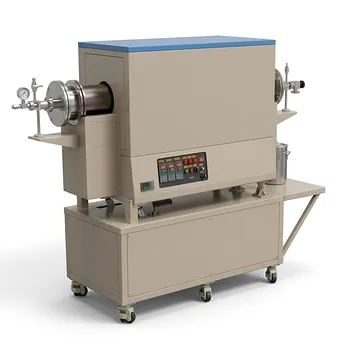
900°C Max Rotary Tube Furnace with 8 Inch 310S Alloy Tube and Optional Multi Zone Heating for Industrial Material Calcination
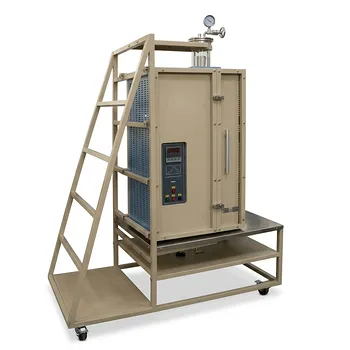
Split Vertical Tube Furnace with 1200C Quartz Tube and Stainless Steel Vacuum Flanges for Rapid Thermal Processing

High Temperature 1700C Tube Furnace with High Vacuum Turbomolecular Pump System and Multi Channel Mass Flow Controller Gas Mixer

1100C Tube Furnace with Vacuum Flange and Programmable Temperature Controller for Material Science and Industrial Heat Treatment
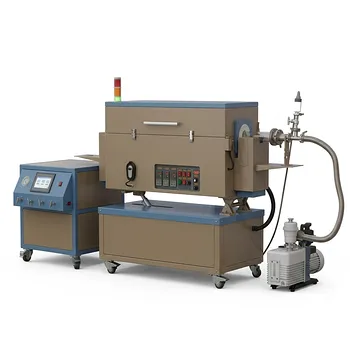
5 Inch Three Zone Rotary Tube Furnace with Integrated Gas Delivery System and 1200C Capability for Advanced Material CVD Processing
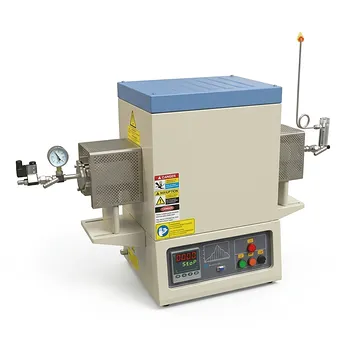
1700C Hydrogen Gas Tube Furnace with 60mm Alumina Process Tube and Integrated Hydrogen Safety Detector
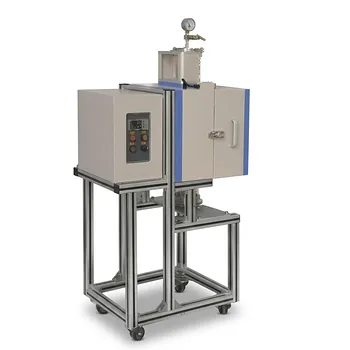
1200°C 5 Inch Vertical Quartz Tube Furnace with Stainless Steel Vacuum Flanges
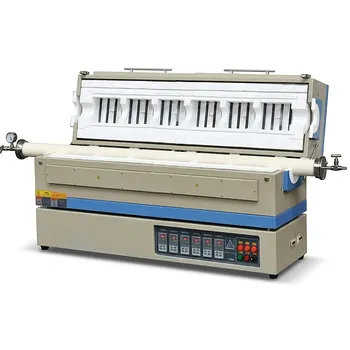
High Temperature 1700C Six Zone Split Tube Furnace with Alumina Tube and Water Cooled Flanges

Compact Vertical Split Quartz Tube Furnace with Stainless Steel Vacuum Flanges for Rapid Thermal Quenching and Controlled Atmosphere Material Processing

High Temperature 1700C Benchtop Tube Furnace with 5 Inch Heating Zone High Purity Alumina Tube and Vacuum Sealing Flanges
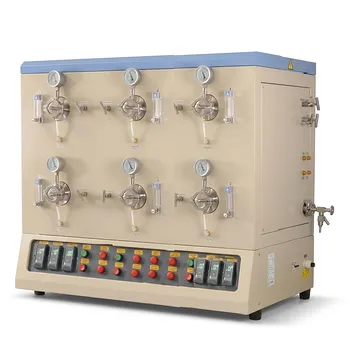
1200C High Throughput Multi Channel Tube Furnace with 50mm Quartz Tubes for Annealing and Material Phase Diagram Research

1800C High Temperature Compact Vacuum Tube Furnace with 60mm OD Alumina Tube and Kanthal MoSi2 Heating Elements
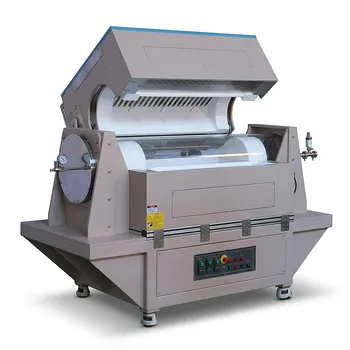
Three Zone Tube Furnace with 11 Inch or 15 Inch Quartz Tube and Hinged Flanges for Vacuum Atmosphere Heat Treatment

High Temperature 1700C Vertical Tube Furnace for Powder Spherification and Material Sintering
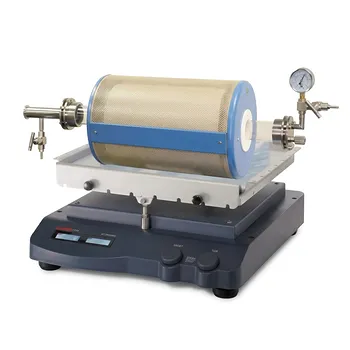
High Temperature Rocking Tube Furnace with Quartz Tube and Vacuum Flange for Materials Synthesis

High Temperature Automated 5 Inch Tube Furnace for Autonomous Material Research and Advanced Laboratory R&D
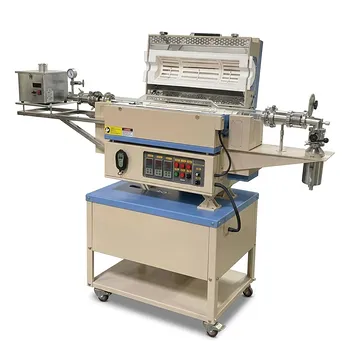
5 Inch Rotary Tube Furnace with Automatic Feeding and Receiving System 1200C Three Zone CVD Powder Processing