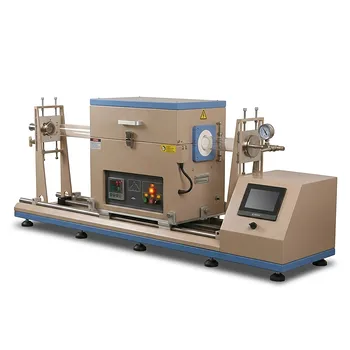
Why is the atmosphere control system of a tube furnace critical for gas-phase phosphidation? Ensure Phase Purity
Updated 3 months ago
Atmosphere control is the linchpin of successful gas-phase phosphidation. This system prevents unwanted secondary oxidation of metal oxides at high temperatures while serving as the essential transport mechanism for phosphorus-bearing gases. By isolating the reaction from ambient air, it ensures a uniform solid-gas interface reaction necessary for synthesizing high-performance catalytic structures.
The atmosphere control system transforms a tube furnace into a precision chemical reactor by maintaining a strictly inert or reducing environment. This control is vital for managing the transport of phosphorus vapor and ensuring the chemical transition from oxides to phosphides occurs without atmospheric interference.
Preventing Unintended Chemical Transitions
Shielding Against Secondary Oxidation
At the high temperatures required for phosphidation, metal oxides are highly susceptible to secondary oxidation or uncontrolled phase changes if exposed to even trace amounts of oxygen. The atmosphere control system uses a sealed furnace tube to isolate the sample from moisture and oxygen in the ambient air. This isolation preserves the chemical stoichiometry of the starting material, allowing the reaction to proceed exactly as intended.
Maintaining Phase Purity
Transition metal phosphides (TMPs) are often unstable in air at elevated temperatures. By introducing high-purity inert gases like Argon or Nitrogen, the system creates a protective envelope that prevents the newly formed phosphides from degrading. This is critical for achieving high-purity active phases, such as iron phosphide (FeP), which would otherwise revert to oxides or phosphates.
Managing the Phosphidation Chemistry
The Role of the Carrier Gas
The system maintains a continuous flow of inert gas to act as a carrier for phosphine gas (PH3) generated from reagents like sodium hypophosphite. Without precise flow control, the phosphorus vapor would not reach the metal oxide precursors uniformly. A stable flow ensures that the phosphorus vapor reacts completely with the oxide intermediates, facilitating a smooth transition from crystalline oxides to nanocrystalline phosphides.
Engineering Lattice Defects and Conductivity
Precise atmosphere control allows for the intentional introduction of lattice defects and oxygen vacancies. By regulating the chemical vapor environment, researchers can achieve surface phosphorus doping that significantly enhances material conductivity. This process is essential for creating complex structures like NiCoFePx, where abundant defects are required to provide active sites for catalytic applications.
Understanding the Trade-offs and Pitfalls
Flow Rate Volatility
Choosing the correct gas flow rate is a delicate balance. If the flow rate is too low, phosphorus vapor may deposit unevenly, leading to incomplete phosphidation and non-uniform material properties. Conversely, a flow rate that is too high can sweep the reactive phosphorus gas out of the hot zone before it has sufficient time to react with the sample, resulting in poor conversion efficiency.
Seal Integrity and Contamination
The effectiveness of the atmosphere control is entirely dependent on the mechanical seals of the tube furnace. Even a microscopic leak can introduce enough oxygen to inhibit the reducing environment, potentially leading to the formation of unwanted amorphous phosphate layers rather than the desired crystalline phosphide phases. Regular maintenance of O-rings and vacuum fittings is mandatory for reproducible results.
How to Apply This to Your Research
Making the Right Choice for Your Goal
To achieve the best results during gas-phase phosphidation, your atmospheric strategy must align with your specific material objectives.
- If your primary focus is maximizing catalytic activity: Prioritize a stable, low-flow inert environment to encourage the formation of abundant lattice defects and oxygen vacancies.
- If your primary focus is phase purity and crystallinity: Use a high-purity Argon/Hydrogen (Ar/H2) reducing mixture to ensure all oxide precursors are fully converted to phosphides without any residual oxygen contamination.
- If your primary focus is uniform surface doping: Ensure the furnace is purged with high-flow inert gas before heating to completely exclude air interference, then switch to a calibrated steady flow during the reaction.
Precise atmospheric regulation is the only way to ensure that the chemical transition of your material is driven by the intended reagents rather than environmental contamination.
Summary Table:
| Key Feature | Role in Phosphidation | Research Benefit |
|---|---|---|
| Oxidation Shielding | Isolates sample from moisture and oxygen | Preserves chemical stoichiometry and phase purity |
| Carrier Gas Flow | Transports phosphorus vapor (PH3) to sample | Ensures uniform reaction and complete conversion |
| Defect Engineering | Regulates chemical vapor environment | Enhances conductivity and catalytic active sites |
| Mechanical Seals | Maintains inert/reducing environment | Prevents formation of unwanted amorphous phosphates |
Unlock Precision Thermal Processing with THERMUNITS
Achieving successful gas-phase phosphidation requires absolute control over your thermal environment. THERMUNITS is a leading manufacturer of high-precision high-temperature laboratory equipment, specifically designed for material science and industrial R&D.
Our advanced Tube and Atmosphere Furnaces provide the airtight seal integrity and stable flow control necessary for delicate chemical transitions. In addition to tube furnaces, our comprehensive range includes:
- Muffle, Vacuum, and Rotary Furnaces
- CVD/PECVD Systems for sophisticated thin-film growth
- Hot Press and Vacuum Induction Melting (VIM) Furnaces
- Dental Furnaces and High-Quality Thermal Elements
Empower your research with reliable, professional-grade heat treatment solutions. Contact our technical experts today to discuss your specific application needs and find the perfect equipment for your laboratory.
References
- Gouda K. Helal, Pingping Zhao. Electrochemical water splitting enhancement by introducing mesoporous NiCoFe-trimetallic phosphide nanosheets as catalysts for the oxygen evolution reaction. DOI: 10.1039/d4ra02344g
Mentioned Products
- Vertical 1700C Vacuum and Atmosphere Tube Furnace with 80mm Alumina Tube
- Compact High Temperature 1600C Tube Furnace with 50mm Alumina Tube and Vacuum Flanges for Material Sintering
- 900°C Max Rotary Tube Furnace with 8 Inch 310S Alloy Tube and Optional Multi Zone Heating for Industrial Material Calcination
- Split Vertical Tube Furnace with 1200C Quartz Tube and Stainless Steel Vacuum Flanges for Rapid Thermal Processing
- High Temperature 1700C Tube Furnace with High Vacuum Turbomolecular Pump System and Multi Channel Mass Flow Controller Gas Mixer
People Also Ask
- How is an industrial-grade vertical tube furnace utilized in smelting leaching residues? Enhance Metal Recovery Efficiency
- What is the function of a laboratory-grade vertical tube furnace in fast pyrolysis? Optimize Composite Research.
- How does a vertical tube furnace facilitate thermoelectric alloy melting? Precision synthesis for material homogeneity.
- Why is a thermocouple sensor indispensable for monitoring the vertical tube furnace during gallium oxide nanowire production? Optimize VLS Growth
- What are the advantages of using a vertical tube furnace for crucible experiments simulating steel-slag interactions?

Tech Team · ThermUnits
Last updated on Jun 02, 2026
Related Products

Vertical 1700C Vacuum and Atmosphere Tube Furnace with 80mm Alumina Tube

Compact High Temperature 1600C Tube Furnace with 50mm Alumina Tube and Vacuum Flanges for Material Sintering
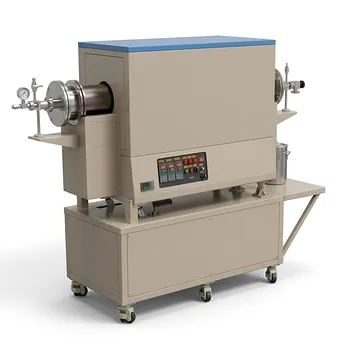
900°C Max Rotary Tube Furnace with 8 Inch 310S Alloy Tube and Optional Multi Zone Heating for Industrial Material Calcination
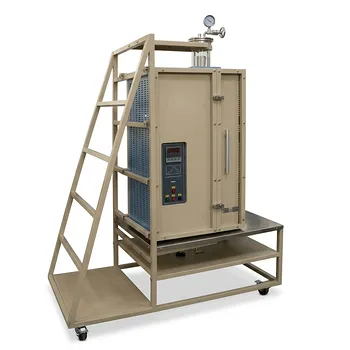
Split Vertical Tube Furnace with 1200C Quartz Tube and Stainless Steel Vacuum Flanges for Rapid Thermal Processing

High Temperature 1700C Tube Furnace with High Vacuum Turbomolecular Pump System and Multi Channel Mass Flow Controller Gas Mixer

1100C Tube Furnace with Vacuum Flange and Programmable Temperature Controller for Material Science and Industrial Heat Treatment

5 Inch Three Zone Rotary Tube Furnace with Integrated Gas Delivery System and 1200C Capability for Advanced Material CVD Processing

1200°C 5 Inch Vertical Quartz Tube Furnace with Stainless Steel Vacuum Flanges

1700C Hydrogen Gas Tube Furnace with 60mm Alumina Process Tube and Integrated Hydrogen Safety Detector

High Temperature 1700C Six Zone Split Tube Furnace with Alumina Tube and Water Cooled Flanges

Compact Vertical Split Quartz Tube Furnace with Stainless Steel Vacuum Flanges for Rapid Thermal Quenching and Controlled Atmosphere Material Processing

High Temperature 1700C Benchtop Tube Furnace with 5 Inch Heating Zone High Purity Alumina Tube and Vacuum Sealing Flanges

1800C High Temperature Compact Vacuum Tube Furnace with 60mm OD Alumina Tube and Kanthal MoSi2 Heating Elements

1200C High Throughput Multi Channel Tube Furnace with 50mm Quartz Tubes for Annealing and Material Phase Diagram Research

Three Zone Tube Furnace with 11 Inch or 15 Inch Quartz Tube and Hinged Flanges for Vacuum Atmosphere Heat Treatment

High Temperature 1700C Vertical Tube Furnace for Powder Spherification and Material Sintering
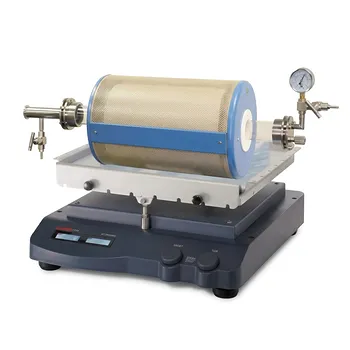
High Temperature Rocking Tube Furnace with Quartz Tube and Vacuum Flange for Materials Synthesis

High Temperature Automated 5 Inch Tube Furnace for Autonomous Material Research and Advanced Laboratory R&D
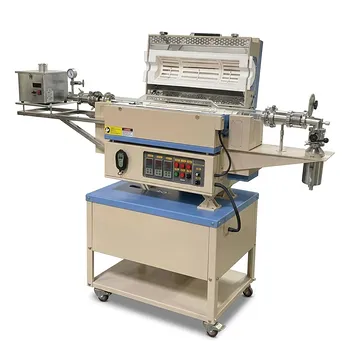
5 Inch Rotary Tube Furnace with Automatic Feeding and Receiving System 1200C Three Zone CVD Powder Processing