Why is temperature zone control critical for SeO2 sublimation? Achieve High Purity in Your Tube Furnace
Updated 3 months ago
Precise control of the constant temperature zone is the fundamental requirement for high-purity selenium dioxide ($SeO_2$) sublimation. In a laboratory-scale tube furnace, this zone provides the stable thermal environment necessary to exploit the specific saturated vapor pressures of various oxides. By maintaining a uniform temperature, the system ensures that $SeO_2$ selectively volatilizes while leaving behind low-volatility impurities, allowing for clean recrystallization at the cooler ends of the furnace tube.
Core Takeaway: Effective selenium dioxide sublimation relies on the furnace's ability to maintain a stable, uniform thermal environment that facilitates selective phase changes. This precision ensures that only the target compound transitions to the vapor phase, directly determining the chemical purity and structural integrity of the final product.
The Thermodynamics of Selective Volatilization
Leveraging Saturated Vapor Pressure
The primary objective of using a tube furnace for $SeO_2$ is to utilize the differences in saturated vapor pressures between the target compound and its impurities. A stable constant temperature zone ensures that the energy input is sufficient to vaporize $SeO_2$ without reaching the boiling or sublimation points of unwanted oxides.
Precise Ramp Rate Management
The furnace must heat the crude powder at a controlled, constant rate—typically 5 °C/min—to prevent thermal shock or uneven sublimation. This gradual increase allows the material to reach the target temperature uniformly, ensuring the first physical phase change occurs consistently across the entire sample.
Maintaining Thermal Equilibrium
A high-quality tube furnace utilizes a closed-loop feedback system with thermocouples (Type K, S, or B) to monitor the zone. By sending data to a PID-based controller, the system can maintain temperature stability within ±1 °C, which is critical for preventing the co-volatilization of contaminants.
Ensuring Product Purity and Yield
Effective Impurity Separation
The constant temperature zone acts as a thermal filter, isolating the $SeO_2$ from low-volatility impurities. Because these impurities require higher temperatures to transition into a gaseous state, they remain in the heated center of the tube while the purified $SeO_2$ migrates and recrystallizes.
Uniform Phase Transitions
Consistent thermal energy throughout the constant zone ensures that chemical reactions and phase transitions occur thoroughly and uniformly. This prevents the formation of "cold spots" where material might partially react, leading to inconsistent yields or trapped gasses within the crystal structure.
Controlling Recrystallization Patterns
While the constant zone handles volatilization, its stability directly influences the thermal gradient leading to the ends of the tube. A stable core temperature creates a predictable gradient, which is essential for controlled recrystallization and the growth of high-quality $SeO_2$ crystals.
Understanding the Trade-offs and Risks
Throughput vs. Purity
Increasing the temperature or ramp rate may speed up the sublimation process, but it risks reducing product purity. Higher temperatures can cause impurities with higher boiling points to enter the vapor phase, contaminating the final crystals.
Precision vs. Equipment Complexity
Achieving a perfectly uniform constant temperature zone requires sophisticated multi-zone heating elements and advanced controllers. While this increases the complexity and cost of the laboratory setup, it is necessary to avoid local overheating, which can lead to tube deformation or material melting.
Gradient Management Pitfalls
If the constant temperature zone is too short or unstable, the thermal gradient becomes too steep. This can lead to premature recrystallization or "clogging" near the edge of the heated zone rather than at the intended collection points at the tube ends.
Practical Application for Laboratory Sublimation
Optimizing Your Sublimation Process
To achieve the best results in $SeO_2$ purification, the operator must balance thermal stability with the specific physical properties of the crude material.
- If your primary focus is Maximum Chemical Purity: Prioritize a slow ramp rate and a highly stable PID-controlled soak time to ensure only $SeO_2$ reaches its sublimation point.
- If your primary focus is Crystal Size and Structure: Focus on the stability of the thermal gradient between the constant zone and the tube ends to allow for slow, organized recrystallization.
- If your primary focus is High Throughput: Utilize a multi-zone furnace to extend the length of the constant temperature zone, allowing for larger batches without sacrificing thermal uniformity.
By mastering the thermal environment of the constant temperature zone, researchers can transform crude powders into high-performance materials with predictable chemical and physical properties.
Summary Table:
| Factor | Role in Sublimation | Lab-Scale Impact |
|---|---|---|
| Vapor Pressure Control | Enables selective volatilization | Isolates $SeO_2$ from low-volatility impurities |
| Ramp Rate (5°C/min) | Prevents thermal shock | Ensures consistent and uniform phase transitions |
| PID Stability (±1°C) | Maintains thermal equilibrium | Eliminates the risk of co-volatilization of contaminants |
| Thermal Gradient | Regulates cooling zones | Controls recrystallization patterns and crystal quality |
Elevate Your Material Research with THERMUNITS Thermal Solutions
Achieving high-purity results in $SeO_2$ sublimation requires absolute thermal precision. THERMUNITS is a leading manufacturer of high-temperature laboratory equipment, providing the advanced thermal processing solutions essential for cutting-edge material science and industrial R&D.
Our comprehensive range of equipment includes:
- Furnaces: Muffle, Vacuum, Atmosphere, Tube, Rotary, and Hot Press furnaces.
- Advanced Systems: CVD/PECVD systems, Dental Furnaces, and Electric Rotary Kilns.
- Specialized Gear: Vacuum Induction Melting (VIM) furnaces and high-quality Thermal Elements.
We empower researchers with equipment designed for superior temperature uniformity and stability. Ready to optimize your lab’s efficiency and product purity?
Contact our expert team today to find your custom solution!
References
- Hui Zhang, Yifan Shi. Preparing 5N Selenium from Crude Selenium Using a Simple Oxidation–Atmospheric Sublimation–Dissolution–Reduction Method. DOI: 10.1007/s40831-024-00960-w
Mentioned Products
- Vertical 1700C Vacuum and Atmosphere Tube Furnace with 80mm Alumina Tube
- Compact High Temperature 1600C Tube Furnace with 50mm Alumina Tube and Vacuum Flanges for Material Sintering
- 900°C Max Rotary Tube Furnace with 8 Inch 310S Alloy Tube and Optional Multi Zone Heating for Industrial Material Calcination
- Split Vertical Tube Furnace with 1200C Quartz Tube and Stainless Steel Vacuum Flanges for Rapid Thermal Processing
- High Temperature 1700C Tube Furnace with High Vacuum Turbomolecular Pump System and Multi Channel Mass Flow Controller Gas Mixer
People Also Ask
- How is an industrial-grade vertical tube furnace utilized in smelting leaching residues? Enhance Metal Recovery Efficiency
- What is the function of a laboratory-grade vertical tube furnace in fast pyrolysis? Optimize Composite Research.
- How does a vertical tube furnace facilitate thermoelectric alloy melting? Precision synthesis for material homogeneity.
- Why is a thermocouple sensor indispensable for monitoring the vertical tube furnace during gallium oxide nanowire production? Optimize VLS Growth
- What are the advantages of using a vertical tube furnace for crucible experiments simulating steel-slag interactions?

Tech Team · ThermUnits
Last updated on Jun 02, 2026
Related Products
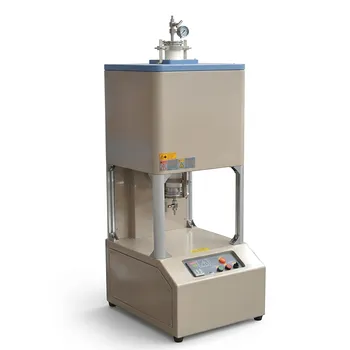
Vertical 1700C Vacuum and Atmosphere Tube Furnace with 80mm Alumina Tube

Compact High Temperature 1600C Tube Furnace with 50mm Alumina Tube and Vacuum Flanges for Material Sintering
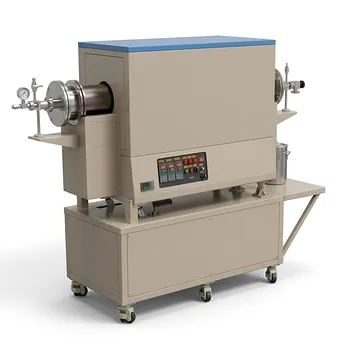
900°C Max Rotary Tube Furnace with 8 Inch 310S Alloy Tube and Optional Multi Zone Heating for Industrial Material Calcination
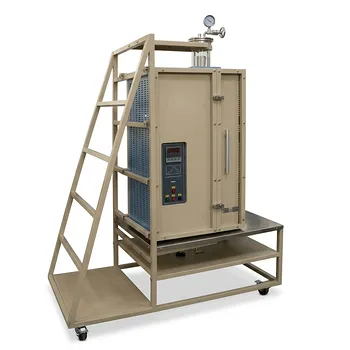
Split Vertical Tube Furnace with 1200C Quartz Tube and Stainless Steel Vacuum Flanges for Rapid Thermal Processing

High Temperature 1700C Tube Furnace with High Vacuum Turbomolecular Pump System and Multi Channel Mass Flow Controller Gas Mixer
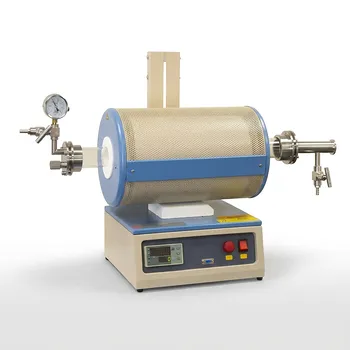
1100C Tube Furnace with Vacuum Flange and Programmable Temperature Controller for Material Science and Industrial Heat Treatment
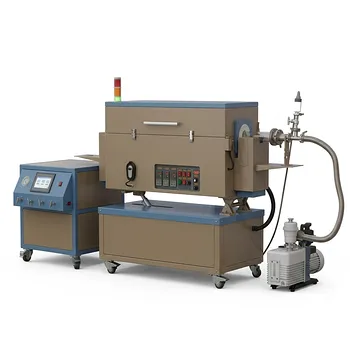
5 Inch Three Zone Rotary Tube Furnace with Integrated Gas Delivery System and 1200C Capability for Advanced Material CVD Processing
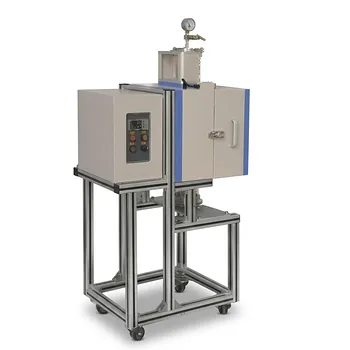
1200°C 5 Inch Vertical Quartz Tube Furnace with Stainless Steel Vacuum Flanges
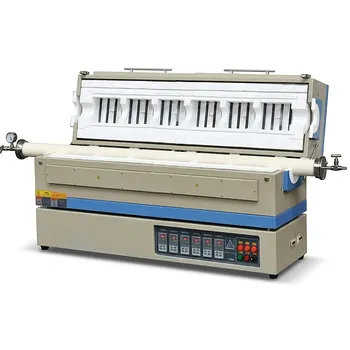
High Temperature 1700C Six Zone Split Tube Furnace with Alumina Tube and Water Cooled Flanges
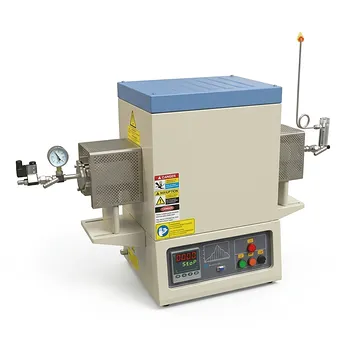
1700C Hydrogen Gas Tube Furnace with 60mm Alumina Process Tube and Integrated Hydrogen Safety Detector
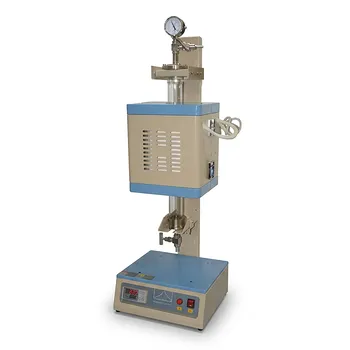
Compact Vertical Split Quartz Tube Furnace with Stainless Steel Vacuum Flanges for Rapid Thermal Quenching and Controlled Atmosphere Material Processing
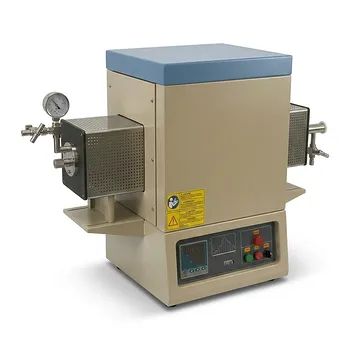
High Temperature 1700C Benchtop Tube Furnace with 5 Inch Heating Zone High Purity Alumina Tube and Vacuum Sealing Flanges
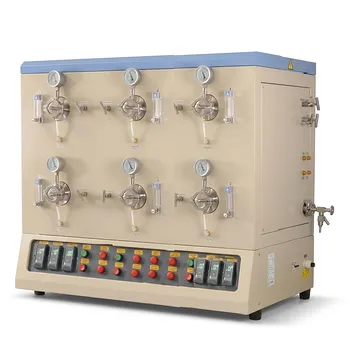
1200C High Throughput Multi Channel Tube Furnace with 50mm Quartz Tubes for Annealing and Material Phase Diagram Research

1800C High Temperature Compact Vacuum Tube Furnace with 60mm OD Alumina Tube and Kanthal MoSi2 Heating Elements
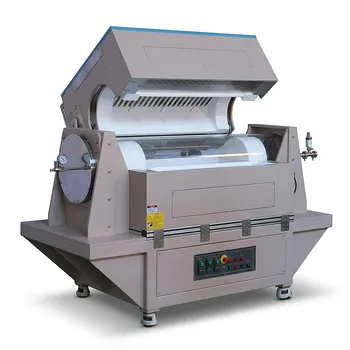
Three Zone Tube Furnace with 11 Inch or 15 Inch Quartz Tube and Hinged Flanges for Vacuum Atmosphere Heat Treatment

High Temperature 1700C Vertical Tube Furnace for Powder Spherification and Material Sintering
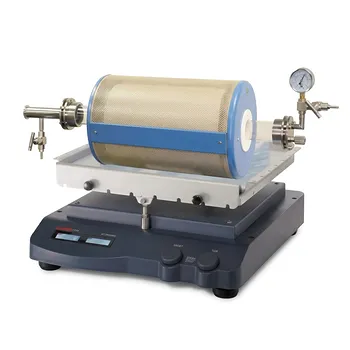
High Temperature Rocking Tube Furnace with Quartz Tube and Vacuum Flange for Materials Synthesis

High Temperature Automated 5 Inch Tube Furnace for Autonomous Material Research and Advanced Laboratory R&D
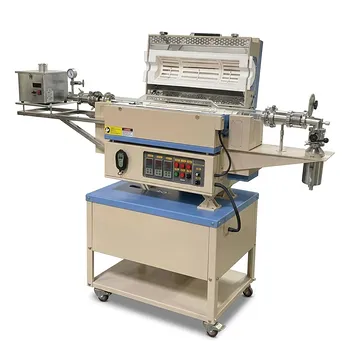
5 Inch Rotary Tube Furnace with Automatic Feeding and Receiving System 1200C Three Zone CVD Powder Processing