Why is the pre-oxidation process in a high-temperature tube furnace essential? Master PAN to Carbon Fiber Stabilization
Updated 3 months ago
The pre-oxidation process is the critical thermal stabilization phase that transforms polyacrylonitrile (PAN) from a meltable plastic into a heat-resistant ladder polymer. Without this step, PAN fibers would simply melt or combust during the high-temperature carbonization stage, losing their fiber structure entirely. By utilizing a high-temperature tube furnace to precisely control heat and airflow, manufacturers ensure the fibers develop a stable, cross-linked chemical framework that can withstand the extreme temperatures required to create carbon fiber.
Core Takeaway: Pre-oxidation creates a chemical "skeleton" within PAN fibers through cyclization and cross-linking. This transformation ensures the material remains solid and maintains its fiber morphology during the subsequent high-heat carbonization process.
The Chemical Transformation of Molecular Chains
From Linear to Ladder Structures
Raw PAN fibers consist of linear molecular chains that are thermoplastic, meaning they melt when heated. During pre-oxidation, these linear chains undergo a process called cyclization, where they reform into a series of interconnected rings. This results in a stable, ladder-like structure that is significantly more rigid and heat-resistant than the original material.
The Role of Oxidation and Dehydrogenation
As the tube furnace maintains an oxygen-containing air atmosphere, the fibers undergo dehydrogenation and oxidation. These reactions remove hydrogen and incorporate oxygen into the molecular backbone, further stabilizing the polymer. This chemical "locking" is what prevents the fibers from burning up or losing their integrity when they eventually reach the much higher temperatures of the carbonization furnace.
Preserving Fiber Morphology and Integrity
Preventing Thermal Collapse
The primary physical goal of pre-oxidation is to preserve the fiber's morphology. Because the process creates a cross-linked structure, the fibers no longer have a melting point; they become infusible. This ensures that the high aspect ratio of the nanofibers—the "one-dimensional" shape that gives carbon fiber its strength—remains intact throughout the production cycle.
Establishing the Carbon Foundation
Pre-oxidation acts as the foundation for the final carbon substrate. By converting the thermoplastic molecules into a heat-resistant framework, the process allows for the subsequent elimination of non-carbon components (like nitrogen and hydrogen) during carbonization. This results in a final product characterized by high electrical conductivity and superior mechanical strength.
Understanding the Trade-offs and Risks
The Danger of Rapid Heating
Precision control in a tube furnace is non-negotiable because the chemical reactions in pre-oxidation are exothermic. If the heating rate is too aggressive (e.g., exceeding 2°C per minute), the internal heat generated by the fiber can lead to "thermal runaway," causing the fibers to fuse together or catch fire.
Balancing Time and Temperature
There is a critical trade-off between dwell time and structural stability. While higher temperatures (around 280°C) speed up the cyclization process, staying at these temperatures for too long can lead to over-oxidation, which degrades the final mechanical properties of the carbon fiber. Conversely, insufficient dwell time leaves a thermoplastic core that will melt during carbonization.
How to Optimize Your Pre-Oxidation Protocol
Applying these principles requires a meticulous approach to furnace settings to ensure the transition from organic precursor to carbon fiber is successful.
- If your primary focus is maximizing fiber strength: Prioritize a very slow heating rate (1°C per minute) to ensure uniform cyclization across the entire fiber diameter.
- If your primary focus is preserving nanomorphology: Ensure a constant supply of air within the tube furnace to facilitate even oxidation and prevent the fibers from collapsing into a film.
- If your primary focus is process efficiency: Calibrate your dwell time—typically around 2 hours at 260°C—to ensure the ladder structure is fully formed without inducing oxidative degradation.
Mastering the pre-oxidation phase is the most vital step in ensuring that a fragile polymer precursor successfully survives the transition into a high-performance carbon material.
Summary Table:
| Process Stage | Temperature Range | Primary Chemical Change | Physical Outcome |
|---|---|---|---|
| Pre-oxidation | 200°C – 300°C | Cyclization & Cross-linking | Thermoplastic becomes heat-resistant |
| Carbonization | 1000°C – 1500°C | Dehydrogenation & Denitrogenation | Formation of carbon-rich structure |
| Graphitization | Up to 3000°C | Orientation of carbon layers | High-modulus, high-strength fiber |
Optimize Your Carbon Fiber Research with THERMUNITS
Precise temperature control is the difference between high-performance carbon fiber and thermal failure. THERMUNITS provides state-of-the-art thermal processing solutions tailored for material science and industrial R&D. Our high-precision Tube Furnaces, Atmosphere Furnaces, and CVD systems offer the uniform heating and airflow control essential for successful PAN fiber stabilization.
Whether you are scaling up production or conducting fundamental heat treatment research, our expert team is ready to help you select the ideal equipment for your laboratory.
Ready to enhance your material properties? Contact THERMUNITS today to get a custom quote!
References
- Xiaohui Zhang, Guobin Wang. Preparation of Phosphorus/Hollow Silica Microsphere Modified Polyacrylonitrile-Based Carbon Fiber Composites and Their Thermal Insulation and Flame Retardant Properties. DOI: 10.3390/pr12112489
Mentioned Products
- High Temperature 1700C Vertical Tube Furnace for Powder Spherification and Material Sintering
- High Temperature Tube Furnace 1500C with Sliding Flanges and 50mm OD for Rapid Thermal Processing Fast Heating and Cooling
- Compact High Temperature 1600C Tube Furnace with 50mm Alumina Tube and Vacuum Flanges for Material Sintering
- High Temperature 1700C Tube Furnace with High Vacuum Turbomolecular Pump System and Multi Channel Mass Flow Controller Gas Mixer
- High Temperature 1700C Benchtop Tube Furnace with 5 Inch Heating Zone High Purity Alumina Tube and Vacuum Sealing Flanges
People Also Ask
- What role does a high-temperature vertical tube furnace play in simulating high-carbon ferromanganese slag formation?
- What functions does a vertical high-temperature tube furnace perform? Master Industrial Sintering & R&D Simulation
- What is the primary function of a high-temperature tube furnace in Cu1-N-C synthesis? Precision Thermal Control.
- High-Temp Tube Furnace Role in Converting Microbial Proteins to Iron Single-Atom Sites: Expert Synthesis Guide
- What impact does the heating rate of a tube furnace have on biochar microstructure? Optimize Your Material R&D.

Tech Team · ThermUnits
Last updated on Jun 02, 2026
Related Products

High Temperature 1700C Vertical Tube Furnace for Powder Spherification and Material Sintering

High Temperature Tube Furnace 1500C with Sliding Flanges and 50mm OD for Rapid Thermal Processing Fast Heating and Cooling

Compact High Temperature 1600C Tube Furnace with 50mm Alumina Tube and Vacuum Flanges for Material Sintering

High Temperature 1700C Tube Furnace with High Vacuum Turbomolecular Pump System and Multi Channel Mass Flow Controller Gas Mixer

High Temperature 1700C Benchtop Tube Furnace with 5 Inch Heating Zone High Purity Alumina Tube and Vacuum Sealing Flanges
1500C High Temperature Compact Tube Furnace 2 Inch OD with Vacuum Flanges and Complete Accessories
High Temperature Three Zone Tube Furnace 1700C with Alumina Tube and Water Cooled Flanges

1750°C High Temperature Benchtop Vacuum Atmosphere Tube Furnace with Kanthal Super 1800 Heating Elements and 60mm Alumina Processing Tube

1800C High Temperature Compact Vacuum Tube Furnace with 60mm OD Alumina Tube and Kanthal MoSi2 Heating Elements
High Temperature Split Tube Furnace 1500C for Material Research Vacuum and Atmosphere Thermal Processing
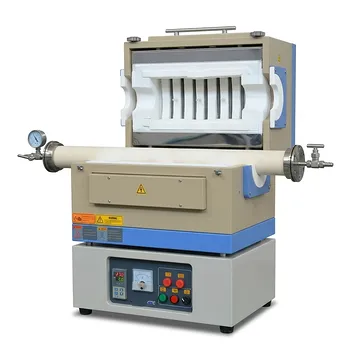
High Temperature 1600C Split Tube Furnace Vacuum Flanges Valves Optional 60mm 80mm Alumina Tube
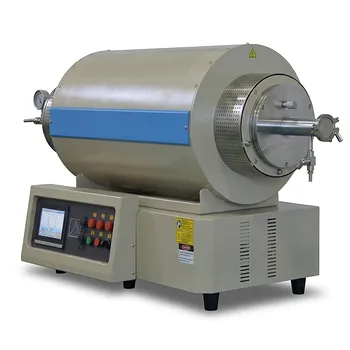
1200C Max Three Zone Tube Furnace 6 Inch OD Max with Tube and Flange
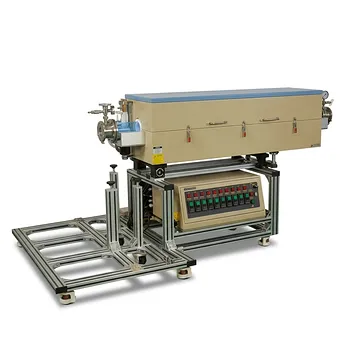
Ten Zone Multi Orientation Laboratory Tube Furnace for 1200C High Temperature Gradient Thermal Processing

1100C Tube Furnace with Vacuum Flange and Programmable Temperature Controller for Material Science and Industrial Heat Treatment

High Temperature Automated 5 Inch Tube Furnace for Autonomous Material Research and Advanced Laboratory R&D
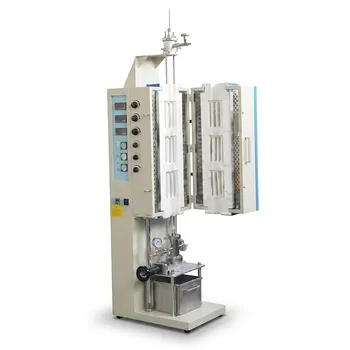
High Temperature Dual Zone Tube Furnace for Material Science Research and Professional Thermal Processing
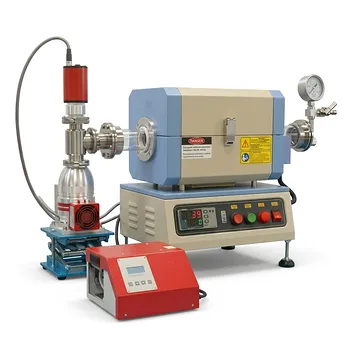
High Vacuum Compact Tube Furnace 1200C with Integrated Turbo Pump System and 8 Inch Heating Zone

1700C Hydrogen Gas Tube Furnace with 60mm Alumina Process Tube and Integrated Hydrogen Safety Detector
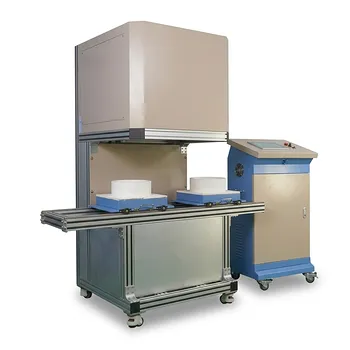
High Temperature Bottom Loading Vertical Furnace 1700C Dual Stage Sample Processing System 18L Large Capacity Thermal Treatment Equipment