Why is tube furnace boat placement critical for NSC synthesis? Optimize Thermal Gradients for Atomic Precision
Updated 3 months ago
Precise spatial arrangement within a tube furnace is the primary mechanism for controlling the chemical environment during synthesis. By placing the thioacetamide (TAA) boat upstream and the carbon source downstream, researchers exploit the furnace’s internal airflow and thermal gradients. This configuration ensures that dopant vapors are transported efficiently and react at the exact temperature required for atomic-level precision.
The strategic placement of ceramic boats allows for the independent regulation of precursor sublimation and reaction rates. This spatial control is essential to ensure that nitrogen and sulfur atoms are incorporated uniformly into the carbon nanotube lattice without disrupting the structural integrity of the material.
Leveraging Thermal Gradients for Sublimation
Matching Precursors to Local Temperatures
A tube furnace does not maintain a perfectly uniform temperature throughout its length; instead, it features a thermal gradient that is hottest at the center. Different precursors, such as thioacetamide (TAA), have specific sublimation temperatures where they transition from solid to gas. By placing the TAA boat at a specific distance from the center, researchers ensure it volatilizes at its optimal local temperature.
Regulating the Rate of Vaporization
The position of the ceramic boat directly dictates the concentration of dopant vapor entering the reaction zone. If the boat is placed too close to the heat source, the precursor may exhaust too quickly, leading to uneven doping. Precise placement allows for a steady, controlled release of nitrogen and sulfur, which is critical for maintaining the stoichiometry of the final NSC product.
Optimizing Gas Dynamics and Transport
The Upstream/Downstream Strategic Layout
In NSC synthesis, the carrier gas acts as a vehicle for the doping elements. Placing the TAA boat upstream ensures that as it vaporizes, the gas flow naturally sweeps the nitrogen and sulfur vapors toward the carbon source located downstream. This directional flow is necessary to utilize the stable internal airflow and prevent the dopants from escaping before they can react.
Ensuring Macroscopic Homogeneity
For carbon nanotubes to exhibit consistent electronic properties, the doping must be macroscopically homogeneous. When the dopant vapor "sweeps" evenly across the downstream sample surface, it facilitates a thorough top-down reaction. This method ensures that the target material is modified at an atomic level across the entire batch, rather than just on the surface layer.
Structural Growth and Diffusion
Reserving Space for Nanotube Expansion
The choice and placement of the boat also impact the physical growth of the nanotubes. High-purity quartz or alumina boats are typically used to occupy only the lower portion of the reaction tube. This design leaves sufficient expansion space for the upward growth of nanotubes, preventing the solid products from clogging the tube and halting the process.
Facilitating Gas Diffusion
A well-placed boat ensures that reaction gases, including reducing atmospheres like hydrogen, can fully diffuse through the catalyst layer. This diffusion is vital for the catalytic decomposition of carbon sources like methane. Without proper spatial clearance, the gas cannot reach the base of the nanotubes, which significantly reduces conversion efficiency.
Understanding the Trade-offs
The Risk of Thermal Overlap
While placing boats at different temperature intervals is beneficial, it introduces the risk of thermal overlap. If the boats are too close together, the heat from the reaction zone may cause premature sublimation of the upstream precursor. This leads to a loss of control over the timing of the doping process and can result in structural defects in the nanotubes.
Managing Vapor Concentration Ratios
Finding the "sweet spot" for boat placement is a delicate balance between vapor density and flow velocity. If the upstream boat is too far away, the dopant vapor may condense on the cooler walls of the tube before reaching the target. Conversely, if it is too close, the high concentration of sulfur can poison the iron catalyst, effectively killing the growth of the carbon nanotubes.
How to Apply This to Your Synthesis
To achieve high-quality N/S co-doped carbon nanotubes, your experimental setup must account for both chemical volatility and furnace geometry.
- If your primary focus is atomic precision: Prioritize the upstream placement of the TAA boat at a lower temperature zone to ensure a slow, steady release of dopant atoms.
- If your primary focus is high yield and growth rate: Ensure the downstream boat has ample overhead clearance to prevent tube clogging and allow for maximum gas diffusion through the catalyst.
- If your primary focus is material homogeneity: Use a consistent carrier gas flow rate and calibrate the boat positions to ensure the dopant vapor sweeps the entire length of the carbon source.
Mastering the spatial dynamics of the tube furnace transforms it from a simple heater into a precision instrument for molecular engineering.
Summary Table:
| Key Factor | Impact on Synthesis | Primary Purpose |
|---|---|---|
| Spatial Arrangement | Chemical environment control | Independent regulation of precursor sublimation |
| Thermal Gradients | Localized heating zones | Matches specific precursor sublimation points |
| Gas Dynamics | Upstream to downstream flow | Ensures macroscopic homogeneity of dopants |
| Physical Clearance | Expansion & diffusion space | Prevents tube clogging and facilitates growth |
Elevate Your Material Research with THERMUNITS
Precision is the difference between a failed experiment and a breakthrough in material science. THERMUNITS is a leading manufacturer of high-temperature laboratory equipment, providing the advanced thermal processing solutions required for sophisticated applications like NSC synthesis.
Our comprehensive range includes:
- Tube & Rotary Furnaces for precise gradient and atmosphere control.
- CVD/PECVD Systems for advanced chemical vapor deposition.
- Muffle, Vacuum, and Hot Press Furnaces for diverse heat treatment needs.
- Vacuum Induction Melting (VIM) and specialized Dental Furnaces.
Whether you are focused on industrial R&D or academic material science, our equipment is engineered for reliability and accuracy. Contact us today to discover how THERMUNITS can optimize your laboratory’s heat treatment efficiency and help you achieve atomic-level precision!
References
- Yue Wu, Guangbin Ji. Manipulating CNT Films with Atomic Precision for Absorption Effectiveness–Enhanced Electromagnetic Interference Shielding and Adaptive Infrared Camouflage. DOI: 10.1002/adfm.202402193
Mentioned Products
- 5 Inch Two Zone Rotary Tube Furnace 1100C for Powder CVD and Material Synthesis
- Two Zone Rotary Tube Furnace for Powder CVD Coating and Core Shell Material Synthesis 1100C
- 1500C 3-Zone Rotary Tube Furnace 60mm with Automatic Powder Feeding and Receiving System for Continuous Material Synthesis
- High Temperature Dual Zone Rotating Tube Furnace 1500C Silicon Carbide Heating for Advanced Material Synthesis
- High Temperature 1700C Vertical Tube Furnace for Powder Spherification and Material Sintering
People Also Ask
- Why is a Tube Furnace typically utilized for CVD? Achieve Precision in Graphene and 2D Material Synthesis
- How does a rotary tube furnace improve the processing of granular materials? Enhance Uniformity and Reaction Kinetics
- In what ways do rotary tube furnaces enhance chemical and specialty mineral processing? Drive Precision and Uniformity.
- Why is the precise optimization of residence time essential in the catalyst calcination process? Maximize Your Yields.
- Why use a rotary tube furnace for FACS carbonization? Ensure uniform morphology and prevent sphere agglomeration.

Tech Team · ThermUnits
Last updated on Jun 03, 2026
Related Products
5 Inch Two Zone Rotary Tube Furnace 1100C for Powder CVD and Material Synthesis
Two Zone Rotary Tube Furnace for Powder CVD Coating and Core Shell Material Synthesis 1100C
1500C 3-Zone Rotary Tube Furnace 60mm with Automatic Powder Feeding and Receiving System for Continuous Material Synthesis
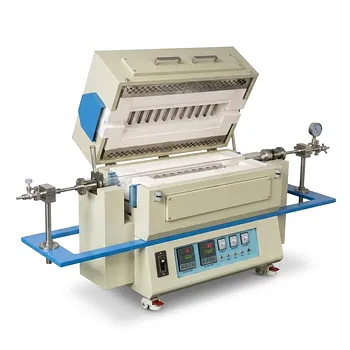
High Temperature Dual Zone Rotating Tube Furnace 1500C Silicon Carbide Heating for Advanced Material Synthesis

High Temperature 1700C Vertical Tube Furnace for Powder Spherification and Material Sintering
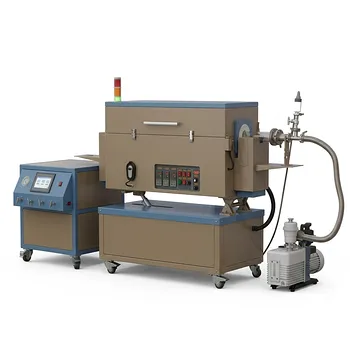
5 Inch Three Zone Rotary Tube Furnace with Integrated Gas Delivery System and 1200C Capability for Advanced Material CVD Processing
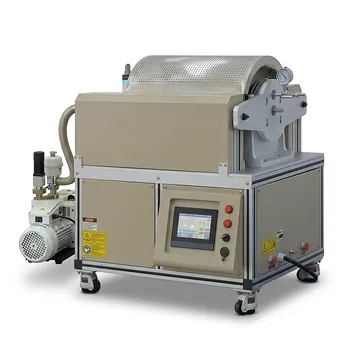
Automated 1200 C Tube Furnace for AI Material Research with 6 Inch OD and Sliding Flange
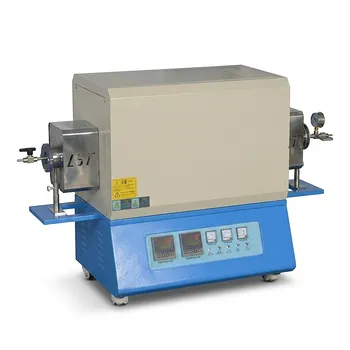
High Temperature Dual Zone Vacuum Tube Furnace for Material Research and CVD Processing
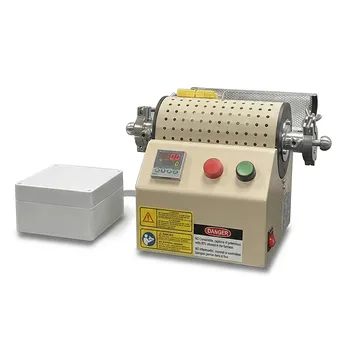
1000C Mini Tube Furnace with 20mm Quartz Tube and Vacuum Flanges for Material Science Research and Controlled Atmosphere Small Sample Processing
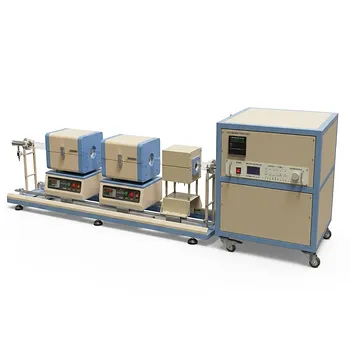
1200C Dual Sliding Tube Furnace with Dual Tubes and Flanges for PECVD Processes
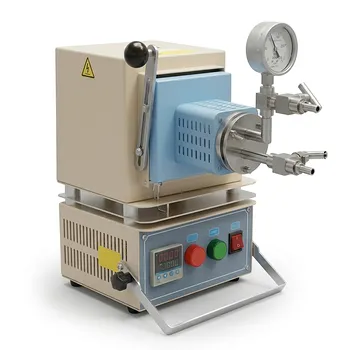
Compact Hybrid Muffle and Tube Furnace for 1000C Controlled Atmosphere Laboratory Material Sintering
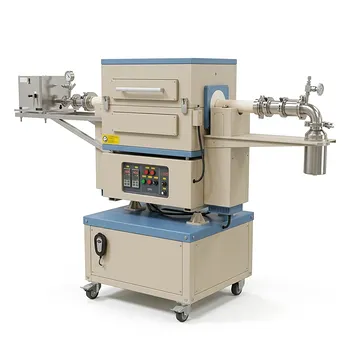
1500C Max Dual Zone Rotary Tube Furnace with 60 mm OD Alumina Tube for High Temperature Material Synthesis
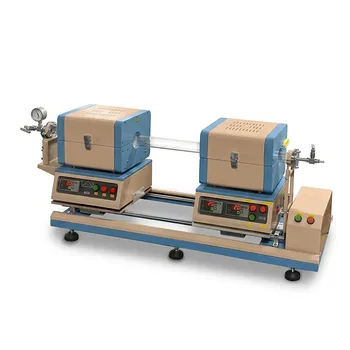
High Temperature 1200C Automatic Sliding Dual Zone Tube Furnace for 2D Transition Metal Dichalcogenides Growth and Material Sublimation Research
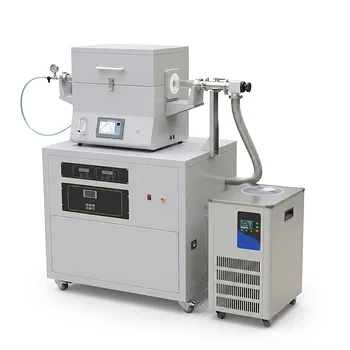
Split Chamber CVD Tube Furnace with Vacuum Station Chemical Vapor Deposition System Machine
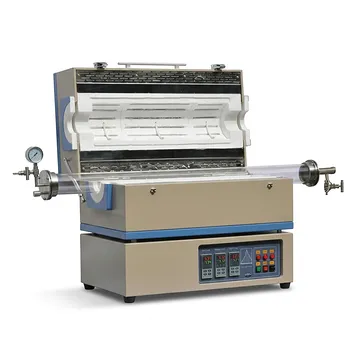
24 Inch Three Zone Split Tube Furnace with Optional Quartz Tube and Vacuum Flange System for High Temperature Material Synthesis
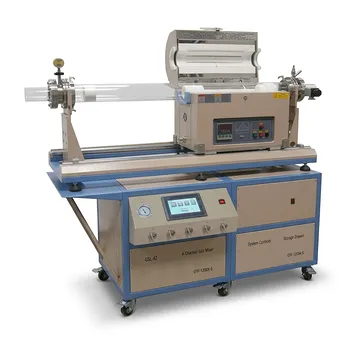
Dual Tube 100mm 80mm CVD Sliding Furnace with 4 Channel Gas Mixing and Vacuum System
5 Inch Rotary Tube Furnace with Automatic Feeding and Receiving System 1200C Three Zone CVD Powder Processing

High Temperature Automated 5 Inch Tube Furnace for Autonomous Material Research and Advanced Laboratory R&D
Compact High Temperature 1600C Tube Furnace with 50mm Alumina Tube and Vacuum Flanges for Material Sintering