Why is TGA conducted prior to tube furnace experiments? Ensure Precise Thermal Baselines & Material Consistency
Updated 6 months ago
Thermogravimetric Analysis (TGA) is conducted prior to tube furnace experiments to establish a precise thermal "fingerprint" of a material at a controlled, microscopic scale. This preliminary step provides the exact onset decomposition temperatures and maximum mass loss rates required to program larger-scale equipment. By defining these boundaries first, researchers can ensure material consistency and avoid the high costs of failed gram-scale runs.
TGA serves as a low-risk diagnostic roadmap that converts unknown thermal behavior into actionable data points. It bridges the gap between raw material properties and successful macro-scale processing by identifying the specific temperature nodes where chemical transformations occur.
Establishing the Thermal Baseline
Identifying Critical Decomposition Nodes
TGA monitors how a material’s mass changes as it is heated, revealing the specific temperatures where components like hemicellulose, cellulose, and lignin decompose. For complex organic materials, this identifies critical temperature nodes (such as 450°C or 730°C) that are essential for setting the furnace's operating range.
Determining Maximum Mass Loss Rates
By calculating the point of maximum mass loss rate, TGA shows exactly when a reaction is at its most volatile. This data allows researchers to predict gas evolution levels, ensuring the tube furnace is prepared for the peak intensity of the decomposition process.
Defining Onset Temperatures
The onset decomposition temperature marks the literal start of the reaction. Knowing this value allows for precise control over the heating ramp in a tube furnace, preventing the accidental degradation of heat-sensitive materials before the intended experiment begins.
Ensuring Material Consistency and Scalability
Verifying Batch Uniformity
Before committing larger quantities of material to a gram-scale experiment, TGA is used to verify chemical consistency across different batches. It ensures that variables like material thickness or minor impurities in substances like PMMA do not result in unexpected behavior during the macro-scale pyrolysis.
Creating Validation Standards
The milligram-scale data from a TGA serves as a validation standard for all subsequent experiments. If the results in the tube furnace do not align with the TGA baseline, it alerts the researcher to potential issues with heat transfer or atmospheric contamination in the larger system.
Optimizing Final Product Quality
For applications like biochar production, TGA data is used to ensure pore development and structural stability. By knowing the exact thermal limits of the feedstock, researchers can tune the tube furnace to produce a final product with the desired physical and chemical properties.
Understanding the Trade-offs
The Impact of Sample Size
While TGA provides high precision, its milligram-scale samples do not experience the same heat and mass transfer limitations as gram-scale samples. In a tube furnace, the "bulk effect" can cause thermal gradients where the center of the sample reacts more slowly than the TGA data might suggest.
Heating Rate Discrepancies
TGA instruments typically offer extremely uniform heating rates that may be difficult to replicate perfectly in a large-volume tube furnace. Researchers must account for this lag, often using the TGA data as a starting point but allowing for longer "soak times" in the macro-scale experiment.
Sensitivity to Atmosphere
TGA is highly sensitive to the purge gas flow, which is tightly controlled in a small chamber. In a tube furnace, maintaining an identical inert or reactive environment is more challenging, meaning the secondary reactions observed at the gram-scale may differ slightly from the TGA baseline.
How to Apply TGA Data to Your Project
Recommendations for Scaling Up
- If your primary focus is biochar stability and pore development: Use TGA to identify the specific decomposition nodes of lignin to ensure your furnace temperature is high enough to achieve complete carbonization.
- If your primary focus is batch-to-batch repeatability: Perform a TGA "spot check" on every new lot of raw material to confirm that the onset decomposition temperature remains within your established tolerance.
- If your primary focus is safety and pressure management: Use the maximum mass loss rate from your TGA to calculate the expected volume of volatiles, ensuring your furnace exhaust and ventilation systems are appropriately sized.
By treating TGA as a mandatory prerequisite, you transform the tube furnace from an environment of trial-and-error into a tool for precise, evidence-based material synthesis.
Summary Table:
| Key TGA Parameter | Thermal Insight Provided | Application in Tube Furnace Experiments |
|---|---|---|
| Onset Temperature | Marks the exact start of decomposition | Sets the initial heating ramp to prevent accidental degradation. |
| Max Mass Loss Rate | Identifies peak volatility and gas evolution | Guides safety protocols and exhaust/ventilation management. |
| Decomposition Nodes | pinpoints specific chemical transformations | Defines the final target temperature for complete reaction. |
| Material Consistency | Verifies batch-to-batch uniformity | Ensures macro-scale results align with established R&D standards. |
Scale Your Research with Precision Thermal Solutions
Ready to transition your findings from TGA data to successful gram-scale experiments? THERMUNITS is a leading manufacturer of high-performance high-temperature laboratory equipment specifically designed for material science and industrial R&D.
We provide a comprehensive range of thermal processing solutions tailored to your specific needs, including:
- Furnaces: Tube, Muffle, Vacuum, Atmosphere, Rotary, Hot Press, and Dental Furnaces.
- Advanced Systems: CVD/PECVD systems and Vacuum Induction Melting (VIM) furnaces.
- Components: High-quality thermal elements and specialized heat treatment tools.
Don't let thermal gradients or inconsistent heating compromise your results. Let our experts help you select the ideal equipment to match your TGA-derived parameters.
Contact THERMUNITS Today to Get a Quote
References
- Karen De Lannoye, Lukas Arnold. Effect of flow velocity, atmosphere and sample thickness on the mass loss rate of PMMA in the tube furnace. DOI: 10.1088/1742-6596/2885/1/012024
Mentioned Products
- Vertical 1700C Vacuum and Atmosphere Tube Furnace with 80mm Alumina Tube
- Compact High Temperature 1600C Tube Furnace with 50mm Alumina Tube and Vacuum Flanges for Material Sintering
- 900°C Max Rotary Tube Furnace with 8 Inch 310S Alloy Tube and Optional Multi Zone Heating for Industrial Material Calcination
- Split Vertical Tube Furnace with 1200C Quartz Tube and Stainless Steel Vacuum Flanges for Rapid Thermal Processing
- High Temperature 1700C Tube Furnace with High Vacuum Turbomolecular Pump System and Multi Channel Mass Flow Controller Gas Mixer
People Also Ask
- How does a vertical tube furnace ensure stable experimental conditions during molten fluoride electrolysis testing? Precision Tips
- How does a vertical tube furnace facilitate thermoelectric alloy melting? Precision synthesis for material homogeneity.
- Why is a thermocouple sensor indispensable for monitoring the vertical tube furnace during gallium oxide nanowire production? Optimize VLS Growth
- What is the function of a laboratory-grade vertical tube furnace in fast pyrolysis? Optimize Composite Research.
- How is an industrial-grade vertical tube furnace utilized in smelting leaching residues? Enhance Metal Recovery Efficiency

Tech Team · ThermUnits
Last updated on Apr 14, 2026
Related Products
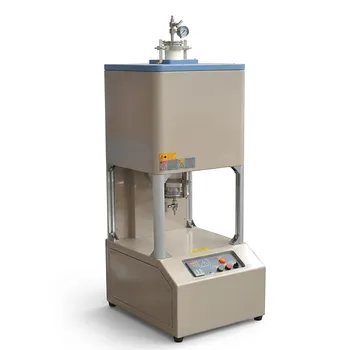
Vertical 1700C Vacuum and Atmosphere Tube Furnace with 80mm Alumina Tube
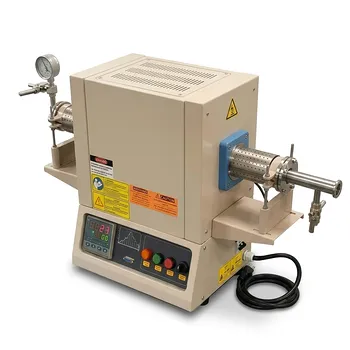
Compact High Temperature 1600C Tube Furnace with 50mm Alumina Tube and Vacuum Flanges for Material Sintering
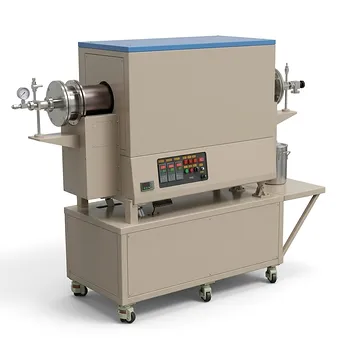
900°C Max Rotary Tube Furnace with 8 Inch 310S Alloy Tube and Optional Multi Zone Heating for Industrial Material Calcination
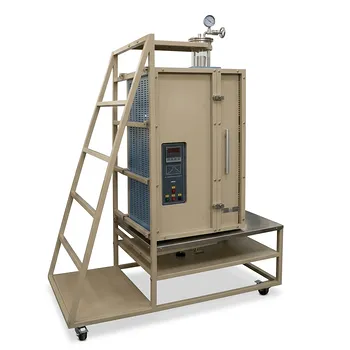
Split Vertical Tube Furnace with 1200C Quartz Tube and Stainless Steel Vacuum Flanges for Rapid Thermal Processing
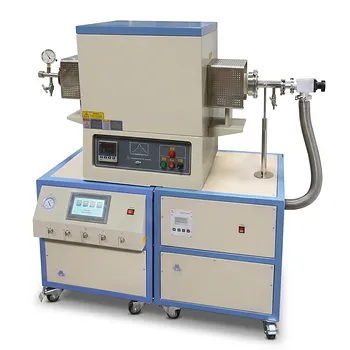
High Temperature 1700C Tube Furnace with High Vacuum Turbomolecular Pump System and Multi Channel Mass Flow Controller Gas Mixer
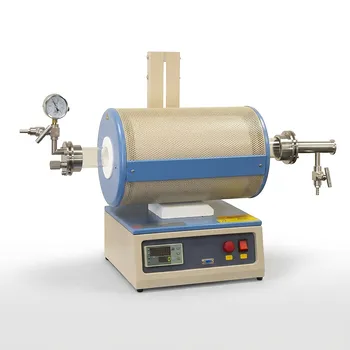
1100C Tube Furnace with Vacuum Flange and Programmable Temperature Controller for Material Science and Industrial Heat Treatment
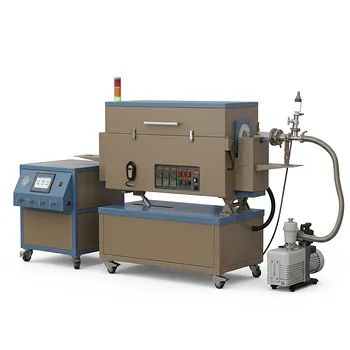
5 Inch Three Zone Rotary Tube Furnace with Integrated Gas Delivery System and 1200C Capability for Advanced Material CVD Processing
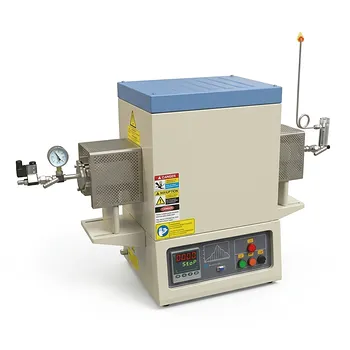
1700C Hydrogen Gas Tube Furnace with 60mm Alumina Process Tube and Integrated Hydrogen Safety Detector
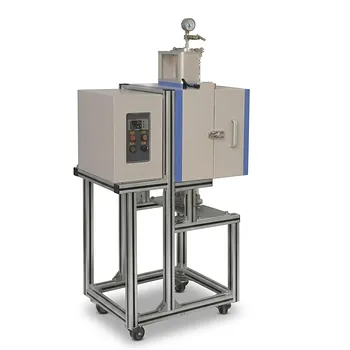
1200°C 5 Inch Vertical Quartz Tube Furnace with Stainless Steel Vacuum Flanges
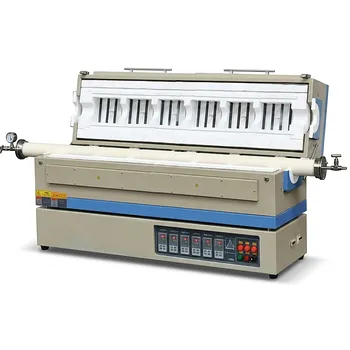
High Temperature 1700C Six Zone Split Tube Furnace with Alumina Tube and Water Cooled Flanges
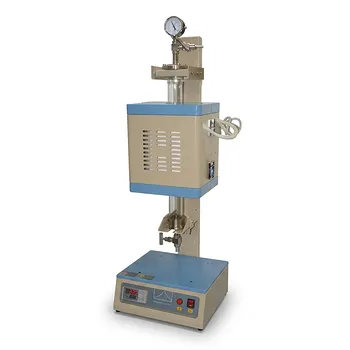
Compact Vertical Split Quartz Tube Furnace with Stainless Steel Vacuum Flanges for Rapid Thermal Quenching and Controlled Atmosphere Material Processing
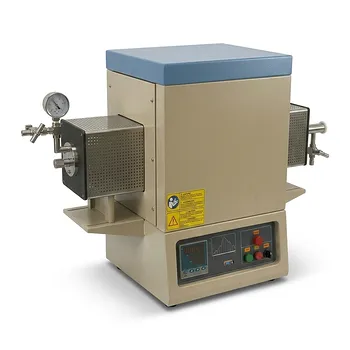
High Temperature 1700C Benchtop Tube Furnace with 5 Inch Heating Zone High Purity Alumina Tube and Vacuum Sealing Flanges
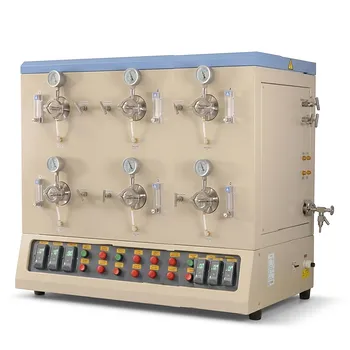
1200C High Throughput Multi Channel Tube Furnace with 50mm Quartz Tubes for Annealing and Material Phase Diagram Research
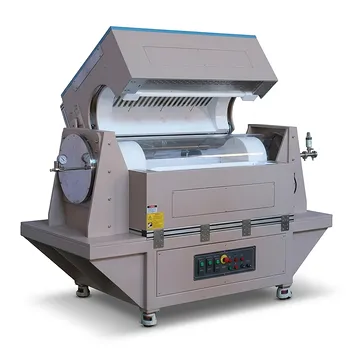
Three Zone Tube Furnace with 11 Inch or 15 Inch Quartz Tube and Hinged Flanges for Vacuum Atmosphere Heat Treatment
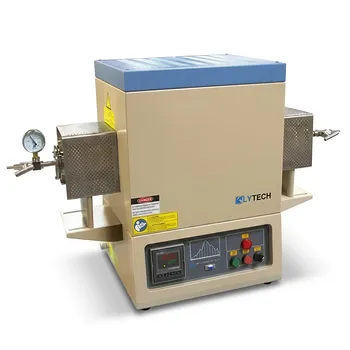
1800C High Temperature Compact Vacuum Tube Furnace with 60mm OD Alumina Tube and Kanthal MoSi2 Heating Elements
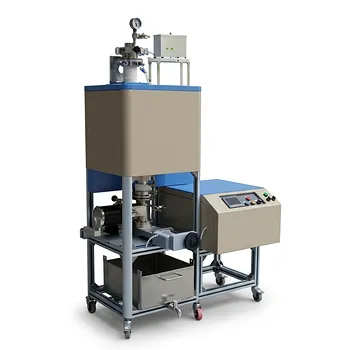
High Temperature 1700C Vertical Tube Furnace for Powder Spherification and Material Sintering
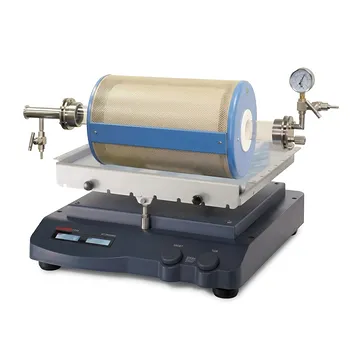
High Temperature Rocking Tube Furnace with Quartz Tube and Vacuum Flange for Materials Synthesis
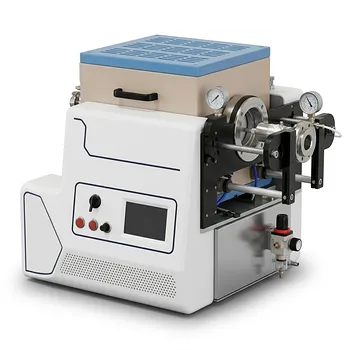
High Temperature Automated 5 Inch Tube Furnace for Autonomous Material Research and Advanced Laboratory R&D
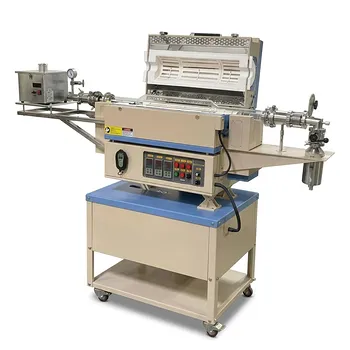
5 Inch Rotary Tube Furnace with Automatic Feeding and Receiving System 1200C Three Zone CVD Powder Processing