What are the core technical advantages of vacuum levels between 10^-3 and 10^-6 Torr? Ensure Superior Material Purity.
Updated 5 months ago
The primary advantage of vacuum levels between $10^{-3}$ and $10^{-6}$ Torr is the creation of a chemically inert environment that prevents surface degradation and internal contamination. This pressure range effectively suppresses oxidation, decarburization, and gas entrapment, which are critical threats to the integrity of reactive metals and high-purity materials. By maintaining this atmosphere, manufacturers can preserve exact material specifications and ensure the repeatability of complex thermal cycles.
Core Takeaway: Utilizing a high vacuum environment ensures the chemical and mechanical integrity of advanced materials by eliminating atmospheric reactions. This range is essential for achieving "bright" surface finishes and obtaining accurate metallurgical data during high-temperature processing.
Preserving Material Integrity and Chemical Purity
Suppression of Oxidation and Decarburization
At vacuum levels reaching $10^{-6}$ Torr, the concentration of oxygen and water vapor is sufficiently low to prevent the formation of surface oxides. This is particularly vital for reactive metals and nickel-based superalloys like 718, where even trace oxygen can alter the material's chemical profile.
Prevention of Surface Brittleness
High-temperature heating in a non-vacuum environment can lead to severe oxidation, which reduces the effective cross-sectional area of a component. By operating in a high vacuum, you prevent surface brittleness and ensure the material maintains its intended ductility and strength.
Eliminating Gas Entrapment
The vacuum environment facilitates the removal of dissolved gases within the material, preventing gas entrapment during the cooling phase. This leads to higher purity in electronics-grade materials and advanced ceramics where internal voids would compromise performance.
Enhancing Process Efficiency and Result Quality
Achieving Bright, Scale-Free Surfaces
One of the most immediate benefits of vacuum processing is the production of bright, oxide-free surfaces. Because the process prevents scale formation, parts often require no post-process cleaning or chemical etching, significantly reducing overall production costs.
Removal of Volatile By-products and Binders
The low-pressure environment effectively "pulls" volatile by-products and organic binders out of the material. This is a critical step in the sintering of ceramics and powder metallurgy, ensuring the final product is dense and free of contaminants.
Metallurgical Consistency and Repeatability
Vacuum furnaces utilize computer-controlled cycles to ensure uniform temperature distribution throughout the workload. This precision, combined with the ability for rapid High-Pressure Gas Quenching (HPGQ), allows for highly repeatable metallurgical results across different batches.
Understanding the Trade-offs and Operational Constraints
Increased Equipment Complexity and Cost
Achieving and maintaining a vacuum of $10^{-6}$ Torr requires sophisticated pumping systems, such as diffusion or turbomolecular pumps. These systems increase the initial capital expenditure and require more rigorous maintenance schedules compared to atmosphere furnaces.
Extended Cycle Times for Outgassing
While the vacuum protects the material, the process of reaching the required vacuum level (pump-down time) can extend the total cycle time. Materials that are "dirty" or contain high levels of volatiles may require extended soak times to allow for complete outgassing before the temperature is raised.
Risks of Element Evaporation
At very high temperatures and deep vacuum levels, certain alloying elements with high vapor pressures (such as chromium or manganese) can evaporate from the metal surface. This requires careful management of partial pressure settings to ensure the alloy's chemical composition remains stable.
How to Apply This to Your Project
When determining if your process requires vacuum levels between $10^{-3}$ and $10^{-6}$ Torr, consider your primary material goals:
- If your primary focus is obtaining accurate material data: Utilize $10^{-6}$ Torr to ensure surface stability, allowing for the collection of precise true stress-true strain data without the interference of oxide layers.
- If your primary focus is reducing post-processing costs: Aim for this vacuum range to produce bright finishes, effectively eliminating the need for sandblasting or acid pickling.
- If your primary focus is processing reactive alloys (Titanium/Nickel): Strict adherence to these vacuum levels is mandatory to prevent interstitial contamination and preserve the material's mechanical properties.
By aligning your vacuum level with the specific chemical sensitivities of your material, you ensure a final product that meets the most demanding technical standards.
Summary Table:
| Technical Feature | Primary Benefit | Ideal Application |
|---|---|---|
| Oxidation Suppression | Prevents surface degradation & decarburization | Reactive metals (Titanium, Nickel-alloys) |
| Low Partial Pressure | Produces bright, scale-free "oxide-free" finishes | Aerospace components & Dental prosthetics |
| Outgassing Support | Removes volatile binders & dissolved gases | Ceramics & Powder Metallurgy |
| Precise Atmosphere | Ensures repeatable metallurgical consistency | Advanced R&D & Electronic materials |
Elevate Your Material Integrity with THERMUNITS
Maximize the precision of your high-temperature processes with THERMUNITS, a leading manufacturer of advanced thermal processing solutions. We specialize in providing high-performance equipment tailored for material science and industrial R&D, including:
- Vacuum & Atmosphere Furnaces (achieving critical $10^{-3}$ to $10^{-6}$ Torr levels)
- CVD/PECVD Systems for thin-film deposition
- Muffle, Tube, and Rotary Furnaces
- Hot Press & Vacuum Induction Melting (VIM) Furnaces
Our equipment is engineered to eliminate atmospheric contamination, ensuring your materials achieve superior ductility, strength, and a scale-free finish.
Ready to optimize your thermal processing? Contact our engineering team today to discuss your specific vacuum requirements and find the ideal furnace solution.
Mentioned Products
- Vertical Vacuum Furnace 1100C High Temperature 8 Inch Quartz Chamber Water Cold Flange System
- High Temperature 1000C Vacuum Furnace with 8 Inch ID Chamber for Material Sintering and Research Annealing
- Ultra High Temperature Induction Heated Vacuum Furnace with Molten Salt Electrolysis Capability and 3000 Degree Precision Control
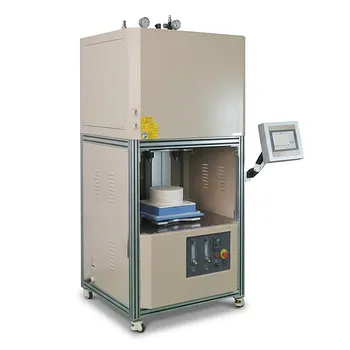
- High Temperature Vacuum Lamination Hot Press Furnace Machine for Semiconductor Wafer Bonding and Advanced Composite Thermal Processing
- High Temperature Cold Wall High Vacuum Chamber Furnace 1400C for Advanced Material Processing
People Also Ask
- How Vacuum Furnaces Heat Treat Fe32Cr33Ni29Al3Ti3? Optimizing HEA Microstructure & Stability
- Why is high-vacuum sealing of quartz tubes necessary for Ta2PdSe6 samples? Protect Purity & Carrier Mobility.
- Why is an integrated vacuum furnace necessary for RHEAs? Ensure data integrity and prevent oxidative embrittlement.
- What is a vacuum furnace and what are its primary functions? Master High-Purity Thermal Processing & Metallurgy
- How does material vapor pressure affect the operating limits of a vacuum furnace? Optimize Your Thermal Processes

Tech Team · ThermUnits
Last updated on Apr 14, 2026
Related Products
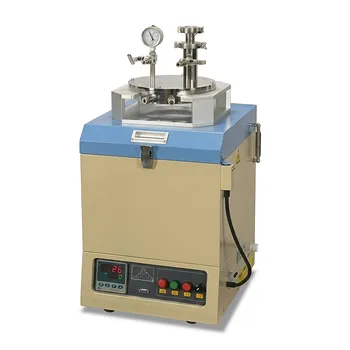
Vertical Vacuum Furnace 1100C High Temperature 8 Inch Quartz Chamber Water Cold Flange System
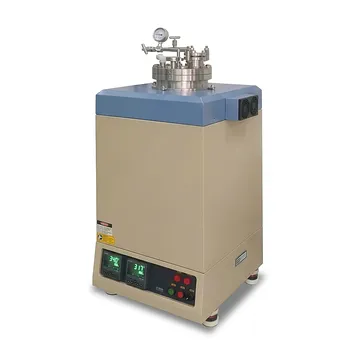
High Temperature 1000C Vacuum Furnace with 8 Inch ID Chamber for Material Sintering and Research Annealing
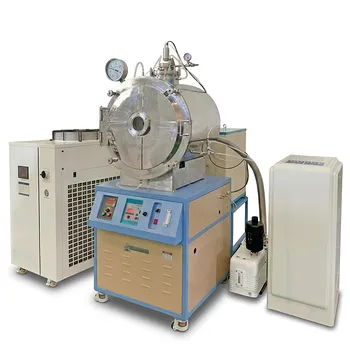
Ultra High Temperature Induction Heated Vacuum Furnace with Molten Salt Electrolysis Capability and 3000 Degree Precision Control
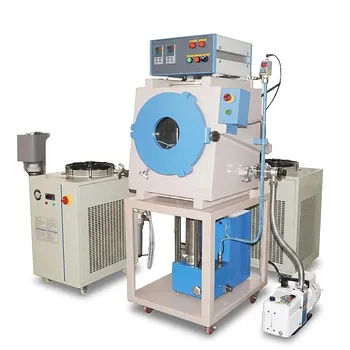
High Temperature Vacuum Lamination Hot Press Furnace Machine for Semiconductor Wafer Bonding and Advanced Composite Thermal Processing
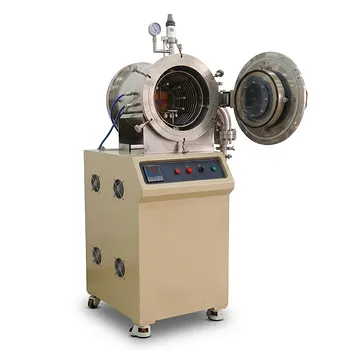
High Temperature Cold Wall High Vacuum Chamber Furnace 1400C for Advanced Material Processing
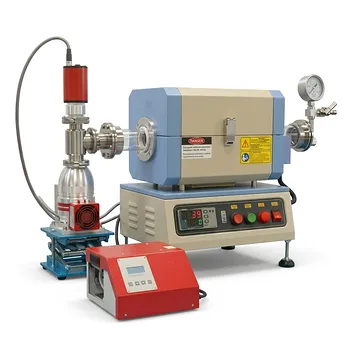
High Vacuum Compact Tube Furnace 1200C with Integrated Turbo Pump System and 8 Inch Heating Zone
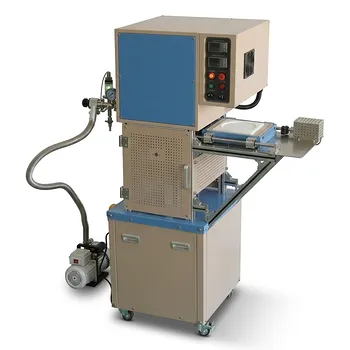
1200°C Bottom Loading Vacuum Furnace with Rapid Gas Cooling and 8.6 Inch Diameter Quartz Chamber
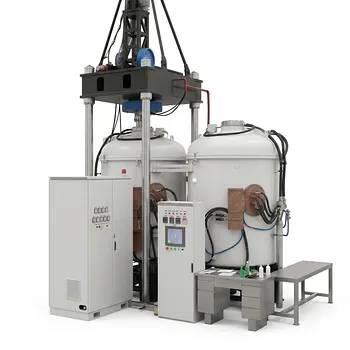
High Pressure 600T Vacuum Induction Hot Press Furnace for Advanced Material Heat Treatment and Sintering
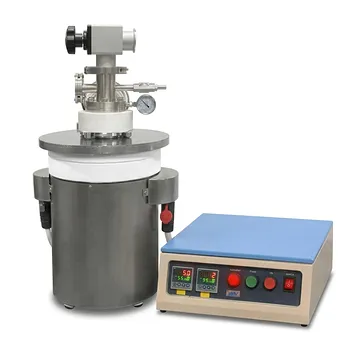
1100C High Temperature Vacuum Crucible Furnace with Quartz Chamber for Thermal Processing and Sintering
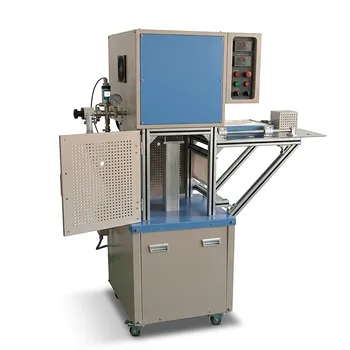
Bottom Loading Vacuum Furnace 1200C Rapid Cooling Atmosphere Control Quartz Chamber

1750°C High Temperature Benchtop Vacuum Atmosphere Tube Furnace with Kanthal Super 1800 Heating Elements and 60mm Alumina Processing Tube
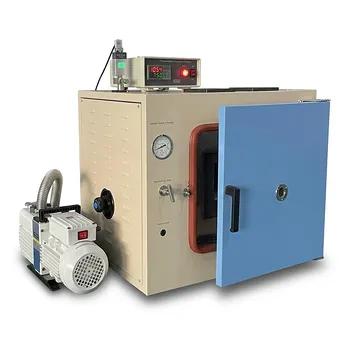
Compact High Vacuum Box Furnace 1050C Max 6.2L Ceramic Chamber Stainless Steel Shell Programmable Temperature Controller for Material Science Research
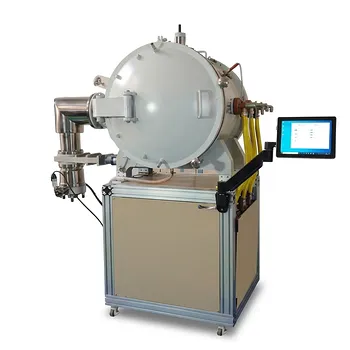
High Temperature Cold Wall Vacuum Furnace for Advanced Material Sintering and Annealing 1600C Heating Area 200x200x300mm

1800C High Temperature Compact Vacuum Tube Furnace with 60mm OD Alumina Tube and Kanthal MoSi2 Heating Elements
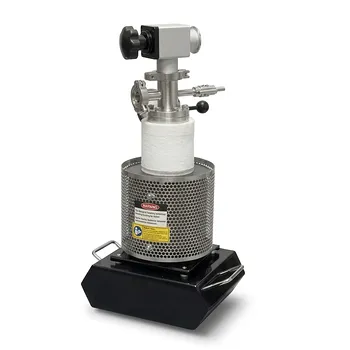
High Temperature 1100C Compact Top Loading Vertical Vacuum Tube Furnace for High Vacuum Noble Metal Melting and Material Research
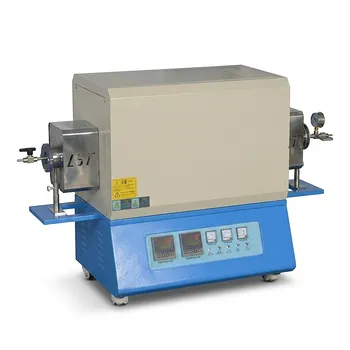
High Temperature Dual Zone Vacuum Tube Furnace for Material Research and CVD Processing
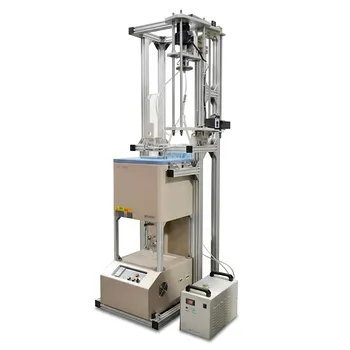
500C Vacuum Vertical Tube Furnace 84mm OD Sample Rotation Lifting System
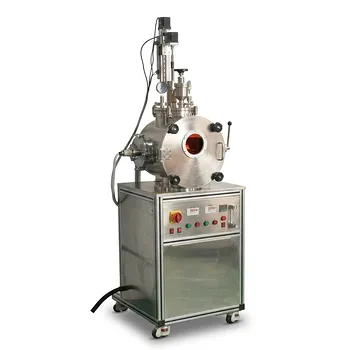
High Vacuum Melting Casting Furnace with Mechanical Stirring and Secondary Charge for Metallic Alloy Research
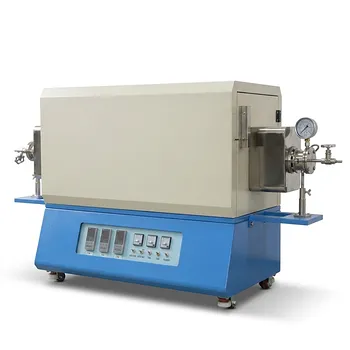
Three Temperature Zone High Temperature Vacuum Tube Furnace for CVD and Material Sintering