Why must a reducing protective atmosphere be used during heat treatment of Cu/W nano-multilayers? Ensure Metal Purity
Updated 3 months ago
The primary reason for using a reducing atmosphere during the heat treatment of Cu/W nano-multilayers is to chemically prevent and reverse the oxidation of metal surfaces. At temperatures reaching 500°C, both copper and tungsten are highly susceptible to oxidation, even in the presence of trace oxygen. The addition of hydrogen ensures that oxide layers are reduced back to pure metal, allowing copper atoms to migrate freely from the interior to the surface to form the micro-particles necessary for high-strength heterogeneous joints.
Core Takeaway: A reducing atmosphere of Ar + 5 vol.% $H_2$ acts as both a physical shield and a chemical cleaner. It preserves the metallic integrity of the Cu/W interface, which is vital for atom diffusion and the successful formation of structural micro-joints.
The Chemical Role of the Reducing Atmosphere
Active Reduction vs. Passive Protection
While pure argon (Ar) provides a passive shield by displacing oxygen, it cannot remove oxygen atoms already chemically bonded to the metal. The 5 vol.% hydrogen ($H_2$) acts as a reducing agent that actively strips oxygen from existing oxide layers ($CuO$ or $WO_x$), converting them back into pure metallic forms.
Preventing the Oxide Barrier
If an oxide layer is allowed to form, it acts as a physical and chemical barrier that prevents the movement of atoms. By maintaining a reducing environment, the furnace ensures that the surface of the Cu/W nano-multilayers remains "clean," facilitating the unimpeded migration of copper.
Maintaining Stoichiometry and Purity
For nano-multilayers, even microscopic amounts of oxidation can drastically alter the material's properties. The Ar/$H_2$ mixture ensures the stoichiometry of the metals remains ideal, which is critical for maintaining the intended electrical and thermal conductivity of the final composite.
Mechanics of Heterogeneous Micro-Joint Formation
Facilitating Copper Atom Migration
During heat treatment at 500°C, copper atoms must flow from the interior of the multilayer structure to the surface. This migration is only possible when the pathway is free of brittle oxide phases that would otherwise trap the atoms or redirect their flow.
Nucleation of Micro/Nano-Particles
Once pure copper atoms reach the surface, they aggregate to form micro-particles. These particles are the building blocks of heterogeneous micro-joints, providing the necessary material to bond strongly with the tungsten layers.
Structural Integrity of the Interface
The bond between copper and tungsten is strongest when it occurs at a metallic level. By eliminating oxygen interference, the reducing atmosphere ensures that the interface between these two dissimilar metals is cohesive and free of the structural weaknesses associated with oxide inclusions.
Understanding the Trade-offs
The Safety Limits of Hydrogen
While higher concentrations of hydrogen would increase the reducing power, 5 vol.% is typically chosen because it is near or below the lower flammability limit in many environments. This concentration provides sufficient chemical activity while minimizing the risk of combustion or explosion within the tube furnace.
Potential for Hydrogen Embrittlement
In some metal systems, prolonged exposure to hydrogen at high temperatures can lead to "hydrogen embrittlement," where the gas diffuses into the metal lattice and causes brittleness. However, for Cu/W nano-multilayers, the benefit of preventing oxidation generally far outweighs the minor risks of hydrogen absorption.
Cost and Equipment Requirements
Utilizing a mixed gas atmosphere requires specialized gas-mixing equipment and a vacuum-tight tube furnace to ensure the atmosphere remains controlled. While more expensive than using atmospheric air or simple nitrogen, it is a non-negotiable requirement for preserving the nano-scale features of the material.
How to Apply This to Your Process
When configuring your heat treatment process for metallic nano-multilayers, consider your specific material goals:
- If your primary focus is maximum joint strength: Ensure the $H_2$ concentration is maintained consistently throughout the heating and cooling cycles to prevent any "re-oxidation" as the material cools.
- If your primary focus is electrical conductivity: Use the highest purity Ar/$H_2$ mixture available (e.g., 5N or 6N purity) to avoid introducing trace moisture that can degrade the copper's conductive path.
- If your primary focus is morphological stability: Precisely control the flow rate of the reducing gas to ensure that the rate of copper migration to the surface does not result in excessive grain growth or loss of the multilayered structure.
By meticulously controlling the reducing environment, you ensure that the delicate nano-architecture of the Cu/W layers translates into a robust, high-performance macro-structure.
Summary Table:
| Feature | Description | Purpose in Heat Treatment |
|---|---|---|
| Atmosphere Type | Reducing (Ar + 5 vol.% $H_2$) | Prevents $CuO$ and $WO_x$ formation |
| Chemical Role | Active Reduction | Converts existing oxides back to pure metals |
| Atom Migration | Cu Surface Diffusion | Facilitates nucleation of micro-particles |
| Interface Quality | Clean Metallic Surface | Ensures high-strength heterogeneous joints |
| Safety Focus | 5% $H_2$ Concentration | Minimizes flammability risk while remaining active |
Precision Thermal Processing for Advanced Material Science
Achieving perfect stoichiometry and oxide-free interfaces in Cu/W nano-multilayers requires precise atmospheric control. THERMUNITS is a leading manufacturer of high-temperature laboratory equipment, providing the specialized tools needed for demanding industrial R&D. Our high-performance Tube Furnaces and Atmosphere Furnaces are engineered to maintain the vacuum integrity and gas flow consistency essential for successful reducing atmosphere heat treatments.
From CVD/PECVD systems to vacuum induction melting and dental furnaces, we offer a comprehensive range of solutions including Muffle, Rotary, and Hot Press furnaces. Let our expertise in thermal elements and heat treatment equipment accelerate your research and production quality.
Ready to optimize your laboratory's efficiency?
Contact THERMUNITS Experts Today to discuss your specific thermal processing requirements!
References
- Giacomo Lorenzin, Claudia Cancellieri. Controlled Directional Cu Outflow in Cu/W Nanomultilayers. DOI: 10.1007/s11665-024-09763-2
Mentioned Products
- Vertical 1700C Vacuum and Atmosphere Tube Furnace with 80mm Alumina Tube
- Compact High Temperature 1600C Tube Furnace with 50mm Alumina Tube and Vacuum Flanges for Material Sintering
- 900°C Max Rotary Tube Furnace with 8 Inch 310S Alloy Tube and Optional Multi Zone Heating for Industrial Material Calcination
- Split Vertical Tube Furnace with 1200C Quartz Tube and Stainless Steel Vacuum Flanges for Rapid Thermal Processing
- High Temperature 1700C Tube Furnace with High Vacuum Turbomolecular Pump System and Multi Channel Mass Flow Controller Gas Mixer
People Also Ask
- How is an industrial-grade vertical tube furnace utilized in smelting leaching residues? Enhance Metal Recovery Efficiency
- What is the function of a laboratory-grade vertical tube furnace in fast pyrolysis? Optimize Composite Research.
- How does a vertical tube furnace facilitate thermoelectric alloy melting? Precision synthesis for material homogeneity.
- Why is a thermocouple sensor indispensable for monitoring the vertical tube furnace during gallium oxide nanowire production? Optimize VLS Growth
- What are the advantages of using a vertical tube furnace for crucible experiments simulating steel-slag interactions?

Tech Team · ThermUnits
Last updated on Jun 02, 2026
Related Products

Vertical 1700C Vacuum and Atmosphere Tube Furnace with 80mm Alumina Tube

Compact High Temperature 1600C Tube Furnace with 50mm Alumina Tube and Vacuum Flanges for Material Sintering
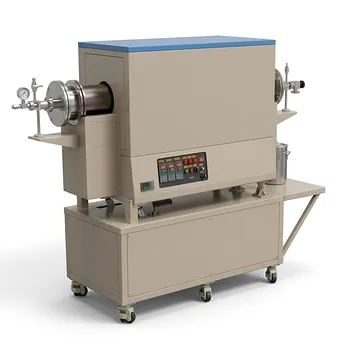
900°C Max Rotary Tube Furnace with 8 Inch 310S Alloy Tube and Optional Multi Zone Heating for Industrial Material Calcination
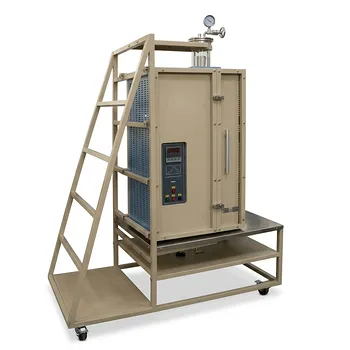
Split Vertical Tube Furnace with 1200C Quartz Tube and Stainless Steel Vacuum Flanges for Rapid Thermal Processing

High Temperature 1700C Tube Furnace with High Vacuum Turbomolecular Pump System and Multi Channel Mass Flow Controller Gas Mixer

1100C Tube Furnace with Vacuum Flange and Programmable Temperature Controller for Material Science and Industrial Heat Treatment
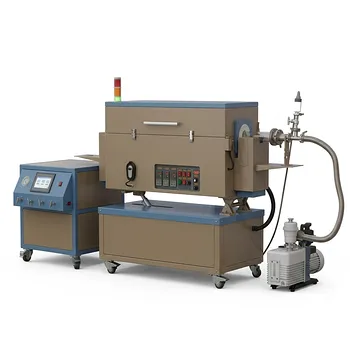
5 Inch Three Zone Rotary Tube Furnace with Integrated Gas Delivery System and 1200C Capability for Advanced Material CVD Processing
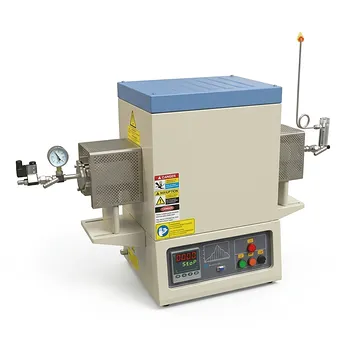
1700C Hydrogen Gas Tube Furnace with 60mm Alumina Process Tube and Integrated Hydrogen Safety Detector
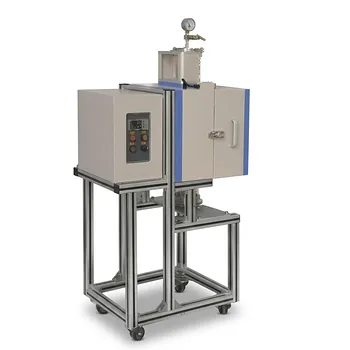
1200°C 5 Inch Vertical Quartz Tube Furnace with Stainless Steel Vacuum Flanges

High Temperature 1700C Six Zone Split Tube Furnace with Alumina Tube and Water Cooled Flanges

Compact Vertical Split Quartz Tube Furnace with Stainless Steel Vacuum Flanges for Rapid Thermal Quenching and Controlled Atmosphere Material Processing

High Temperature 1700C Benchtop Tube Furnace with 5 Inch Heating Zone High Purity Alumina Tube and Vacuum Sealing Flanges
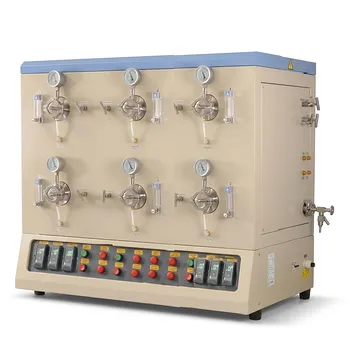
1200C High Throughput Multi Channel Tube Furnace with 50mm Quartz Tubes for Annealing and Material Phase Diagram Research
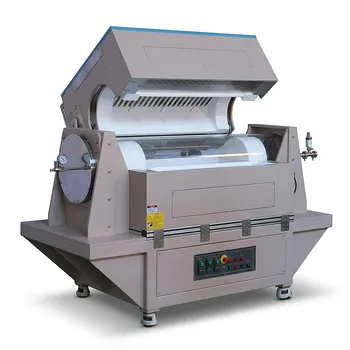
Three Zone Tube Furnace with 11 Inch or 15 Inch Quartz Tube and Hinged Flanges for Vacuum Atmosphere Heat Treatment

1800C High Temperature Compact Vacuum Tube Furnace with 60mm OD Alumina Tube and Kanthal MoSi2 Heating Elements

High Temperature 1700C Vertical Tube Furnace for Powder Spherification and Material Sintering
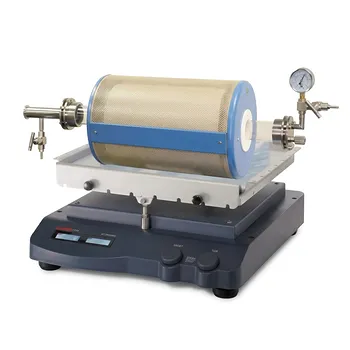
High Temperature Rocking Tube Furnace with Quartz Tube and Vacuum Flange for Materials Synthesis

High Temperature Automated 5 Inch Tube Furnace for Autonomous Material Research and Advanced Laboratory R&D
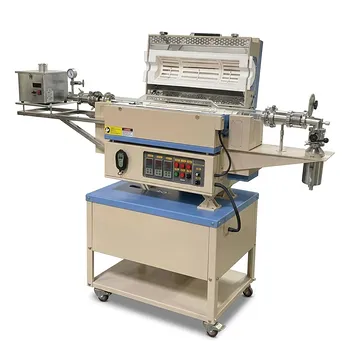
5 Inch Rotary Tube Furnace with Automatic Feeding and Receiving System 1200C Three Zone CVD Powder Processing