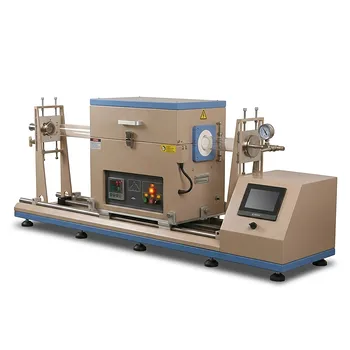
Why must high-purity argon gas be continuously introduced as a protective atmosphere during tube furnace sintering?
Updated 3 months ago
High-purity argon gas is the primary safeguard against material oxidation during thermal processing. In a tube furnace, argon acts as an inert medium that displaces atmospheric oxygen, creating a stable environment where materials can reach high temperatures without reacting with the air. This prevents the formation of brittle oxide films and ensures that the sintered product retains its intended mechanical, electrical, and structural properties.
Core Takeaway: Continuous argon flow is required because most metals and carbon-based materials become highly reactive at sintering temperatures. By maintaining a completely inert atmosphere, you prevent irreversible chemical degradation and ensure the final material meets precise performance specifications.
The Role of Argon in Preventing Oxidation
Displacing Atmospheric Oxygen
At high sintering temperatures, even trace amounts of oxygen can lead to rapid oxidation of the sample. High-purity argon is introduced to physically purge oxygen and moisture from the furnace chamber before and during the heating cycle. This continuous flow ensures that any oxygen outgassed from the material or leaking through seals is immediately removed.
Maintaining Material Purity and Ductility
When active metals like aluminum or copper are heated, they are highly susceptible to forming oxides that act as impurities. In aluminum sintering, preventing these brittle oxide films is critical for maintaining the material's metallic nature and ductility. For copper-based composites, an inert atmosphere preserves the electrical and thermal conductivity that would otherwise be destroyed by oxidation.
Controlling Oxide Layer Thickness
In specific applications like Titanium Dioxide (TiO2) coatings, the atmosphere must be strictly controlled to prevent secondary oxidation. Argon allows researchers to precisely manage the thickness of oxide layers and the micro-morphology of nanotube structures. This level of control is essential for ensuring the biological performance and structural integrity of the coating.
Protecting Structural and Chemical Integrity
Safeguarding Carbon-Based Carriers
Carbon materials, such as nanofibers or nitrogen-doped carbon frameworks, are prone to oxidative combustion (burning off) at high temperatures. An argon atmosphere protects these structures from erosion, ensuring that carbon lattices remain stable. This preservation is vital for maintaining the intended pore structure and high surface area of the final material.
Governing Chemical Reaction Pathways
In complex synthesis, such as working with Boron Carbide (B4C), oxygen can force chemical reactions down unintended thermodynamic paths. Introducing argon prevents the formation of phases like B2O3 glass, which can inhibit the densification of the material. This ensures that the additives react correctly to form the desired intermetallic compounds.
Preserving Atomic and Valence States
For advanced catalysts and multi-metal atom dispersed materials, the inert environment prevents the unnecessary oxidation of metal atoms. This allows for the selective agglomeration of atoms based on their internal cohesive energy. It ensures that the final catalyst possesses the correct metal valence states and a highly conductive framework.
Understanding the Trade-offs and Pitfalls
The Risk of Insufficient Gas Purity
Using argon with even minor impurities can be as damaging as using no protective gas at all. If the argon contains trace oxygen or water vapor, micro-oxidation can occur at the grain boundaries of the material. This often results in internal stresses or "hidden" brittleness that may not be visible on the surface but causes the material to fail under load.
Constant Flow vs. Static Pressure
While a static inert atmosphere might seem sufficient, a continuous flow is generally required to account for furnace leakage and material outgassing. However, excessively high flow rates can cause temperature fluctuations within the tube, leading to non-uniform sintering. Finding the balance between a positive pressure to keep oxygen out and a steady rate to maintain thermal stability is a common challenge.
How to Apply This to Your Project
Recommendations Based on Material Goals
- If your primary focus is mechanical strength and ductility: Prioritize high-purity argon (99.999%) to prevent the formation of brittle inter-granular oxides that compromise structural integrity.
- If your primary focus is electrical or thermal conductivity: Ensure a continuous, steady flow to prevent even slight oxidation of the metal matrix, which significantly increases electrical resistance.
- If your primary focus is nanostructure or carbon preservation: Use argon to create a strictly non-oxidizing environment to prevent the "burning" of delicate microscopic features and to maintain surface area.
- If your primary focus is precise chemical synthesis: Monitor gas exit purity to ensure that the atmosphere remains inert throughout the entire heating and cooling cycle, preventing unwanted secondary phases.
The continuous introduction of argon serves as a vital shield, ensuring that the energy of the furnace changes only the physical state of your material rather than its fundamental chemistry.
Summary Table:
| Key Role | Protective Benefit of Argon | Risk of Atmospheric Exposure |
|---|---|---|
| Oxidation Prevention | Displaces oxygen and moisture | Formation of brittle oxide films |
| Purity Maintenance | Preserves metallic ductility and conductivity | Chemical degradation and impurities |
| Structural Integrity | Protects carbon lattices from combustion | Erosion of nanofibers and pore structures |
| Reaction Control | Ensures intended thermodynamic paths | Formation of unwanted phases (e.g., B2O3) |
| Atomic State | Stabilizes metal valence states | Unselective atom agglomeration |
Achieve Precision in Thermal Processing with THERMUNITS
Don't let oxidation compromise your research outcomes. THERMUNITS is a leading manufacturer of high-performance laboratory equipment, providing the precise atmospheric control necessary for advanced material science. Our comprehensive range of solutions includes:
- Specialized Furnaces: Tube, Muffle, Vacuum, Atmosphere, Rotary, and Hot Press furnaces.
- Advanced Systems: CVD/PECVD systems, Vacuum Induction Melting (VIM) furnaces, and Electric Rotary Kilns.
- Expert Components: High-quality Thermal Elements and Dental Furnaces.
Whether you are focusing on mechanical strength, electrical conductivity, or complex chemical synthesis, our equipment ensures a stable, inert environment for every cycle.
Contact THERMUNITS today to optimize your lab’s heat treatment efficiency!
References
- Ahmad Amirul Mukmin Yusof, Kamarul-Azhar Kamarudin. Effect of Alumina as Reinforcement on the Mechanical and Physical Properties of Recycled AA6061 Aluminium. DOI: 10.37934/aram.126.1.7178
Mentioned Products
- Vertical 1700C Vacuum and Atmosphere Tube Furnace with 80mm Alumina Tube
- Compact High Temperature 1600C Tube Furnace with 50mm Alumina Tube and Vacuum Flanges for Material Sintering
- 900°C Max Rotary Tube Furnace with 8 Inch 310S Alloy Tube and Optional Multi Zone Heating for Industrial Material Calcination
- Split Vertical Tube Furnace with 1200C Quartz Tube and Stainless Steel Vacuum Flanges for Rapid Thermal Processing
- High Temperature 1700C Tube Furnace with High Vacuum Turbomolecular Pump System and Multi Channel Mass Flow Controller Gas Mixer
People Also Ask
- How is an industrial-grade vertical tube furnace utilized in smelting leaching residues? Enhance Metal Recovery Efficiency
- What is the function of a laboratory-grade vertical tube furnace in fast pyrolysis? Optimize Composite Research.
- How does a vertical tube furnace facilitate thermoelectric alloy melting? Precision synthesis for material homogeneity.
- Why is a thermocouple sensor indispensable for monitoring the vertical tube furnace during gallium oxide nanowire production? Optimize VLS Growth
- What are the advantages of using a vertical tube furnace for crucible experiments simulating steel-slag interactions?

Tech Team · ThermUnits
Last updated on Jun 02, 2026
Related Products

Vertical 1700C Vacuum and Atmosphere Tube Furnace with 80mm Alumina Tube

Compact High Temperature 1600C Tube Furnace with 50mm Alumina Tube and Vacuum Flanges for Material Sintering
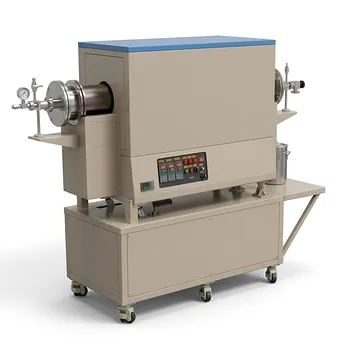
900°C Max Rotary Tube Furnace with 8 Inch 310S Alloy Tube and Optional Multi Zone Heating for Industrial Material Calcination
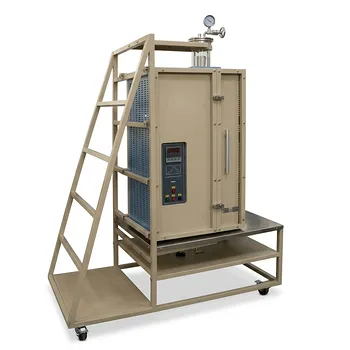
Split Vertical Tube Furnace with 1200C Quartz Tube and Stainless Steel Vacuum Flanges for Rapid Thermal Processing

High Temperature 1700C Tube Furnace with High Vacuum Turbomolecular Pump System and Multi Channel Mass Flow Controller Gas Mixer

1100C Tube Furnace with Vacuum Flange and Programmable Temperature Controller for Material Science and Industrial Heat Treatment
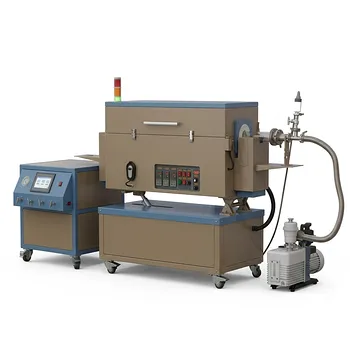
5 Inch Three Zone Rotary Tube Furnace with Integrated Gas Delivery System and 1200C Capability for Advanced Material CVD Processing
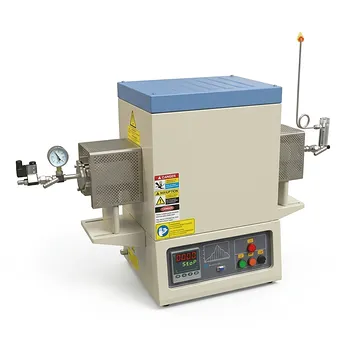
1700C Hydrogen Gas Tube Furnace with 60mm Alumina Process Tube and Integrated Hydrogen Safety Detector

1200°C 5 Inch Vertical Quartz Tube Furnace with Stainless Steel Vacuum Flanges

High Temperature 1700C Six Zone Split Tube Furnace with Alumina Tube and Water Cooled Flanges

Compact Vertical Split Quartz Tube Furnace with Stainless Steel Vacuum Flanges for Rapid Thermal Quenching and Controlled Atmosphere Material Processing

High Temperature 1700C Benchtop Tube Furnace with 5 Inch Heating Zone High Purity Alumina Tube and Vacuum Sealing Flanges
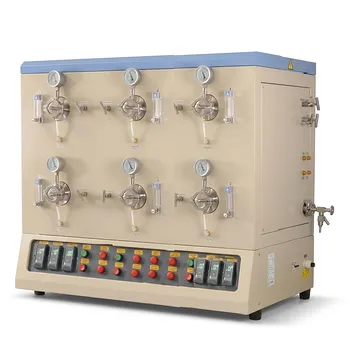
1200C High Throughput Multi Channel Tube Furnace with 50mm Quartz Tubes for Annealing and Material Phase Diagram Research

Three Zone Tube Furnace with 11 Inch or 15 Inch Quartz Tube and Hinged Flanges for Vacuum Atmosphere Heat Treatment

1800C High Temperature Compact Vacuum Tube Furnace with 60mm OD Alumina Tube and Kanthal MoSi2 Heating Elements

High Temperature 1700C Vertical Tube Furnace for Powder Spherification and Material Sintering
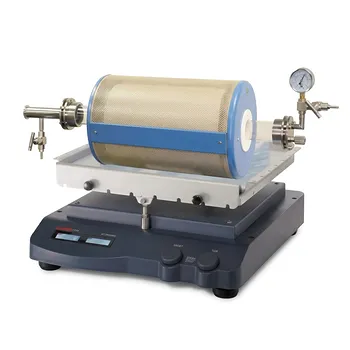
High Temperature Rocking Tube Furnace with Quartz Tube and Vacuum Flange for Materials Synthesis

High Temperature Automated 5 Inch Tube Furnace for Autonomous Material Research and Advanced Laboratory R&D
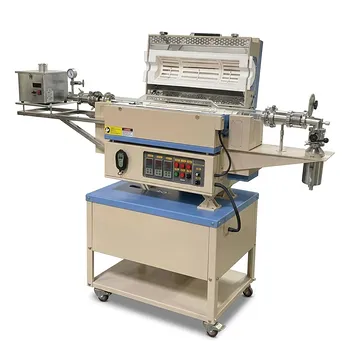
5 Inch Rotary Tube Furnace with Automatic Feeding and Receiving System 1200C Three Zone CVD Powder Processing