Why must samples be immediately removed from the tube furnace? Prevent CN Decomposition & Optimize Film Performance
Updated 3 months ago
Immediate removal is a critical quenching step. It utilizes natural convection to achieve rapid cooling, which instantly terminates the thermal reaction and prevents the carbon nitride (CN) layer from undergoing overheating-induced decomposition. This process ensures the structural integrity of the synthesized material by bypassing temperature zones that would otherwise degrade its performance.
Core Takeaway: Immediate removal from the furnace acts as a thermal "circuit breaker," preventing the decomposition of the active layer and allowing for the removal of loose surface powder to reveal the high-performing dense film underneath.
The Role of Natural Convection in Rapid cooling
Terminating the Thermal Reaction
Once the synthesis duration is complete, the chemical transformation must be halted precisely to avoid over-processing. By moving the sample from the insulated furnace environment into room-temperature air, natural convection rapidly dissipates heat.
Preventing Decomposition
Carbon nitride (CN) is sensitive to prolonged high-temperature exposure, which can lead to overheating-induced decomposition. Rapidly dropping the temperature ensures that the CN layer remains intact rather than breaking down into inactive byproducts.
"Freezing" the Material State
Similar to air quenching in high-entropy oxides, rapid cooling allows the material to bypass medium-to-low temperature zones. This effectively "freezes" the active single-phase structure formed at high temperatures, preventing unwanted phase separation or structural changes that occur during slow cooling.
Optimization of the Photoelectric Surface
Removing Loose CN Powder
The rapid synthesis process often leaves an accumulation of excess loose CN powder on the top layer of the sample. This loose material is less stable and can interfere with the efficiency of the device.
Exposing the Active Dense Film
Subsequent processing involves the careful removal of this loose powder to reveal the underlying dense CN film. This specific layer is firmly bonded to the FTO substrate, providing the stability necessary for long-term use.
Maximizing Photoelectric Activity
The dense film hidden beneath the loose powder possesses superior photoelectric activity. By removing the sample and processing it immediately, you ensure this high-performance interface is preserved and accessible for application.
Understanding the Trade-offs
Thermal Stress and Substrate Integrity
While rapid cooling is essential for chemical stability, it introduces thermal gradients that can stress the material. If the cooling is too violent, there is a risk of delamination or micro-cracking in the film, though the primary reference suggests natural convection is the standard balance.
Processing Consistency
Relying on manual removal and natural convection requires consistent timing and technique. Variations in how quickly the sample is moved or how the surface powder is cleared can lead to minor differences in the thickness and activity of the final dense film.
How to Apply This to Your Synthesis
Following the completion of the heating cycle, your laboratory protocol should prioritize the transition from the furnace to the processing bench to maintain material quality.
- If your primary focus is material stability: Remove the sample immediately to prevent the thermal decomposition of the CN layer and lock in the desired phase.
- If your primary focus is device performance: Prioritize the removal of loose surface powder to ensure the dense, photoelectrically active film is fully exposed and bonded to the substrate.
- If your primary focus is structural uniformity: Utilize the air-quenching effect of rapid removal to avoid phase separation that typically occurs during slow cooling cycles.
Effective rapid synthesis is defined as much by how the reaction ends as by how it begins.
Summary Table:
| Step / Mechanism | Functional Benefit | Impact on Material Quality |
|---|---|---|
| Natural Convection | Rapidly terminates thermal reaction | Prevents overheating-induced decomposition of CN layers. |
| Thermal Quenching | "Freezes" the material state | Bypasses unwanted phase separation to lock in active structures. |
| Surface Processing | Removes loose surface powder | Exposes the underlying dense, active film bonded to the substrate. |
| Substrate Bonding | Preserves interface integrity | Ensures the photoelectric film remains stable for long-term use. |
Elevate Your Material Research with THERMUNITS
Achieving precise thermal quenching and structural control requires high-performance heating equipment. THERMUNITS is a leading manufacturer specializing in high-temperature laboratory solutions for material science and industrial R&D. We provide the reliability and precision needed to ensure your synthesis results are consistent and high-performing.
Our Comprehensive Thermal Solutions:
- Tube & Rotary Furnaces for controlled atmospheric synthesis.
- Vacuum, Muffle, & Atmosphere Furnaces for versatile heat treatments.
- CVD/PECVD Systems for advanced thin-film deposition.
- Specialized Equipment: Hot Press Furnaces, Vacuum Induction Melting (VIM), Dental Furnaces, and Electric Rotary Kilns.
Ready to optimize your lab’s thermal processing? Contact our experts today to discover how THERMUNITS can enhance your research efficiency and material stability.
References
- Ayelet Tashakory, Menny Shalom. Minute‐Scale High‐Temperature Synthesis of Polymeric Carbon Nitride Photoanodes. DOI: 10.1002/sstr.202400123
Mentioned Products
- Vertical 1700C Vacuum and Atmosphere Tube Furnace with 80mm Alumina Tube
- Compact High Temperature 1600C Tube Furnace with 50mm Alumina Tube and Vacuum Flanges for Material Sintering
- 900°C Max Rotary Tube Furnace with 8 Inch 310S Alloy Tube and Optional Multi Zone Heating for Industrial Material Calcination
- Split Vertical Tube Furnace with 1200C Quartz Tube and Stainless Steel Vacuum Flanges for Rapid Thermal Processing
- High Temperature 1700C Tube Furnace with High Vacuum Turbomolecular Pump System and Multi Channel Mass Flow Controller Gas Mixer
People Also Ask
- How is an industrial-grade vertical tube furnace utilized in smelting leaching residues? Enhance Metal Recovery Efficiency
- What is the function of a laboratory-grade vertical tube furnace in fast pyrolysis? Optimize Composite Research.
- How does a vertical tube furnace facilitate thermoelectric alloy melting? Precision synthesis for material homogeneity.
- Why is a thermocouple sensor indispensable for monitoring the vertical tube furnace during gallium oxide nanowire production? Optimize VLS Growth
- What are the advantages of using a vertical tube furnace for crucible experiments simulating steel-slag interactions?

Tech Team · ThermUnits
Last updated on Jun 03, 2026
Related Products

Vertical 1700C Vacuum and Atmosphere Tube Furnace with 80mm Alumina Tube

Compact High Temperature 1600C Tube Furnace with 50mm Alumina Tube and Vacuum Flanges for Material Sintering
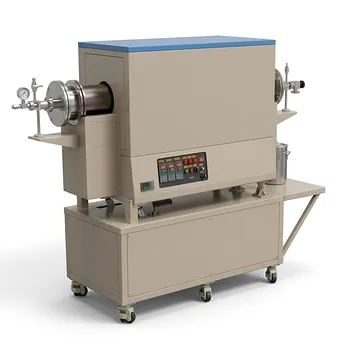
900°C Max Rotary Tube Furnace with 8 Inch 310S Alloy Tube and Optional Multi Zone Heating for Industrial Material Calcination
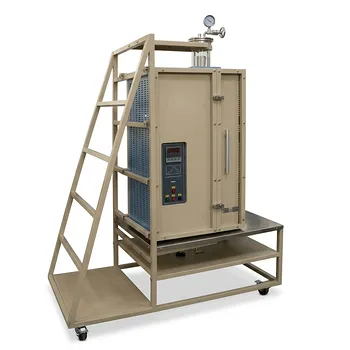
Split Vertical Tube Furnace with 1200C Quartz Tube and Stainless Steel Vacuum Flanges for Rapid Thermal Processing

High Temperature 1700C Tube Furnace with High Vacuum Turbomolecular Pump System and Multi Channel Mass Flow Controller Gas Mixer

1100C Tube Furnace with Vacuum Flange and Programmable Temperature Controller for Material Science and Industrial Heat Treatment
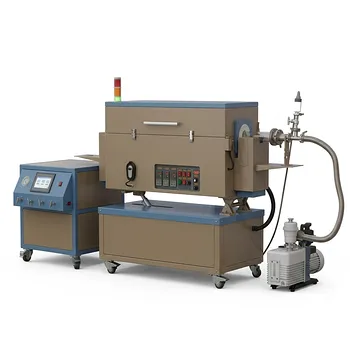
5 Inch Three Zone Rotary Tube Furnace with Integrated Gas Delivery System and 1200C Capability for Advanced Material CVD Processing
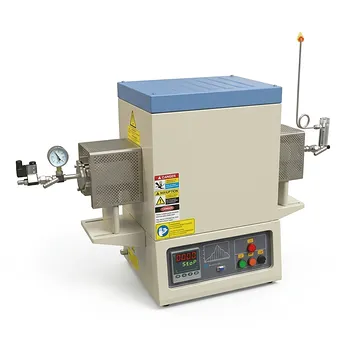
1700C Hydrogen Gas Tube Furnace with 60mm Alumina Process Tube and Integrated Hydrogen Safety Detector
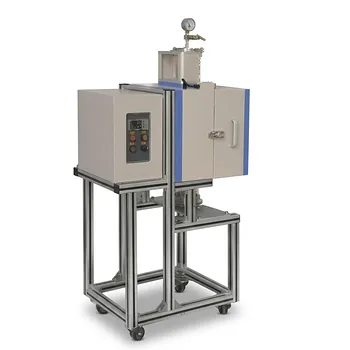
1200°C 5 Inch Vertical Quartz Tube Furnace with Stainless Steel Vacuum Flanges

High Temperature 1700C Six Zone Split Tube Furnace with Alumina Tube and Water Cooled Flanges

Compact Vertical Split Quartz Tube Furnace with Stainless Steel Vacuum Flanges for Rapid Thermal Quenching and Controlled Atmosphere Material Processing

High Temperature 1700C Benchtop Tube Furnace with 5 Inch Heating Zone High Purity Alumina Tube and Vacuum Sealing Flanges

1200C High Throughput Multi Channel Tube Furnace with 50mm Quartz Tubes for Annealing and Material Phase Diagram Research
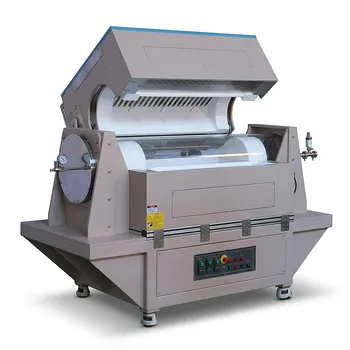
Three Zone Tube Furnace with 11 Inch or 15 Inch Quartz Tube and Hinged Flanges for Vacuum Atmosphere Heat Treatment

1800C High Temperature Compact Vacuum Tube Furnace with 60mm OD Alumina Tube and Kanthal MoSi2 Heating Elements

High Temperature 1700C Vertical Tube Furnace for Powder Spherification and Material Sintering
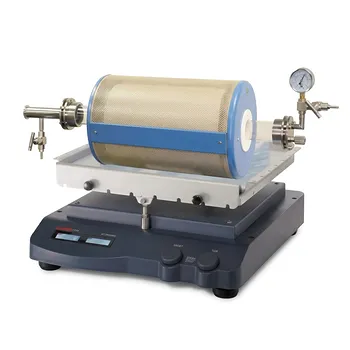
High Temperature Rocking Tube Furnace with Quartz Tube and Vacuum Flange for Materials Synthesis

High Temperature Automated 5 Inch Tube Furnace for Autonomous Material Research and Advanced Laboratory R&D
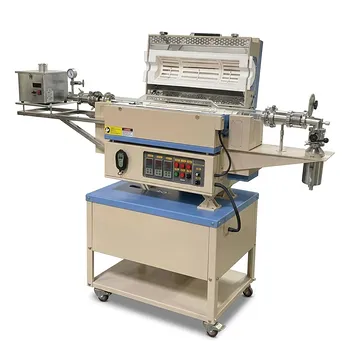
5 Inch Rotary Tube Furnace with Automatic Feeding and Receiving System 1200C Three Zone CVD Powder Processing