The Geometry of Heat: Disciplining the Atom in Bilayer Graphene Synthesis
Apr 24, 2026
The System of Perfection
In material science, as in surgery, the difference between a breakthrough and a failure is rarely a lack of knowledge. It is a failure of systems.
Synthesizing large-area Bilayer Graphene (BLG) is an exercise in managing chaos. You are asking carbon atoms—released from a gas—to arrange themselves into a perfect hexagonal lattice, exactly two layers thick, over a massive surface area.
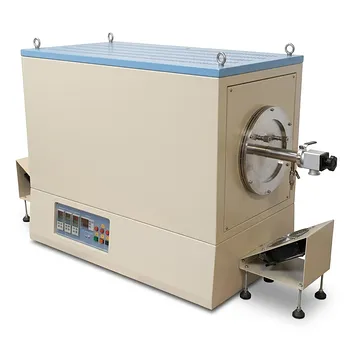
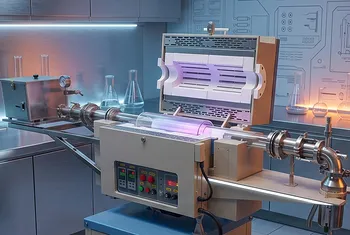
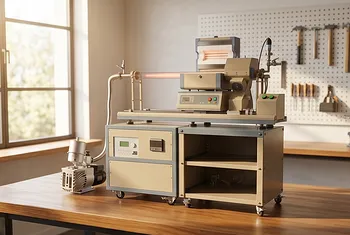
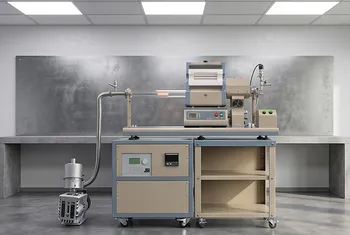
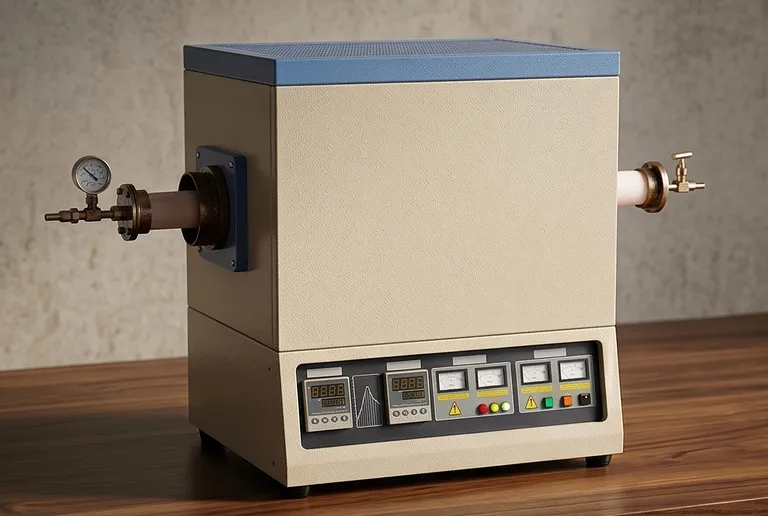
At 1050°C, the high-temperature tube furnace is not merely a heater. It is the governor of a microscopic assembly line.
The Architecture of Pyrolysis
The process begins with destruction. To build graphene, you must first break a precursor—typically methane (CH4). This is the role of thermal energy.
Pyrolysis is the systematic cracking of chemical bonds. If the thermal field within the furnace lacks precision, the "release" of carbon becomes erratic.
- Too cold: The methane remains stable. No growth occurs.
- Too hot: The carbon rains down too quickly, forming amorphous soot rather than elegant crystals.
- The Sweet Spot: Precise thermal energy allows for a controlled "catalytic dance" on the metal substrate.
Preparing the Catalyst Canvas
The furnace does not just act on the gas; it acts on the substrate. Whether using copper (Cu) or copper-nickel (Cu-Ni) alloys, the furnace must "clean" the stage.
High temperatures remove surface oxides, revealing the raw catalytic surface. This heated metal acts as a template, lowering the energy barrier for atoms to find their place.
In this environment, the furnace dictates the kinetics. It decides how fast the atoms move and where they settle. Without a stable thermal environment, the "canvas" itself becomes a source of defects.
The Uniformity Mandate
Large-scale synthesis is a game of consistency. In a "hot-wall" furnace design, the goal is a perfectly homogenous thermal field.
Even a minor deviation of five degrees across the tube can cause nucleation to happen at different rates. This leads to "islands" of graphene that don't stitch together properly, or worse, unwanted patches of multi-layer growth.
Uniformity is achieved through:
- Strict Atmosphere Regulation: Balancing hydrogen (the etchant) and methane (the source).
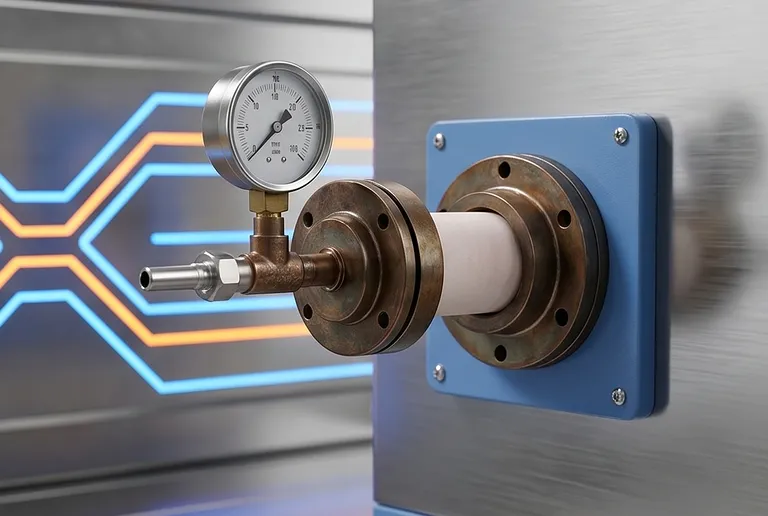
- Vacuum Integrity: Preventing oxygen from poisoning the reaction.
- Laminar Flow: Ensuring gases pass over the substrate without turbulence.
Managing the Second Layer
Growing one layer of graphene is a feat; growing two is a strategy. To achieve Bilayer Graphene (BLG), the furnace must manage the transition after the first layer has stabilized.
This often involves manipulating the cooling rate or the precursor concentration. By carefully "tuning" the furnace environment during the final stages of the process, researchers can trigger the precipitation of a second carbon layer beneath or atop the first.
Thermodynamic Compromises
Engineering is the art of trade-offs. While higher temperatures generally yield higher crystal quality, we are limited by the physics of the substrate.
| Variable | The Trade-off | The Risk |
|---|---|---|
| Temperature | Higher quality vs. Substrate melting | Copper foils sublimate near 1085°C |
| Hydrogen Flow | Better grain size vs. Over-etching | High H2 can destroy graphene as it grows |
| Cooling Rate | Layer control vs. Thermal shock | Fast cooling creates stress and wrinkles |
Engineering the Future of 2D Materials
To move from laboratory curiosity to industrial reality, the synthesis of bilayer graphene requires the "Engineer's Romance"—a marriage of high-level theory and robust, reliable hardware.
At THERMUNITS, we provide the thermal infrastructure that makes this discipline possible. From CVD/PECVD systems designed for atomic precision to vacuum induction melting furnaces for advanced metallurgy, our equipment acts as the stable heart of your research.
Success in the nano-scale requires a system that never wavers at the macro-scale.
Ready to optimize your heat treatment process?
Contact Our Experts
Quick Links
Suggested Products
Split Chamber CVD Tube Furnace with Vacuum Station Chemical Vapor Deposition System Machine 5 Inch Rotary Tube Furnace with Automatic Feeding and Receiving System 1200C Three Zone CVD Powder Processing 1200C Max Dual Sliding Tube Furnace with 50 mm Tube Flanges for CVD High Temperature 1700C Tube Furnace with High Vacuum Turbomolecular Pump System and Multi Channel Mass Flow Controller Gas Mixer Vertical Openable Tube Furnace 0-1700c High Temperature Laboratory System for CVD and Vacuum Heat TreatmentFurther Reading
The Choreography of Carbon: Why CVD Precision Defines the Next Era of Material Science The Geometry of Silence: Why Depth Demands a Chemical Solution The Architecture of Inertness: Why Nitrogen is the Silent Guardian of CVD Synthesis The Invisible Architecture: Engineering Reality from the Gas Phase The Geometry of Light: Engineering Nanoscale Interfaces with High-Precision CVD
ThermUnits
Last updated on Apr 15, 2026
Related Products
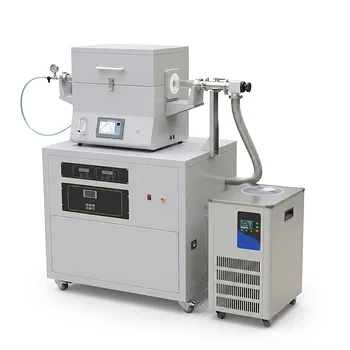
Split Chamber CVD Tube Furnace with Vacuum Station Chemical Vapor Deposition System Machine
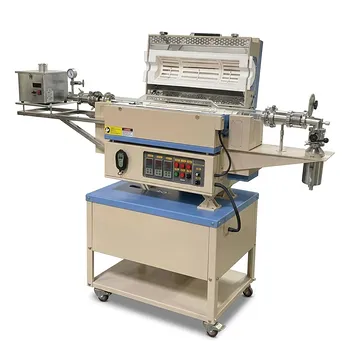
5 Inch Rotary Tube Furnace with Automatic Feeding and Receiving System 1200C Three Zone CVD Powder Processing
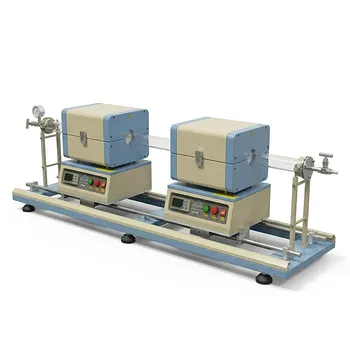
1200C Max Dual Sliding Tube Furnace with 50 mm Tube Flanges for CVD

High Temperature 1700C Tube Furnace with High Vacuum Turbomolecular Pump System and Multi Channel Mass Flow Controller Gas Mixer
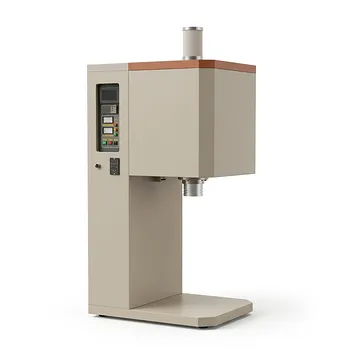
Vertical Openable Tube Furnace 0-1700c High Temperature Laboratory System for CVD and Vacuum Heat Treatment

5 Inch Three Zone Rotary Tube Furnace with Integrated Gas Delivery System and 1200C Capability for Advanced Material CVD Processing
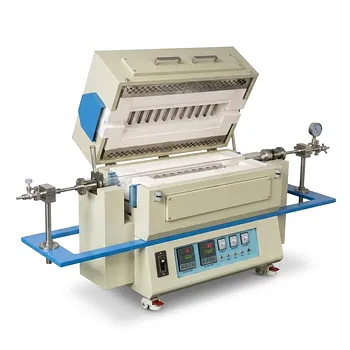
High Temperature Dual Zone Rotating Tube Furnace 1500C Silicon Carbide Heating for Advanced Material Synthesis
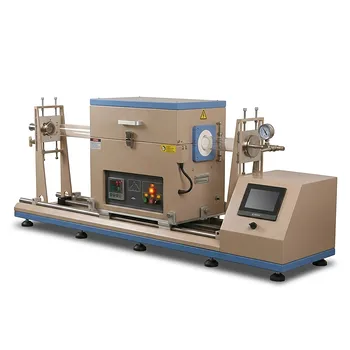
1200C Sliding Tube Furnace for Rapid Thermal Processing and CVD Graphene Growth with 100mm OD Capacity
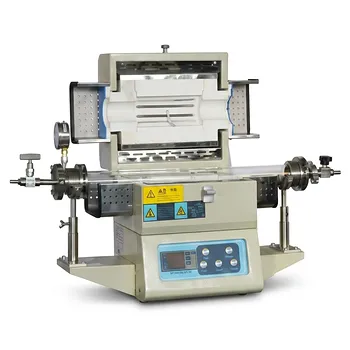
High Temperature 1200C Split Tube Furnace for CVD Research and Vacuum Atmosphere Heat Treatment
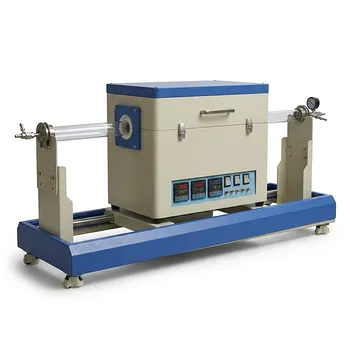
Double Temperature Zone Double Cover Tube Furnace for High Temperature CVD and Vacuum Annealing
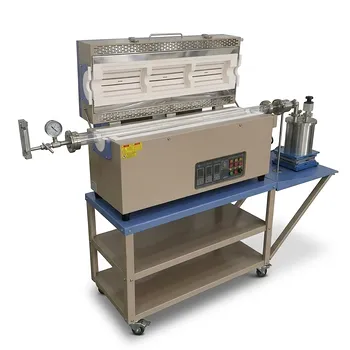
5 Inch Two Zone Rotary Tube Furnace 1100C for Powder CVD and Material Synthesis
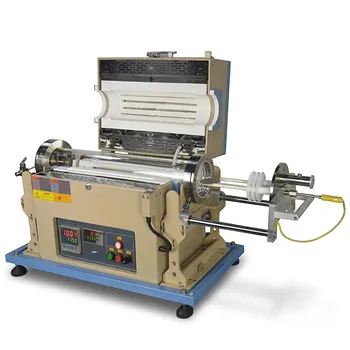
1200°C High Temperature 4 Inch Tube Furnace with Sliding Flange for CVD Systems
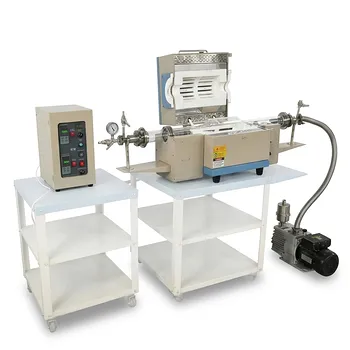
Two Zone Rotary Tube Furnace for Powder CVD Coating and Core Shell Material Synthesis 1100C
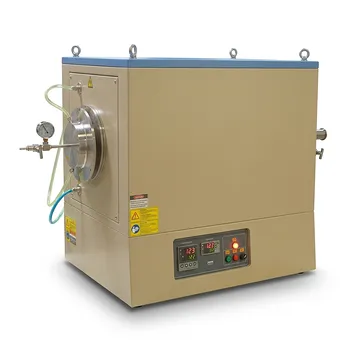
1100°C Large Diameter Quartz Tube Furnace with 24 Inch Heating Zone and Water Cooled Flanges
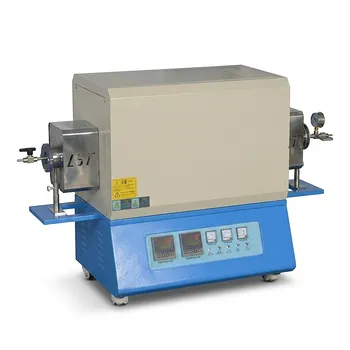
High Temperature Dual Zone Vacuum Tube Furnace for Material Research and CVD Processing
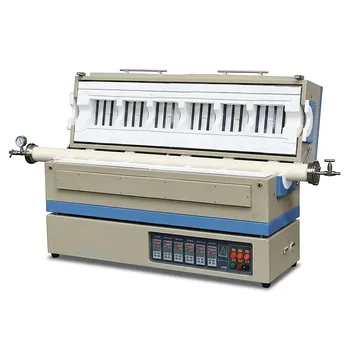
Six Zone Split Tube Furnace with Alumina Tube and Vacuum Flanges for 1500C High Temperature Thermal Processing and CVD

High Temperature 1700C Benchtop Tube Furnace with 5 Inch Heating Zone High Purity Alumina Tube and Vacuum Sealing Flanges
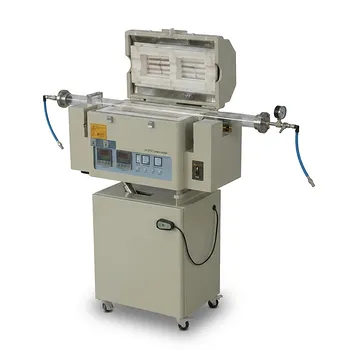
Double Temperature Revolving Tube Furnace with Precision Rotation and Adjustable Inclination for Advanced Material Research
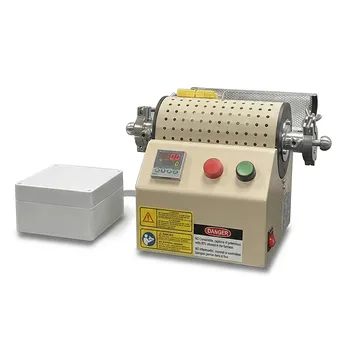
1000C Mini Tube Furnace with 20mm Quartz Tube and Vacuum Flanges for Material Science Research and Controlled Atmosphere Small Sample Processing