How does precision tube furnace control influence CoFe nanoparticle formation? Master Your Bimetallic Synthesis.
Updated 3 months ago
Precision temperature control is the fundamental mechanism for governing the in-situ synthesis and spatial distribution of CoFe nanoparticles. By strictly managing heating rates (typically 5–10°C/min) and maintaining stable high-temperature plateaus, a tube furnace ensures the synchronized reduction and migration of cobalt and iron ions into uniform bimetallic alloys within a porous carbon matrix.
The accuracy of a tube furnace's thermal profile dictates the phase purity, particle size, and structural integrity of cobalt-iron bimetallic systems. Precision control prevents uncontrolled particle agglomeration and ensures the supporting framework provides a stable environment for uniform nanoparticle dispersion.
Regulating Nucleation and Growth Kinetics
Synchronized Reduction of Metal Ions
In a precision thermal field, cobalt and iron ions within a carbon matrix undergo synchronized reduction and migration. This synchronization is critical because it allows the two distinct metal species to contact each other at the molecular level, facilitating the formation of in-situ CoFe alloy nanoparticles rather than separate, discrete metal phases.
Controlling Particle Size and Uniformity
The heating rate directly influences the nucleation density of the nanoparticles. A precise, steady ramp-up prevents sudden temperature spikes that would otherwise trigger rapid, localized grain growth, ensuring that the resulting bimetallic particles remain small and uniformly dispersed throughout the framework.
Preventing Thermal Agglomeration
Maintaining a stable maintenance temperature, such as 900°C, is essential for achieving complete alloying without causing particle sintering. Precision control eliminates the temperature fluctuations that drive smaller particles to merge into larger, less active masses, thereby preserving the high surface area of the bimetallic catalyst.
Structural Integrity of the Supporting Matrix
Carbonization of the Bio-Template
High-temperature precision is required to transform organic ligands, such as alginate, into a porous biochar framework. Accurate heating rates ensure the thorough carbonization of these ligands, creating a robust "scaffold" that physically traps the CoFe nanoparticles and prevents them from migrating and clumping during the reaction.
Managing Pore Development and Gas Etching
Specific temperature plateaus facilitate the controlled decomposition of precursors into gases like ammonia, which act as etching agents. This process, when managed precisely, creates a hierarchical structure with high specific surface area and well-developed micropores, which are necessary for the nanoparticles to be accessible for catalytic reactions.
Maintaining Structural Morphology
Slow, precise heating (sometimes as low as 2°C/min) is often necessary to prevent structural collapse due to internal stresses. By allowing organic components to decompose uniformly, the furnace preserves the complex two-dimensional or three-dimensional shapes of the carbon support, which in turn dictates the final distribution of the metal atoms.
Understanding the Trade-offs
Heating Rate vs. Structural Stress
While rapid heating can save time, it often leads to thermal shock and the release of volatile gases too quickly, which can rupture the carbon matrix. Conversely, excessively slow heating may lead to unnecessary energy consumption and, in some cases, may promote unwanted grain growth if the material dwells too long in intermediate temperature zones.
Phase Purity vs. Energy Intensity
Achieving a perfectly ordered intermetallic structure often requires higher temperatures and longer holding times. However, increasing the temperature increases the risk of the nanoparticles growing too large, creating a trade-off between the catalytic activity of the alloy phase and the active surface area of the particles.
Applying Precision Control to Your Synthesis
How to Apply This to Your Project
- If your primary focus is minimizing particle size: Utilize a moderate heating rate of 5°C/min and avoid exceeding the minimum temperature required for full reduction to prevent sintering.
- If your primary focus is achieving a specific alloy phase: Prioritize the precision of the high-temperature plateau (e.g., 900°C) to ensure the iron and cobalt atoms have sufficient thermal energy to migrate into an ordered lattice.
- If your primary focus is high surface area and porosity: Implement multi-stage heating programs with specific holding temperatures to allow for controlled gas etching and stable carbonization.
The ability to command the thermal trajectory of a tube furnace transforms it from a simple heater into a precision instrument for tailoring the nanostructure of bimetallic catalysts.
Summary Table:
| Parameter | Influence on Nanoparticle Formation | Key Benefit |
|---|---|---|
| Heating Rate | Regulates nucleation density and prevents thermal shock. | Small, uniformly dispersed particles. |
| Temperature Plateau | Facilitates synchronized reduction and atomic migration. | High-purity in-situ alloy formation. |
| Steady Maintenance | Prevents sintering and particle merging at high heat. | Preserves high catalytic surface area. |
| Gas Etching Control | Manages decomposition of precursors (e.g., ammonia). | Develops hierarchical pore structures. |
| Thermal Stability | Protects the structural morphology of the carbon matrix. | Prevents collapse of the support scaffold. |
Elevate Your Material Research with THERMUNITS
Precision is the difference between a successful alloy and a failed experiment. THERMUNITS is a leading manufacturer of high-temperature laboratory equipment designed specifically for the rigorous demands of material science and industrial R&D.
Our advanced thermal processing solutions ensure the exact temperature control needed for synchronized metal reduction and structural integrity in bimetallic synthesis. Whether you are developing catalysts or advanced composites, we provide the tools for success:
- Comprehensive Furnace Range: Tube, Muffle, Vacuum, Atmosphere, Rotary, and Hot Press Furnaces.
- Advanced Systems: CVD/PECVD systems, Vacuum Induction Melting (VIM), and Dental Furnaces.
- Precision Components: High-quality Thermal Elements and custom lab heat treatment equipment.
Ready to achieve superior nanoparticle dispersion and phase purity? Contact our technical experts today to find the perfect furnace for your laboratory.
References
- Jingyu Zhao, Jiayi Zhang. Cobalt/Iron Bimetallic Biochar Composites for Lead(II) Adsorption: Mechanism and Remediation Performance. DOI: 10.3390/molecules29071595
Mentioned Products
- High Temperature Tube Furnace 1500C with Sliding Flanges and 50mm OD for Rapid Thermal Processing Fast Heating and Cooling
- High Temperature 1700C Tube Furnace with High Vacuum Turbomolecular Pump System and Multi Channel Mass Flow Controller Gas Mixer
- 1750°C High Temperature Benchtop Vacuum Atmosphere Tube Furnace with Kanthal Super 1800 Heating Elements and 60mm Alumina Processing Tube
- High Temperature 1700C Benchtop Tube Furnace with 5 Inch Heating Zone High Purity Alumina Tube and Vacuum Sealing Flanges
- 1700C High Temperature Alumina Tube Furnace with 18 Inch Heated Zone and Vacuum Sealing Flanges
People Also Ask
- How are high-temperature tube furnaces utilized to repair etching damage? Precision Lattice Restoration Solutions
- What core conditions does a high-temperature tube furnace provide for rGO aerogels? Mastering Precision Synthesis.
- What role does a high-temperature tube furnace play in CVD synthesis of silicon nanowires? Master VLS Growth Precision.
- What role does a high-temperature tube furnace play in the sulfidation heat treatment of CoS@C/MXene nanocomposites? Guide
- What is the function of a high-temperature tube furnace in zirconia catalyst prep? Optimize phase and performance.

Tech Team · ThermUnits
Last updated on Jun 02, 2026
Related Products
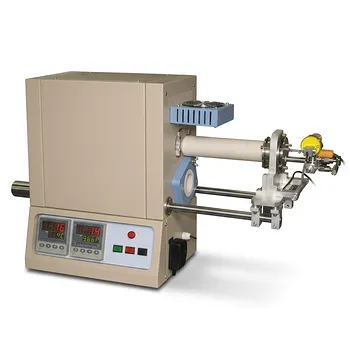
High Temperature Tube Furnace 1500C with Sliding Flanges and 50mm OD for Rapid Thermal Processing Fast Heating and Cooling

High Temperature 1700C Tube Furnace with High Vacuum Turbomolecular Pump System and Multi Channel Mass Flow Controller Gas Mixer
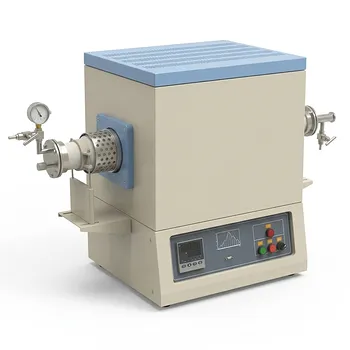
1750°C High Temperature Benchtop Vacuum Atmosphere Tube Furnace with Kanthal Super 1800 Heating Elements and 60mm Alumina Processing Tube

High Temperature 1700C Benchtop Tube Furnace with 5 Inch Heating Zone High Purity Alumina Tube and Vacuum Sealing Flanges
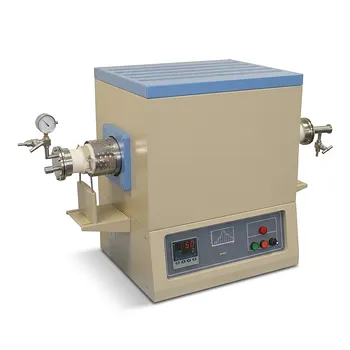
1700C High Temperature Alumina Tube Furnace with 18 Inch Heated Zone and Vacuum Sealing Flanges
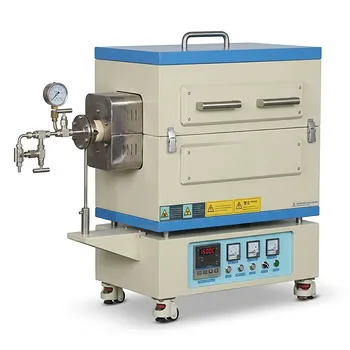
High Temperature Split Tube Furnace 1500C for Material Research Vacuum and Atmosphere Thermal Processing

1800C High Temperature Compact Vacuum Tube Furnace with 60mm OD Alumina Tube and Kanthal MoSi2 Heating Elements

Compact High Temperature 1600C Tube Furnace with 50mm Alumina Tube and Vacuum Flanges for Material Sintering
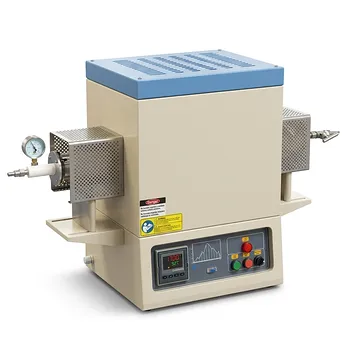
High Temperature Three Zone Tube Furnace 1700C with Alumina Tube and Water Cooled Flanges
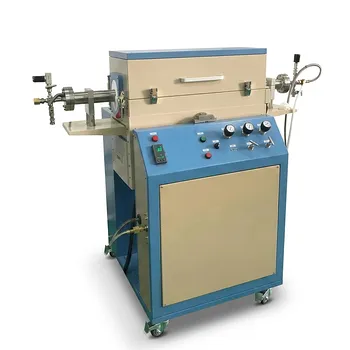
High Temperature Rocking Tube Furnace 1700°C Alumina Processing Tube with Precision Oscillation for Material Synthesis
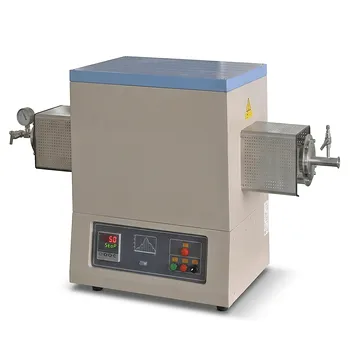
High Temperature 1700C Tube Furnace with 4 Inch OD Alumina Tube and Vacuum Sealing Flanges

High Temperature 1700C Vertical Tube Furnace for Powder Spherification and Material Sintering
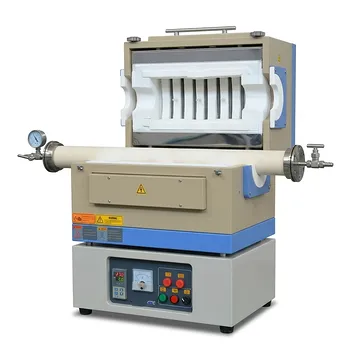
High Temperature 1600C Split Tube Furnace Vacuum Flanges Valves Optional 60mm 80mm Alumina Tube

High Temperature Automated 5 Inch Tube Furnace for Autonomous Material Research and Advanced Laboratory R&D

High Temperature 1700C Six Zone Split Tube Furnace with Alumina Tube and Water Cooled Flanges

High Vacuum Compact Tube Furnace 1200C with Integrated Turbo Pump System and 8 Inch Heating Zone
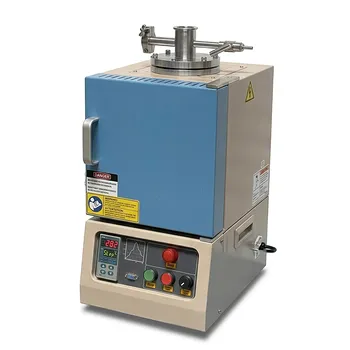
High Temperature Hybrid Muffle and Tube Furnace with Vacuum Capability and PID Control
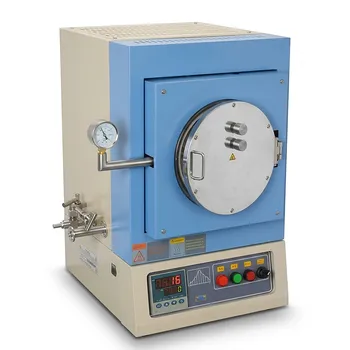
1100°C High Temperature Quartz Chamber Furnace 8 Inch OD with 7.6 Liter Capacity and Vacuum Atmosphere Capability

1100C Tube Furnace with Vacuum Flange and Programmable Temperature Controller for Material Science and Industrial Heat Treatment