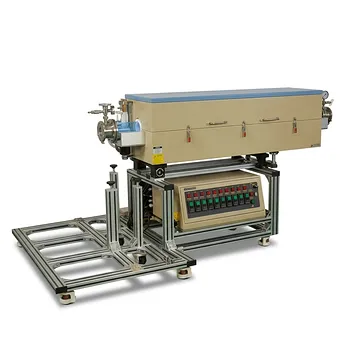
How does a high-purity atmosphere tube furnace contribute to the carbonization process of molybdenum carbide catalysts? - Guide
Updated 3 months ago
A high-purity atmosphere tube furnace is the critical enabling technology for synthesizing molybdenum carbide catalysts because it isolates the reaction from oxygen while providing the thermal precision necessary for complex phase transitions. By maintaining a strictly inert environment, the furnace prevents the molybdenum precursor from oxidizing at high temperatures and allows organic ligands to undergo in-situ self-carbonization into the desired carbide structure.
Core Takeaway: The atmosphere tube furnace acts as a controlled chemical reactor that facilitates the transformation of molybdenum precursors into specific carbide phases (like $\beta$-Mo₂C) by managing atmospheric purity, gas flow, and precise thermal gradients.
Eliminating Oxidation and Managing Pyrolysis
Prevention of Molybdenum Oxidation
At synthesis temperatures—often exceeding 700°C—molybdenum sources are highly susceptible to oxidation by even trace amounts of ambient oxygen. The tube furnace provides a hermetically sealed environment where high-purity inert gases, such as argon or nitrogen, displace oxygen to ensure the metal source remains in a state conducive to carburization rather than turning into unwanted molybdenum oxides.
Facilitating In-Situ Self-Carbonization
In many catalyst synthesis protocols, the organic ligands within the precursor act as the carbon source. The oxygen-depleted environment inside the furnace allows these ligands to undergo pyrolysis, a process of thermal decomposition that leaves behind a carbon matrix that subsequently reacts with the molybdenum to form the carbide phase.
Continuous Removal of Volatile Byproducts
As organic components decompose, they release volatile organic compounds (VOCs) and other gases that can contaminate the catalyst or inhibit the reaction. The precision flow control of the tube furnace creates a continuous sweep of inert gas, effectively carrying these byproducts away and promoting the development of a clean, porous material structure.
Driving Phase Transformation and Structural Integrity
Sequential Phase Control
The transformation from an initial precursor, such as amine molybdenum oxide (AMO), to the final stable catalyst is a temperature-dependent sequence. The furnace’s programmable temperature functions allow researchers to navigate through the $\alpha$-MoC$_{1-x}$ stage and finally reach the stable $\beta$-Mo₂C phase, ensuring the catalyst reaches its most active and durable crystalline form.
Preventing Metal Sintering and Agglomeration
Precise control over the heating rate (e.g., 5°C/min) is vital to manage the energy input into the system. Slow, steady heating ensures that molybdenum nanoparticles are anchored within the carbon matrix as they form, preventing them from sintering or "clumping," which would otherwise reduce the available surface area and catalytic activity.
Temperature Uniformity and Consistency
The design of the tube furnace ensures a uniform temperature field across the specimen. This thermal consistency is a decisive factor in achieving a uniform degree of carbonization throughout the entire batch, which directly impacts the electrical conductivity and electrochemical performance of the final molybdenum carbide catalyst.
Understanding the Trade-offs
Atmospheric Purity vs. Gas Consumption
Achieving the "high-purity" environment required for molybdenum carbide synthesis requires a continuous flow of expensive inert gases like Argon. While lower flow rates reduce costs, they may fail to effectively remove byproducts, leading to pore clogging or surface contamination of the catalyst.
Heating Speed vs. Phase Purity
While rapid heating can save time, it often leads to thermal gradients within the material that result in a mixture of different carbide phases. Achieving a pure beta-phase molybdenum carbide requires slower, carefully controlled ramps that may increase the total processing time significantly.
Mass Transport Limitations
In a static tube furnace, the gas interacts primarily with the surface of the precursor powder. If the precursor bed is too deep, the "internal" parts of the sample may not experience the same atmospheric conditions as the surface, leading to non-uniform carbonization and inconsistent catalytic properties.
How to Apply This to Your Project
Recommendations for Catalyst Synthesis
To achieve the best results when using a tube furnace for molybdenum carbide production, tailor your parameters to your specific material goals.
- If your primary focus is phase purity: Utilize the slowest possible programmable heating ramps to allow the molybdenum atoms sufficient time to rearrange into the stable $\beta$-Mo₂C lattice.
- If your primary focus is high surface area: Increase the flow rate of the carrier gas (Argon) to ensure that all volatile pyrolysis byproducts are swept away immediately, preventing the collapse of the pore structure.
- If your primary focus is electrical conductivity: Ensure the final carbonization temperature reaches at least 900°C to promote the formation of a well-graphitized carbon nitrogen-doped substrate around the carbide clusters.
By masterfully controlling the interplay between temperature, time, and atmospheric composition, the tube furnace transforms simple precursors into high-performance catalytic tools.
Summary Table:
| Key Feature | Role in Carbonization | Impact on Catalyst |
|---|---|---|
| Inert Atmosphere | Prevents molybdenum oxidation | Ensures high phase purity and stability |
| Precision Flow Control | Removes volatile organic byproducts | Increases surface area and porosity |
| Thermal Precision | Manages $\beta$-Mo₂C phase transition | Optimizes crystalline structure and activity |
| Uniform Heating | Prevents nanoparticle sintering | Maintains high catalytic surface area |
Elevate Your Material Research with THERMUNITS
As a leading manufacturer of high-temperature laboratory equipment, THERMUNITS provides the thermal precision required for advanced catalyst synthesis. Whether you are developing molybdenum carbide catalysts or exploring new material boundaries, our specialized range of Atmosphere, Tube, Vacuum, and CVD/PECVD furnaces offers unmatched control over atmospheric purity and phase transformation.
Our expertise extends to Rotary kilns, Hot Press furnaces, VIM systems, and Dental furnaces, ensuring that researchers in material science and industrial R&D have the tools to achieve consistent, high-performance results.
Ready to optimize your heat treatment process? Contact THERMUNITS Today to discuss your specific requirements with our technical experts and discover how our advanced laboratory solutions can accelerate your innovation.
References
- Linyuan Zhou, Changwei Hu. Regulating the Hydrodeoxygenation Activity of Molybdenum Carbide with Different Diamines as Carbon Sources. DOI: 10.3390/catal14020138
Mentioned Products
- Vertical 1700C Vacuum and Atmosphere Tube Furnace with 80mm Alumina Tube
- 1750°C High Temperature Benchtop Vacuum Atmosphere Tube Furnace with Kanthal Super 1800 Heating Elements and 60mm Alumina Processing Tube
- 1200C Hybrid Muffle and Tube Furnace for Material Research with Dual Atmosphere Control Quartz Tubes
- Compact Hybrid Muffle and Tube Furnace for 1000C Controlled Atmosphere Laboratory Material Sintering
- Three Zone Tube Furnace with 11 Inch or 15 Inch Quartz Tube and Hinged Flanges for Vacuum Atmosphere Heat Treatment
People Also Ask
- How is an industrial-grade vertical tube furnace utilized in smelting leaching residues? Enhance Metal Recovery Efficiency
- What is the function of a laboratory-grade vertical tube furnace in fast pyrolysis? Optimize Composite Research.
- How does a vertical tube furnace facilitate thermoelectric alloy melting? Precision synthesis for material homogeneity.
- Why is a thermocouple sensor indispensable for monitoring the vertical tube furnace during gallium oxide nanowire production? Optimize VLS Growth
- What are the advantages of using a vertical tube furnace for crucible experiments simulating steel-slag interactions?

Tech Team · ThermUnits
Last updated on Jun 02, 2026
Related Products

Vertical 1700C Vacuum and Atmosphere Tube Furnace with 80mm Alumina Tube

1750°C High Temperature Benchtop Vacuum Atmosphere Tube Furnace with Kanthal Super 1800 Heating Elements and 60mm Alumina Processing Tube
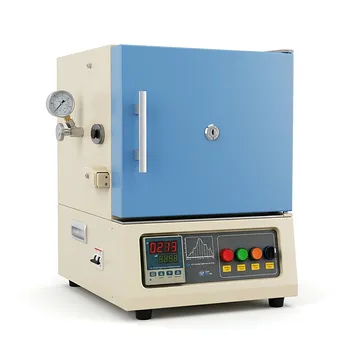
1200C Hybrid Muffle and Tube Furnace for Material Research with Dual Atmosphere Control Quartz Tubes
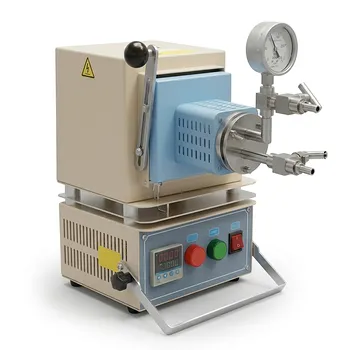
Compact Hybrid Muffle and Tube Furnace for 1000C Controlled Atmosphere Laboratory Material Sintering
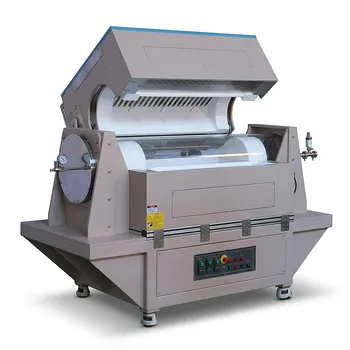
Three Zone Tube Furnace with 11 Inch or 15 Inch Quartz Tube and Hinged Flanges for Vacuum Atmosphere Heat Treatment

1700C High Temperature Alumina Tube Furnace with 18 Inch Heated Zone and Vacuum Sealing Flanges

1100°C High Temperature Quartz Chamber Furnace 8 Inch OD with 7.6 Liter Capacity and Vacuum Atmosphere Capability
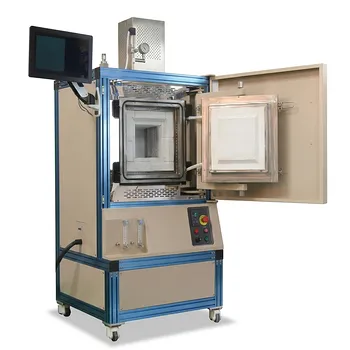
High Temperature Hydrogen Atmosphere Box Furnace 1650C Max Reducing Environment Material Synthesis System 8x8x8 Chamber
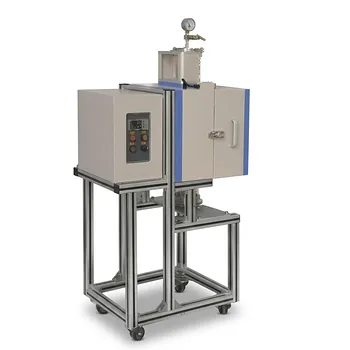
1200°C 5 Inch Vertical Quartz Tube Furnace with Stainless Steel Vacuum Flanges
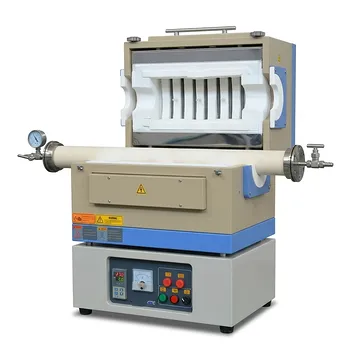
High Temperature 1600C Split Tube Furnace Vacuum Flanges Valves Optional 60mm 80mm Alumina Tube

High Temperature 1700C Tube Furnace with High Vacuum Turbomolecular Pump System and Multi Channel Mass Flow Controller Gas Mixer

1100C Tube Furnace with Vacuum Flange and Programmable Temperature Controller for Material Science and Industrial Heat Treatment

High Temperature 1700C Vertical Tube Furnace for Powder Spherification and Material Sintering

Compact High Temperature 1600C Tube Furnace with 50mm Alumina Tube and Vacuum Flanges for Material Sintering

High Temperature 1700C Six Zone Split Tube Furnace with Alumina Tube and Water Cooled Flanges

1800C High Temperature Compact Vacuum Tube Furnace with 60mm OD Alumina Tube and Kanthal MoSi2 Heating Elements
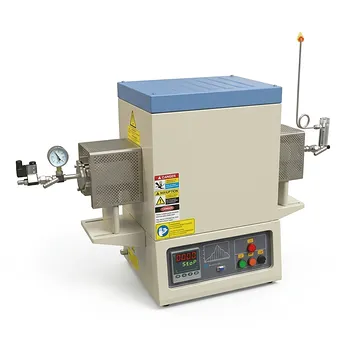
1700C Hydrogen Gas Tube Furnace with 60mm Alumina Process Tube and Integrated Hydrogen Safety Detector

High Temperature 1700C Benchtop Tube Furnace with 5 Inch Heating Zone High Purity Alumina Tube and Vacuum Sealing Flanges

High Temperature Automated 5 Inch Tube Furnace for Autonomous Material Research and Advanced Laboratory R&D