How high-temp furnaces ensure membrane integrity in molten salt impregnation? Precision Thermal & Atmosphere Control
Updated 3 months ago
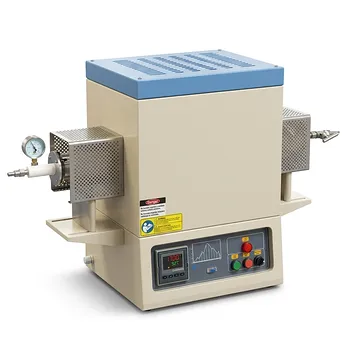
The high-temperature atmosphere furnace ensures membrane integrity by synchronizing precise thermal control with a specific chemical atmosphere. This environment prevents salt decomposition and hydrolysis while maintaining the low-viscosity molten state necessary for the complete, defect-free filling of micropores.
Core Takeaway: To preserve the structural integrity of membranes during impregnation, the furnace must act as a stabilization chamber that simultaneous manages phase state and chemical equilibrium. By maintaining temperatures above 400°C and providing a $CO_2$-rich environment, the system prevents the chemical breakdown of the salt that would otherwise compromise the membrane's structure.
Thermal Management and Phase Stability
Maintaining the Molten State for Penetration
The furnace provides a constant-temperature environment, typically set above 400°C, to ensure the eutectic carbonates remain in a fully molten state. This fluidity is critical because it allows the salt to infiltrate alumina micropores via capillary action without requiring mechanical pressure that could rupture the membrane.
Eliminating Lattice Defects through Uniformity
A high-quality atmosphere furnace provides a uniform thermal field, which is essential for consistent impregnation across the entire membrane surface. This uniformity prevents localized thermal stresses and reduces the formation of lattice defects, resulting in a more robust and thermally stable composite material.
Precise Overheating for Homogenization
In many molten salt processes, the furnace is set to approximately 100°C above the highest melting point of the salt mixture. This specific temperature elevation facilitates molecular-level diffusion, ensuring the salt is chemically homogenized before it enters the membrane pores.
Chemical Protection and Atmosphere Control
Preventing Carbonate Decomposition
The introduction of a high-concentration $CO_2$ atmosphere (such as 50% $CO_2/N_2$) is the primary mechanism for protecting the salt's chemistry. This atmosphere suppresses the natural tendency of carbonates to decompose at high temperatures, ensuring that only pure, stable molten salt fills the micropores.
Dehydration to Prevent Corrosive Hydrolysis
Before reaching melting temperatures, the furnace often operates at a lower set point (e.g., 120°C) under a high vacuum. This step is vital for the deep removal of adsorbed water, which prevents the formation of corrosive by-products that could etch or degrade the membrane structure during the heating cycle.
Controlled Oxygen Partial Pressure
For non-oxide membrane materials, the furnace maintains a strictly controlled inert or reductive environment (using Argon or Vacuum). By precisely managing the oxygen partial pressure, the furnace prevents oxidation of the membrane and the salt, which would otherwise lead to structural failure or pore blockages.
Understanding the Trade-offs
The Risk of Atmospheric Imbalance
If the $CO_2$ concentration is too low, the carbonates will begin to decompose into oxides and gases. This not only changes the chemical composition of the filler but also creates gas bubbles that prevent the micropores from being completely filled, leading to structural "weak spots."
Thermal Stress vs. Penetration Speed
While higher temperatures decrease salt viscosity and speed up the impregnation process, excessive heat can lead to unwanted sintering or grain growth in the membrane structure. Finding the "thermal sweet spot" is a delicate balance between achieving full penetration and maintaining the original pore geometry.
Volatile By-product Management
During the reaction, certain salts may release volatile by-products that can accumulate and contaminate the membrane. The furnace must use a continuous gas flow to efficiently remove these species, ensuring they do not re-condense on the membrane surface and cause surface defects.
How to Apply This to Your Project
Recommendations Based on Material Goals
- If your primary focus is carbonate-based membranes: Prioritize an atmosphere furnace capable of delivering a 50% $CO_2$ mix to prevent salt decomposition during the 400°C+ impregnation phase.
- If your primary focus is moisture-sensitive Lewis acid salts: Ensure your furnace includes a high-vacuum dehydration cycle at 120°C to eliminate structural water before the salt reaches its melting point.
- If your primary focus is minimizing structural defects: Invest in a furnace with high thermal uniformity (muffle or specialized atmosphere furnace) to avoid localized stresses that cause lattice distortions.
- If your primary focus is synthesizing non-oxide materials: Use a furnace that allows for precise control of oxygen partial pressure (down to $10^{-5}$ Pa) to prevent premature oxidation of the raw materials.
By integrating precise thermal gradients with a reactive-suppressant atmosphere, you can achieve a perfectly impregnated membrane that maintains its design specifications and structural longevity.
Summary Table:
| Key Feature | Mechanism | Benefit for Membranes |
|---|---|---|
| Thermal Uniformity | Constant field > 400°C | Prevents thermal stress and lattice defects |
| CO2 Atmosphere | Suppresses salt decomposition | Ensures pure, defect-free pore filling |
| High Vacuum | Pre-heating dehydration | Prevents corrosive hydrolysis and etching |
| Inert/Reductive Gas | Managed oxygen partial pressure | Prevents oxidation of non-oxide materials |
Elevate Your Material Research with THERMUNITS
Precision is paramount in high-temperature membrane processing. THERMUNITS is a leading manufacturer of advanced laboratory equipment designed for the rigors of material science and industrial R&D. Whether you are performing molten salt impregnation or complex CVD/PECVD synthesis, our equipment provides the stability and control your project demands.
Our comprehensive range includes:
- Atmosphere & Vacuum Furnaces for precise chemical stabilization.
- Muffle, Tube, & Rotary Furnaces for superior thermal uniformity.
- Hot Press & Vacuum Induction Melting (VIM) Furnaces for advanced metallurgy.
- Dental Furnaces & Electric Rotary Kilns for specialized processing.
Don't let atmospheric imbalance or thermal stress compromise your results. Contact our technical experts today to discuss a customized thermal solution for your laboratory.
References
- Ian S. Metcalfe, Patricia A. Hunt. Separation and concentration of CO2 from air using a humidity-driven molten-carbonate membrane. DOI: 10.1038/s41560-024-01588-6
Mentioned Products
- 1650C High Temperature Atmosphere Controlled Box Furnace with 65L Chamber for Advanced Material Sintering and Industrial Heat Treatment
- High Temperature Vertical Atmosphere Controlled Furnace with Automatic Bottom Loading and 1700°C Capacity for Advanced Material Research
- 1750°C High Temperature Benchtop Vacuum Atmosphere Tube Furnace with Kanthal Super 1800 Heating Elements and 60mm Alumina Processing Tube
- High Temperature Oxygen and Inert Atmosphere Controlled Furnace 8 Liter 1700C Sintering System for Advanced Materials RD
- High Temperature Hydrogen Atmosphere Box Furnace 1650C Max Reducing Environment Material Synthesis System 8x8x8 Chamber
People Also Ask
- What role does atmosphere control play in technical ceramics and glass? Master Material Purity and Precision
- What role does a high-temperature atmosphere furnace play in the direct electrochemical reduction of CO2? - Key Insights
- What is the role of a high-temperature box furnace in the solid-state synthesis of Europium-doped M3MgSi2O8 phosphors?
- What is the role of a high-temperature box furnace in Na3MnZr(PO4)3 synthesis? Engineering High-Performance NASICON.
- What physical conditions does a high-temperature atmosphere furnace provide for MXene exfoliation? Process Guide

Tech Team · ThermUnits
Last updated on Jun 03, 2026
Related Products
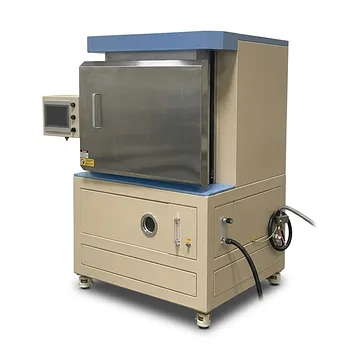
1650C High Temperature Atmosphere Controlled Box Furnace with 65L Chamber for Advanced Material Sintering and Industrial Heat Treatment
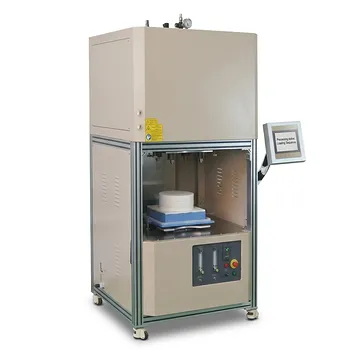
High Temperature Vertical Atmosphere Controlled Furnace with Automatic Bottom Loading and 1700°C Capacity for Advanced Material Research

1750°C High Temperature Benchtop Vacuum Atmosphere Tube Furnace with Kanthal Super 1800 Heating Elements and 60mm Alumina Processing Tube
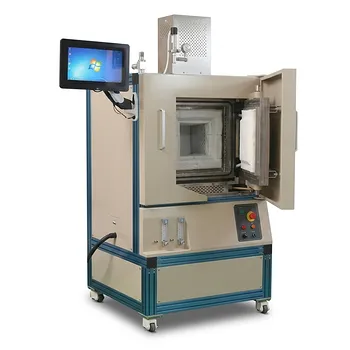
High Temperature Oxygen and Inert Atmosphere Controlled Furnace 8 Liter 1700C Sintering System for Advanced Materials RD
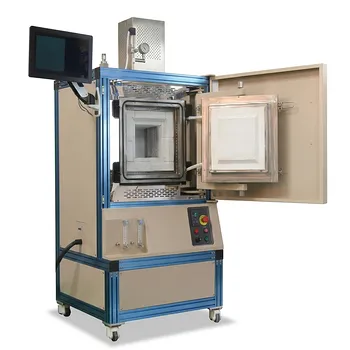
High Temperature Hydrogen Atmosphere Box Furnace 1650C Max Reducing Environment Material Synthesis System 8x8x8 Chamber
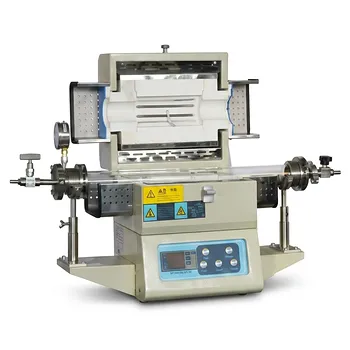
High Temperature 1200C Split Tube Furnace for CVD Research and Vacuum Atmosphere Heat Treatment
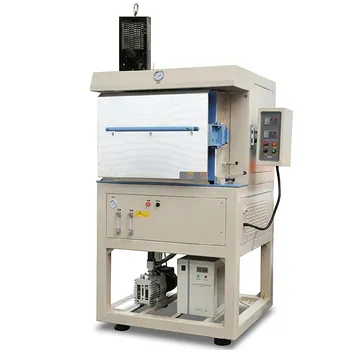
1200C Hydrogen Atmosphere Box Furnace with 5 Heated Sides and 64L Chamber
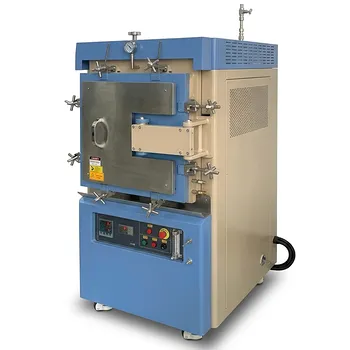
Atmosphere Controlled Muffle Furnace 1700C Maximum Temperature 80L High Capacity Vacuum Inert Gas Box Furnace
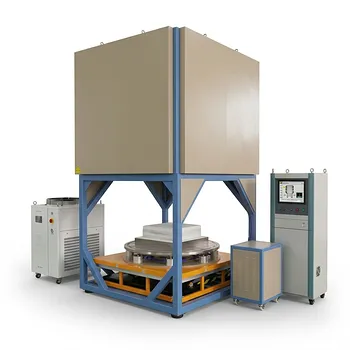
Bottom Loaded Inert Gas Atmosphere Box Furnace 1700C 1300C 216L Large Capacity Industrial Thermal Processing System
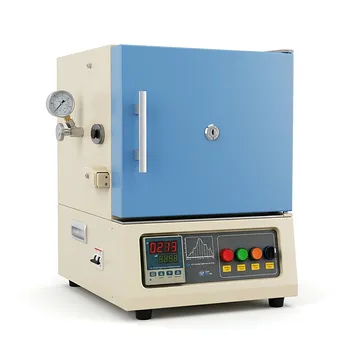
1200C Hybrid Muffle and Tube Furnace for Material Research with Dual Atmosphere Control Quartz Tubes
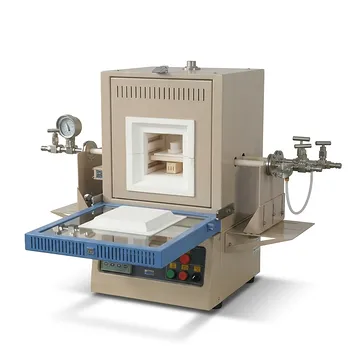
1700C Compact Hybrid Furnace with Dual Layer Box Sintering and Controlled Atmosphere Alumina Tubes
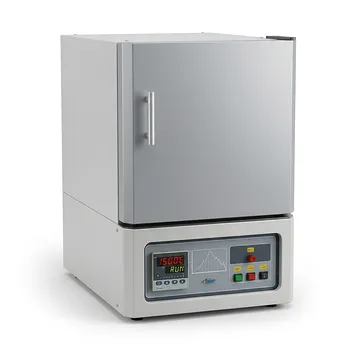
High Temperature 1500C Benchtop Muffle Furnace 3.6L Alumina Fiber Chamber Programmable Controller Sintering Annealing Carbonization Thermal Processing System

Vertical 1700C Vacuum and Atmosphere Tube Furnace with 80mm Alumina Tube

High Temperature 1700C Tube Furnace with High Vacuum Turbomolecular Pump System and Multi Channel Mass Flow Controller Gas Mixer
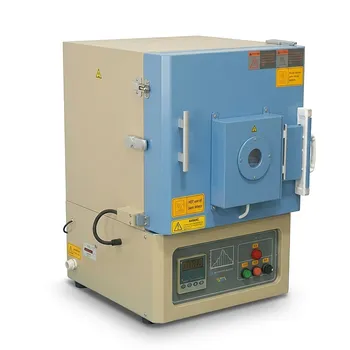
High Temperature Benchtop Muffle Furnace 1500C with 3.6L Chamber and Quartz Observation Window
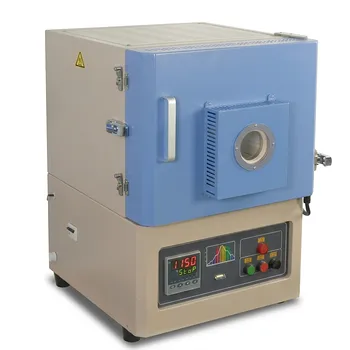
High Temperature Benchtop Muffle Furnace with Quartz Observation Window for Thermal Imaging and Material Analysis
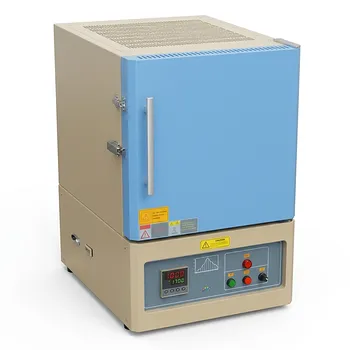
Large Bench Top 1700C High Temperature Muffle Furnace with 19L Chamber for Advanced Material Sintering and Annealing

High Temperature 1700C Benchtop Tube Furnace with 5 Inch Heating Zone High Purity Alumina Tube and Vacuum Sealing Flanges
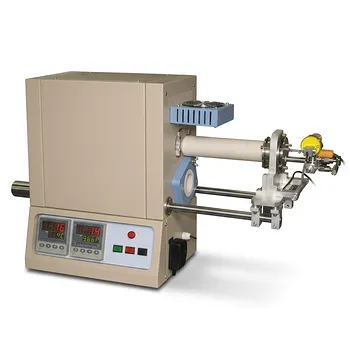
High Temperature Tube Furnace 1500C with Sliding Flanges and 50mm OD for Rapid Thermal Processing Fast Heating and Cooling