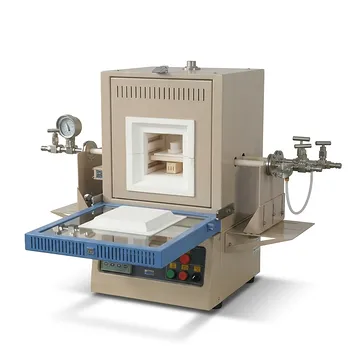
How does a high-temperature atmosphere tube furnace facilitate phenolic resin activation? Master Precise Pore Control.
Updated 3 months ago
The high-temperature atmosphere tube furnace acts as the controlled reactor necessary to drive the chemical etching of phenolic resin. It provides the specific thermal environment—typically between 750°C and 900°C—and the inert nitrogen atmosphere required for activators to strip carbon atoms from the resin precursor. This precise combination of heat and chemistry transforms the solid resin into a highly porous structure with a significantly increased specific surface area.
The furnace facilitates activation by simultaneously preventing material combustion through an inert atmosphere and enabling aggressive chemical etching. This dual control allows for the precise engineering of microporous and mesoporous systems essential for high-performance carbon materials.
The Role of Controlled Thermal Energy
Reaching the Activation Threshold
The furnace provides the high-heat environment, often reaching 1100°C, required to trigger the reaction between the resin and activating agents. Most phenolic resin activation processes occur between 750°C and 900°C, where the thermal energy is sufficient to break chemical bonds within the carbon framework.
Regulating Heating Rates
Precise program-controlled systems allow for specific heating rates, such as 5°C to 10°C per minute. Controlling the speed at which the resin reaches activation temperature is vital for ensuring uniform pore development and preventing structural collapse.
Managing Residence Time
The furnace maintains a stable temperature for a set "holding time" to ensure the chemical reaction reaches completion. This duration determines the depth of the etching process and directly influences the final adsorption capacity of the carbon.
Engineering the Reaction Atmosphere
Preventing Oxidation with Inert Gases
A strictly controlled nitrogen (N2) protective atmosphere is essential to prevent the carbonized resin from burning. By removing oxygen, the furnace ensures that the carbon material is etched by the activator rather than consumed by combustion.
Introducing Reactive Gases
In addition to inert protection, these furnaces can introduce oxidizing gases like carbon dioxide or steam. These gases facilitate a disproportionation reaction that further regulates the distribution of micropores within the carbon matrix.
Creating a Reducing Environment
The sealed nature of the tube furnace allows for a high-purity environment that supports the use of specific chemical activators like potassium oxalate. This prevents the loss of carbon material and ensures the gases produced during decomposition can effectively etch the resin skeleton.
Facilitating the Chemical Etching Process
Stripping Carbon Atoms
The furnace provides the heat necessary for chemical agents, such as sodium hydroxide (NaOH) or potassium hydroxide (KOH), to react with the resin. This reaction effectively "strips" carbon atoms from the precursor, leaving behind a hollowed-out, porous framework.
Developing Pore Architectures
By precisely adjusting the temperature and the type of atmosphere, the furnace allows for the targeted creation of micropores and mesopores. This architecture is what gives the activated carbon its ability to adsorb specific ions or molecules.
Maximizing Specific Surface Area
The ultimate goal of the furnace process is to increase the material's specific surface area, often reaching levels over 1900 m²/g. This massive internal surface area is what determines the final energy storage or filtration capabilities of the activated carbon.
Understanding the Trade-offs
Temperature vs. Carbon Yield
Higher activation temperatures generally lead to a more developed pore structure and higher surface area. However, excessive heat can cause "over-activation," where the carbon walls between pores burn away, leading to a significant loss in total carbon yield.
Corrosive Nature of Activators
Using chemical agents like KOH or NaOH at high temperatures is highly effective for pore creation but is extremely harsh on equipment. These chemicals can corrode the internal surfaces of the furnace tube, requiring more frequent maintenance or the use of specialized, resistant materials.
Atmosphere Purity and Consistency
Even minor leaks in the furnace seals can introduce oxygen, leading to localized combustion and inconsistent batches. Maintaining a high-purity atmosphere is technically demanding but non-negotiable for producing high-quality activated carbon.
How to Apply This to Your Project
When utilizing a tube furnace for phenolic resin activation, your settings should align with your specific material requirements:
- If your primary focus is maximizing surface area: Aim for the higher end of the temperature range (850°C–900°C) with a strong chemical activator like KOH, ensuring a slow heating rate to maintain structural integrity.
- If your primary focus is pore size regulation: Use a combination of chemical activators and a secondary gas phase, such as CO2, while precisely controlling the residence time to prevent micropores from collapsing into larger voids.
- If your primary focus is material yield: Keep temperatures closer to the 700°C–750°C range and use a strictly inert nitrogen atmosphere to minimize the loss of the carbon framework.
By mastering the balance between thermal energy and atmospheric chemistry, you can precisely tune the properties of phenolic resin-derived activated carbon for any technical application.
Summary Table:
| Feature | Role in Activation Process | Typical Specification |
|---|---|---|
| Temperature Range | Triggers chemical etching & bond breaking | 750°C – 900°C (up to 1100°C) |
| Atmosphere Control | Prevents combustion; enables N2 or CO2 etching | High-purity Inert/Reactive Gas |
| Heating Rate | Ensures uniform pore development | 5°C – 10°C per minute |
| Pore Engineering | Develops microporous & mesoporous structures | Targeted specific surface area |
| Surface Area | Maximizes adsorption capacity | > 1900 m²/g |
Elevate Your Carbon Research with THERMUNITS Precision
To achieve superior surface area and precise pore architecture in activated carbon, you need a thermal environment that offers uncompromising control. THERMUNITS is a leading manufacturer of high-temperature laboratory equipment specifically designed for material science and industrial R&D.
Our advanced Atmosphere Tube Furnaces provide the airtight integrity and thermal stability required for complex phenolic resin activation. Beyond tube furnaces, we offer a comprehensive range of thermal processing solutions, including:
- Muffle & Atmosphere Furnaces for versatile heat treatment.
- Vacuum & Hot Press Furnaces for advanced material synthesis.
- CVD/PECVD Systems for thin-film research.
- Rotary Kilns & VIM Furnaces for industrial-scale development.
Whether you are optimizing carbon yield or engineering specific pore sizes, our expert team can provide the specialized equipment needed to drive your innovation.
Ready to optimize your lab's thermal processes?
Contact THERMUNITS Today to discuss your specific requirements and get a professional quote.
References
- Shaima Albazzaz, Rusul Naseer Mohammed. The Removal of Azo Dyes from an Aqueous Solution Using NaOH-Activated Carbon from Phenolic Resin. DOI: 10.5755/j01.erem.80.4.37236
Mentioned Products
- High Temperature Vertical Atmosphere Controlled Furnace with Automatic Bottom Loading and 1700°C Capacity for Advanced Material Research
- High Temperature 1700C Vertical Tube Furnace for Powder Spherification and Material Sintering
- High Temperature Tube Furnace 1500C with Sliding Flanges and 50mm OD for Rapid Thermal Processing Fast Heating and Cooling
- 1750°C High Temperature Benchtop Vacuum Atmosphere Tube Furnace with Kanthal Super 1800 Heating Elements and 60mm Alumina Processing Tube
- 1200°C Atmosphere Controlled Automatic Bottom Loading Furnace with 6 Inch Quartz Tube
People Also Ask
- What role does atmosphere control play in technical ceramics and glass? Master Material Purity and Precision
- What is the function of a vertical tube furnace in MnOx-SiO2 research? Precision Control & Quenching
- What's the Role of Tube Furnaces in FeCuS-N-C Synthesis? Precision Pyrolysis & Atmosphere Control
- What role does a high-temperature atmosphere furnace play in the direct electrochemical reduction of CO2? - Key Insights
- What is the function of a high-temperature tube furnace with atmosphere control? Optimize Carbonization of Composites

Tech Team · ThermUnits
Last updated on Jun 03, 2026
Related Products
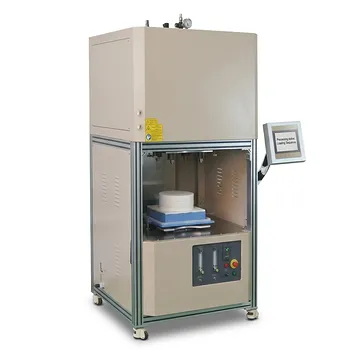
High Temperature Vertical Atmosphere Controlled Furnace with Automatic Bottom Loading and 1700°C Capacity for Advanced Material Research

High Temperature 1700C Vertical Tube Furnace for Powder Spherification and Material Sintering

High Temperature Tube Furnace 1500C with Sliding Flanges and 50mm OD for Rapid Thermal Processing Fast Heating and Cooling

1750°C High Temperature Benchtop Vacuum Atmosphere Tube Furnace with Kanthal Super 1800 Heating Elements and 60mm Alumina Processing Tube
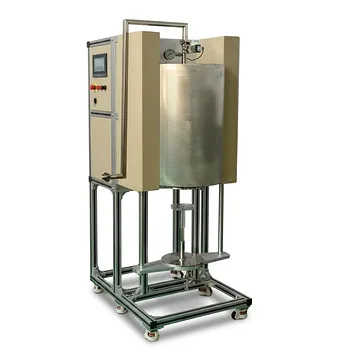
1200°C Atmosphere Controlled Automatic Bottom Loading Furnace with 6 Inch Quartz Tube

1700C High Temperature Alumina Tube Furnace with 18 Inch Heated Zone and Vacuum Sealing Flanges
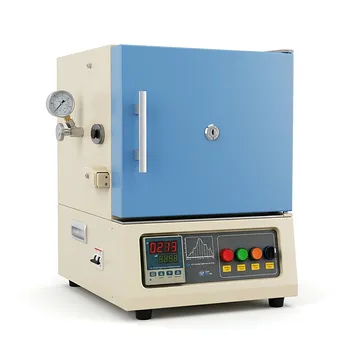
1200C Hybrid Muffle and Tube Furnace for Material Research with Dual Atmosphere Control Quartz Tubes

1100°C High Temperature Quartz Chamber Furnace 8 Inch OD with 7.6 Liter Capacity and Vacuum Atmosphere Capability

High Temperature 1700C Tube Furnace with High Vacuum Turbomolecular Pump System and Multi Channel Mass Flow Controller Gas Mixer

High Temperature Automated 5 Inch Tube Furnace for Autonomous Material Research and Advanced Laboratory R&D
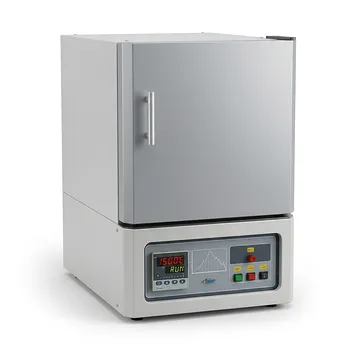
High Temperature 1500C Benchtop Muffle Furnace 3.6L Alumina Fiber Chamber Programmable Controller Sintering Annealing Carbonization Thermal Processing System

Vertical 1700C Vacuum and Atmosphere Tube Furnace with 80mm Alumina Tube

Compact High Temperature 1600C Tube Furnace with 50mm Alumina Tube and Vacuum Flanges for Material Sintering
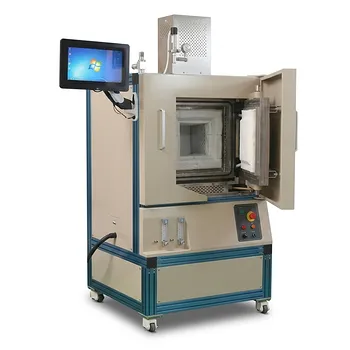
High Temperature Oxygen and Inert Atmosphere Controlled Furnace 8 Liter 1700C Sintering System for Advanced Materials RD

High Temperature 1700C Benchtop Tube Furnace with 5 Inch Heating Zone High Purity Alumina Tube and Vacuum Sealing Flanges

High Temperature 1700C Tube Furnace with 4 Inch OD Alumina Tube and Vacuum Sealing Flanges
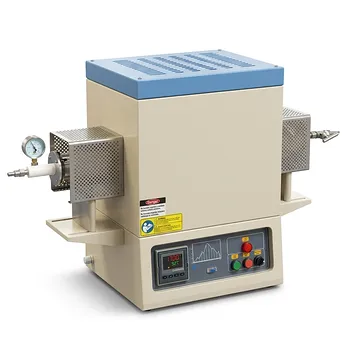
High Temperature Three Zone Tube Furnace 1700C with Alumina Tube and Water Cooled Flanges

1800C High Temperature Compact Vacuum Tube Furnace with 60mm OD Alumina Tube and Kanthal MoSi2 Heating Elements
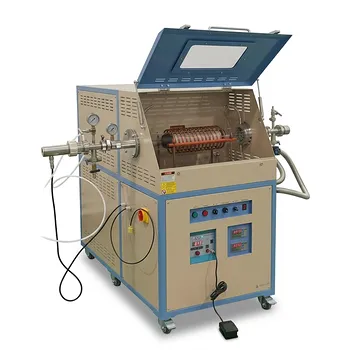
Ultra High Temperature 2300C Induction Heated Graphite Tube Furnace with Infrared Control