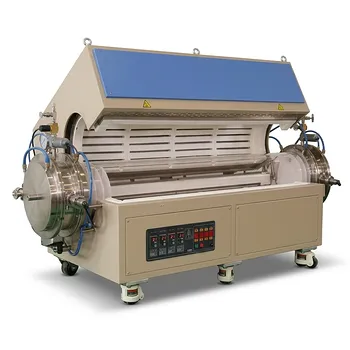
How does a tube furnace facilitate sintering for SrCrO3? Master Perovskite Synthesis with Precise Thermal Control
Updated 3 months ago
The high-temperature tube furnace facilitates the synthesis of perovskite-type oxides like $\text{SrCrO}_3$ by providing a precise, stable thermal environment that drives solid-state diffusion and chemical reactions between precursor powders. By maintaining uniform temperatures and offering hermetic control over the internal atmosphere, the furnace ensures that metal ions reorganize into a highly ordered crystalline lattice while maintaining the specific valence states required for phase purity.
A high-temperature tube furnace is the essential tool for solid-phase sintering because it provides the continuous thermal energy and atmospheric stability required to overcome the kinetic barriers of atomic diffusion, allowing solid precursors to transform into a single-phase perovskite structure.
Driving Solid-State Diffusion and Reaction
Overcoming Kinetic Barriers
Solid-phase sintering requires extreme thermal energy to prompt atoms to move across the interfaces of solid particles. The tube furnace provides a stable thermal field that allows precursors like strontium and chromium oxides to interact at a molecular level.
Promoting Lattice Reorganization
As temperatures rise, the furnace facilitates isothermal holding times, during which the crystal lattice begins to reorganize. This period of sustained heat is what allows the random mixture of powders to form the specific, highly ordered cubic or pseudocubic structure characteristic of perovskites.
Achieving High Density and Phase Purity
A consistent heating profile ensures that the resulting material reaches the high-density requirements for advanced applications. Precise control over the heating and cooling curves prevents the formation of secondary, unwanted phases, ensuring the final $\text{SrCrO}_3$ is chemically uniform.
Atmosphere Control and Chemical Stability
Maintaining Valence States
Chromium-based oxides like $\text{SrCrO}_3$ are sensitive to their environment; unintended oxidation can change the valence state of the chromium ions. Tube furnaces allow for the introduction of inert or reductive atmospheres (such as Argon or $H_2/Ar$ mixes) to prevent these unwanted chemical shifts.
Hermetic Sealing for Structural Integrity
The design of a tube furnace allows for superior sealing performance compared to open-air furnaces. This stability is critical for maintaining the stoichiometric ratio of the precursors, ensuring that no volatile components escape and the final crystal structure remains intact.
Facilitating Multi-Stage Sintering
Many perovskites require intermediate grinding and multiple firing cycles to ensure a complete reaction. The tube furnace supports these multi-stage processes by providing a repeatable thermal environment that ensures consistency across every sintering iteration.
Understanding the Trade-offs
Thermal Gradients and Uniformity
While tube furnaces provide excellent control, they can suffer from radial and axial thermal gradients. If the sample is too large or placed outside the furnace's "sweet spot," the edges may react differently than the center, leading to phase heterogeneity.
Processing Time and Energy Consumption
Solid-state sintering in a tube furnace is a diffusion-limited process, often requiring several hours or even days at high temperatures. This high energy demand and long processing time can be a disadvantage compared to faster, non-equilibrium synthesis methods like spark plasma sintering.
Material Compatibility and Contamination
At extreme temperatures, the furnace tube material (e.g., alumina or quartz) may react with the precursor powders. Careful selection of crucible materials is necessary to prevent contamination that could degrade the electronic or magnetic properties of the synthesized perovskite.
How to Apply This to Your Synthesis Goal
Making the Right Choice for Your Project
To successfully synthesize $\text{SrCrO}_3$ or similar perovskite oxides, your approach must align with your specific material requirements:
- If your primary focus is phase purity: Utilize a tube furnace with high-precision PID controllers and execute multiple sintering stages with intermediate grinding.
- If your primary focus is oxidation control: Ensure the furnace is equipped with a reliable gas flow system and high-quality vacuum seals to maintain a strictly controlled atmosphere.
- If your primary focus is high-density particles: Prioritize long isothermal holding times at the peak temperature to allow for maximum particle consolidation and grain growth.
By mastering the balance of thermal energy and atmospheric control, the tube furnace transforms a simple powder mixture into a sophisticated, high-performance perovskite crystal.
Summary Table:
| Process Phase | Furnace Function | Key Benefit for Perovskite |
|---|---|---|
| Heating & Soaking | Stable thermal field | Overcomes kinetic barriers for atomic diffusion |
| Isothermal Holding | Precise PID control | Promotes lattice reorganization & high density |
| Atmosphere Control | Hermetic sealing | Maintains specific metal ion valence states |
| Multi-stage Cycles | Repeatable profiles | Ensures stoichiometry and chemical uniformity |
Elevate Your Material Research with THERMUNITS
As a leading manufacturer of high-temperature laboratory equipment, THERMUNITS provides the precision and stability essential for material science and industrial R&D. Whether you are synthesizing complex perovskite oxides like $\text{SrCrO}_3$ or developing new ceramics, our thermal processing solutions deliver unmatched reliability.
Our comprehensive product range includes:
- Tube, Atmosphere, and Vacuum Furnaces for controlled environments.
- Muffle, Hot Press, and Rotary Furnaces for diverse sintering needs.
- CVD/PECVD Systems & Vacuum Induction Melting (VIM) for advanced thin-films and alloys.
- Dental Furnaces, Electric Rotary Kilns, and Thermal Elements.
Ready to optimize your solid-phase sintering or heat treatment process? Contact THERMUNITS today to discover how our high-performance furnaces can accelerate your R&D results.
References
- Kaifeng Zhang, Yanjing Su. Investigation of Two Novel Heterojunction Photocatalysts with Boosted Hydrogen Evolution Performance. DOI: 10.3390/nano14231947
Mentioned Products
- Compact High Temperature 1600C Tube Furnace with 50mm Alumina Tube and Vacuum Flanges for Material Sintering
- High Temperature 1700C Vertical Tube Furnace for Powder Spherification and Material Sintering
- High Temperature Tube Furnace 1500C with Sliding Flanges and 50mm OD for Rapid Thermal Processing Fast Heating and Cooling
- High Temperature Vertical Atmosphere Controlled Furnace with Automatic Bottom Loading and 1700°C Capacity for Advanced Material Research
- High Temperature 1200C Split Tube Furnace with Optional Quartz Tube Sizes and Vacuum Sealing Flanges for Material Science Research
People Also Ask
- What is the role of a high-temperature tube furnace in the calcination process of ZnO/In2O3 nanocomposites?
- Why is a high-temperature tube furnace required for CuAlO2 heat treatment? Master Phase Transformation Today
- Function of tube furnaces in cellulose aerogel carbonization? Achieve High-Performance Materials
- What role does a high-temperature tube furnace play in the carbonization? Mastering Precision Carbon Synthesis
- What role does a high-temperature tube furnace play in executing nitrogen absorption kinetic experiments? Expert Insights

Tech Team · ThermUnits
Last updated on Jun 02, 2026
Related Products

Compact High Temperature 1600C Tube Furnace with 50mm Alumina Tube and Vacuum Flanges for Material Sintering

High Temperature 1700C Vertical Tube Furnace for Powder Spherification and Material Sintering
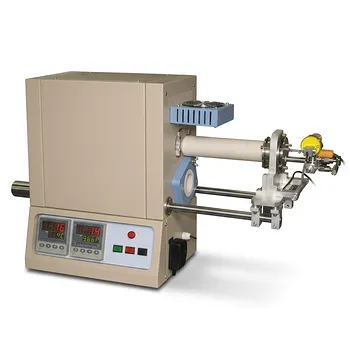
High Temperature Tube Furnace 1500C with Sliding Flanges and 50mm OD for Rapid Thermal Processing Fast Heating and Cooling
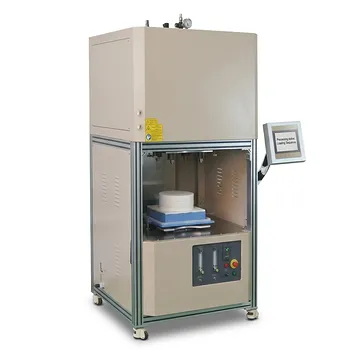
High Temperature Vertical Atmosphere Controlled Furnace with Automatic Bottom Loading and 1700°C Capacity for Advanced Material Research
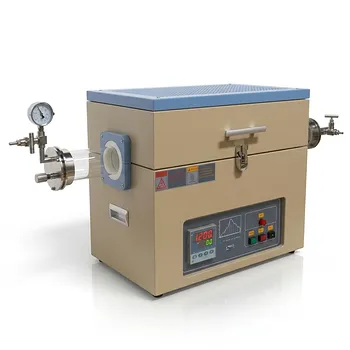
High Temperature 1200C Split Tube Furnace with Optional Quartz Tube Sizes and Vacuum Sealing Flanges for Material Science Research
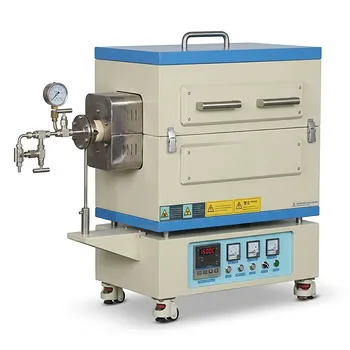
High Temperature Split Tube Furnace 1500C for Material Research Vacuum and Atmosphere Thermal Processing
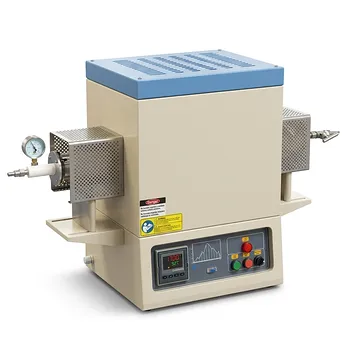
High Temperature Three Zone Tube Furnace 1700C with Alumina Tube and Water Cooled Flanges
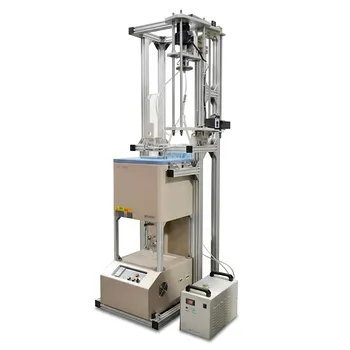
500C Vacuum Vertical Tube Furnace 84mm OD Sample Rotation Lifting System
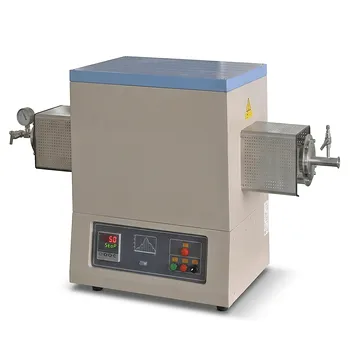
High Temperature 1700C Tube Furnace with 4 Inch OD Alumina Tube and Vacuum Sealing Flanges
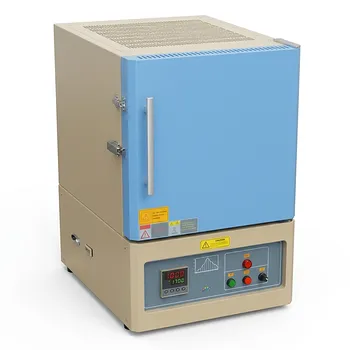
Large Bench Top 1700C High Temperature Muffle Furnace with 19L Chamber for Advanced Material Sintering and Annealing

High Temperature 1700C Benchtop Tube Furnace with 5 Inch Heating Zone High Purity Alumina Tube and Vacuum Sealing Flanges

1750°C High Temperature Benchtop Vacuum Atmosphere Tube Furnace with Kanthal Super 1800 Heating Elements and 60mm Alumina Processing Tube
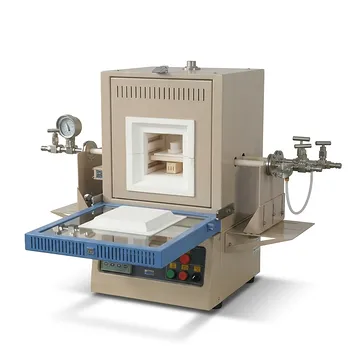
1700C Compact Hybrid Furnace with Dual Layer Box Sintering and Controlled Atmosphere Alumina Tubes

1800C High Temperature Compact Vacuum Tube Furnace with 60mm OD Alumina Tube and Kanthal MoSi2 Heating Elements
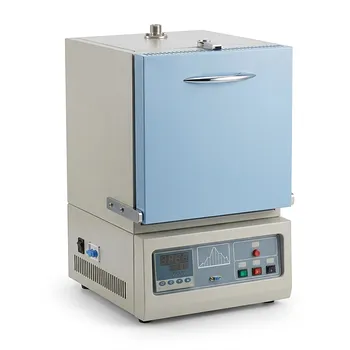
1750C Compact Muffle Furnace 1.7L Ultra High Temperature Laboratory Sintering System for Advanced Ceramics and Material Science Research
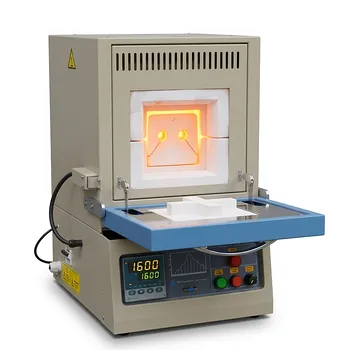
High Temperature Compact Muffle Furnace 1700 C with 30 Segment Programmable Controller and 1.7L Cubic Chamber
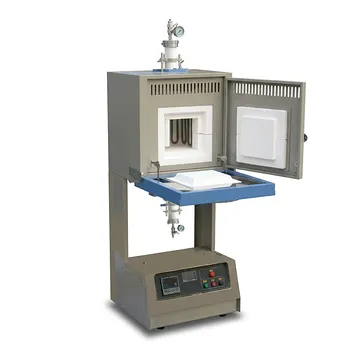
Vertical Hybrid High Temperature Furnace 1500C Alumina Tube SOFC Fuel Cell Testing Laboratory Heat Treatment Research Equipment
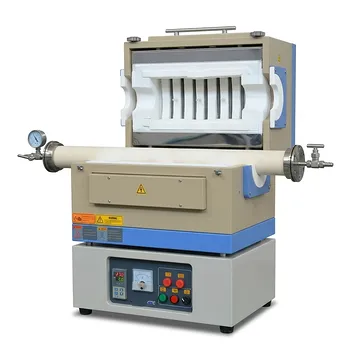
High Temperature 1600C Split Tube Furnace Vacuum Flanges Valves Optional 60mm 80mm Alumina Tube
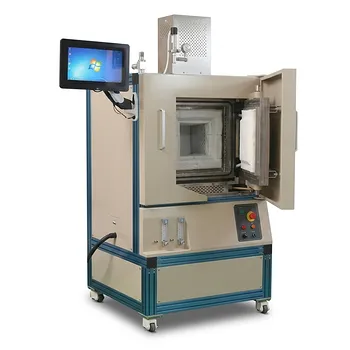
High Temperature Oxygen and Inert Atmosphere Controlled Furnace 8 Liter 1700C Sintering System for Advanced Materials RD