How does a programmable tube furnace achieve high-quality pyrolysis? Optimize Biochar Production with Precision.
Updated 3 months ago
A programmable tube furnace achieves high-quality pyrolysis by strictly isolating the material from oxygen and executing a precise, multi-stage thermal profile. This controlled environment ensures that poultry manure undergoes thermochemical decomposition rather than simple combustion, resulting in a biochar with a superior carbon skeleton and a well-developed pore structure.
Core Takeaway: The tube furnace transforms raw biomass into high-grade biochar by maintaining an anaerobic atmosphere and applying exact heating rates, which are essential for developing the specific surface area and chemical stability required for high-performance applications.
The Role of Atmospheric Control
Eliminating Oxidative Combustion
To produce biochar rather than ash, the furnace must maintain a strictly anaerobic environment. By introducing a constant flow of high-purity nitrogen (often at rates like 500 mL/min), the furnace tube effectively displaces all oxygen.
Ensuring Chemical Stability
In this oxygen-free setting, the organic components of poultry manure—such as hemicellulose, cellulose, and lignin—undergo thermal degradation. This process maximizes the retention of the carbon skeleton and ensures a stable chemical composition in the final product.
Preventing Material Loss
Without the precise atmosphere control provided by the sealed tube structure, the material would undergo oxidative combustion at high temperatures. The furnace's ability to prevent air infiltration is what allows the biochar to retain a high fixed carbon content.
Precision Thermal Profiles
Controlling the Heating Rate
The integrated programmable system allows researchers to set specific heating rates, such as 10°C/min or 30°C/min. This gradual temperature increase is critical for the uniform release of volatile gases, which prevents the structural collapse of the material.
Defining Peak Temperatures and Dwell Times
The furnace maintains an accurate constant temperature environment, typically ranging from 400°C to 800°C. Maintaining a specific dwell time (residence time) at these peak temperatures ensures that the carbonization process is complete and consistent throughout the entire sample.
Optimizing Surface Morphology
Precise thermal control is the primary driver behind the formation of a honeycomb microporous structure. By carefully managing the temperature intervals, the furnace dictates the degree of biomass pyrolysis and the resulting pore volume.
Impact on Biochar Functionality
Developing Aromatic Carbon Skeletons
The programmable nature of the furnace facilitates the transition of raw organic matter into a dense aromatic carbon skeleton. This structural evolution is what gives biochar its longevity and resistance to biological degradation in the soil.
Controlling Persistent Free Radicals (PFRs)
Specific temperature intervals directly influence the conversion of phenolic substances and the stability of persistent free radicals (PFRs). This level of control allows for the creation of "modified" biochars with optimized reduction activity for treating contaminants like hexavalent chromium.
Maximizing Solid Biochar Yield
By providing a stable and repeatable thermal environment, the tube furnace minimizes the production of bio-oil and syngas in favor of solid biochar yield. This efficiency is vital for scaling laboratory results to practical environmental applications.
Understanding the Trade-offs
Balancing Yield and Porosity
Higher pyrolysis temperatures generally increase the surface area and porosity of the biochar, but they also lead to a lower mass yield. A programmable furnace allows you to find the "sweet spot" where the biochar is sufficiently porous without losing excessive mass.
Heating Rate vs. Structural Integrity
While faster heating rates (e.g., 30°C/min) can save time, they may cause rapid gas evolution that can rupture the micropore walls. Conversely, very slow rates may lead to a more compact, less porous structure that is less effective for filtration or adsorption.
Energy Consumption and Throughput
Maintaining a high-purity nitrogen flow and long dwell times increases the operational cost per batch of biochar. Users must balance the need for "perfect" biochar quality with the practical energy constraints of the laboratory or production facility.
How to Apply This to Your Project
Recommendations for Poultry Manure Pyrolysis
To achieve the best results with a programmable tube furnace, align your parameters with your ultimate environmental or industrial goal.
- If your primary focus is Contaminant Adsorption: Use a higher peak temperature (600°C-800°C) and a moderate heating rate to maximize the development of the microporous honeycomb structure.
- If your primary focus is Carbon Sequestration: Prioritize a lower heating rate and a moderate peak temperature (approx. 400°C-500°C) to maximize the solid yield and stable aromatic carbon content.
- If your primary focus is Chemical Reduction (e.g., Heavy Metals): Focus on precise temperature intervals that favor the production of persistent free radicals to enhance the biochar's chemical reactivity.
By mastering the programmable features of the tube furnace, you transform poultry manure from a waste product into a highly engineered technical material.
Summary Table:
| Parameter | Role in Pyrolysis | Impact on Biochar Quality |
|---|---|---|
| Atmospheric Control | Eliminates oxygen via N2 flow | Prevents combustion; retains carbon skeleton |
| Heating Rate | Controls volatile gas release | Dictates pore volume and structural integrity |
| Peak Temperature | Governs thermal degradation | Increases surface area and aromaticity |
| Dwell Time | Ensures complete carbonization | Guarantees chemical stability and consistency |
Elevate Your Material Research with THERMUNITS Precision
As a leading manufacturer of high-temperature laboratory equipment, THERMUNITS provides the advanced thermal processing solutions required for cutting-edge material science and industrial R&D. Our programmable Tube Furnaces are specifically engineered to provide the rigorous atmospheric control and precise thermal profiling essential for high-quality biochar preparation and complex pyrolysis processes.
From Muffle and Vacuum furnaces to advanced CVD/PECVD systems, our equipment is designed to meet the exacting standards of modern laboratories. We offer a comprehensive range of solutions including:
- Furnaces: Muffle, Atmosphere, Rotary, Hot Press, and Dental Furnaces.
- Specialized Systems: CVD/PECVD, Electric Rotary Kilns, and Vacuum Induction Melting (VIM) Furnaces.
- Components: High-quality Thermal Elements and custom heat treatment tools.
Ready to optimize your laboratory's heat treatment performance?
Contact THERMUNITS Today to find the perfect thermal solution for your research and development needs.
References
- Joyce Clarke, Maria Olea. The Effect of Temperature and Treatment Regime on the Physical, Chemical, and Biological Properties of Poultry Litter Biochar. DOI: 10.3390/reactions5030020
Mentioned Products
- High Temperature Tube Furnace 1500C with Sliding Flanges and 50mm OD for Rapid Thermal Processing Fast Heating and Cooling
- Vertical 1700C Vacuum and Atmosphere Tube Furnace with 80mm Alumina Tube
- 1100C Tube Furnace with Vacuum Flange and Programmable Temperature Controller for Material Science and Industrial Heat Treatment
- Compact High Temperature 1600C Tube Furnace with 50mm Alumina Tube and Vacuum Flanges for Material Sintering
- 900°C Max Rotary Tube Furnace with 8 Inch 310S Alloy Tube and Optional Multi Zone Heating for Industrial Material Calcination
People Also Ask
- How are high-temperature tube furnaces utilized to repair etching damage? Precision Lattice Restoration Solutions
- What role does a high-temperature tube furnace play in CVD synthesis of silicon nanowires? Master VLS Growth Precision.
- What core conditions does a high-temperature tube furnace provide for rGO aerogels? Mastering Precision Synthesis.
- What role does a high-temperature tube furnace play in the sulfidation heat treatment of CoS@C/MXene nanocomposites? Guide
- How does precision tube furnace control influence CoFe nanoparticle formation? Master Your Bimetallic Synthesis.

Tech Team · ThermUnits
Last updated on Jun 02, 2026
Related Products

High Temperature Tube Furnace 1500C with Sliding Flanges and 50mm OD for Rapid Thermal Processing Fast Heating and Cooling

Vertical 1700C Vacuum and Atmosphere Tube Furnace with 80mm Alumina Tube

1100C Tube Furnace with Vacuum Flange and Programmable Temperature Controller for Material Science and Industrial Heat Treatment

Compact High Temperature 1600C Tube Furnace with 50mm Alumina Tube and Vacuum Flanges for Material Sintering
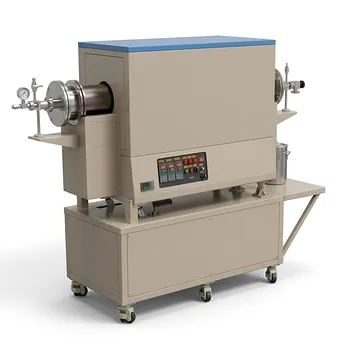
900°C Max Rotary Tube Furnace with 8 Inch 310S Alloy Tube and Optional Multi Zone Heating for Industrial Material Calcination

1700C Hydrogen Gas Tube Furnace with 60mm Alumina Process Tube and Integrated Hydrogen Safety Detector

High Temperature 1700C Tube Furnace with High Vacuum Turbomolecular Pump System and Multi Channel Mass Flow Controller Gas Mixer
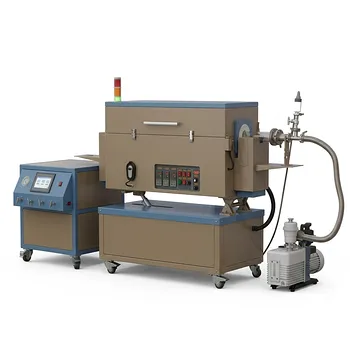
5 Inch Three Zone Rotary Tube Furnace with Integrated Gas Delivery System and 1200C Capability for Advanced Material CVD Processing

Three Zone Tube Furnace with 11 Inch or 15 Inch Quartz Tube and Hinged Flanges for Vacuum Atmosphere Heat Treatment

1200C High Throughput Multi Channel Tube Furnace with 50mm Quartz Tubes for Annealing and Material Phase Diagram Research

1200°C 5 Inch Vertical Quartz Tube Furnace with Stainless Steel Vacuum Flanges
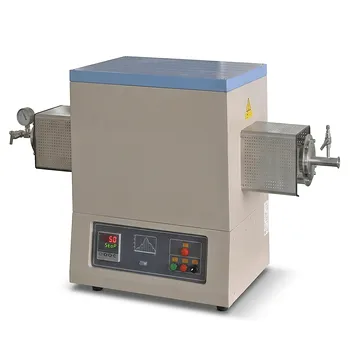
High Temperature 1700C Tube Furnace with 4 Inch OD Alumina Tube and Vacuum Sealing Flanges

High Temperature 1700C Benchtop Tube Furnace with 5 Inch Heating Zone High Purity Alumina Tube and Vacuum Sealing Flanges

High Temperature 1700C Six Zone Split Tube Furnace with Alumina Tube and Water Cooled Flanges

Compact Vertical Split Quartz Tube Furnace with Stainless Steel Vacuum Flanges for Rapid Thermal Quenching and Controlled Atmosphere Material Processing

1800C High Temperature Compact Vacuum Tube Furnace with 60mm OD Alumina Tube and Kanthal MoSi2 Heating Elements
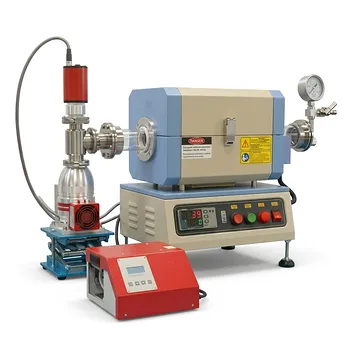
High Vacuum Compact Tube Furnace 1200C with Integrated Turbo Pump System and 8 Inch Heating Zone
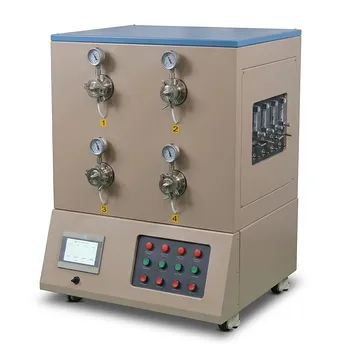
High Throughput 1200C Four Channel Tube Furnace with 3 Inch Quartz Tubes for Multi Zone Annealing and Material Research

High Temperature Automated 5 Inch Tube Furnace for Autonomous Material Research and Advanced Laboratory R&D
