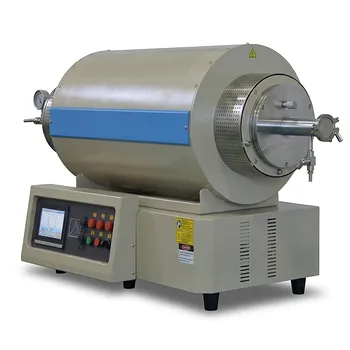
How does a tube atmosphere furnace influence the microstructure of SS-Cu catalysts during post-treatment? Expert Guide
Updated 3 months ago
A tube atmosphere furnace serves as a precision thermochemical reactor that dictates the final microstructural state of SS-Cu catalysts. By providing a strictly controlled thermal environment under a reducing atmosphere, such as a hydrogen and argon mixture, the furnace prevents the oxidation of copper nanoparticles while simultaneously optimizing crystal defects. This post-treatment process is the decisive factor in maintaining the abundant surface step sites required for high catalytic activity and selectivity.
The core influence of a tube atmosphere furnace is its ability to stabilize the metallic state of copper and preserve high-energy surface geometries through precise control of the gaseous environment and thermal kinetics.
The Role of Controlled Atmospheres in Microstructural Integrity
Preventing Copper Oxidation
Copper nanoparticles are highly susceptible to oxidation when exposed to even trace amounts of oxygen at high temperatures. The tube furnace mitigates this by maintaining a reducing atmosphere (typically H2/Ar or H2/N2), which ensures that the copper remains in its active metallic state rather than reverting to inactive oxides.
Eliminating Surface Impurities
The furnace environment effectively removes residual solvents, moisture, and oxygen-containing impurities that accumulate during the initial catalyst manufacturing process. By purging these contaminants at high temperatures, the furnace creates a cleaner interface for subsequent chemical reactions.
Enhancing Metallic Properties and Conductivity
A reducing environment within the furnace increases the metallic copper content and improves its overall metallic properties. This optimization enhances the electrical conductivity of the catalyst carrier and ensures a more effective distribution of active sites across the surface.
Structural Optimization and Defect Engineering
Maintaining Surface Step Sites
The precise heating curves provided by the furnace allow researchers to preserve abundant step sites on the catalyst surface. These geometric features are critical for specific reactions, such as the conversion of carbon dioxide into ethylene, where surface topology dictates selectivity.
Healing and Optimizing Crystal Defects
High-temperature annealing allows for the reorganization of the crystal lattice, effectively optimizing crystal defects to improve stability. This controlled thermal energy helps in anchoring metal species to the support, preventing the random aggregation that often degrades catalyst performance.
Inducing Functional Vacancies
In specific configurations, the furnace can be used to induce oxygen vacancies or nitrogen vacancies within the catalyst support. These vacancies are vital for accelerating the kinetics of reactions like the hydrogen evolution reaction (HER) by facilitating ion insertion and extraction.
Understanding the Trade-offs and Pitfalls
The Risk of Thermal Aggregation
While high temperatures are necessary for annealing, excessive heat can lead to the sintering and aggregation of copper nanoparticles. If the temperature exceeds a specific threshold, the high surface energy of the particles causes them to fuse, significantly reducing the electrochemical active surface area.
Atmospheric Non-Uniformity
The design of the tube furnace is intended to ensure contact between the gas flow and catalyst particles, but improper flow rates can create stagnant zones. This results in non-uniform sulfurization or reduction, leading to a catalyst with inconsistent performance across different batches.
Gas Composition Precision
Choosing the wrong ratio of reducing gases (e.g., H2 to Ar) can lead to incomplete reduction or an overly aggressive reaction that alters the desired phase. Precise thermochemical control is required to ensure that precursors convert into the intended active phases, such as specific metallic states or layered disulfides.
Optimizing Post-Treatment for Specific Catalyst Goals
How to Apply This to Your Project
To achieve the best results with a tube atmosphere furnace, your operational parameters must align with your specific performance targets.
- If your primary focus is Selective CO2 Conversion: Prioritize a precise heating curve and moderate annealing temperatures to maintain surface step sites and prevent copper oxidation.
- If your primary focus is High Electrical Conductivity: Utilize a strong reducing atmosphere (high H2 concentration) at elevated temperatures to maximize metallic copper content and minimize oxygen-containing impurities.
- If your primary focus is Long-term Stability: Focus on the coordination strength between the metal atoms and the support by using a controlled inert flow to anchor species and prevent aggregation.
The tube atmosphere furnace is not merely a heater, but a sophisticated tool for engineering the atomic-scale landscape of the SS-Cu catalyst.
Summary Table:
| Factor | Impact on Microstructure | Key Benefit |
|---|---|---|
| Reducing Gas | Prevents Copper Oxidation | Maintains active metallic state |
| Precise Heating | Preserves Surface Step Sites | Enhances catalytic selectivity |
| Annealing | Optimizes Crystal Defects | Improves stability & site anchoring |
| Thermal Flow | Eliminates Surface Impurities | Creates cleaner reaction interfaces |
Elevate Your Material Research with THERMUNITS
As a leading manufacturer of high-temperature laboratory equipment, THERMUNITS empowers material scientists and industrial R&D teams with precision thermal solutions. Our advanced Tube, Atmosphere, Vacuum, and CVD/PECVD furnaces are engineered to provide the exact thermochemical control required for optimizing catalyst microstructures like SS-Cu.
From Muffle and Rotary furnaces to specialized Vacuum Induction Melting (VIM) and Hot Press systems, our comprehensive range of heat treatment equipment ensures high-performance results for your most demanding projects.
Ready to optimize your thermal processing? Contact our technical experts today to discuss how our solutions can enhance your lab's efficiency and catalyst performance.
References
- Xiaojie She, Shu Ping Lau. Pure-water-fed, electrocatalytic CO2 reduction to ethylene beyond 1,000 h stability at 10 A. DOI: 10.1038/s41560-023-01415-4
Mentioned Products
- Vertical 1700C Vacuum and Atmosphere Tube Furnace with 80mm Alumina Tube
- 1200C Hybrid Muffle and Tube Furnace for Material Research with Dual Atmosphere Control Quartz Tubes
- Compact Vertical Split Quartz Tube Furnace with Stainless Steel Vacuum Flanges for Rapid Thermal Quenching and Controlled Atmosphere Material Processing
- Compact Hybrid Muffle and Tube Furnace for 1000C Controlled Atmosphere Laboratory Material Sintering
- 1200°C Atmosphere Controlled Automatic Bottom Loading Furnace with 6 Inch Quartz Tube
People Also Ask
- How is an industrial-grade vertical tube furnace utilized in smelting leaching residues? Enhance Metal Recovery Efficiency
- What is the function of a laboratory-grade vertical tube furnace in fast pyrolysis? Optimize Composite Research.
- How does a vertical tube furnace facilitate thermoelectric alloy melting? Precision synthesis for material homogeneity.
- Why is a thermocouple sensor indispensable for monitoring the vertical tube furnace during gallium oxide nanowire production? Optimize VLS Growth
- What are the advantages of using a vertical tube furnace for crucible experiments simulating steel-slag interactions?

Tech Team · ThermUnits
Last updated on Jun 02, 2026
Related Products

Vertical 1700C Vacuum and Atmosphere Tube Furnace with 80mm Alumina Tube
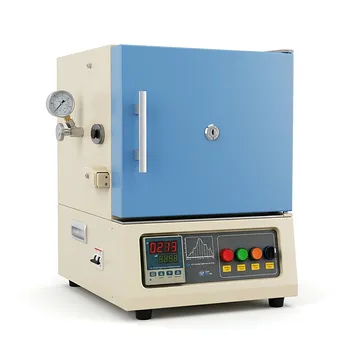
1200C Hybrid Muffle and Tube Furnace for Material Research with Dual Atmosphere Control Quartz Tubes
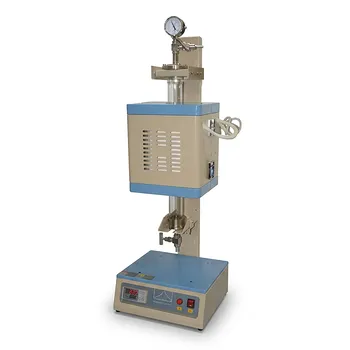
Compact Vertical Split Quartz Tube Furnace with Stainless Steel Vacuum Flanges for Rapid Thermal Quenching and Controlled Atmosphere Material Processing
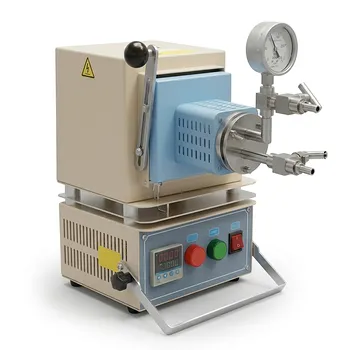
Compact Hybrid Muffle and Tube Furnace for 1000C Controlled Atmosphere Laboratory Material Sintering
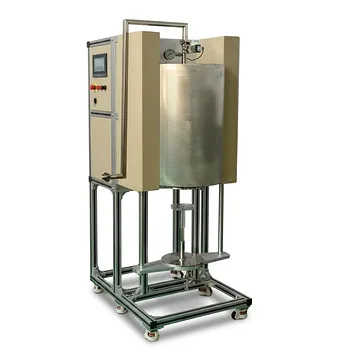
1200°C Atmosphere Controlled Automatic Bottom Loading Furnace with 6 Inch Quartz Tube
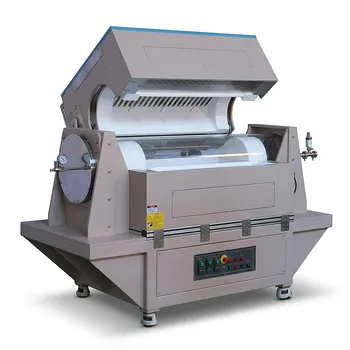
Three Zone Tube Furnace with 11 Inch or 15 Inch Quartz Tube and Hinged Flanges for Vacuum Atmosphere Heat Treatment
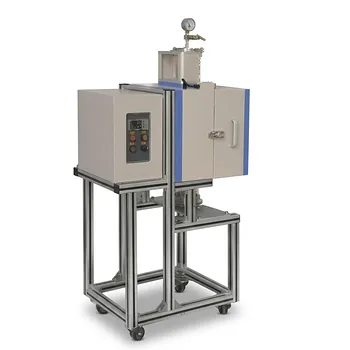
1200°C 5 Inch Vertical Quartz Tube Furnace with Stainless Steel Vacuum Flanges
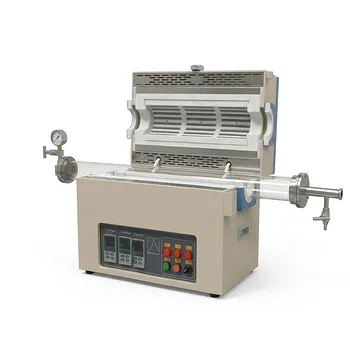
1200°C Three Zone Split Tube Furnace with 18 Inch Heating Length and Vacuum Flanges
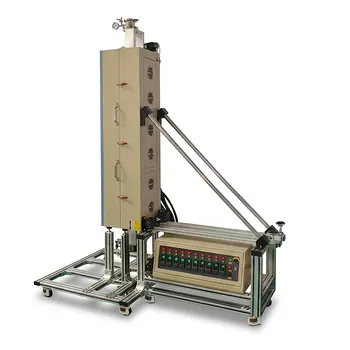
1200°C 10-Zone Split Tube Furnace with Horizontal and Vertical Mounting for Multi-Zone Thermal Gradients and Large Diameter Material Processing
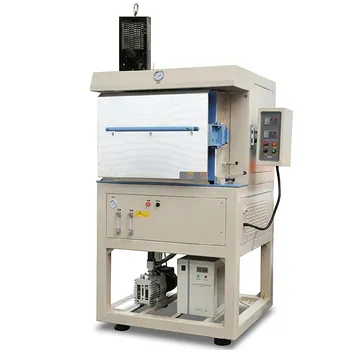
1200C Hydrogen Atmosphere Box Furnace with 5 Heated Sides and 64L Chamber

High Temperature 1700C Tube Furnace with High Vacuum Turbomolecular Pump System and Multi Channel Mass Flow Controller Gas Mixer
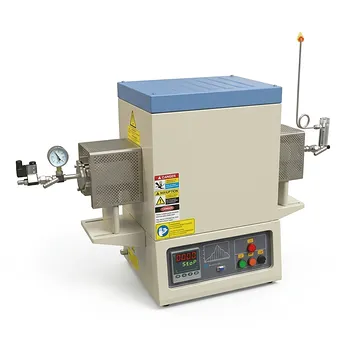
1700C Hydrogen Gas Tube Furnace with 60mm Alumina Process Tube and Integrated Hydrogen Safety Detector

High Temperature 1700C Vertical Tube Furnace for Powder Spherification and Material Sintering
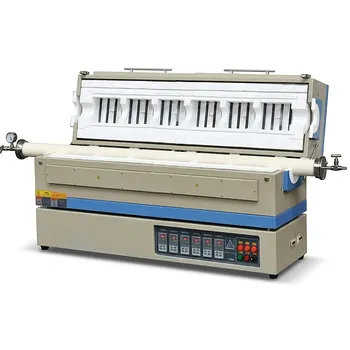
High Temperature 1700C Six Zone Split Tube Furnace with Alumina Tube and Water Cooled Flanges
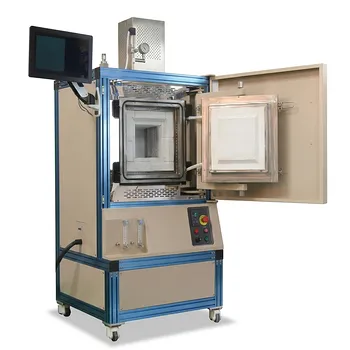
High Temperature Hydrogen Atmosphere Box Furnace 1650C Max Reducing Environment Material Synthesis System 8x8x8 Chamber
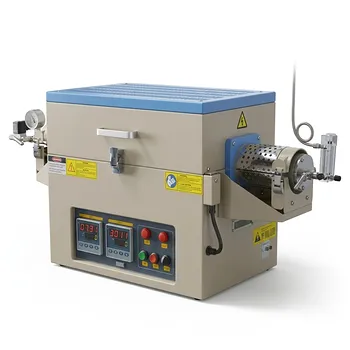
1100C Dual Zone Hydrogen Gas Tube Furnace with Quartz Tube and Integrated H2 Leak Detection System

1800C High Temperature Compact Vacuum Tube Furnace with 60mm OD Alumina Tube and Kanthal MoSi2 Heating Elements

High Temperature 1700C Benchtop Tube Furnace with 5 Inch Heating Zone High Purity Alumina Tube and Vacuum Sealing Flanges

High Temperature Automated 5 Inch Tube Furnace for Autonomous Material Research and Advanced Laboratory R&D