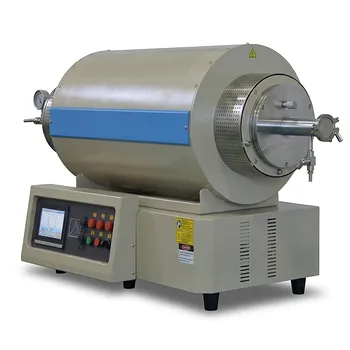
How does a tube atmosphere furnace maintain the electrochemical performance of Li4Ti5O12 (LTO)? Enhance Conductivity.
Updated 3 months ago
A tube atmosphere furnace maintains the electrochemical performance of $Li_4Ti_5O_{12}$ (LTO) by providing a hermetically sealed environment that precisely regulates temperature and gas composition. By introducing specific atmospheres like nitrogen, argon, or diluted hydrogen, the furnace prevents the over-oxidation of the LTO material while inducing the formation of $Ti^{3+}$ ions and oxygen vacancies. This "self-doping" process significantly boosts the material's intrinsic electronic conductivity without compromising its stable spinel crystal structure.
The core advantage of a tube atmosphere furnace lies in its ability to engineer the defect chemistry of LTO. By balancing gas-phase equilibrium and thermal kinetics, it transforms a naturally insulating material into a high-conductivity electrode while preserving its structural integrity.
Preventing Oxidation and Material Degradation
Precise Control of the Chemical Environment
The furnace uses a high-vacuum sealing system and precise flow regulation to exclude unwanted reactive gases, such as oxygen or moisture. This prevents the uncontrolled oxidation of the LTO powder, which would otherwise result in a loss of electrochemical activity at high temperatures.
Maintaining the Spinel Lattice Structure
The controlled atmosphere ensures that the lithium-titanium-oxygen ratio remains within the ideal stoichiometric range. By providing a stable thermal field, the furnace allows the material to achieve high crystallinity without the formation of non-conductive impurities or secondary phases.
Elimination of Residual Impurities
High-precision tube furnaces can be programmed to hold specific vacuum levels at lower temperatures to drive off trace moisture. This dehydration stage is critical for lithium-based materials to ensure high ionic conductivity and prevent electrolyte degradation in the final battery cell.
Engineering Electronic Conductivity through Self-Doping
Inducing Ti3+ and Oxygen Vacancies
By introducing reducing gases like diluted hydrogen or inert gases like argon, the furnace encourages the reduction of a small fraction of $Ti^{4+}$ ions to $Ti^{3+}$. This process creates oxygen vacancies within the lattice, which serve as charge carriers to facilitate faster electron transport.
Enhancing Intrinsic Electronic Conductivity
LTO is naturally a poor electronic conductor, which often limits its performance at high discharge rates. The "self-doping" effect achieved in the atmosphere furnace bypasses this limitation, allowing the electrode to handle higher current densities effectively.
Surface and Interface Optimization
The furnace environment allows for the directional tuning of the material's surface properties. This ensures that the interface between the LTO particles and the electrolyte is optimized for rapid lithium-ion insertion and extraction.
Understanding the Trade-offs and Risks
The Risk of Over-Reduction
While inducing $Ti^{3+}$ is beneficial, excessive reduction can lead to the collapse of the spinel structure or the formation of metallic titanium species. This would drastically reduce the cycle life of the battery and must be managed by precise hydrogen partial pressure control.
Gas Flow and Temperature Gradients
Inconsistent gas flow or thermal gradients within the tube can lead to non-uniform material properties. If one section of the batch is exposed to more reducing gas than another, the resulting LTO will exhibit inconsistent electrochemical behavior across the cell.
Equipment Sensitivity and Cost
Maintaining high-vacuum seals and precise gas-mixing systems increases operational complexity. Failure to maintain a perfect seal can introduce oxygen leaks, negating the benefits of the inert atmosphere and potentially ruining the entire production batch.
How to Optimize Your LTO Heat Treatment
Making the Right Choice for Your Goal
- If your primary focus is maximizing high-rate discharge capacity: Use a diluted hydrogen atmosphere (0.1% to 5% $H_2$) to aggressively induce $Ti^{3+}$ ions and oxygen vacancies for peak electronic conductivity.
- If your primary focus is long-term cycling stability: Prioritize a high-purity argon environment and precise temperature ramping to ensure the highest possible crystallinity and a perfect spinel structure.
- If your primary focus is material purity and moisture control: Utilize a multi-stage heating profile that includes a low-temperature vacuum dehydration step before the final sintering phase.
By meticulously balancing gas-phase chemistry with thermal precision, the tube atmosphere furnace acts as a surgical tool for optimizing the electronic and structural properties of LTO.
Summary Table:
| Feature | Role in LTO Processing | Electrochemical Benefit |
|---|---|---|
| Inert/Reducing Gas | Induces Ti3+ and oxygen vacancies | Boosts electronic conductivity via "self-doping" |
| Hermetic Sealing | Excludes oxygen and moisture | Prevents over-oxidation and structural degradation |
| Vacuum Dehydration | Removes trace moisture/impurities | Ensures high ionic conductivity and stability |
| Precise Temp Control | Regulates thermal kinetics | Preserves stable spinel structure and crystallinity |
Elevate Your Material Research with THERMUNITS Precision
As a global leader in high-temperature laboratory equipment, THERMUNITS provides the advanced thermal solutions necessary for cutting-edge material science and industrial R&D. Whether you are optimizing Li4Ti5O12 for next-gen batteries or developing advanced ceramics, our comprehensive range—including Tube, Atmosphere, Vacuum, Muffle, and Rotary furnaces, as well as CVD/PECVD and Hot Press systems—ensures unmatched atmosphere control and temperature uniformity.
Ready to achieve superior electrochemical performance? Contact our engineering experts today to discuss how our custom thermal processing solutions can accelerate your R&D breakthroughs.
References
- C. Julien, A. Mauger. Fabrication of Li4Ti5O12 (LTO) as Anode Material for Li-Ion Batteries. DOI: 10.3390/mi15030310
Mentioned Products
- Vertical 1700C Vacuum and Atmosphere Tube Furnace with 80mm Alumina Tube
- 1200C Hybrid Muffle and Tube Furnace for Material Research with Dual Atmosphere Control Quartz Tubes
- Compact Vertical Split Quartz Tube Furnace with Stainless Steel Vacuum Flanges for Rapid Thermal Quenching and Controlled Atmosphere Material Processing
- Compact Hybrid Muffle and Tube Furnace for 1000C Controlled Atmosphere Laboratory Material Sintering
- 1200°C Atmosphere Controlled Automatic Bottom Loading Furnace with 6 Inch Quartz Tube
People Also Ask
- How is an industrial-grade vertical tube furnace utilized in smelting leaching residues? Enhance Metal Recovery Efficiency
- What is the function of a laboratory-grade vertical tube furnace in fast pyrolysis? Optimize Composite Research.
- How does a vertical tube furnace facilitate thermoelectric alloy melting? Precision synthesis for material homogeneity.
- Why is a thermocouple sensor indispensable for monitoring the vertical tube furnace during gallium oxide nanowire production? Optimize VLS Growth
- What are the advantages of using a vertical tube furnace for crucible experiments simulating steel-slag interactions?

Tech Team · ThermUnits
Last updated on Jun 02, 2026
Related Products

Vertical 1700C Vacuum and Atmosphere Tube Furnace with 80mm Alumina Tube
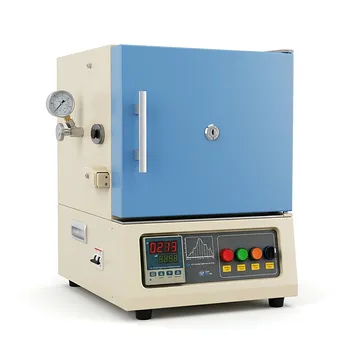
1200C Hybrid Muffle and Tube Furnace for Material Research with Dual Atmosphere Control Quartz Tubes

Compact Vertical Split Quartz Tube Furnace with Stainless Steel Vacuum Flanges for Rapid Thermal Quenching and Controlled Atmosphere Material Processing
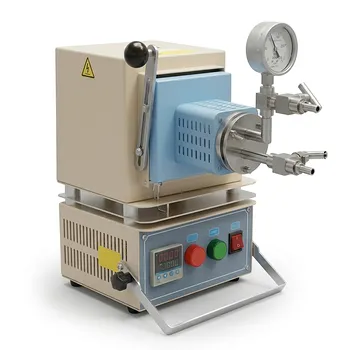
Compact Hybrid Muffle and Tube Furnace for 1000C Controlled Atmosphere Laboratory Material Sintering
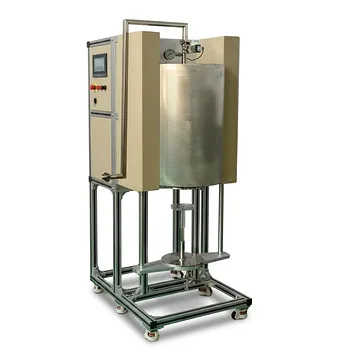
1200°C Atmosphere Controlled Automatic Bottom Loading Furnace with 6 Inch Quartz Tube
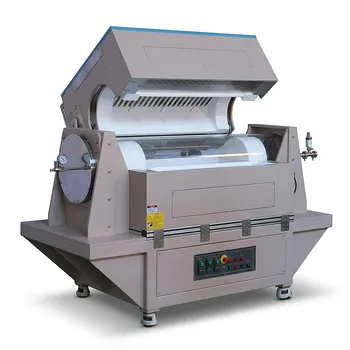
Three Zone Tube Furnace with 11 Inch or 15 Inch Quartz Tube and Hinged Flanges for Vacuum Atmosphere Heat Treatment

1200°C 5 Inch Vertical Quartz Tube Furnace with Stainless Steel Vacuum Flanges
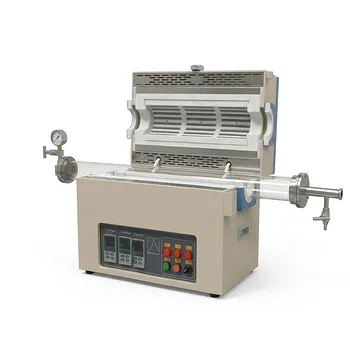
1200°C Three Zone Split Tube Furnace with 18 Inch Heating Length and Vacuum Flanges
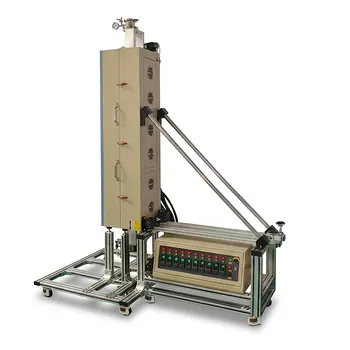
1200°C 10-Zone Split Tube Furnace with Horizontal and Vertical Mounting for Multi-Zone Thermal Gradients and Large Diameter Material Processing
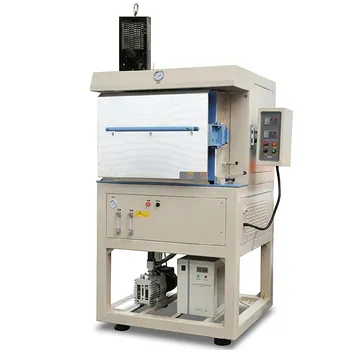
1200C Hydrogen Atmosphere Box Furnace with 5 Heated Sides and 64L Chamber

High Temperature 1700C Tube Furnace with High Vacuum Turbomolecular Pump System and Multi Channel Mass Flow Controller Gas Mixer

1700C Hydrogen Gas Tube Furnace with 60mm Alumina Process Tube and Integrated Hydrogen Safety Detector

High Temperature 1700C Vertical Tube Furnace for Powder Spherification and Material Sintering

High Temperature 1700C Six Zone Split Tube Furnace with Alumina Tube and Water Cooled Flanges

1800C High Temperature Compact Vacuum Tube Furnace with 60mm OD Alumina Tube and Kanthal MoSi2 Heating Elements
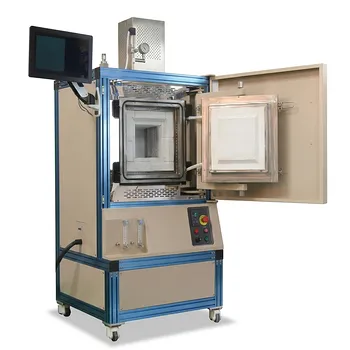
High Temperature Hydrogen Atmosphere Box Furnace 1650C Max Reducing Environment Material Synthesis System 8x8x8 Chamber
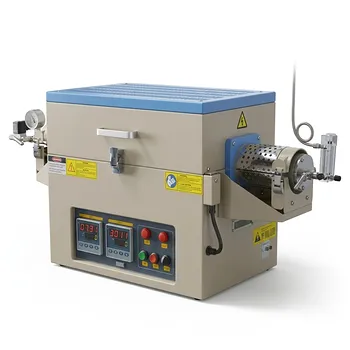
1100C Dual Zone Hydrogen Gas Tube Furnace with Quartz Tube and Integrated H2 Leak Detection System

High Temperature 1700C Benchtop Tube Furnace with 5 Inch Heating Zone High Purity Alumina Tube and Vacuum Sealing Flanges

High Temperature Automated 5 Inch Tube Furnace for Autonomous Material Research and Advanced Laboratory R&D