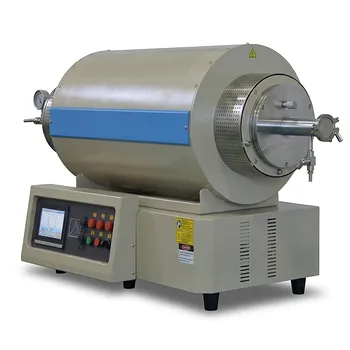
How does a tube atmosphere furnace maintain the structural integrity of carbon block samples? Expert Carbonization Guide
Updated 3 months ago
A tube atmosphere furnace maintains the structural integrity of carbon block samples by combining a strictly controlled inert environment with precise thermal regulation. By displacing oxygen with nitrogen or argon, the furnace prevents the carbon from burning away (oxidative loss) at temperatures reaching 1,000°C. Simultaneously, it manages internal pressure by regulating the heating rate, which allows volatile gases to escape slowly without fracturing the block's internal structure.
The structural integrity of carbon blocks is preserved through the dual action of inert gas shielding and controlled degassing. By preventing high-temperature oxidation and internal structural failure caused by rapid volatile escape, the furnace ensures the transformation of "green" blocks into high-strength carbon networks.
Prevention of Oxidative Material Loss
The Role of Inert Gas Displacement
The furnace continuously supplies high-purity inert gases, typically nitrogen (N2) or argon (Ar), to displace oxygen from the heating chamber. This prevents the oxidative combustion of the carbon block, which would otherwise lead to significant mass loss or total destruction at high temperatures.
Superior Sealing and Oxygen Exclusion
Advanced sealing performance in tube furnaces ensures that no ambient air infiltrates the reaction zone during the process. This oxygen-free environment is critical for maintaining the chemical stability and the yield of the carbonaceous material.
Preventing Premature Surface Degradation
By maintaining a stable, non-oxidizing atmosphere, the furnace ensures that the surface of the carbon block does not degrade before the core has been carbonized. This leads to a more consistent material density across the entire sample.
Management of Volatile Matter and Degassing
Regulated Heating Rates for Internal Stability
Programmed controllers allow the furnace to maintain a very slow, steady heating rate, often as low as 2 °C/min. This precise control allows volatile components from binders, such as pitch or phenolic resin, to escape the material at a manageable pace.
Avoiding Internal Structural Failure
Rapid gas escape during heating can create internal cracks or large, debilitating pores within the sample. The controlled release of volatiles preserves the mechanical strength and prevents the block from fracturing under internal gas pressure.
Formation of a Rigid Carbon Network
As the furnace facilitates the slow removal of non-carbon elements, it promotes the reorganization of carbon chains. This transformation is what converts a plastic "green" block into a high-strength isotropic carbon block.
Ensuring Microstructural Consistency
Temperature Field Uniformity
A high-quality tube furnace provides a uniform temperature field throughout the specimen. This consistency ensures that the degree of carbonization is equal from the core to the surface, which is a decisive factor in the mechanical strength of the final composite.
Facilitating Phase Transitions
Stable heat facilitates the transition from organic precursors to amorphous or mesophase carbon. Precise temperature control allows for complex transitions, including dehydrogenation and cyclization, which define the final structural characteristics of the coal char or carbon block.
Understanding the Trade-offs
Processing Time vs. Structural Quality
While slow heating rates are essential for structural integrity, they significantly increase the total processing time. Balancing the need for a high-strength, crack-free sample with the requirement for laboratory or production throughput is a common challenge.
Gas Consumption and Operational Costs
Maintaining a strictly inert environment requires a continuous flow of high-purity gas. This adds an ongoing operational cost and requires a reliable supply chain for nitrogen or argon cylinders.
Thermal Lag in Large Samples
In very dense or large carbon blocks, the center of the sample may lag behind the furnace temperature. If the heating rate is too fast, this thermal gradient can cause uneven expansion and structural failure, despite the controlled atmosphere.
How to Apply This to Your Project
When utilizing a tube atmosphere furnace for carbonization, consider your specific material goals:
- If your primary focus is maximizing mechanical strength: Prioritize a very slow heating rate (under 2°C/min) to ensure complete, non-destructive degassing of binders.
- If your primary focus is preventing surface oxidation: Ensure the furnace has superior sealing and maintain a positive pressure of high-purity nitrogen throughout the cooling phase.
- If your primary focus is microstructural uniformity: Choose a furnace with a long "hot zone" to ensure the entire length of the carbon block experiences an identical temperature field.
Mastering the balance between atmosphere purity and thermal ramp rates is the definitive requirement for producing high-performance carbon materials.
Summary Table:
| Mechanism | Action | Key Benefit for Carbon Blocks |
|---|---|---|
| Inert Gas Shielding | Displaces oxygen with N2 or Ar | Prevents oxidative mass loss and surface degradation |
| Controlled Heating Rate | Slow ramp-up (e.g., 2°C/min) | Allows safe degassing of volatiles to prevent internal cracks |
| Superior Sealing | Airtight chamber design | Maintains chemical stability and prevents oxygen infiltration |
| Thermal Uniformity | Stable temperature field | Ensures consistent material density and phase transitions |
Elevate Your Material Research with THERMUNITS
As a leading manufacturer of high-temperature laboratory equipment, THERMUNITS provides the precision tools required for advanced material science and industrial R&D. Our high-performance Atmosphere Tube Furnaces are specifically engineered to preserve the structural integrity of your samples during critical carbonization and heat treatment processes.
Beyond tube furnaces, we offer a comprehensive range of thermal solutions, including:
- Muffle, Vacuum, and Atmosphere Furnaces
- Rotary, Hot Press, and Dental Furnaces
- CVD/PECVD Systems
- Vacuum Induction Melting (VIM) & Electric Rotary Kilns
- Thermal Elements and Laboratory Heat Treatment Accessories
Whether you are developing carbon composites or advanced ceramics, our equipment ensures uniform heating and superior sealing to prevent oxidation and structural failure.
Ready to optimize your thermal processing? Contact THERMUNITS today to discuss your specific requirements with our technical experts!
References
- Sun-Ung Gwon, Jae‐Seung Roh. Effect of Pressure and Holding Time during Compression Molding on Mechanical Properties and Microstructure of Coke-Pitch Carbon Blocks. DOI: 10.3390/app14020772
Mentioned Products
- Vertical 1700C Vacuum and Atmosphere Tube Furnace with 80mm Alumina Tube
- 1200C Hybrid Muffle and Tube Furnace for Material Research with Dual Atmosphere Control Quartz Tubes
- Compact Vertical Split Quartz Tube Furnace with Stainless Steel Vacuum Flanges for Rapid Thermal Quenching and Controlled Atmosphere Material Processing
- Compact Hybrid Muffle and Tube Furnace for 1000C Controlled Atmosphere Laboratory Material Sintering
- 1200°C Atmosphere Controlled Automatic Bottom Loading Furnace with 6 Inch Quartz Tube
People Also Ask
- How is an industrial-grade vertical tube furnace utilized in smelting leaching residues? Enhance Metal Recovery Efficiency
- What is the function of a laboratory-grade vertical tube furnace in fast pyrolysis? Optimize Composite Research.
- How does a vertical tube furnace facilitate thermoelectric alloy melting? Precision synthesis for material homogeneity.
- Why is a thermocouple sensor indispensable for monitoring the vertical tube furnace during gallium oxide nanowire production? Optimize VLS Growth
- What are the advantages of using a vertical tube furnace for crucible experiments simulating steel-slag interactions?

Tech Team · ThermUnits
Last updated on Jun 03, 2026
Related Products

Vertical 1700C Vacuum and Atmosphere Tube Furnace with 80mm Alumina Tube
1200C Hybrid Muffle and Tube Furnace for Material Research with Dual Atmosphere Control Quartz Tubes

Compact Vertical Split Quartz Tube Furnace with Stainless Steel Vacuum Flanges for Rapid Thermal Quenching and Controlled Atmosphere Material Processing
Compact Hybrid Muffle and Tube Furnace for 1000C Controlled Atmosphere Laboratory Material Sintering
1200°C Atmosphere Controlled Automatic Bottom Loading Furnace with 6 Inch Quartz Tube
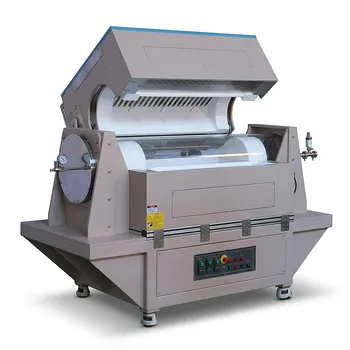
Three Zone Tube Furnace with 11 Inch or 15 Inch Quartz Tube and Hinged Flanges for Vacuum Atmosphere Heat Treatment
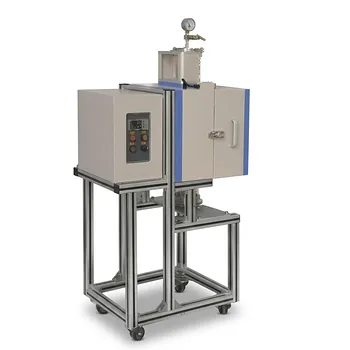
1200°C 5 Inch Vertical Quartz Tube Furnace with Stainless Steel Vacuum Flanges
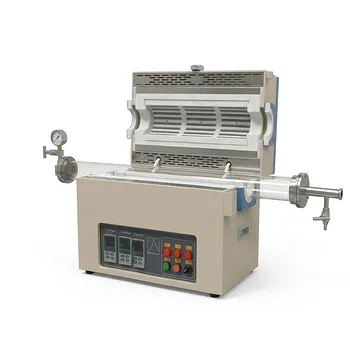
1200°C Three Zone Split Tube Furnace with 18 Inch Heating Length and Vacuum Flanges
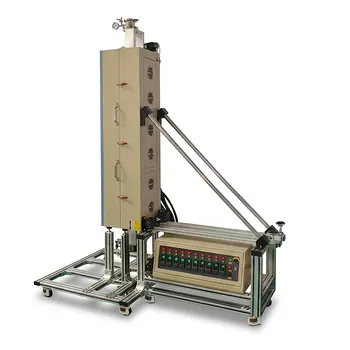
1200°C 10-Zone Split Tube Furnace with Horizontal and Vertical Mounting for Multi-Zone Thermal Gradients and Large Diameter Material Processing
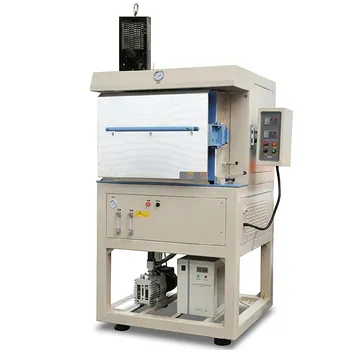
1200C Hydrogen Atmosphere Box Furnace with 5 Heated Sides and 64L Chamber

High Temperature 1700C Tube Furnace with High Vacuum Turbomolecular Pump System and Multi Channel Mass Flow Controller Gas Mixer
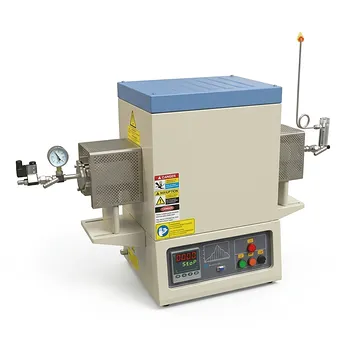
1700C Hydrogen Gas Tube Furnace with 60mm Alumina Process Tube and Integrated Hydrogen Safety Detector

High Temperature 1700C Vertical Tube Furnace for Powder Spherification and Material Sintering

High Temperature 1700C Six Zone Split Tube Furnace with Alumina Tube and Water Cooled Flanges

1800C High Temperature Compact Vacuum Tube Furnace with 60mm OD Alumina Tube and Kanthal MoSi2 Heating Elements
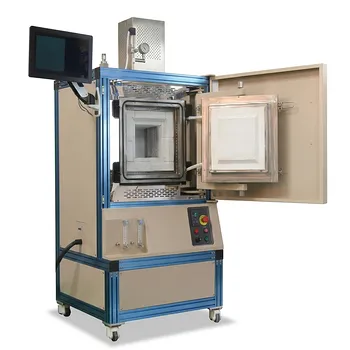
High Temperature Hydrogen Atmosphere Box Furnace 1650C Max Reducing Environment Material Synthesis System 8x8x8 Chamber
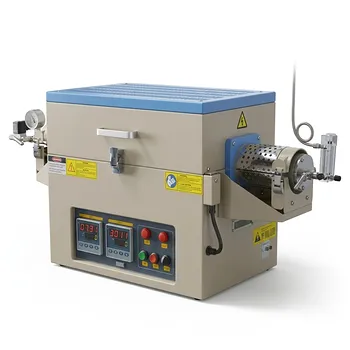
1100C Dual Zone Hydrogen Gas Tube Furnace with Quartz Tube and Integrated H2 Leak Detection System

High Temperature 1700C Benchtop Tube Furnace with 5 Inch Heating Zone High Purity Alumina Tube and Vacuum Sealing Flanges

High Temperature Automated 5 Inch Tube Furnace for Autonomous Material Research and Advanced Laboratory R&D