How does a tube furnace ensure lignin structural characteristics at 600–900 °C? Expert Carbonization Guide
Updated 3 months ago
To ensure the structural integrity of lignin during high-temperature processing, a tube furnace maintains a strict inert atmosphere while providing precise, programmed thermal control. By continuously supplying high-purity nitrogen, the furnace prevents uncontrolled combustion and oxidative loss, allowing lignin to undergo a controlled chemical transformation into a carbon skeleton with specific pore sizes and graphitization degrees.
Central Takeaway: The tube furnace acts as a sealed chemical reactor that decouples thermal decomposition from oxidation, enabling the precise reorganization of lignin molecules into high-purity, conductive carbon structures through regulated heating and atmospheric shielding.
Preventing Oxidative Degradation
The Role of High-Purity Nitrogen
The primary function of the tube furnace is to provide a strict inert atmosphere, typically using high-purity nitrogen. This oxygen-free environment is critical because it prevents the lignin from combusting at temperatures between 600–900 °C, ensuring that the material undergoes carbonization rather than total destruction.
Enabling Simultaneous Chemical Activation
Under these inert conditions, the furnace allows for chemical activation (such as with $K_2CO_3$) to occur concurrently with carbonization. Because there is no oxygen to interfere, the activation agent can precisely etch the carbon matrix, regulating the pore size distribution and surface chemistry of the resulting activated carbon.
Managing Molecular Reorganization
Preservation of the Microscopic Skeleton
Within the furnace, lignin molecules undergo a series of reactions, including dehydrogenation, deoxygenation, and polycondensation. The stable thermal environment ensures that in-situ $sp^2/sp^3$ hybridized structures are preserved and reorganized into graphene microcrystalline fragments, which form the "hard carbon" skeleton.
Precision Heating and Volatile Release
The ability to set specific heating rates (e.g., 2 °C/min) is vital for maintaining mechanical strength. Controlled heating ensures a slow and steady release of volatile matter, which prevents the formation of internal cracks or oversized pores that typically occur when gases escape too rapidly.
Heteroatom Removal and Uniformity
By utilizing constant temperature holding functions (isothermal zones), the furnace ensures that heteroatoms are thoroughly removed from the lignin structure. This extended thermal treatment time allows for sufficient polycondensation, resulting in high-purity carbon with uniform internal structures and stable chemical properties.
Understanding the Trade-offs
Heating Rate vs. Structural Integrity
While faster heating rates (e.g., 10 °C/min) increase throughput, they significantly raise the risk of structural defects. Rapid gas evolution can rupture the carbon walls, leading to a loss of mechanical stability and an unpredictable pore structure.
Temperature vs. Graphitization
Higher temperatures (closer to 900 °C and above) enhance the graphitization degree and electrical conductivity of the biochar. However, excessive heat can also lead to the collapse of certain micropores created during the activation phase, potentially reducing the surface area available for specific applications.
How to Apply This to Your Project
To achieve the best results when carbonizing lignin, you must align your furnace parameters with your specific material goals.
- If your primary focus is high mechanical strength: Use a very slow heating rate (1–2 °C/min) to allow volatiles to escape without creating internal fractures.
- If your primary focus is maximum surface area/porosity: Prioritize a stable isothermal hold at 600–800 °C to ensure the activation agent has sufficient time to develop the pore network before the structure begins to shrink at higher temperatures.
- If your primary focus is electrical conductivity: Aim for the higher end of the temperature range (900 °C+) to promote the reorganization of carbon into conductive graphene-like fragments.
By mastering the balance between nitrogen flow, heating kinetics, and peak temperature, you can transform raw lignin into a highly engineered carbon material tailored for its intended application.
Summary Table:
| Parameter | Function in Carbonization | Impact on Lignin Structure |
|---|---|---|
| Inert Atmosphere | Oxygen exclusion via high-purity $N_2$ | Prevents combustion; ensures carbonization over destruction. |
| Heating Rate | Controlled volatile release (e.g., 2 °C/min) | Prevents internal cracks; maintains mechanical strength. |
| Temperature Range | High-temp thermal reorganization (600–900 °C) | Promotes graphitization and electrical conductivity. |
| Isothermal Zones | Constant temperature holding | Thorough heteroatom removal and structural uniformity. |
| Chemical Activation | Etching the carbon matrix (e.g., with $K_2CO_3$) | Regulates pore size distribution and surface area. |
Precision Thermal Solutions for Advanced Material Research
Are you looking to achieve superior structural control in your carbonization or chemical activation processes? THERMUNITS is a leading manufacturer of high-performance high-temperature laboratory equipment specifically designed for material science and industrial R&D.
From Tube and Atmosphere furnaces that ensure strict inert environments to Vacuum, Muffle, Rotary, and Hot Press furnaces, we provide the thermal precision needed to transform raw precursors like lignin into high-purity engineered materials. Our comprehensive range also includes CVD/PECVD systems, Dental Furnaces, VIM systems, and Thermal Elements to support your entire heat treatment workflow.
Optimize your lab’s efficiency today—Contact our technical experts to find the ideal furnace for your specific research goals!
References
- Piotr Łątka, Piotr Kuśtrowski. Spherical Lignin-Derived Activated Carbons for the Adsorption of Phenol from Aqueous Media. DOI: 10.3390/molecules29050960
Mentioned Products
- High Temperature Tube Furnace 1500C with Sliding Flanges and 50mm OD for Rapid Thermal Processing Fast Heating and Cooling
- Vertical 1700C Vacuum and Atmosphere Tube Furnace with 80mm Alumina Tube
- Compact High Temperature 1600C Tube Furnace with 50mm Alumina Tube and Vacuum Flanges for Material Sintering
- 900°C Max Rotary Tube Furnace with 8 Inch 310S Alloy Tube and Optional Multi Zone Heating for Industrial Material Calcination
- 1100C Tube Furnace with Vacuum Flange and Programmable Temperature Controller for Material Science and Industrial Heat Treatment
People Also Ask
- How are high-temperature tube furnaces utilized to repair etching damage? Precision Lattice Restoration Solutions
- What core conditions does a high-temperature tube furnace provide for rGO aerogels? Mastering Precision Synthesis.
- What role does a high-temperature tube furnace play in CVD synthesis of silicon nanowires? Master VLS Growth Precision.
- How does precision tube furnace control influence CoFe nanoparticle formation? Master Your Bimetallic Synthesis.
- What role does a high-temperature tube furnace play in the sulfidation heat treatment of CoS@C/MXene nanocomposites? Guide

Tech Team · ThermUnits
Last updated on Jun 02, 2026
Related Products

High Temperature Tube Furnace 1500C with Sliding Flanges and 50mm OD for Rapid Thermal Processing Fast Heating and Cooling

Vertical 1700C Vacuum and Atmosphere Tube Furnace with 80mm Alumina Tube

Compact High Temperature 1600C Tube Furnace with 50mm Alumina Tube and Vacuum Flanges for Material Sintering
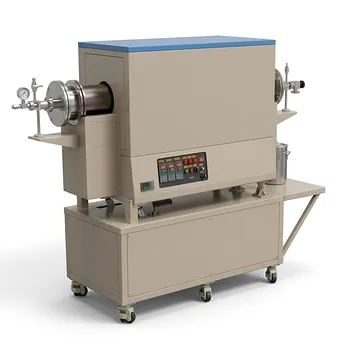
900°C Max Rotary Tube Furnace with 8 Inch 310S Alloy Tube and Optional Multi Zone Heating for Industrial Material Calcination

1100C Tube Furnace with Vacuum Flange and Programmable Temperature Controller for Material Science and Industrial Heat Treatment

High Temperature 1700C Tube Furnace with High Vacuum Turbomolecular Pump System and Multi Channel Mass Flow Controller Gas Mixer

1700C Hydrogen Gas Tube Furnace with 60mm Alumina Process Tube and Integrated Hydrogen Safety Detector

5 Inch Three Zone Rotary Tube Furnace with Integrated Gas Delivery System and 1200C Capability for Advanced Material CVD Processing

1200°C 5 Inch Vertical Quartz Tube Furnace with Stainless Steel Vacuum Flanges

High Temperature 1700C Six Zone Split Tube Furnace with Alumina Tube and Water Cooled Flanges

Compact Vertical Split Quartz Tube Furnace with Stainless Steel Vacuum Flanges for Rapid Thermal Quenching and Controlled Atmosphere Material Processing

1200C High Throughput Multi Channel Tube Furnace with 50mm Quartz Tubes for Annealing and Material Phase Diagram Research
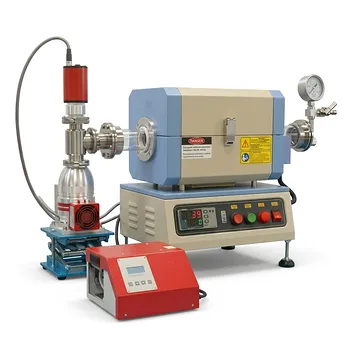
High Vacuum Compact Tube Furnace 1200C with Integrated Turbo Pump System and 8 Inch Heating Zone

High Temperature 1700C Benchtop Tube Furnace with 5 Inch Heating Zone High Purity Alumina Tube and Vacuum Sealing Flanges

1800C High Temperature Compact Vacuum Tube Furnace with 60mm OD Alumina Tube and Kanthal MoSi2 Heating Elements

Three Zone Tube Furnace with 11 Inch or 15 Inch Quartz Tube and Hinged Flanges for Vacuum Atmosphere Heat Treatment
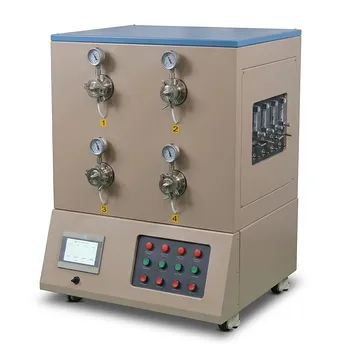
High Throughput 1200C Four Channel Tube Furnace with 3 Inch Quartz Tubes for Multi Zone Annealing and Material Research

High Temperature 1700C Vertical Tube Furnace for Powder Spherification and Material Sintering
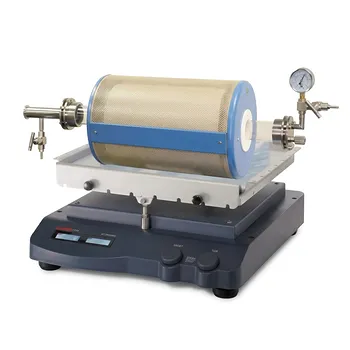
High Temperature Rocking Tube Furnace with Quartz Tube and Vacuum Flange for Materials Synthesis
