How does a tube furnace with controlled oxygen flow contribute to PAD? Enhance Epitaxial Growth & Oxide Purity
Updated 3 months ago
The tube furnace serves as the precision thermal reactor required to transform a polymer-precursor film into a high-quality crystalline oxide. It provides the high temperatures necessary to burn away organic binders while using a controlled oxygen environment to dictate the final chemical composition and structural integrity of the epitaxial layer.
A tube furnace with oxygen flow enables the transition from a liquid-phase precursor to a solid crystalline oxide by facilitating complete organic decomposition and ensuring the precise oxygen stoichiometry required for high-performance epitaxial films.
Driving the Structural Transformation of Thin Films
Removing the Organic Template
In the PAD process, the initial film consists of metal precursors bound within a polymer matrix. The tube furnace provides the high temperatures needed to trigger the thermal decomposition of these organic components, effectively "cleaning" the film of its carbon-based scaffolding.
Facilitating Phase Formation and Crystallization
Once the organics are removed, the remaining metal ions must reorganize into a specific crystal lattice. The sustained, uniform heat of the furnace allows these atoms to migrate and settle into a stable, epitaxial oxide phase that aligns with the underlying substrate.
Maintaining a Controlled Reaction Environment
Unlike an open furnace, a tube furnace allows for a sealed, specific atmosphere. This isolation is vital to prevent environmental contaminants from interfering with the delicate crystallization process occurring on the substrate surface.
The Critical Role of Controlled Oxygen Flow
Ensuring Complete Carbon Removal
The introduction of oxygen is not merely atmospheric; it is a chemical reactant. Controlled oxygen flow ensures that all polymer residue is fully oxidized into volatile gases, preventing carbon contamination which would otherwise degrade the film's electrical or structural properties.
Regulating Oxygen Stoichiometry
The flow rate and concentration of oxygen directly influence the number of oxygen atoms incorporated into the thin film. Precise regulation is critical to achieving the correct oxygen stoichiometry, which dictates the final film's phase purity and functional performance.
Preventing Oxide Deficiencies
If oxygen levels are insufficient during the high-heat phase, the resulting oxide film may suffer from oxygen vacancies. By maintaining a constant flow, the furnace compensates for any oxygen loss, ensuring a high-quality oxide production that meets rigorous technical standards.
Understanding the Trade-offs and Technical Pitfalls
Managing Thermal Ramp Rates
While high temperatures are necessary for crystallization, heating the film too rapidly can lead to mechanical stress or "cracking" as the organics exit the film. A gradual thermal ramp is required to allow the gas byproducts to escape without damaging the film's morphology.
Balancing Flow and Turbulence
Excessive oxygen flow can create turbulence within the tube, leading to temperature fluctuations across the substrate. Conversely, stagnant oxygen can lead to the "smothering" of the reaction, where incomplete decomposition leaves residual carbon trapped within the crystal lattice.
Substrate and Precursor Compatibility
Not all substrates or metal precursors react identically to high-heat oxygen environments. Some substrates may undergo unwanted oxidation themselves, requiring a delicate balance between the oxygen partial pressure needed for the film and the chemical stability of the base material.
How to Apply This to Your Project
When utilizing a tube furnace for PAD, your configuration should be driven by the specific material properties of your target oxide.
- If your primary focus is maximizing phase purity: Prioritize the precision of the oxygen flow controllers to ensure stoichiometric balance and the complete elimination of organic residues.
- If your primary focus is film morphology and smoothness: Focus on the thermal ramp-up and cool-down profiles of the furnace to prevent structural cracking during the decomposition phase.
- If your primary focus is high-throughput production: Ensure the tube furnace has a sufficiently large "uniform heat zone" to process multiple substrates simultaneously without variance in crystallization quality.
Mastering the synergy between thermal energy and oxygen chemistry is the definitive path to achieving superior epitaxial growth in polymer-assisted processes.
Summary Table:
| Key Process Factor | Impact on PAD Epitaxial Growth |
|---|---|
| High Temperature | Triggers organic decomposition and facilitates phase transformation. |
| Controlled Oxygen | Oxidizes polymer residues to prevent carbon contamination. |
| Sealed Environment | Prevents atmospheric contaminants from interfering with crystallization. |
| Oxygen Stoichiometry | Regulates the atomic oxygen ratio for high-performance film properties. |
| Thermal Ramping | Manages gas escape to prevent mechanical stress and film cracking. |
Elevate Your Material Research with THERMUNITS
Precision is paramount in epitaxial growth and thin-film deposition. THERMUNITS is a leading manufacturer of high-temperature laboratory equipment, providing the accuracy and reliability required for advanced material science.
From specialized Tube Furnaces and CVD/PECVD systems to Muffle, Vacuum, Atmosphere, Rotary, and Hot Press furnaces, we offer a comprehensive range of thermal processing solutions tailored for industrial R&D and laboratory heat treatment. Whether you need a vacuum induction melting furnace (VIM) or high-performance Thermal Elements, we deliver the tools you need to achieve superior results.
Ready to optimize your heat treatment process? Contact THERMUNITS today to consult with our experts and find the perfect furnace for your application!
References
- Meritxell Toda‐Casaban, B. Martı́nez. Tuning of Antiferromagnetic Phase in La<sub>1–<i>x</i></sub>Sr<sub><i>x</i></sub>MnO<sub>3</sub> Epitaxial Thin Films by Polymer-Assisted Deposition Synthesis. DOI: 10.1021/acs.cgd.4c00229
Mentioned Products
- High Temperature Tube Furnace 1500C with Sliding Flanges and 50mm OD for Rapid Thermal Processing Fast Heating and Cooling
- Vertical 1700C Vacuum and Atmosphere Tube Furnace with 80mm Alumina Tube
- 1100C Tube Furnace with Vacuum Flange and Programmable Temperature Controller for Material Science and Industrial Heat Treatment
- Compact High Temperature 1600C Tube Furnace with 50mm Alumina Tube and Vacuum Flanges for Material Sintering
- 900°C Max Rotary Tube Furnace with 8 Inch 310S Alloy Tube and Optional Multi Zone Heating for Industrial Material Calcination
People Also Ask
- How are high-temperature tube furnaces utilized to repair etching damage? Precision Lattice Restoration Solutions
- What core conditions does a high-temperature tube furnace provide for rGO aerogels? Mastering Precision Synthesis.
- What role does a high-temperature tube furnace play in CVD synthesis of silicon nanowires? Master VLS Growth Precision.
- How does precision tube furnace control influence CoFe nanoparticle formation? Master Your Bimetallic Synthesis.
- What role does a high-temperature tube furnace play in the sulfidation heat treatment of CoS@C/MXene nanocomposites? Guide

Tech Team · ThermUnits
Last updated on Jun 02, 2026
Related Products

High Temperature Tube Furnace 1500C with Sliding Flanges and 50mm OD for Rapid Thermal Processing Fast Heating and Cooling

Vertical 1700C Vacuum and Atmosphere Tube Furnace with 80mm Alumina Tube

1100C Tube Furnace with Vacuum Flange and Programmable Temperature Controller for Material Science and Industrial Heat Treatment

Compact High Temperature 1600C Tube Furnace with 50mm Alumina Tube and Vacuum Flanges for Material Sintering
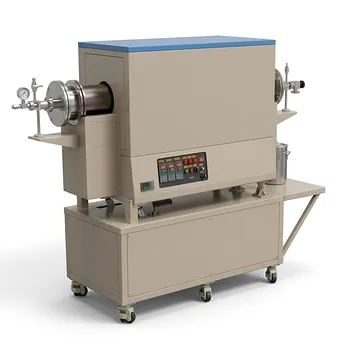
900°C Max Rotary Tube Furnace with 8 Inch 310S Alloy Tube and Optional Multi Zone Heating for Industrial Material Calcination

1700C Hydrogen Gas Tube Furnace with 60mm Alumina Process Tube and Integrated Hydrogen Safety Detector

High Temperature 1700C Tube Furnace with High Vacuum Turbomolecular Pump System and Multi Channel Mass Flow Controller Gas Mixer

5 Inch Three Zone Rotary Tube Furnace with Integrated Gas Delivery System and 1200C Capability for Advanced Material CVD Processing
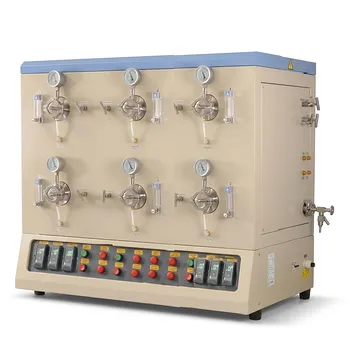
1200C High Throughput Multi Channel Tube Furnace with 50mm Quartz Tubes for Annealing and Material Phase Diagram Research

Three Zone Tube Furnace with 11 Inch or 15 Inch Quartz Tube and Hinged Flanges for Vacuum Atmosphere Heat Treatment

1200°C 5 Inch Vertical Quartz Tube Furnace with Stainless Steel Vacuum Flanges
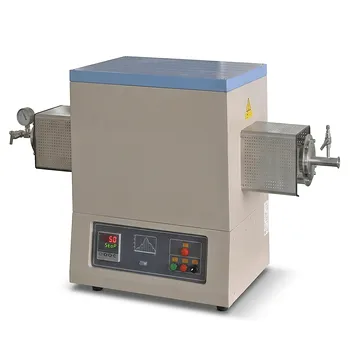
High Temperature 1700C Tube Furnace with 4 Inch OD Alumina Tube and Vacuum Sealing Flanges

High Temperature 1700C Six Zone Split Tube Furnace with Alumina Tube and Water Cooled Flanges

Compact Vertical Split Quartz Tube Furnace with Stainless Steel Vacuum Flanges for Rapid Thermal Quenching and Controlled Atmosphere Material Processing

High Temperature 1700C Benchtop Tube Furnace with 5 Inch Heating Zone High Purity Alumina Tube and Vacuum Sealing Flanges

1800C High Temperature Compact Vacuum Tube Furnace with 60mm OD Alumina Tube and Kanthal MoSi2 Heating Elements
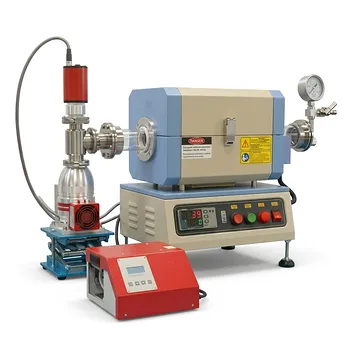
High Vacuum Compact Tube Furnace 1200C with Integrated Turbo Pump System and 8 Inch Heating Zone
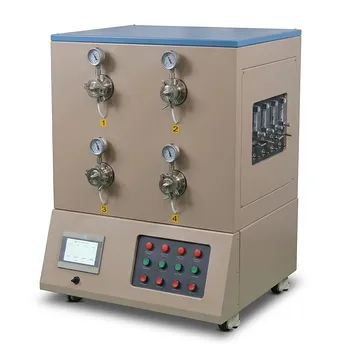
High Throughput 1200C Four Channel Tube Furnace with 3 Inch Quartz Tubes for Multi Zone Annealing and Material Research

High Temperature Automated 5 Inch Tube Furnace for Autonomous Material Research and Advanced Laboratory R&D
