How does MFC argon flow rate control achieve Te phase regulation? Master Alpha & Beta Nanostructure Precision
Updated 3 months ago
Controlling the argon gas flow rate allows for phase regulation of tellurium (Te) by directly manipulating the density of tellurium atomic clusters within the reaction chamber. By using a Mass Flow Controller (MFC) to adjust the carrier gas velocity, researchers can determine whether tellurium atoms remain sparse—favoring the formation of low-energy alpha-Te (α-Te) nanosheets—or become dense and highly interactive, driving the transition into beta-Te (β-Te) nanorods.
Core Takeaway: The MFC acts as the primary dial for "phase engineering" in tellurium deposition; it regulates the transport efficiency and concentration of tellurium vapors, which dictates the thermodynamic path and final crystal structure of the material.
The Mechanism of Atomic Cluster Density
The primary role of the Mass Flow Controller is to manage the concentration of precursor materials in the deposition zone.
Transport Efficiency and Vapor Concentration
The MFC regulates how quickly argon carrier gas sweeps tellurium vapor from the high-temperature source zone to the cooler substrate. A higher flow rate increases the transport efficiency, delivering a greater volume of tellurium atoms to the substrate per unit of time.
Influence on Atomic Interactions
When the flow rate is high, the resulting high atomic cluster density increases the frequency of interactions between tellurium atoms. These strengthened interactions provide the kinetic energy and proximity necessary to drive the crystal transition toward the beta-phase (β-Te).
Low-Density Phase Selection
Conversely, a lower flow rate maintains a low cluster density, preventing the atoms from interacting heavily before they settle. This environment allows the system to settle into the lower-energy alpha-Te (α-Te) phase, typically characterized by two-dimensional nanosheets.
Fluid Dynamics and Deposition Flux
Beyond simple density, the physics of gas flow impacts how tellurium crystals nucleate and grow on the substrate.
Laminar vs. Turbulent Flow
The MFC allows for precise switching between specific flow rates (e.g., 150 sccm to 40 sccm), which fundamentally changes the fluid dynamics near the substrate. Changes in flow velocity can trigger a transition between laminar and turbulent flow, directly affecting the uniformity of the deposition flux.
Supersaturation Management
By adjusting the carrier gas, operators can dynamically balance the supersaturation of reactants in the furnace. This balance is critical for regulating both the growth rate and the lateral dimensions of the resulting nanostructures, ensuring large-area uniformity of the single crystals.
Understanding the Trade-offs
While high flow rates enable the growth of specific phases like β-Te, they introduce several technical challenges.
The Risk of Non-Uniformity
Extremely high flow rates can lead to turbulent gas patterns that cause non-uniform deposition across the substrate. This may result in a mix of phases or inconsistent crystal sizes, undermining the goal of pure phase regulation.
Precursor Wastage and Interaction Time
High-velocity gas may carry precursor vapors past the substrate too quickly, leading to low deposition efficiency. If the gas moves too fast, the tellurium atoms may not have sufficient residence time to form the stable nuclei required for high-quality single crystals.
How to Apply This to Your Project
Achieving the desired tellurium phase requires a calculated approach to argon flow management based on your specific structural goals.
- If your primary focus is alpha-Te (α-Te) nanosheets: Use a lower argon flow rate to maintain low atomic cluster density and minimize inter-atomic interactions.
- If your primary focus is beta-Te (β-Te) nanorods: Increase the flow rate via the MFC to boost cluster density and drive the transition to the higher-energy beta phase.
- If your primary focus is crystal purity and oxygen prevention: Ensure a constant, steady flow to effectively displace residual oxygen and prevent unintended oxidation of the tellurium structures.
Precise control of the carrier gas atmosphere remains the most effective tool for navigating the complex phase diagram of tellurium nanostructures.
Summary Table:
| Flow Rate (MFC) | Atomic Cluster Density | Interaction Strength | Resulting Phase | Morphology |
|---|---|---|---|---|
| Low Flow | Low Density | Weak | Alpha-phase (α-Te) | 2D Nanosheets |
| High Flow | High Density | Strong | Beta-phase (β-Te) | 1D Nanorods |
| Effect | Transport Efficiency | Kinetic Path | Phase Engineering | Structural Control |
Elevate Your Material Research with THERMUNITS
Achieving precise phase regulation in tellurium vapor deposition requires high-performance thermal processing equipment and stable atmosphere control. THERMUNITS is a leading manufacturer of advanced laboratory systems designed specifically for material science and industrial R&D.
Our comprehensive range of solutions includes:
- CVD/PECVD Systems for advanced thin-film and nanostructure growth
- Tube and Atmosphere Furnaces for precise gas flow management
- Muffle, Vacuum, and Rotary Furnaces for diverse heat treatments
- Hot Press, Dental Furnaces, and Vacuum Induction Melting (VIM) systems
Whether you are engineering 2D nanosheets or 1D nanorods, our equipment provides the stability and MFC precision your research demands. Contact our experts today to find the perfect thermal solution for your laboratory!
References
- Jun Zhou, Junpeng Lü. Phase-engineered synthesis of atomically thin te single crystals with high on-state currents. DOI: 10.1038/s41467-024-45940-6
Mentioned Products
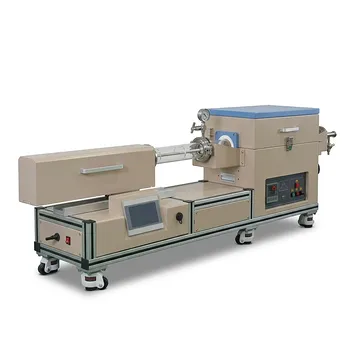
- Chemical Vapor Deposition CVD System Slide PECVD Tube Furnace with Liquid Gasifier PECVD Machine
- Versatile Chemical Vapor Deposition Tube Furnace System for Advanced Material Research and Industrial Coating Processes
- 915MHz MPCVD Diamond Machine Microwave Plasma Chemical Vapor Deposition System Reactor
- Radio Frequency Plasma Enhanced Chemical Vapor Deposition RF PECVD System for Laboratory and Industrial Thin Film Growth
- HFCVD Machine System for Nano Diamond Coating on Drawing Dies and Industrial Tools
People Also Ask
- What are the advantages of PECVD systems for nano flame retardant films? Protect Heat-Sensitive Polymers with Precision
- How does a sliding rail design benefit the CVD process within a furnace ventilation hood? Enhance Control & Quenching
- What is the role of CVD/PECVD systems in the research of optoelectronic materials and functional coatings? Expert Guide
- How does PECVD differ from conventional thermal CVD? Key Advantages of Low-Temperature Deposition for R&D
- What role do by-product desorption and evacuation play in CVD film quality? Key Factors for High-Purity Films

Tech Team · ThermUnits
Last updated on Jun 02, 2026
Related Products
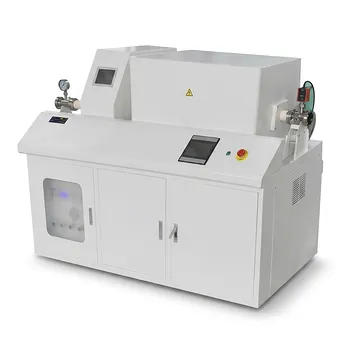
Chemical Vapor Deposition CVD System Slide PECVD Tube Furnace with Liquid Gasifier PECVD Machine
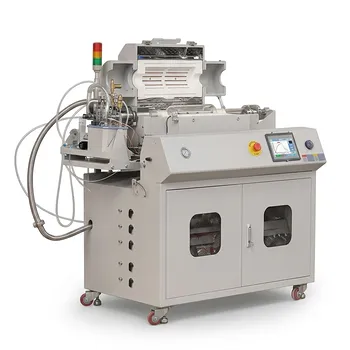
Versatile Chemical Vapor Deposition Tube Furnace System for Advanced Material Research and Industrial Coating Processes
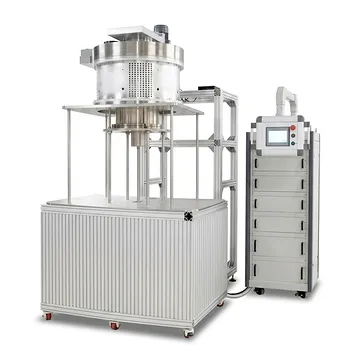
915MHz MPCVD Diamond Machine Microwave Plasma Chemical Vapor Deposition System Reactor
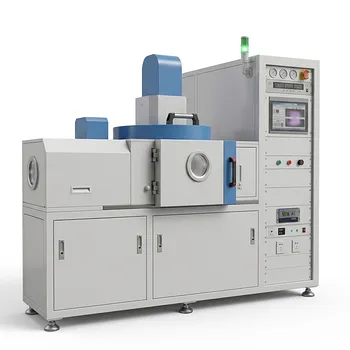
Radio Frequency Plasma Enhanced Chemical Vapor Deposition RF PECVD System for Laboratory and Industrial Thin Film Growth
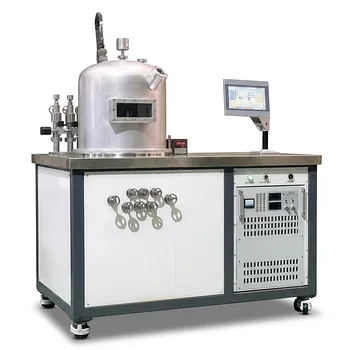
HFCVD Machine System for Nano Diamond Coating on Drawing Dies and Industrial Tools
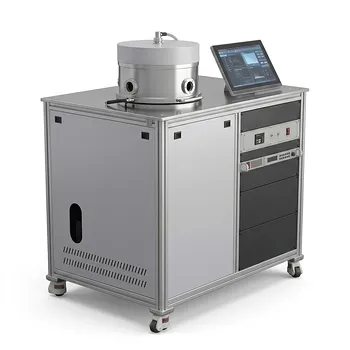
Inclined Rotary Plasma Enhanced Chemical Vapor Deposition PECVD System for Thin Film Deposition and Nanomaterial Synthesis
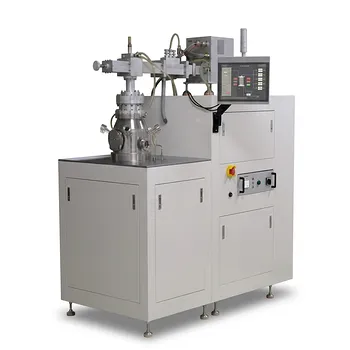
Cylindrical Resonator MPCVD Machine System for Microwave Plasma Chemical Vapor Deposition and Lab Diamond Growth
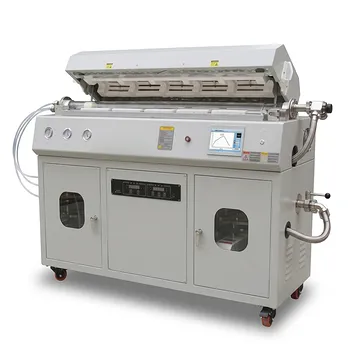
Multi Heating Zones CVD Tube Furnace System for Precision Chemical Vapor Deposition and Advanced Material Synthesis
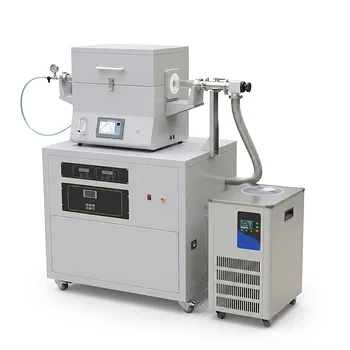
Split Chamber CVD Tube Furnace with Vacuum Station Chemical Vapor Deposition System Machine
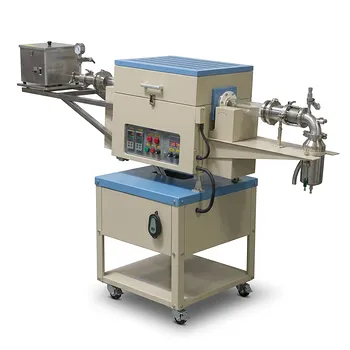
Two Zone Rotary CVD Furnace with Automatic Feeding and Receiving System for Powder Processing
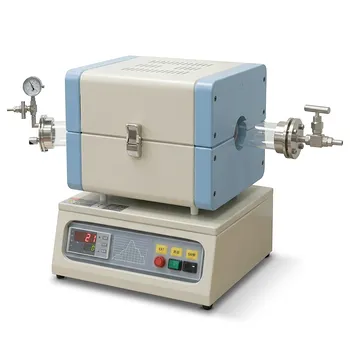
1200C Tube Furnace with Internal Magnetic Sample Sliding for Direct Vaporizing Deposition and Rapid Thermal Processing
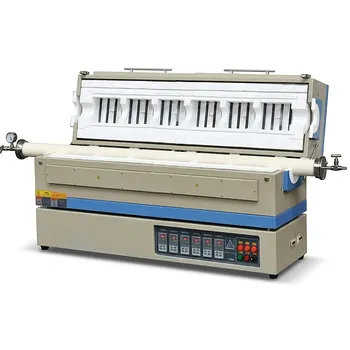
High Temperature 1700C Six Zone Split Tube Furnace with Alumina Tube and Water Cooled Flanges