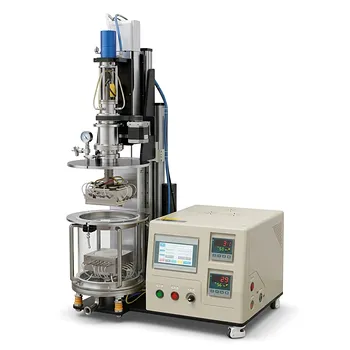
How does placing substrates perpendicular to the gas flow direction optimize the perovskite thin film vapor deposition process?
Updated 3 months ago
Optimizing perovskite vapor deposition requires a precise configuration of the reaction chamber geometry to maximize chemical interactions. By placing substrates perpendicular to the carrier gas flow, engineers can significantly increase the collision frequency and residence time of reactive gases on the substrate surface. This orientation eliminates the inefficiencies of parallel placement, ensuring higher deposition rates and superior film consistency across large-scale production batches.
Placing substrates perpendicular to the gas flow transforms the deposition process from a passive bypass to an active impingement. This geometric shift maximizes gas-surface contact, ensuring that every substrate in a cycle receives uniform coverage and high-quality material integration.
Maximizing Gas-Surface Interactions
Increasing Collision Frequency
In a perpendicular arrangement, the carrier gas is forced to impact the substrate surface directly rather than gliding over it. This direct impingement significantly increases the number of times reactive molecules strike the target area.
Prolonging Residence Time
When gas flows parallel to a surface, it often passes too quickly for optimal reaction. A perpendicular orientation creates a localized zone where the gas remains in contact with the substrate for a longer duration, known as residence time.
Enhancing Deposition Rates
The combination of frequent collisions and extended residence time directly boosts the efficiency of the chemical reaction. This results in faster film growth, allowing for shorter process cycles without sacrificing film quality.
Overcoming Scalability and Coverage Issues
Mitigating the Shadowing Effect
In parallel configurations, upstream substrates can physically block the flow of gas to downstream units, a phenomenon known as the shadowing effect. Positioning substrates perpendicularly ensures that each piece of material has an unobstructed path to the reactive gas stream.
Achieving Full Surface Coverage
By removing the "shadows" cast by neighboring components, the system achieves full surface coverage in a single process cycle. This is critical for manufacturing high-performance perovskite films that require absolute continuity to function effectively.
Enabling Large-Scale Consistency
Consistency is the primary hurdle in moving from lab-scale to industrial production. The perpendicular fixture ensures that every substrate across a large batch experiences the same gas dynamics, leading to uniform device performance.
Enhancing Uniformity Through System Synergy
Integrating Substrate Rotation
While perpendicular placement improves gas contact, adding a rotation mechanism further refines the process. Constant rotation compensates for any inherent spatial non-uniformity in the sputtering or vapor source.
Ensuring Thickness and Compositional Balance
Dynamic movement during deposition balances the material distribution across the entire surface area. This results in highly uniform thickness and consistent chemical composition, which are essential for the stability of photodetector devices.
Understanding the Trade-offs
Mechanical Complexity of Fixtures
Holding substrates perpendicularly requires more complex specialized fixtures compared to simply laying them flat. These fixtures must be robust enough to withstand the deposition environment while maintaining precise alignment.
Potential for Flow Turbulence
At very high flow velocities, perpendicular substrates can act as obstacles that create localized turbulence. If not carefully managed, this turbulence can lead to uneven deposition patterns or "eddy" zones where gas concentration fluctuates.
How to Apply This to Your Project
Depending on your specific manufacturing priorities, the implementation of perpendicular substrate placement should be tailored to your target outcome.
- If your primary focus is maximizing throughput: Prioritize the perpendicular arrangement to reduce cycle times by leveraging the increased deposition rates.
- If your primary focus is device stability and precision: Integrate a substrate rotation mechanism alongside the vertical placement to ensure absolute thickness uniformity.
- If your primary focus is material efficiency: Optimize the flow velocity to ensure that the increased residence time leads to maximum precursor utilization rather than gas waste.
By mastering the geometry of gas dynamics, you can transform vapor deposition into a highly repeatable and efficient engine for perovskite production.
Summary Table:
| Key Optimization Factor | Perpendicular Placement Benefit | Parallel Placement Limitation |
|---|---|---|
| Collision Frequency | Maximizes direct impingement of reactive gases. | Gas molecules glide over without reacting. |
| Residence Time | Creates localized zones for prolonged interaction. | Gas passes too quickly for optimal reaction. |
| Deposition Rate | Faster film growth via efficient chemical reaction. | Slower cycles and lower material utilization. |
| Scalability | Eliminates shadowing; ensures batch consistency. | Upstream substrates block flow to downstream units. |
| Film Uniformity | Enables full surface coverage across large areas. | Prone to uneven thickness and "edge effects." |
Elevate Your Thin Film Research with THERMUNITS
Precision in gas dynamics is the key to superior perovskite production. As a leading manufacturer of high-temperature laboratory equipment for material science and industrial R&D, THERMUNITS provides the specialized systems you need to achieve absolute film consistency.
Whether you are scaling up for industrial production or conducting precise lab-scale experiments, our comprehensive range of thermal solutions—including CVD/PECVD systems, Vacuum Tube Furnaces, and Atmosphere Furnaces—is engineered to provide the control and uniformity your project demands.
Ready to optimize your deposition process? Contact our engineering team today to discuss your specific requirements and discover how our advanced heat treatment equipment can drive your research forward.
References
- Dmitry S. Muratov, Aldo Di Carlo. Single‐Step Chemical Vapor Deposition of Methyl Ammonium Lead Halide Perovskite for p–i‐n Solar Cells. DOI: 10.1002/slct.202400147
Mentioned Products
- Radio Frequency Plasma Enhanced Chemical Vapor Deposition RF PECVD System for Laboratory and Industrial Thin Film Growth
- Inclined Rotary Plasma Enhanced Chemical Vapor Deposition PECVD System for Thin Film Deposition and Nanomaterial Synthesis
- Chemical Vapor Deposition CVD System Slide PECVD Tube Furnace with Liquid Gasifier PECVD Machine
- HFCVD Machine System for Nano Diamond Coating on Drawing Dies and Industrial Tools
- 1200C Sliding Internal Crucible Tube Furnace for Controlled Atmosphere Thin Film Deposition and Material Sublimation Research
People Also Ask
- What are the advantages of PECVD systems for nano flame retardant films? Protect Heat-Sensitive Polymers with Precision
- How does PECVD differ from conventional thermal CVD? Key Advantages of Low-Temperature Deposition for R&D
- What is the role of CVD/PECVD systems in the research of optoelectronic materials and functional coatings? Expert Guide
- What are the benefits of using PECVD for optical and photonic coatings? Achieve High-Precision Thin-Film Deposition
- How do RF frequency and power settings influence the characteristics of a PECVD process? Master Quality & Efficiency

Tech Team · ThermUnits
Last updated on Jun 03, 2026
Related Products
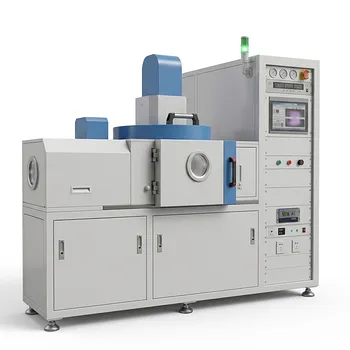
Radio Frequency Plasma Enhanced Chemical Vapor Deposition RF PECVD System for Laboratory and Industrial Thin Film Growth
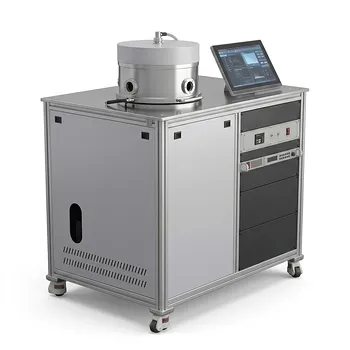
Inclined Rotary Plasma Enhanced Chemical Vapor Deposition PECVD System for Thin Film Deposition and Nanomaterial Synthesis
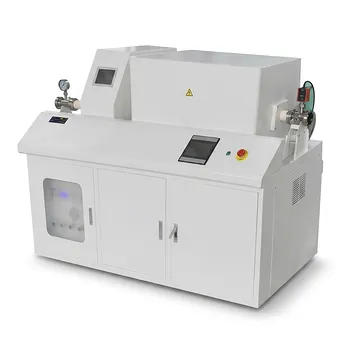
Chemical Vapor Deposition CVD System Slide PECVD Tube Furnace with Liquid Gasifier PECVD Machine
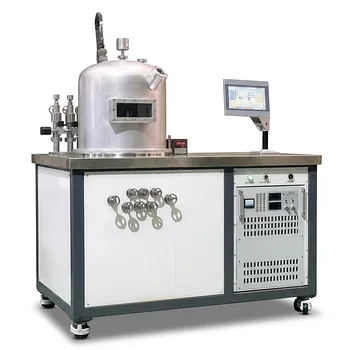
HFCVD Machine System for Nano Diamond Coating on Drawing Dies and Industrial Tools
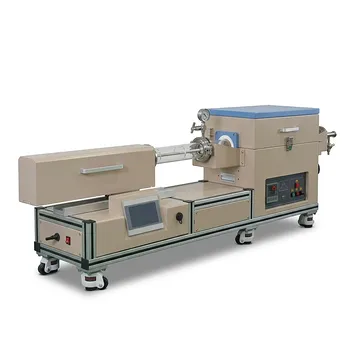
1200C Sliding Internal Crucible Tube Furnace for Controlled Atmosphere Thin Film Deposition and Material Sublimation Research
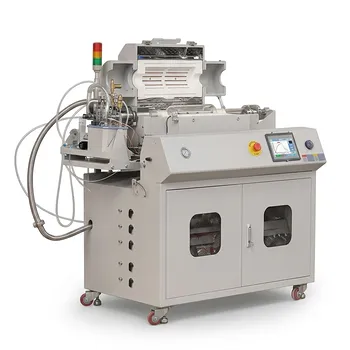
Versatile Chemical Vapor Deposition Tube Furnace System for Advanced Material Research and Industrial Coating Processes
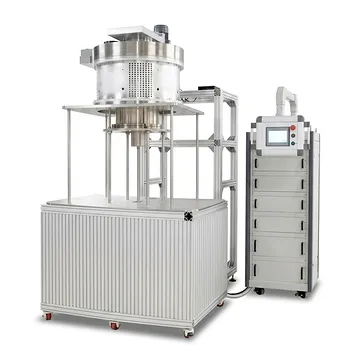
915MHz MPCVD Diamond Machine Microwave Plasma Chemical Vapor Deposition System Reactor
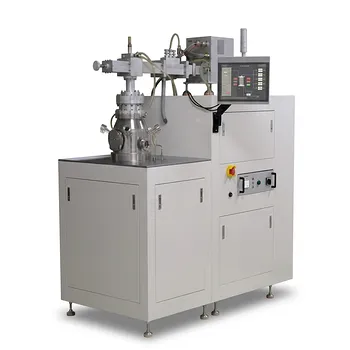
Cylindrical Resonator MPCVD Machine System for Microwave Plasma Chemical Vapor Deposition and Lab Diamond Growth
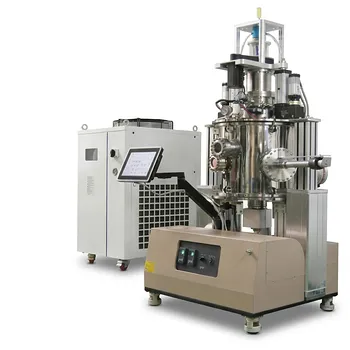
950C Rapid Thermal Processing Furnace for 12 Inch Wafer CSS Coating with Rotating Substrate Holder
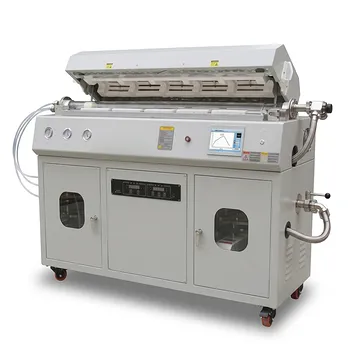
Multi Heating Zones CVD Tube Furnace System for Precision Chemical Vapor Deposition and Advanced Material Synthesis
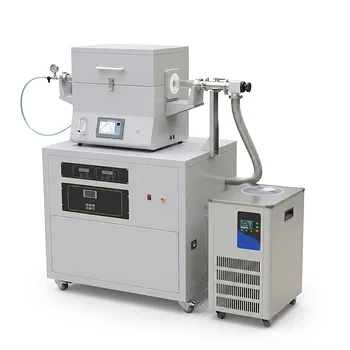
Split Chamber CVD Tube Furnace with Vacuum Station Chemical Vapor Deposition System Machine
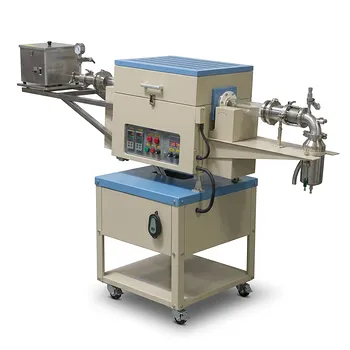
Two Zone Rotary CVD Furnace with Automatic Feeding and Receiving System for Powder Processing
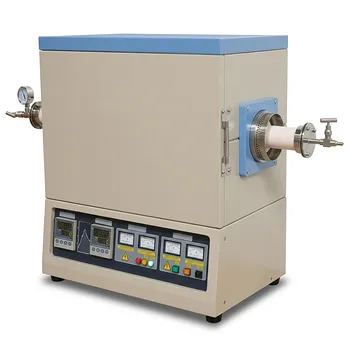
High Temperature 1700C Dual Zone Tube Furnace for Material Science and Industrial Chemical Vapor Deposition Research