How does PTFE function in high-entropy fluoride carbon fiber synthesis? In-Situ Fluorination & Pore Engineering
Updated 3 months ago
Polytetrafluoroethylene (PTFE) serves as a dual-purpose agent during the synthesis of high-entropy fluoride carbon fibers. It functions simultaneously as a sacrificial pore-forming template and a reactive solid fluorine source. Within the controlled environment of a tube furnace, PTFE decomposes to engineer the fiber's internal architecture while chemically converting metal salts into high-entropy fluoride crystals.
PTFE is the critical process material that enables "one-pot" structural and chemical transformation, turning a simple carbonization step into a sophisticated synthesis of high-entropy (MnNiCuCoZn)F2 materials.
Structural Engineering via Pore Formation
Decomposition and Gas Evolution
As the tube furnace reaches high temperatures, the PTFE integrated into the precursor fibers undergoes thermal degradation. This decomposition releases volatile gaseous byproducts that permeate the carbonizing matrix.
Developing Specific Surface Area
The escape of these gases creates an intricate network of micro- and meso-pores within the fibers. This structural change significantly increases the specific surface area, which is vital for the material's eventual performance in applications like energy storage or catalysis.
Establishing the Carbonaceous Skeleton
While the PTFE decomposes, the remaining carbon components undergo pyrolysis. The presence of the tube furnace's oxygen-deficient environment ensures that a preliminary carbon skeleton forms to support the newly created pores.
Chemical Conversion via In-Situ Fluorination
PTFE as a Solid Fluorine Source
PTFE acts as a stable, manageable solid fluorine source that only becomes reactive at elevated temperatures. This allows for a safe and localized delivery of fluorine directly to the metal precursors without the need for hazardous fluorine gas.
Facilitating High-Entropy Phase Transformation
The decomposition of PTFE generates a concentrated in-situ fluorination atmosphere. This reactive environment facilitates the conversion of multi-metal salts into stable (MnNiCuCoZn)F2 high-entropy crystals.
Stabilization of the High-Entropy State
The uniform distribution of fluorine from the decomposing PTFE ensures that all five metallic elements—Manganese, Nickel, Copper, Cobalt, and Zinc—incorporate into a single, cohesive crystalline phase. This high-entropy configuration provides the material with unique thermal and chemical stability.
The Role of the Tube Furnace Environment
Precise Thermal Control
A high-precision tube furnace is required to maintain the stable high-temperature environment necessary for PTFE to decompose at a controlled rate. Inconsistent heating can lead to irregular pore sizes or incomplete fluorination.
Atmospheric Regulation
The furnace maintains an accurately controlled nitrogen atmosphere to prevent oxidation of the carbon fibers. This oxygen-deficient environment is essential for the successful pyrolysis of the fiber precursors and the preservation of the fluoride phase.
Understanding the Trade-offs
Porosity vs. Mechanical Strength
Increasing the PTFE content generally leads to higher porosity and surface area. However, excessive gas evolution can create structural voids that compromise the mechanical integrity and "skeletal" strength of the carbon fibers.
Kinetic Balancing
The rate of PTFE decomposition must be perfectly synchronized with the carbonization of the fiber. If the PTFE gasifies too quickly before the carbon skeleton is rigid enough, the fiber structure may collapse rather than becoming porous.
How to Apply This to Your Synthesis
Making the Right Choice for Your Goal
- If your primary focus is maximizing surface area: Increase the PTFE-to-precursor ratio while utilizing a slower heating ramp in the tube furnace to allow for uniform pore development.
- If your primary focus is high-entropy phase purity: Ensure the furnace maintains a strictly controlled nitrogen flow and a stable peak temperature to allow the in-situ fluorination reaction to reach equilibrium.
PTFE essentially transforms from a passive polymer into the primary driver of both the physical structure and the chemical identity of high-entropy fluoride carbon fibers.
Summary Table:
| PTFE Function | Mechanism in Tube Furnace | Key Benefit |
|---|---|---|
| Pore-Forming Template | Sacrificial thermal decomposition and gas evolution | Increases specific surface area with micro/meso-pores |
| Solid Fluorine Source | In-situ fluorination of multi-metal precursors | Converts salts into stable (MnNiCuCoZn)F2 crystals |
| Structural Support | Pyrolysis in oxygen-deficient atmosphere | Establishes a rigid carbonaceous skeleton |
| Phase Stabilizer | Controlled release of reactive fluorine | Ensures uniform high-entropy phase transformation |
Elevate Your Material Research with THERMUNITS
Precise synthesis of high-entropy materials requires absolute control over thermal kinetics and atmospheric purity. THERMUNITS is a leading manufacturer of high-performance laboratory equipment designed for the most demanding R&D environments.
Our advanced Tube Furnaces, Vacuum/Atmosphere Furnaces, and CVD/PECVD systems provide the stable nitrogen flow and uniform temperature profiles essential for PTFE decomposition and in-situ fluorination. Whether you are developing energy storage solutions or advanced catalysts, we offer comprehensive thermal processing solutions—including Muffle, Rotary, and Hot Press furnaces—to ensure your synthesis is repeatable and high-yield.
Ready to optimize your heat treatment process? Contact our technical experts today to find the perfect furnace for your lab.
References
- Gang Wang, Bowen Cheng. Zinc-induced polycrystalline transformation of high-entropy fluorides and derived regulatory mechanisms for bifunctional oxygen electrocatalysis. DOI: 10.1039/d4ta02866j
Mentioned Products
- High Temperature Tube Furnace 1500C with Sliding Flanges and 50mm OD for Rapid Thermal Processing Fast Heating and Cooling
- Vertical 1700C Vacuum and Atmosphere Tube Furnace with 80mm Alumina Tube
- 1100C Tube Furnace with Vacuum Flange and Programmable Temperature Controller for Material Science and Industrial Heat Treatment
- Compact High Temperature 1600C Tube Furnace with 50mm Alumina Tube and Vacuum Flanges for Material Sintering
- 900°C Max Rotary Tube Furnace with 8 Inch 310S Alloy Tube and Optional Multi Zone Heating for Industrial Material Calcination
People Also Ask
- How are high-temperature tube furnaces utilized to repair etching damage? Precision Lattice Restoration Solutions
- What core conditions does a high-temperature tube furnace provide for rGO aerogels? Mastering Precision Synthesis.
- What role does a high-temperature tube furnace play in CVD synthesis of silicon nanowires? Master VLS Growth Precision.
- How does precision tube furnace control influence CoFe nanoparticle formation? Master Your Bimetallic Synthesis.
- What role does a high-temperature tube furnace play in the sulfidation heat treatment of CoS@C/MXene nanocomposites? Guide

Tech Team · ThermUnits
Last updated on Jun 02, 2026
Related Products

High Temperature Tube Furnace 1500C with Sliding Flanges and 50mm OD for Rapid Thermal Processing Fast Heating and Cooling

Vertical 1700C Vacuum and Atmosphere Tube Furnace with 80mm Alumina Tube

1100C Tube Furnace with Vacuum Flange and Programmable Temperature Controller for Material Science and Industrial Heat Treatment

Compact High Temperature 1600C Tube Furnace with 50mm Alumina Tube and Vacuum Flanges for Material Sintering
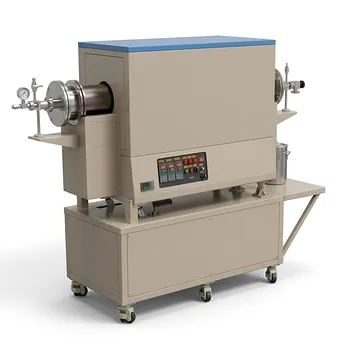
900°C Max Rotary Tube Furnace with 8 Inch 310S Alloy Tube and Optional Multi Zone Heating for Industrial Material Calcination

1700C Hydrogen Gas Tube Furnace with 60mm Alumina Process Tube and Integrated Hydrogen Safety Detector

High Temperature 1700C Tube Furnace with High Vacuum Turbomolecular Pump System and Multi Channel Mass Flow Controller Gas Mixer

5 Inch Three Zone Rotary Tube Furnace with Integrated Gas Delivery System and 1200C Capability for Advanced Material CVD Processing

Three Zone Tube Furnace with 11 Inch or 15 Inch Quartz Tube and Hinged Flanges for Vacuum Atmosphere Heat Treatment
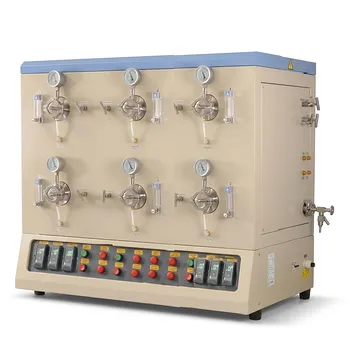
1200C High Throughput Multi Channel Tube Furnace with 50mm Quartz Tubes for Annealing and Material Phase Diagram Research

1200°C 5 Inch Vertical Quartz Tube Furnace with Stainless Steel Vacuum Flanges
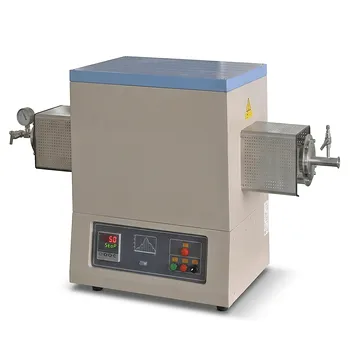
High Temperature 1700C Tube Furnace with 4 Inch OD Alumina Tube and Vacuum Sealing Flanges

High Temperature 1700C Benchtop Tube Furnace with 5 Inch Heating Zone High Purity Alumina Tube and Vacuum Sealing Flanges

High Temperature 1700C Six Zone Split Tube Furnace with Alumina Tube and Water Cooled Flanges

Compact Vertical Split Quartz Tube Furnace with Stainless Steel Vacuum Flanges for Rapid Thermal Quenching and Controlled Atmosphere Material Processing

1800C High Temperature Compact Vacuum Tube Furnace with 60mm OD Alumina Tube and Kanthal MoSi2 Heating Elements
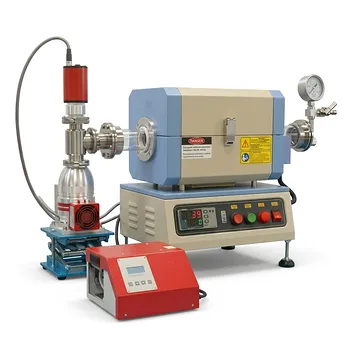
High Vacuum Compact Tube Furnace 1200C with Integrated Turbo Pump System and 8 Inch Heating Zone
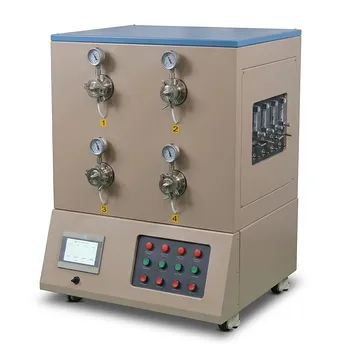
High Throughput 1200C Four Channel Tube Furnace with 3 Inch Quartz Tubes for Multi Zone Annealing and Material Research

High Temperature Automated 5 Inch Tube Furnace for Autonomous Material Research and Advanced Laboratory R&D
