How does quartz tube diameter affect hydrogen-assisted CVD growth of WSe2? Key for monolayer uniformity.
Updated 3 months ago
Optimizing tube diameter is a critical lever for controlling gas phase dynamics during CVD growth. A constrained diameter, specifically around 35mm, forces carrier gases and precursor vapors into a more directed path toward the substrate. This confinement reduces turbulence and ensures a uniform concentration of reactants, which is necessary to achieve high-quality, continuous monolayer tungsten diselenide ($WSe_2$).
Using a narrower, constrained reaction tube diameter improves the uniformity of reactant delivery by optimizing gas flow directionality. This setup minimizes concentration gradients across the substrate, facilitating the growth of large-area, high-quality monolayers.
How Tube Geometry Dictates Growth Quality
Enhanced Flow Directionality
A constrained diameter reduces the cross-sectional area through which the carrier gas must travel. This increase in gas velocity helps maintain a laminar flow, ensuring that precursor vapors reach the substrate in a predictable and directed manner.
Improved Reactant Concentration Uniformity
When the reaction space is confined, the distribution of tungsten and selenium precursors becomes more homogeneous across the substrate surface. This uniform concentration prevents localized over-saturation, which is a common cause of unwanted multilayer growth or crystal defects.
Facilitating Large-Area Monolayer Continuity
Uniform transport allows individual $WSe_2$ flakes to merge seamlessly as they grow. By maintaining consistent precursor delivery over the entire substrate, the system can produce continuous monolayers rather than isolated, non-coalesced islands.
Understanding the Trade-offs and Constraints
Risks of Excessive Confinement
While a 35mm diameter is often optimal, reducing the diameter too further can lead to increased pressure drops within the tube. This may alter the residence time of the precursors, potentially causing them to deposit prematurely on the tube walls rather than the substrate.
Limitations of Large-Diameter Tubes
In larger tubes, gas flow often becomes stagnant or turbulent, leading to non-uniform depletion of precursors. This typically results in "edge effects" where the growth quality varies significantly from the center of the substrate to its perimeter.
Thermal Gradient Management
A smaller tube diameter also affects the thermal mass and heat distribution within the furnace. While it allows for faster heating and cooling cycles, it requires precise calibration to ensure the substrate temperature remains stable during the critical growth phase.
How to Apply This to Your Project
Recommendations for Experimental Design
- If your primary focus is maximizing monolayer crystallinity: Use a constrained tube (approximately 35mm) to ensure a stable, laminar supply of hydrogen and precursor vapors.
- If your primary focus is scaling to larger substrates: Incrementally increase the tube diameter while adjusting the total gas flow rate to maintain the same linear velocity and reactant flux.
Selecting the correct tube diameter creates the ideal fluid dynamic environment for high-performance 2D material synthesis.
Summary Table:
| Tube Diameter | Flow Dynamics | Reactant Uniformity | Growth Result |
|---|---|---|---|
| Constrained (~35mm) | Directed Laminar Flow | High / Homogeneous | Large-area Continuous Monolayer |
| Large (>35mm) | Turbulent / Stagnant | Low (Edge Effects) | Non-uniform / Isolated Flakes |
| Over-Constrained | High Pressure Drop | Low (Wall Deposition) | Increased Defects / Reduced Yield |
Accelerate Your 2D Material Research with THERMUNITS
Achieving perfect monolayer $WSe_2$ requires a precision-engineered thermal environment. THERMUNITS is a leading manufacturer of high-temperature laboratory equipment, specializing in high-performance CVD/PECVD systems, Tube furnaces, and Vacuum induction melting furnaces (VIM) tailored for material science and industrial R&D.
Our equipment provides the critical stability and gas flow control necessary to optimize your thin-film synthesis and heat treatment processes. From custom quartz reaction tubes to advanced atmospheric control, we offer comprehensive solutions to enhance your lab's efficiency.
Optimize your CVD process—Contact THERMUNITS today!
References
- Xuemin Luo, Yong Liu. Impact of Carrier Gas Flow Rate on the Synthesis of Monolayer WSe2 via Hydrogen-Assisted Chemical Vapor Deposition. DOI: 10.3390/ma17102190
Mentioned Products
- 1100°C Large Diameter Quartz Tube Furnace with 24 Inch Heating Zone and Water Cooled Flanges
- Dual Zone Quartz Tube Furnace with 80mm Diameter 1200C Max Temperature 3 Channel Gas Mixer and Vacuum Pump System
- Three Zone Quartz Tube Furnace with 3 Channel Gas Mixer Vacuum Pump and Anti Corrosive Vacuum Gauge
- 1200C Three Zone Vertical Tube Furnace with 2 Inch Quartz Tube and Vacuum Flanges
- 1000C Mini Tube Furnace with 20mm Quartz Tube and Vacuum Flanges for Material Science Research and Controlled Atmosphere Small Sample Processing
People Also Ask
- Why is a quartz tube furnace necessary for phosphorus-doped MoS2/GO preparation? Ensure Purity & Precise Synthesis
- What are the advantages of 1100°C tube furnaces for ORR catalysts? Boost Conductivity and Structural Stability.
- What conditions does a quartz tube furnace provide for AlxCoCrFeNi steam corrosion tests? Achieve Precise R&D Control.
- What is the primary function of a Quartz Tube Furnace in ZnO VLS growth? Master High-Precision Nanowire Synthesis
- What role does a single-temperature zone quartz tube furnace play in the growth of monolayer MoS2? Optimize 2D Synthesis

Tech Team · ThermUnits
Last updated on Jun 02, 2026
Related Products
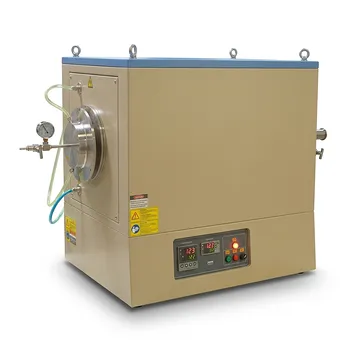
1100°C Large Diameter Quartz Tube Furnace with 24 Inch Heating Zone and Water Cooled Flanges
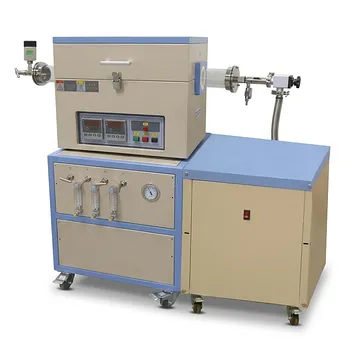
Dual Zone Quartz Tube Furnace with 80mm Diameter 1200C Max Temperature 3 Channel Gas Mixer and Vacuum Pump System
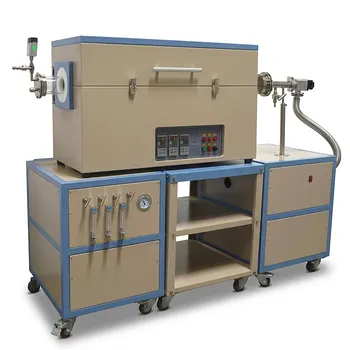
Three Zone Quartz Tube Furnace with 3 Channel Gas Mixer Vacuum Pump and Anti Corrosive Vacuum Gauge
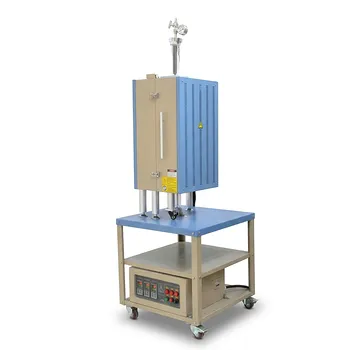
1200C Three Zone Vertical Tube Furnace with 2 Inch Quartz Tube and Vacuum Flanges
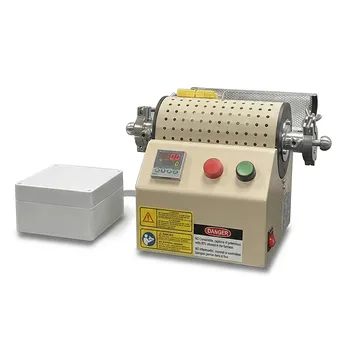
1000C Mini Tube Furnace with 20mm Quartz Tube and Vacuum Flanges for Material Science Research and Controlled Atmosphere Small Sample Processing
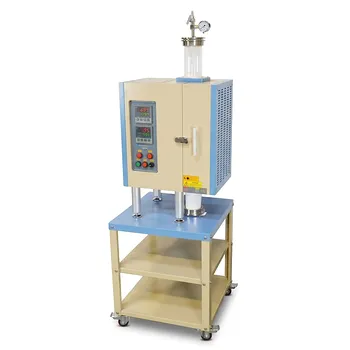
1100°C Dual Zone Split Vertical Tube Furnace with 4 Inch Quartz Tube and Vacuum Sealing Flanges
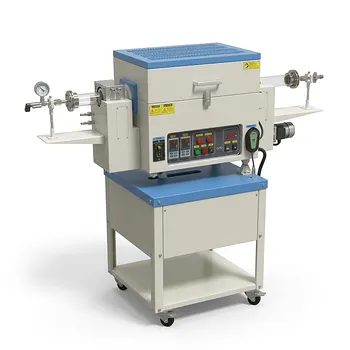
4 Inch Two Zone Rotary CVD Tube Furnace for High Temperature Battery Material Synthesis and Advanced Material Calcination

Compact Vertical Split Quartz Tube Furnace with Stainless Steel Vacuum Flanges for Rapid Thermal Quenching and Controlled Atmosphere Material Processing
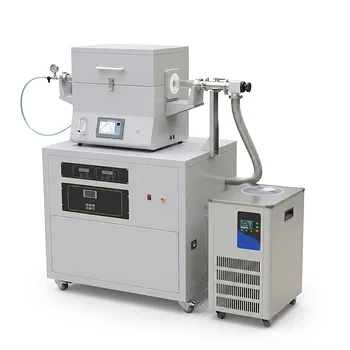
Split Chamber CVD Tube Furnace with Vacuum Station Chemical Vapor Deposition System Machine
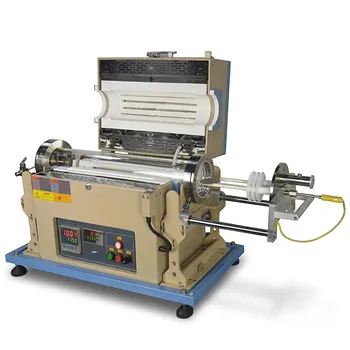
1200°C High Temperature 4 Inch Tube Furnace with Sliding Flange for CVD Systems
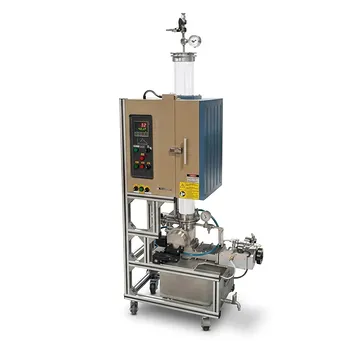
1200C High Temperature Atmosphere Controlled Vertical Quenching Tube Furnace with 4 Inch Quartz Tube
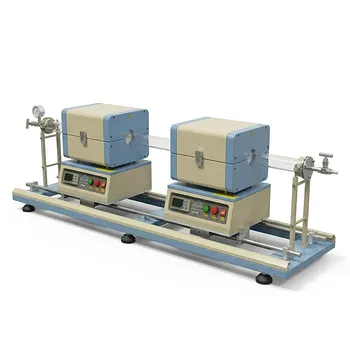
1200C Max Dual Sliding Tube Furnace with 50 mm Tube Flanges for CVD
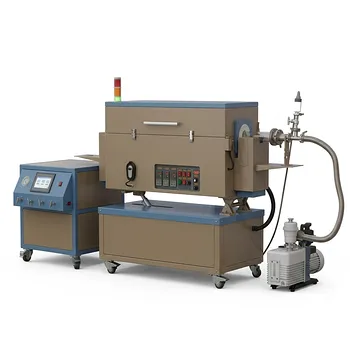
5 Inch Three Zone Rotary Tube Furnace with Integrated Gas Delivery System and 1200C Capability for Advanced Material CVD Processing
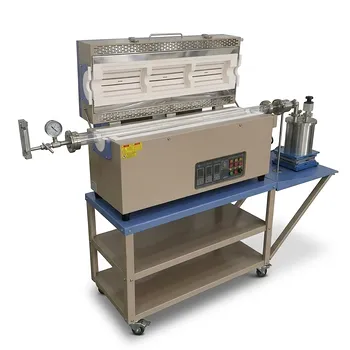
5 Inch Two Zone Rotary Tube Furnace 1100C for Powder CVD and Material Synthesis
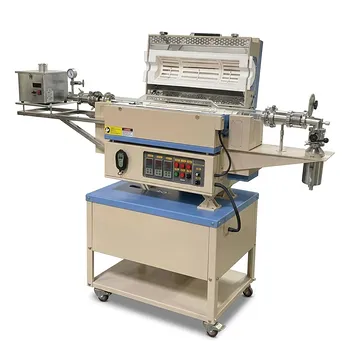
5 Inch Rotary Tube Furnace with Automatic Feeding and Receiving System 1200C Three Zone CVD Powder Processing

1200°C 5 Inch Vertical Quartz Tube Furnace with Stainless Steel Vacuum Flanges
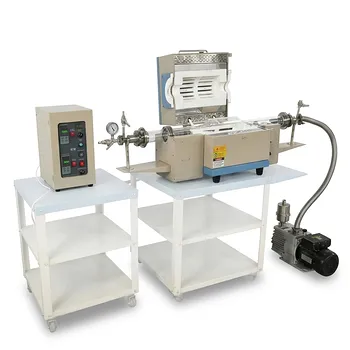
Two Zone Rotary Tube Furnace for Powder CVD Coating and Core Shell Material Synthesis 1100C
Two Zone Rotary CVD Furnace with Automatic Feeding and Receiving System for Powder Processing
Vertical Openable Tube Furnace 0-1700c High Temperature Laboratory System for CVD and Vacuum Heat Treatment