How does the heating rate control of a tube furnace affect the anchoring of CoSAs? Mastering Atomic Dispersion
Updated 3 months ago
The precise control of the heating rate in a tube furnace is the determining factor in achieving atomic-level dispersion versus metallic clumping. For the anchoring of Cobalt Single Atoms (CoSAs), a slow heating rate—specifically 2°C per minute—is required to provide sufficient time for cobalt ions to coordinate fully with nitrogen atoms in the graphitic carbon nitride (g-C3N4) framework. This synchronization prevents the transition from isolated atoms to inactive nanoparticles, ensuring maximum exposure of catalytic active sites.
Core Takeaway: Proper heating rate control manages the kinetic balance between metal ion coordination and thermal migration. By slowing the ramp speed, researchers prioritize the formation of stable metal-nitrogen bonds, effectively "freezing" cobalt in an atomic state before it can aggregate.
The Mechanism of Atomic Anchoring
Maximizing Metal-Ligand Coordination
A slow heating rate ensures that cobalt ions have the necessary residence time at lower temperatures to find and bind to nitrogen vacancies. This thorough coordination is essential for stabilizing the metal within the g-C3N4 lattice.
Without this temporal window, the cobalt ions remain mobile as the temperature rises. This mobility leads to premature movement across the substrate rather than secure anchoring at the intended atomic sites.
Kinetic Control of Dispersion
The heating rate acts as a throttle for the energy entering the system. At 2°C/min, the thermal energy is supplied gradually enough to favor the thermodynamics of atomic dispersion over the kinetics of particle growth.
This precise thermal treatment achieves a high density of single-atom sites. By avoiding the "thermal shock" of rapid heating, the system avoids the energy spikes that typically drive atoms to coalesce into larger, less effective clusters.
Preventing Metallic Aggregation
Inhibiting Nanoparticle Nucleation
When heating rates are too high, the rapid increase in thermal energy facilitates the migration of cobalt atoms across the surface of the support. This leads to aggregation, where single atoms collide and bond to form metal nanoparticles.
Aggregation is detrimental because it buries the majority of cobalt atoms inside the core of a particle. In contrast, maintaining a slow ramp rate ensures that each cobalt atom remains isolated and fully accessible for chemical reactions.
Managing Volatile Release and Structural Integrity
As seen in similar carbon-based syntheses, the heating rate regulates the escape velocity of volatile components. A controlled release prevents local "micro-explosions" or structural collapses within the carbon framework.
Maintaining the structural integrity of the g-C3N4 or MOF precursor is vital. A stable, intact framework provides the necessary "pockets" or nitrogen-rich environments required to keep the cobalt atoms physically separated.
Understanding the Trade-offs
The Risk of Rapid Heating
Rapid heating (e.g., >10°C/min) significantly increases production throughput but often results in catalyst deactivation. The high energy flux triggers the rapid decomposition of ligands, often causing the carbon skeleton to shrink unevenly or the metal to "sinter" into large, inactive chunks.
The Downside of Excessive Slowing
While a slow rate is beneficial for dispersion, an excessively slow ramp can lead to unnecessary processing time and potential over-calcination. If the material stays at high temperatures for too long, it may lead to the collapse of the very porous structures meant to support the single atoms.
How to Apply This to Your Synthesis
Achieving the perfect cobalt single-atom catalyst requires balancing the heating rate with your specific substrate and target loading.
- If your primary focus is Maximum Catalytic Activity: Utilize a slow heating rate of 1-2°C/min to ensure every cobalt ion is individually anchored to a nitrogen site, maximizing the surface area of active sites.
- If your primary focus is Structural Integrity of the Support: Implement a ramp rate that matches the decomposition profile of your precursors (typically 2-5°C/min) to allow gases to escape without damaging the pore network.
- If your primary focus is Preventing Metal Sintering: Ensure the tube furnace's PID controller is calibrated for low-speed ramping to avoid "overshooting" the target temperature, which is a common cause of atomic clumping.
In the synthesis of single-atom catalysts, the heating rate is not merely a setting, but a precise tool for governing the fundamental architecture of the material at the atomic scale.
Summary Table:
| Parameter | Slow Heating Rate (1-2°C/min) | Fast Heating Rate (>10°C/min) |
|---|---|---|
| Metal State | Atomic-level dispersion (CoSAs) | Metallic clumping/Nanoparticles |
| Coordination | Full metal-ligand (N-Co) binding | Poor coordination; high mobility |
| Structure | Preserved framework integrity | Potential structural collapse |
| Activity | Maximum catalytic active sites | Reduced activity due to sintering |
| Result | High-performance catalysts | Deactivated or low-efficiency material |
Achieve Atomic Precision with THERMUNITS Thermal Solutions
For material scientists synthesizing Single Atom Catalysts (SACs), precision is everything. THERMUNITS provides the advanced heating technology required to maintain the strict kinetic control necessary for anchoring atoms without aggregation. Our high-performance Tube Furnaces, Vacuum Furnaces, and CVD/PECVD systems feature industry-leading PID controllers to ensure perfectly linear, slow-ramp heating profiles as low as 0.1°C/min.
Whether you are working on CoSAs, MOF precursors, or advanced energy materials, our comprehensive range of equipment—including Muffle, Atmosphere, Rotary, and Hot Press furnaces—is designed for the rigors of industrial R&D and academic excellence.
Ready to elevate your heat treatment precision? Contact our technical experts today to find the ideal thermal processing solution for your research.
References
- Juan Wu, Weisheng Liu. Enhanced photoelectrochemical water splitting performance of α-Fe<sub>2</sub>O<sub>3</sub> photoanodes through Co-modification with Co single atoms and g-C<sub>3</sub>N<sub>4</sub>. DOI: 10.1039/d4sc03442b
Mentioned Products
- High Temperature Tube Furnace 1500C with Sliding Flanges and 50mm OD for Rapid Thermal Processing Fast Heating and Cooling
- Vertical 1700C Vacuum and Atmosphere Tube Furnace with 80mm Alumina Tube
- Compact High Temperature 1600C Tube Furnace with 50mm Alumina Tube and Vacuum Flanges for Material Sintering
- 900°C Max Rotary Tube Furnace with 8 Inch 310S Alloy Tube and Optional Multi Zone Heating for Industrial Material Calcination
- 1100C Tube Furnace with Vacuum Flange and Programmable Temperature Controller for Material Science and Industrial Heat Treatment
People Also Ask
- How are high-temperature tube furnaces utilized to repair etching damage? Precision Lattice Restoration Solutions
- What role does a high-temperature tube furnace play in CVD synthesis of silicon nanowires? Master VLS Growth Precision.
- What core conditions does a high-temperature tube furnace provide for rGO aerogels? Mastering Precision Synthesis.
- What role does a high-temperature tube furnace play in the sulfidation heat treatment of CoS@C/MXene nanocomposites? Guide
- How does precision tube furnace control influence CoFe nanoparticle formation? Master Your Bimetallic Synthesis.

Tech Team · ThermUnits
Last updated on Jun 03, 2026
Related Products

High Temperature Tube Furnace 1500C with Sliding Flanges and 50mm OD for Rapid Thermal Processing Fast Heating and Cooling

Vertical 1700C Vacuum and Atmosphere Tube Furnace with 80mm Alumina Tube

Compact High Temperature 1600C Tube Furnace with 50mm Alumina Tube and Vacuum Flanges for Material Sintering
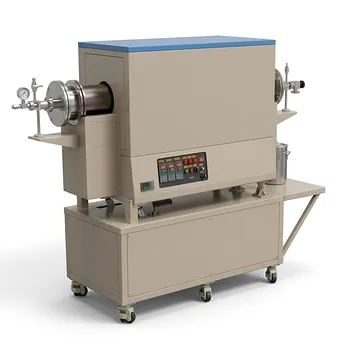
900°C Max Rotary Tube Furnace with 8 Inch 310S Alloy Tube and Optional Multi Zone Heating for Industrial Material Calcination

1100C Tube Furnace with Vacuum Flange and Programmable Temperature Controller for Material Science and Industrial Heat Treatment

High Temperature 1700C Tube Furnace with High Vacuum Turbomolecular Pump System and Multi Channel Mass Flow Controller Gas Mixer
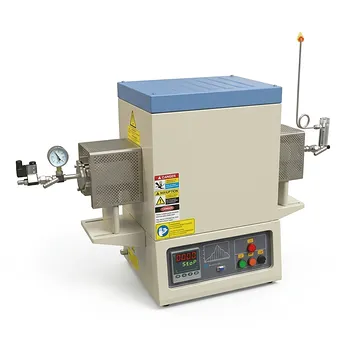
1700C Hydrogen Gas Tube Furnace with 60mm Alumina Process Tube and Integrated Hydrogen Safety Detector
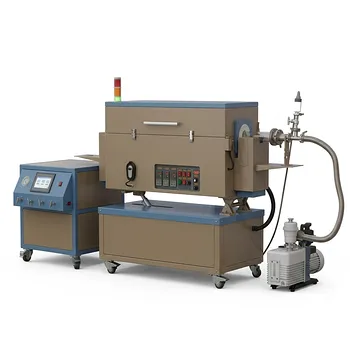
5 Inch Three Zone Rotary Tube Furnace with Integrated Gas Delivery System and 1200C Capability for Advanced Material CVD Processing

1200°C 5 Inch Vertical Quartz Tube Furnace with Stainless Steel Vacuum Flanges

High Temperature 1700C Six Zone Split Tube Furnace with Alumina Tube and Water Cooled Flanges

Compact Vertical Split Quartz Tube Furnace with Stainless Steel Vacuum Flanges for Rapid Thermal Quenching and Controlled Atmosphere Material Processing
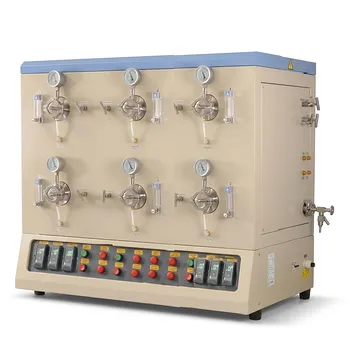
1200C High Throughput Multi Channel Tube Furnace with 50mm Quartz Tubes for Annealing and Material Phase Diagram Research
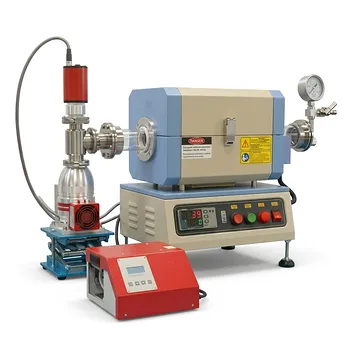
High Vacuum Compact Tube Furnace 1200C with Integrated Turbo Pump System and 8 Inch Heating Zone

High Temperature 1700C Benchtop Tube Furnace with 5 Inch Heating Zone High Purity Alumina Tube and Vacuum Sealing Flanges

1800C High Temperature Compact Vacuum Tube Furnace with 60mm OD Alumina Tube and Kanthal MoSi2 Heating Elements
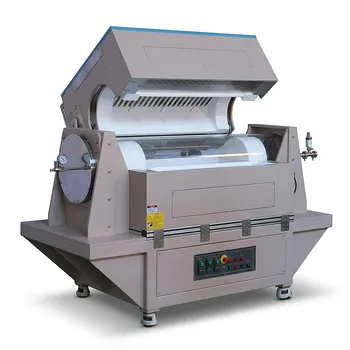
Three Zone Tube Furnace with 11 Inch or 15 Inch Quartz Tube and Hinged Flanges for Vacuum Atmosphere Heat Treatment
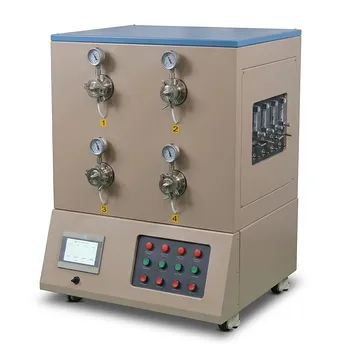
High Throughput 1200C Four Channel Tube Furnace with 3 Inch Quartz Tubes for Multi Zone Annealing and Material Research

High Temperature 1700C Vertical Tube Furnace for Powder Spherification and Material Sintering
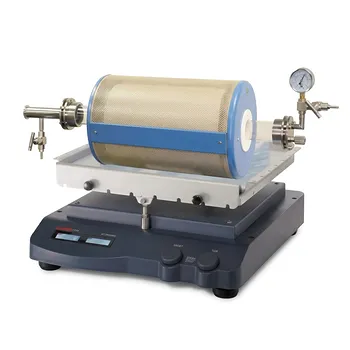
High Temperature Rocking Tube Furnace with Quartz Tube and Vacuum Flange for Materials Synthesis
