How does the heating rate control of a tube furnace affect 3DOM FeVCrAlOx catalysts? Achieve Structural Precision.
Updated 3 months ago
Precise heating rate control is the critical factor in preventing the structural collapse of 3DOM catalysts during synthesis.
In the preparation of 3DOM FeVCrAlOx catalysts via the PMMA template method, a tube furnace must maintain a slow, programmed heating rate—typically 1°C per minute. This controlled ramp ensures that organic templates decompose and exit the system gradually, preserving the three-dimensionally ordered macroporous architecture and maximizing the specific surface area available for catalytic reactions.
Core Takeaway: The heating rate acts as a "kinetic regulator" that balances the speed of organic template removal with the structural stabilization of the inorganic framework; failing to control this rate leads to gas-pressure-induced collapse or micro-cracking.
Managing the Decomposition Kinetics of Templates
Gradual Removal of PMMA and P123
The PMMA template method relies on "hard" PMMA spheres and "soft" P123 surfactants to define the catalyst's pores. A slow heating rate (1°C/min) ensures these organic materials decompose and are discharged as gases at a steady, manageable pace.
Preventing Internal Pressure Buildup
If the temperature rises too quickly, the rapid volatilization of organics creates high internal gas pressure within the pores. This pressure can physically shatter the delicate FeVCrAlOx walls before they have fully calcined and reached structural maturity.
Facilitating Inorganic Framework Stabilization
As the templates exit, the inorganic precursors (Fe, V, Cr, Al) must transition into a stable oxide skeleton. A controlled heating program provides the necessary time for this framework to solidify, effectively "locking in" the 3DOM structure.
Impact on Microstructure and Surface Area
Mitigating Micro-cracks and Local Overheating
Rapid heating can cause local "hot spots" where exothermic decomposition happens too fast. These spikes lead to the formation of micro-cracks, which compromise the mechanical integrity of the catalyst and reduce its operational lifespan.
Uniform Nucleation and Growth
Precise temperature control facilitates the uniform nucleation of the active metal components within the pores. This prevents the excessive aggregation of particles, ensuring that the final FeVCrAlOx catalyst maintains a high density of active sites and a rich mesoporous structure.
Defining Pore Size Distribution
The escape velocity of volatile matter directly influences the final pore size distribution. A steady heating curve prevents the uneven pore distribution or structural shrinkage that typically occurs during uncontrolled thermal shocks.
Understanding the Trade-offs
The Cost of Precision
Lower heating rates (e.g., <2°C/min) significantly increase the total calcination time and energy consumption of the tube furnace. While this is essential for structural integrity, it reduces the throughput of catalyst production in a laboratory or industrial setting.
Risk of Surface Migration
While slow heating protects the structure, excessively slow rates in certain systems can allow for the unwanted migration of solutes toward the outer surface. However, for 3DOM materials, the risk of structural collapse from rapid heating almost always outweighs the risks associated with slow heating.
Potential for Sintering
Extended time at high temperatures, which is a byproduct of slow heating ramps, can sometimes lead to the sintering of active components. It is vital to balance the slow ramp-up with a precisely timed "soak" at the final calcination temperature to avoid deactivating the catalyst.
How to Apply This to Your Project
Optimizing Your Calcination Program
To ensure a high-quality 3DOM FeVCrAlOx catalyst, the heating program must be tailored to the specific decomposition temperature of your PMMA template.
- If your primary focus is maximizing specific surface area: Maintain a heating rate of 1°C/min to 2°C/min to ensure total structural preservation.
- If your primary focus is preventing film or framework cracking: Utilize a programmable tube furnace to implement multiple "dwell" stages at the known decomposition points of P123 and PMMA.
- If your primary focus is industrial throughput: Experiment with slightly faster rates (up to 5°C/min) only after the majority of organic templates have been safely evacuated at lower temperatures.
The precision of the tube furnace's heating rate is the fundamental difference between a highly active 3DOM catalyst and a collapsed, low-surface-area powder.
Summary Table:
| Factor | Effect of Slow Heating (1°C/min) | Risk of Rapid Heating |
|---|---|---|
| Structural Integrity | Preserves 3DOM macroporous architecture | Internal gas-pressure-induced collapse |
| Template Removal | Gradual decomposition of PMMA and P123 | Rapid volatilization and wall shattering |
| Surface Area | Maximizes active sites and mesoporosity | Formation of micro-cracks and sintering |
| Active Sites | Uniform nucleation of metal components | Particle aggregation and reduced activity |
Elevate Your Material Research with THERMUNITS Precision
Achieving the perfect 3DOM catalyst requires absolute thermal precision. THERMUNITS is a leading manufacturer of high-temperature laboratory equipment, providing the control needed for cutting-edge material science and industrial R&D. Our high-performance Tube Furnaces and CVD/PECVD systems offer the stable, programmable ramp rates essential for preserving delicate macroporous structures.
Our Comprehensive Thermal Solutions Include:
- Laboratory Furnaces: Muffle, Vacuum, Atmosphere, and Rotary configurations.
- Industrial R&D: Hot Press furnaces, Vacuum Induction Melting (VIM), and Electric Rotary Kilns.
- Specialized Equipment: Dental Furnaces, Thermal Elements, and advanced heat treatment accessories.
Don't let structural collapse compromise your synthesis. Partner with THERMUNITS to secure the high-surface-area results your research demands.
Contact our technical experts today to find your solution!
References
- Xiaoshuai Gao, Qiuye Li. Engineering multi-component 3DOM FeVCrO<sub><i>x</i></sub> catalysts with high oxygen mobility for the oxidative dehydrogenation of 1-butene with CO<sub>2</sub>. DOI: 10.1039/d4nr03011g
Mentioned Products
- High Temperature Tube Furnace 1500C with Sliding Flanges and 50mm OD for Rapid Thermal Processing Fast Heating and Cooling
- Vertical 1700C Vacuum and Atmosphere Tube Furnace with 80mm Alumina Tube
- 1100C Tube Furnace with Vacuum Flange and Programmable Temperature Controller for Material Science and Industrial Heat Treatment
- Compact High Temperature 1600C Tube Furnace with 50mm Alumina Tube and Vacuum Flanges for Material Sintering
- 900°C Max Rotary Tube Furnace with 8 Inch 310S Alloy Tube and Optional Multi Zone Heating for Industrial Material Calcination
People Also Ask
- How are high-temperature tube furnaces utilized to repair etching damage? Precision Lattice Restoration Solutions
- What role does a high-temperature tube furnace play in CVD synthesis of silicon nanowires? Master VLS Growth Precision.
- What core conditions does a high-temperature tube furnace provide for rGO aerogels? Mastering Precision Synthesis.
- What role does a high-temperature tube furnace play in the sulfidation heat treatment of CoS@C/MXene nanocomposites? Guide
- How does precision tube furnace control influence CoFe nanoparticle formation? Master Your Bimetallic Synthesis.

Tech Team · ThermUnits
Last updated on Jun 03, 2026
Related Products

High Temperature Tube Furnace 1500C with Sliding Flanges and 50mm OD for Rapid Thermal Processing Fast Heating and Cooling

Vertical 1700C Vacuum and Atmosphere Tube Furnace with 80mm Alumina Tube

1100C Tube Furnace with Vacuum Flange and Programmable Temperature Controller for Material Science and Industrial Heat Treatment

Compact High Temperature 1600C Tube Furnace with 50mm Alumina Tube and Vacuum Flanges for Material Sintering
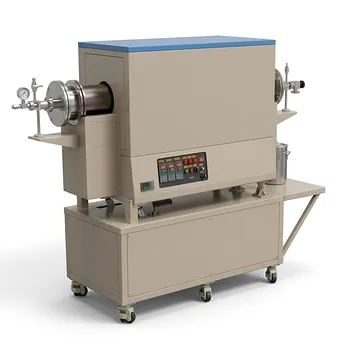
900°C Max Rotary Tube Furnace with 8 Inch 310S Alloy Tube and Optional Multi Zone Heating for Industrial Material Calcination

1700C Hydrogen Gas Tube Furnace with 60mm Alumina Process Tube and Integrated Hydrogen Safety Detector

High Temperature 1700C Tube Furnace with High Vacuum Turbomolecular Pump System and Multi Channel Mass Flow Controller Gas Mixer
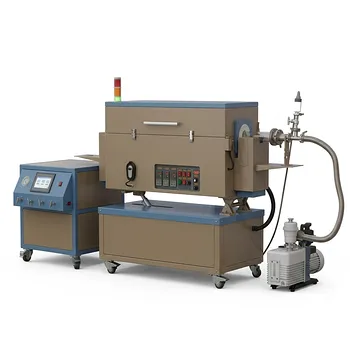
5 Inch Three Zone Rotary Tube Furnace with Integrated Gas Delivery System and 1200C Capability for Advanced Material CVD Processing

Three Zone Tube Furnace with 11 Inch or 15 Inch Quartz Tube and Hinged Flanges for Vacuum Atmosphere Heat Treatment

1200C High Throughput Multi Channel Tube Furnace with 50mm Quartz Tubes for Annealing and Material Phase Diagram Research

1200°C 5 Inch Vertical Quartz Tube Furnace with Stainless Steel Vacuum Flanges
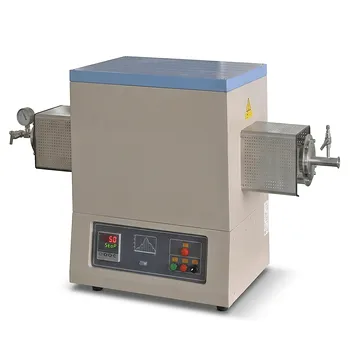
High Temperature 1700C Tube Furnace with 4 Inch OD Alumina Tube and Vacuum Sealing Flanges

High Temperature 1700C Benchtop Tube Furnace with 5 Inch Heating Zone High Purity Alumina Tube and Vacuum Sealing Flanges

High Temperature 1700C Six Zone Split Tube Furnace with Alumina Tube and Water Cooled Flanges

Compact Vertical Split Quartz Tube Furnace with Stainless Steel Vacuum Flanges for Rapid Thermal Quenching and Controlled Atmosphere Material Processing

1800C High Temperature Compact Vacuum Tube Furnace with 60mm OD Alumina Tube and Kanthal MoSi2 Heating Elements
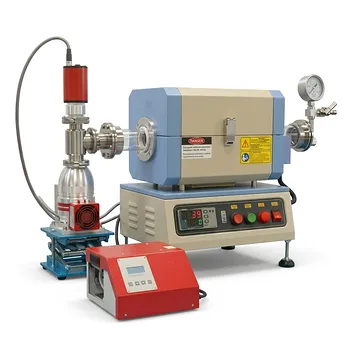
High Vacuum Compact Tube Furnace 1200C with Integrated Turbo Pump System and 8 Inch Heating Zone
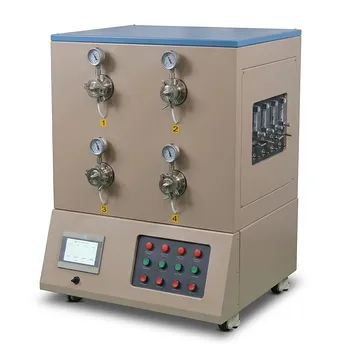
High Throughput 1200C Four Channel Tube Furnace with 3 Inch Quartz Tubes for Multi Zone Annealing and Material Research

High Temperature Automated 5 Inch Tube Furnace for Autonomous Material Research and Advanced Laboratory R&D
