How does nitrogen atmosphere annealing in a tube furnace affect NiCoO2/rGAs? Optimize Catalyst Stability & Performance
Updated 3 months ago
Annealing NiCoO2/rGAs in a nitrogen atmosphere is a critical step for developing high-performance catalytic materials. The process enables the precise thermal decomposition of precursors at temperatures between 350°C and 400°C, resulting in a high-crystallinity nickel-cobalt oxide phase. By operating in an oxygen-free environment, the tube furnace ensures that the reduced graphene aerogel (rGA) carrier remains intact while maximizing the electronic synergy between the metal oxide and its support.
The nitrogen atmosphere serves as a dual-purpose agent: it preserves the structural integrity of the carbon-based carrier by preventing oxidation and facilitates strong electronic coupling at the catalyst-carrier interface. This synergy is the foundation for enhanced electrochemical activity and long-term stability.
Preserving the Structural Integrity of the Carrier
Prevention of Carrier Oxidation and Ash Loss
In a standard air environment, carbon-based materials like reduced graphene aerogels (rGAs) or activated carbon would undergo combustion or significant oxidation at high temperatures. The nitrogen flow in a tube furnace creates an inert protective environment that excludes oxygen, ensuring the graphene framework isn't consumed or weakened during the heating cycle.
Maintaining Stoichiometric Precision
Consistent with other high-temperature processes, such as the synthesis of CuGaS2 thin films, the nitrogen atmosphere prevents the unintended volatilization or reaction of functional components. This ensures that the NiCoO2 phase maintains its intended chemical ratio and structural defects remain controlled.
Protection of Active Sites
By displacing air, the nitrogen environment prevents generated active sites from reacting with moisture or carbon dioxide. This isolation is vital for maintaining the high basic strength and chemical stability required for the catalyst to function effectively in real-world applications.
Optimizing the Catalyst-Support Interface
Enhancing Electronic Coupling
The nitrogen atmosphere annealing process promotes the formation of specific chemical bonds at the interface between the nickel-cobalt oxide and the rGA carrier. These bonds bridge the two materials, significantly enhancing the electronic coupling effect.
Improving Charge Transfer Risks
Effective coupling allows for more efficient electron movement between the active NiCoO2 particles and the conductive graphene network. This leads to lower internal resistance and higher performance in reactions like the Hydrogen Evolution Reaction (HER) or other electrochemical processes.
Facilitating Uniform Phase Formation
The controlled heating within the tube furnace promotes high-crystallinity. Rather than a disorganized mixture, the process induces the formation of a distinct nickel-cobalt oxide phase that is uniformly distributed across the large surface area of the aerogel.
Understanding the Trade-offs and Pitfalls
The Risk of Temperature Imbalance
While 350–400°C is ideal for NiCoO2, exceeding this range can lead to sintering, where the nanoparticles clump together and reduce the available surface area. Conversely, temperatures that are too low may fail to fully decompose the precursors, leaving impurities that poison the catalyst.
Trace Oxygen Contamination
A common pitfall is the presence of trace oxygen due to leaks in the tube furnace seals or impure nitrogen sources. Even small amounts of oxygen at high temperatures can cause localized oxidation of the graphene, creating structural weak points that degrade the catalyst’s lifespan.
Interaction vs. Inertness
While nitrogen is used for its inertness, it does not provide the reducing benefits of gases like H2/Ar. If the goal is to achieve deep reduction of metal species into metallic nanoparticles rather than oxides, a pure nitrogen atmosphere may be insufficient.
Applying These Insights to Your Synthesis
Strategy for Optimal Performance
The success of your catalyst depends on balancing the thermal energy required for crystallinity with the inertness needed for carrier protection.
- If your primary focus is maximizing electronic conductivity: Ensure the annealing temperature reaches at least 350°C to facilitate strong chemical bonding at the interface between the metal oxide and the graphene.
- If your primary focus is preserving the surface area of the rGA: Prioritize a high-purity nitrogen flow rate to eliminate any oxygen backflow, preventing the "burning off" of fine graphene structures.
- If your primary focus is phase purity of NiCoO2: Use a horizontal tube furnace to maintain a stable and uniform temperature field, avoiding cold spots that lead to incomplete precursor decomposition.
Through precise atmosphere and temperature control, the tube furnace transforms simple precursors into a robust, high-performance heterogeneous catalyst.
Summary Table:
| Process Factor | Impact on NiCoO2/rGAs Catalyst | Key Outcome |
|---|---|---|
| Inert N2 Atmosphere | Prevents oxidation of the graphene aerogel (rGA) framework | Structural integrity & high surface area |
| Temperature (350-400°C) | Facilitates precise thermal decomposition of precursors | High-crystallinity NiCoO2 phase |
| Electronic Synergy | Enhances coupling between metal oxide and carrier | Faster charge transfer & improved HER performance |
| Tube Furnace Control | Maintains uniform temperature field & excludes moisture/O2 | Phase purity & elimination of active site poisoning |
Elevate Your Material Research with THERMUNITS Precision Furnaces
High-performance catalysts like NiCoO2/rGAs require absolute precision in atmosphere and temperature control. THERMUNITS is a global leader in manufacturing high-temperature laboratory equipment specifically designed for material science and industrial R&D.
Our comprehensive range of thermal solutions—including Tube Furnaces, Atmosphere and Vacuum Furnaces, CVD/PECVD systems, and Vacuum Induction Melting (VIM) furnaces—provides the stable environment needed to prevent carrier oxidation and maximize electronic coupling.
Ready to optimize your heat treatment results?
Contact our engineering experts today to find the perfect furnace for your laboratory’s unique requirements.
References
- Donglei Guo, Xu Yu. Hierarchically Structured Graphene Aerogel Supported Nickel–Cobalt Oxide Nanowires as an Efficient Electrocatalyst for Oxygen Evolution Reaction. DOI: 10.3390/molecules29081805
Mentioned Products
- High Temperature Tube Furnace 1500C with Sliding Flanges and 50mm OD for Rapid Thermal Processing Fast Heating and Cooling
- Vertical 1700C Vacuum and Atmosphere Tube Furnace with 80mm Alumina Tube
- 1100C Tube Furnace with Vacuum Flange and Programmable Temperature Controller for Material Science and Industrial Heat Treatment
- Compact High Temperature 1600C Tube Furnace with 50mm Alumina Tube and Vacuum Flanges for Material Sintering
- 900°C Max Rotary Tube Furnace with 8 Inch 310S Alloy Tube and Optional Multi Zone Heating for Industrial Material Calcination
People Also Ask
- How are high-temperature tube furnaces utilized to repair etching damage? Precision Lattice Restoration Solutions
- What core conditions does a high-temperature tube furnace provide for rGO aerogels? Mastering Precision Synthesis.
- What role does a high-temperature tube furnace play in CVD synthesis of silicon nanowires? Master VLS Growth Precision.
- How does precision tube furnace control influence CoFe nanoparticle formation? Master Your Bimetallic Synthesis.
- What role does a high-temperature tube furnace play in the sulfidation heat treatment of CoS@C/MXene nanocomposites? Guide

Tech Team · ThermUnits
Last updated on Jun 02, 2026
Related Products

High Temperature Tube Furnace 1500C with Sliding Flanges and 50mm OD for Rapid Thermal Processing Fast Heating and Cooling

Vertical 1700C Vacuum and Atmosphere Tube Furnace with 80mm Alumina Tube
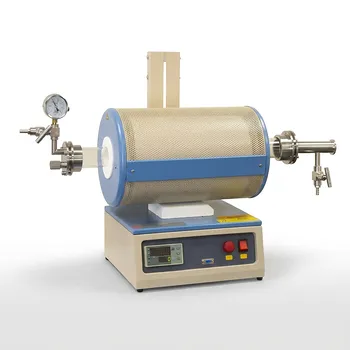
1100C Tube Furnace with Vacuum Flange and Programmable Temperature Controller for Material Science and Industrial Heat Treatment

Compact High Temperature 1600C Tube Furnace with 50mm Alumina Tube and Vacuum Flanges for Material Sintering
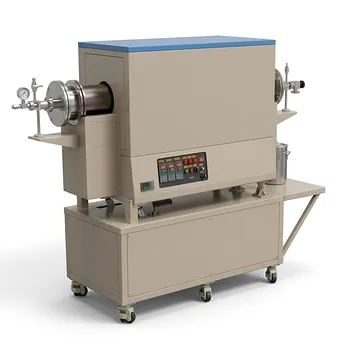
900°C Max Rotary Tube Furnace with 8 Inch 310S Alloy Tube and Optional Multi Zone Heating for Industrial Material Calcination
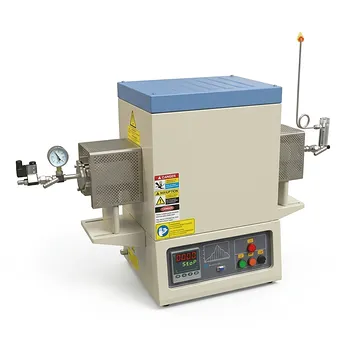
1700C Hydrogen Gas Tube Furnace with 60mm Alumina Process Tube and Integrated Hydrogen Safety Detector

High Temperature 1700C Tube Furnace with High Vacuum Turbomolecular Pump System and Multi Channel Mass Flow Controller Gas Mixer
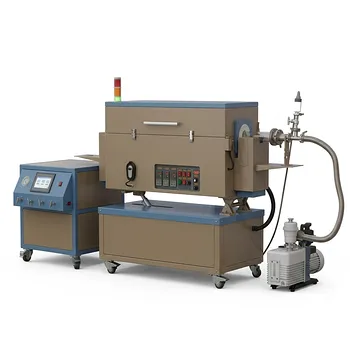
5 Inch Three Zone Rotary Tube Furnace with Integrated Gas Delivery System and 1200C Capability for Advanced Material CVD Processing
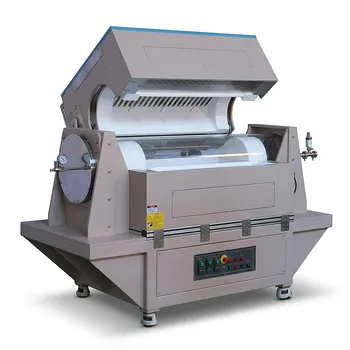
Three Zone Tube Furnace with 11 Inch or 15 Inch Quartz Tube and Hinged Flanges for Vacuum Atmosphere Heat Treatment
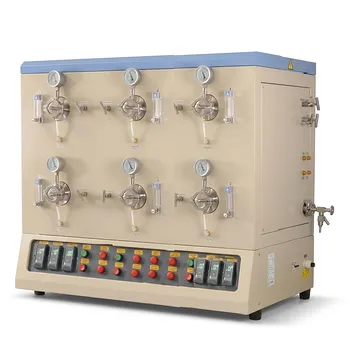
1200C High Throughput Multi Channel Tube Furnace with 50mm Quartz Tubes for Annealing and Material Phase Diagram Research
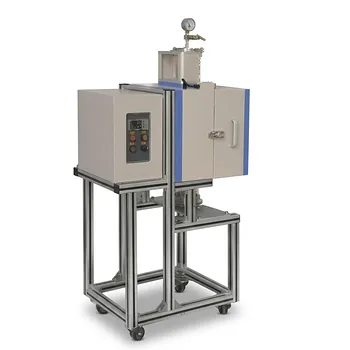
1200°C 5 Inch Vertical Quartz Tube Furnace with Stainless Steel Vacuum Flanges
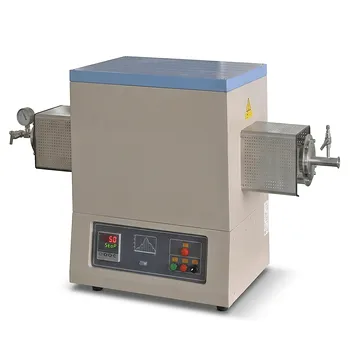
High Temperature 1700C Tube Furnace with 4 Inch OD Alumina Tube and Vacuum Sealing Flanges

High Temperature 1700C Benchtop Tube Furnace with 5 Inch Heating Zone High Purity Alumina Tube and Vacuum Sealing Flanges

High Temperature 1700C Six Zone Split Tube Furnace with Alumina Tube and Water Cooled Flanges

Compact Vertical Split Quartz Tube Furnace with Stainless Steel Vacuum Flanges for Rapid Thermal Quenching and Controlled Atmosphere Material Processing

1800C High Temperature Compact Vacuum Tube Furnace with 60mm OD Alumina Tube and Kanthal MoSi2 Heating Elements
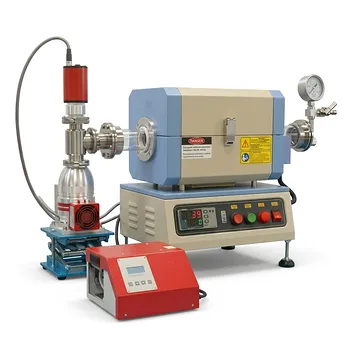
High Vacuum Compact Tube Furnace 1200C with Integrated Turbo Pump System and 8 Inch Heating Zone
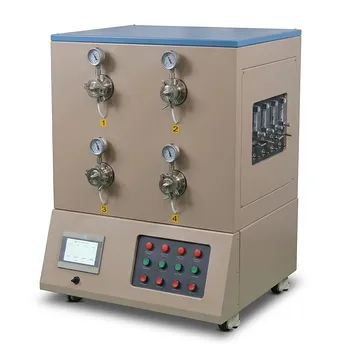
High Throughput 1200C Four Channel Tube Furnace with 3 Inch Quartz Tubes for Multi Zone Annealing and Material Research

High Temperature Automated 5 Inch Tube Furnace for Autonomous Material Research and Advanced Laboratory R&D
