How does the spatial arrangement of quartz boats within a tube furnace affect the phosphidation of metal precursors? Optimize Synthesis Precision
Updated 3 months ago
The spatial arrangement of quartz boats determines the efficiency and uniformity of phosphidation by controlling the diffusion of reactant gases. By positioning the phosphorus source upstream and the metal precursor downstream, researchers can utilize the carrier gas to transport PH₃ vapor directly to the precursor surface, ensuring a complete topological transformation into a uniform phosphide material.
This configuration creates a controlled gas-solid phase reaction environment where the distance between boats and their specific location in the furnace’s thermal gradient dictate the concentration and rate of phosphorus delivery. Mastering this layout is essential for achieving consistent crystal phases and preventing structural damage to the target material.
The Mechanics of Upstream vs. Downstream Placement
The Role of the Upstream Position
The upstream quartz boat typically contains the phosphorus source, such as sodium hypophosphite (NaH₂PO₂). As the furnace heats, this source decomposes to generate phosphine (PH₃) gas or phosphorus vapor.
Placing the source upstream ensures that the inert carrier gas (like Argon) captures the vapor immediately upon release. This allows for a continuous, directional flow of the reactant toward the target material.
The Role of the Downstream Position
The downstream quartz boat houses the metal precursor or Metal-Organic Framework (MOF). This position ensures that the sample is "bathed" in a steady stream of phosphorus-rich gas.
This arrangement enables non-contact gas-phase modification, allowing the phosphorus to react with the precursor surface without the need for physical mixing. This is critical for maintaining the macroscopic homogeneity of the resulting catalyst.
Control of Reaction Kinetics and Uniformity
Regulating Diffusion Rates
The physical distance between the two boats is a primary lever for controlling the reaction. By adjusting this gap, the diffusion rate of the reducing gas to the precursor surface can be precisely modulated.
Proper spacing prevents the precursor from being overwhelmed by a high-concentration "burst" of gas. Instead, it promotes a synchronous phosphidation process that builds stable heterojunction interfaces.
Achieving Uniform Active Sites
The tube furnace provides a stable gas flow path and a uniform thermal field. This environment ensures that the phosphorus vapor sweeps evenly across the sample surface.
This consistency results in a consistent depth of phosphorization. For complex materials like cobalt-iron phosphide (CoFeP), this spatial control is what produces the uniform active sites required for high performance.
Utilizing Thermal Gradients for Phase Control
Temperature Zone Strategic Positioning
Tube furnaces often exhibit a natural temperature gradient, with the highest heat at the center. Strategic boat placement allows the phosphorus source to sublime at a lower temperature upstream while the precursor reacts at a higher temperature in the isothermal heating zone.
This separation prevents premature precursor depletion. It ensures that the metal oxide or nitride is at the optimal energy state to accept the phosphorus atoms as they arrive.
Protection of Structural Integrity
In certain applications, such as the phosphidation of Ni₃FeN, the spatial arrangement facilitates a top-down modification. This creates a phosphate layer without damaging the bulk structure of the original material.
Using the spatial gradient prevents cross-contamination. By keeping the solids separate, the reaction is limited to the gas-solid interface, preserving the desired morphology of the precursor nanosheets.
Understanding the Trade-offs
Concentration vs. Distance
While moving boats closer increases the reaction rate, it can lead to agglomeration or uneven "hot spots" where the phosphorus concentration is too high. Conversely, excessive distance may result in incomplete transformation, leaving unreacted metal oxides in the core of the material.
Gas Flow Velocity vs. Reaction Time
A high carrier gas flow rate ensures the phosphorus reaches the precursor quickly but may dilute the vapor too much, requiring higher temperatures or longer reaction times. Finding the balance between flow rate and boat proximity is essential for creating a superior crystal phase structure.
How to Apply This to Your Project
When setting up your tube furnace for phosphidation, your boat arrangement should be dictated by your specific material requirements:
- If your primary focus is structural preservation: Place the precursor significantly downstream and use a lower phosphorus-to-metal ratio to ensure a gentle gas-phase reaction that does not collapse the framework.
- If your primary focus is complete phase transformation: Minimize the distance between the upstream source and downstream precursor to maintain a high concentration of PH₃ gas at the reaction site.
- If your primary focus is 2D crystal growth or heterojunctions: Utilize the furnace's temperature gradient by placing the phosphorus source at the edge of the heating zone and the metal precursor at the high-temperature center.
The strategic layout of quartz boats transforms a simple heating process into a precision engineering tool for advanced material synthesis.
Summary Table:
| Feature | Upstream Position (Source) | Downstream Position (Precursor) | Influence on Outcome |
|---|---|---|---|
| Material | Phosphorus Source (e.g., NaH₂PO₂) | Metal Precursor / MOF | Controls reactant delivery |
| Function | Gas Generation (PH₃ Vapor) | Gas-Solid Phase Reaction | Determines phase purity |
| Temperature | Sublimation/Decomposition Zone | Isothermal Heating Zone | Affects reaction kinetics |
| Gas Flow | Carrier gas captures vapor | Sample is "bathed" in reactant | Ensures macroscopic homogeneity |
Elevate Your Material Research with THERMUNITS Precision Technology
Achieving perfect phosphidation requires more than just a setup; it requires the stable thermal environments and precise gas flow controls found in THERMUNITS laboratory solutions. As a leading manufacturer of high-temperature equipment for material science, we provide a comprehensive range of thermal processing tools, including:
- Advanced Tube Furnaces (Single & Multi-zone) for precise spatial control.
- CVD/PECVD Systems for sophisticated gas-phase modifications.
- Vacuum, Atmosphere, and Rotary Kilns for diverse R&D and industrial needs.
- High-Quality Thermal Elements and specialized laboratory heat treatment equipment.
Whether you are developing next-generation catalysts or exploring complex heterojunctions, THERMUNITS offers the reliability and expertise to ensure consistent results.
Ready to optimize your thermal processing? Contact us today to discuss your specific research requirements with our technical experts!
References
- Junyan Liu, L. J. Wang. CoFe bimetallic phosphide fabricated by topological transformation strategy for efficient electrooxidation of benzyl alcohol. DOI: 10.15251/djnb.2024.193.1159
Mentioned Products
- High Temperature Tube Furnace 1500C with Sliding Flanges and 50mm OD for Rapid Thermal Processing Fast Heating and Cooling
- Vertical 1700C Vacuum and Atmosphere Tube Furnace with 80mm Alumina Tube
- 1100C Tube Furnace with Vacuum Flange and Programmable Temperature Controller for Material Science and Industrial Heat Treatment
- Compact High Temperature 1600C Tube Furnace with 50mm Alumina Tube and Vacuum Flanges for Material Sintering
- 900°C Max Rotary Tube Furnace with 8 Inch 310S Alloy Tube and Optional Multi Zone Heating for Industrial Material Calcination
People Also Ask
- How are high-temperature tube furnaces utilized to repair etching damage? Precision Lattice Restoration Solutions
- What role does a high-temperature tube furnace play in CVD synthesis of silicon nanowires? Master VLS Growth Precision.
- What core conditions does a high-temperature tube furnace provide for rGO aerogels? Mastering Precision Synthesis.
- What role does a high-temperature tube furnace play in the sulfidation heat treatment of CoS@C/MXene nanocomposites? Guide
- How does precision tube furnace control influence CoFe nanoparticle formation? Master Your Bimetallic Synthesis.

Tech Team · ThermUnits
Last updated on Jun 03, 2026
Related Products
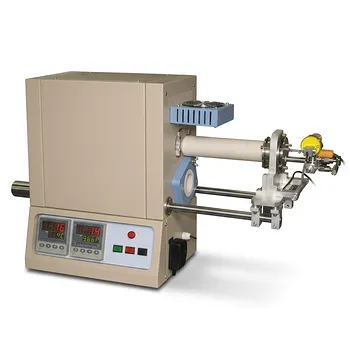
High Temperature Tube Furnace 1500C with Sliding Flanges and 50mm OD for Rapid Thermal Processing Fast Heating and Cooling

Vertical 1700C Vacuum and Atmosphere Tube Furnace with 80mm Alumina Tube

1100C Tube Furnace with Vacuum Flange and Programmable Temperature Controller for Material Science and Industrial Heat Treatment

Compact High Temperature 1600C Tube Furnace with 50mm Alumina Tube and Vacuum Flanges for Material Sintering
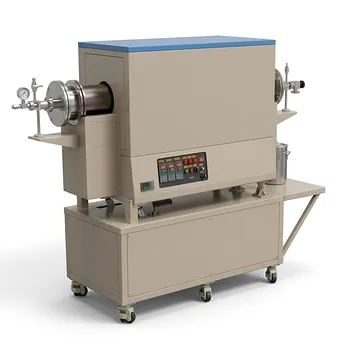
900°C Max Rotary Tube Furnace with 8 Inch 310S Alloy Tube and Optional Multi Zone Heating for Industrial Material Calcination

1700C Hydrogen Gas Tube Furnace with 60mm Alumina Process Tube and Integrated Hydrogen Safety Detector

High Temperature 1700C Tube Furnace with High Vacuum Turbomolecular Pump System and Multi Channel Mass Flow Controller Gas Mixer
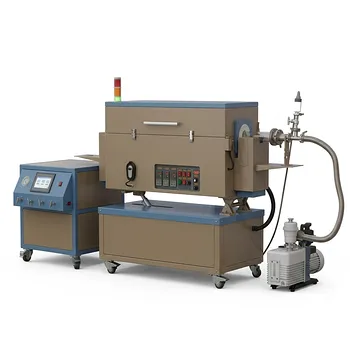
5 Inch Three Zone Rotary Tube Furnace with Integrated Gas Delivery System and 1200C Capability for Advanced Material CVD Processing

Three Zone Tube Furnace with 11 Inch or 15 Inch Quartz Tube and Hinged Flanges for Vacuum Atmosphere Heat Treatment

1200C High Throughput Multi Channel Tube Furnace with 50mm Quartz Tubes for Annealing and Material Phase Diagram Research

1200°C 5 Inch Vertical Quartz Tube Furnace with Stainless Steel Vacuum Flanges

1800C High Temperature Compact Vacuum Tube Furnace with 60mm OD Alumina Tube and Kanthal MoSi2 Heating Elements

High Temperature 1700C Benchtop Tube Furnace with 5 Inch Heating Zone High Purity Alumina Tube and Vacuum Sealing Flanges
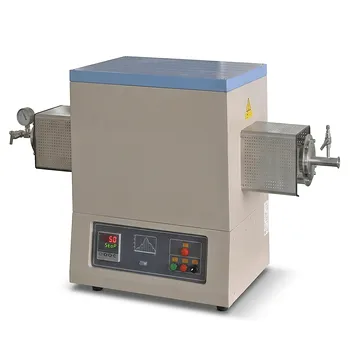
High Temperature 1700C Tube Furnace with 4 Inch OD Alumina Tube and Vacuum Sealing Flanges

High Temperature 1700C Six Zone Split Tube Furnace with Alumina Tube and Water Cooled Flanges

Compact Vertical Split Quartz Tube Furnace with Stainless Steel Vacuum Flanges for Rapid Thermal Quenching and Controlled Atmosphere Material Processing

High Vacuum Compact Tube Furnace 1200C with Integrated Turbo Pump System and 8 Inch Heating Zone
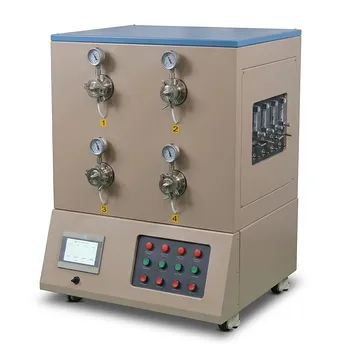
High Throughput 1200C Four Channel Tube Furnace with 3 Inch Quartz Tubes for Multi Zone Annealing and Material Research

High Temperature Automated 5 Inch Tube Furnace for Autonomous Material Research and Advanced Laboratory R&D
