How does urea affect Rh–WNO catalyst development? Optimize lattice formation and nanocluster dispersion in furnaces.
Updated 3 months ago
The integration of urea into the synthesis process is the defining factor in achieving a stable and high-performing Rh–WNO architecture. In a high-temperature furnace, urea functions as both a complexing agent and a solid nitrogen source, preventing metal aggregation during the initial sol-gel phase and driving the formation of the tungsten oxynitride (WNO) crystal lattice. This dual role ensures that rhodium nanoclusters are uniformly distributed across a robust, chemically active scaffold.
Urea acts as a structural director that manages the transition from liquid precursors to a solid-state crystalline framework. By simultaneously suppressing metal clumping and providing the nitrogen necessary for lattice formation, it creates the essential interfacial environment required for stable rhodium dispersion.
The Role of Urea in the Sol-Gel Phase
Suppression of Metal Aggregation
In the early stages of synthesis, urea acts as a powerful complexing agent. It coordinates directly with rhodium and tungsten ions in the precursor solution.
This coordination is critical because it prevents metal species from gathering into large, inactive clumps. By keeping these ions isolated, urea sets the stage for a highly dispersed final catalyst.
Preparation for Thermal Transformation
The initial bonding between urea and the metal ions ensures that the components are intimately mixed at the molecular level. This homogenous distribution is a prerequisite for the uniform reactions that occur once the furnace reaches higher temperatures.
Thermal Transformation and Lattice Construction
Urea as a Solid Nitrogen Source
As the furnace temperature rises, the urea undergoes thermal decomposition. This process releases active nitrogen and oxygen-containing chemical groups directly into the reaction environment.
Unlike gaseous nitrogen sources, which may not interact as deeply with the solid precursors, the decomposition of solid urea provides a concentrated source of reactants. This facilitates the deep nitridation of the tungsten source.
Construction of the WNO Scaffold
The released nitrogen groups react with the tungsten source to build the tungsten oxynitride (WNO) crystal scaffold. This scaffold serves as the structural backbone of the entire catalyst.
The presence of urea ensures that this crystal growth happens in a controlled manner. It results in a stable lattice that can support the active rhodium components without collapsing under high-temperature conditions.
Controlling the Interfacial Environment
Promoting Rhodium Dispersion
The decomposition of urea does more than just build the scaffold; it creates a specific interfacial chemical environment. This environment is what dictates how the rhodium nanoclusters settle on the tungsten oxynitride surface.
Uniform Distribution of Nanoclusters
Because of the chemical "anchors" provided by the urea decomposition products, the rhodium forms small, uniform nanoclusters rather than large particles. This maximizes the surface area of the rhodium, which is essential for catalytic efficiency.
Common Pitfalls and Synthesis Challenges
Sensitivity to Temperature Ramps
The rate at which the furnace temperature increases is critical for urea-based synthesis. If the temperature rises too quickly, the urea may decompose and gasify before it can effectively react with the tungsten, leading to a weak WNO lattice.
The Urea-to-Metal Stoichiometry
Achieving the correct balance of urea is a common challenge. Too little urea will result in insufficient nitrogen for the WNO scaffold, while an excess can lead to residual carbon or bulky structures that block the active rhodium sites.
Making the Right Choice for Your Goal
To optimize the synthesis of Rh-WNO catalysts using urea, consider the specific requirements of your application:
- If your primary focus is Maximum Surface Area: Ensure the urea-to-metal ratio is high enough to fully coordinate all metal ions during the sol-gel phase, preventing any initial clumping.
- If your primary focus is Structural Stability: Prioritize a controlled, slower temperature ramp in the furnace to allow the urea to decompose steadily and build a robust WNO crystal scaffold.
- If your primary focus is Rhodium Efficiency: Monitor the interfacial chemical environment to ensure that nitrogen groups are sufficiently present to anchor rhodium nanoclusters uniformly.
Mastering the dual-functionality of urea allows for the precise engineering of the Rh-WNO interface, turning a simple additive into a powerful tool for catalyst design.
Summary Table:
| Synthesis Phase | Urea's Primary Function | Structural Impact on Catalyst |
|---|---|---|
| Sol-Gel Phase | Complexing Agent | Prevents metal aggregation; ensures molecular mixing |
| Thermal Phase | Solid Nitrogen Source | Drives WNO lattice growth; prevents scaffold collapse |
| Interfacial Control | Structural Director | Anchors Rh nanoclusters; maximizes active surface area |
| Optimization | Stoichiometry & Ramp Control | Balances nitrogen levels; ensures robust crystal framework |
Elevate Your Material Research with THERMUNITS
Precision is the defining factor in advanced catalyst synthesis. THERMUNITS is a leading manufacturer of high-temperature laboratory equipment, providing the exact thermal environments required for complex processes like urea-mediated Rh–WNO development.
Whether you are conducting material science R&D or industrial scaling, our comprehensive range of equipment ensures superior heat treatment results:
- Precision Furnaces: Muffle, Vacuum, Atmosphere, Tube, and Rotary Furnaces.
- Advanced Systems: CVD/PECVD, Vacuum Induction Melting (VIM), and Hot Press Furnaces.
- Specialized Tools: Dental Furnaces, Electric Rotary Kilns, and high-quality Thermal Elements.
Master the interfacial environment of your catalysts with our industry-leading technology. Contact our experts today to find the perfect thermal processing solution for your laboratory.
References
- Ben Zhang, Shuang Li. Interfacial electron-engineered tungsten oxynitride interconnected rhodium layer for highly efficient all-pH-value hydrogen production. DOI: 10.1039/d3ta06856k
Mentioned Products
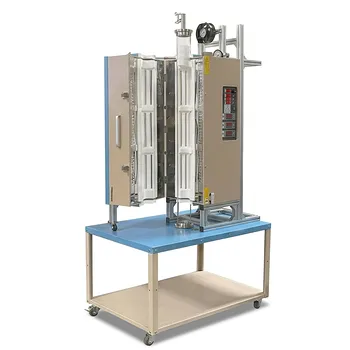
- High Temperature 1700C Tube Furnace with High Vacuum Turbomolecular Pump System and Multi Channel Mass Flow Controller Gas Mixer
- High Temperature Hydrogen Atmosphere Box Furnace 1650C Max Reducing Environment Material Synthesis System 8x8x8 Chamber
- 1800C Bench Top Muffle Furnace 18 Liters with Kanthal Super 1900 Heating Elements for High Purity Ceramic Sintering and Material Research
- High Temperature Rocking Tube Furnace with Quartz Tube and Vacuum Flange for Materials Synthesis
- High Temperature 1500C Benchtop Muffle Furnace 3.6L Alumina Fiber Chamber Programmable Controller Sintering Annealing Carbonization Thermal Processing System
People Also Ask
- What is the role of a high-temperature tube furnace in the calcination process of ZnO/In2O3 nanocomposites?
- What impact does the heating rate of a tube furnace have on biochar microstructure? Optimize Your Material R&D.
- What is the function of a high-temperature tube furnace in the synthesis of g-C3N4? Optimize Thermal Polycondensation
- What is the critical function of a high-temperature tube furnace in Si/Al2O3/RGO synthesis? Key to Battery Innovation
- What are the primary functions of a high-temperature tube furnace for Inconel 718? Master Debinding & Pre-sintering.

Tech Team · ThermUnits
Last updated on Jun 03, 2026
Related Products

High Temperature 1700C Tube Furnace with High Vacuum Turbomolecular Pump System and Multi Channel Mass Flow Controller Gas Mixer
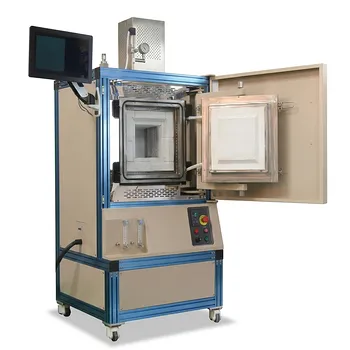
High Temperature Hydrogen Atmosphere Box Furnace 1650C Max Reducing Environment Material Synthesis System 8x8x8 Chamber
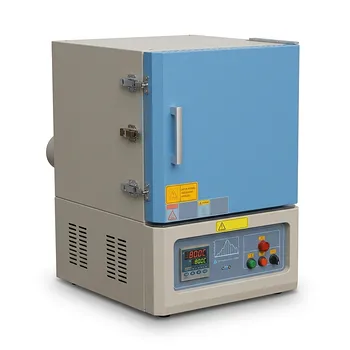
1800C Bench Top Muffle Furnace 18 Liters with Kanthal Super 1900 Heating Elements for High Purity Ceramic Sintering and Material Research
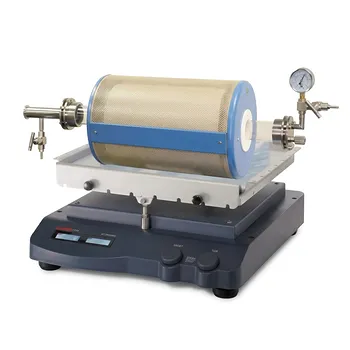
High Temperature Rocking Tube Furnace with Quartz Tube and Vacuum Flange for Materials Synthesis
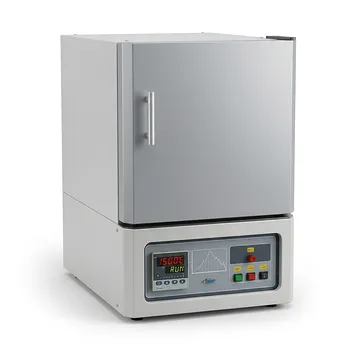
High Temperature 1500C Benchtop Muffle Furnace 3.6L Alumina Fiber Chamber Programmable Controller Sintering Annealing Carbonization Thermal Processing System
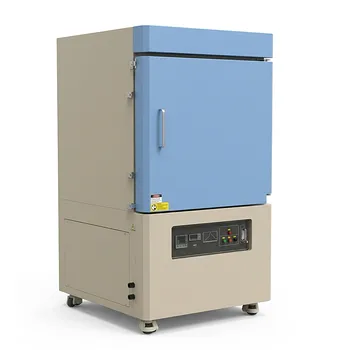
Industrial Large Box Furnace 1700C 216L High Temp Muffle Sintering System
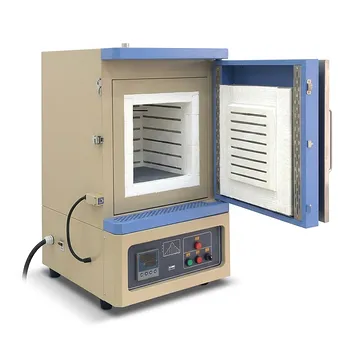
Five Side Heating Muffle Furnace High Purity Alumina Fiber 27L Chamber 1200C High Temperature Thermal Processing System for Sintering Annealing and Materials Research
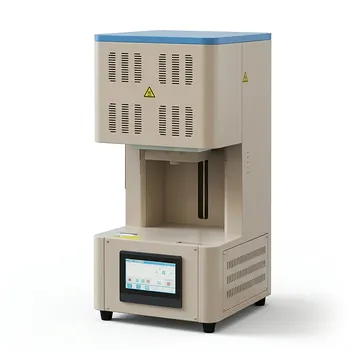
Automated 1700C High Temperature Bottom Loading Box Furnace with PC Software Control and Robotic Integration Capability
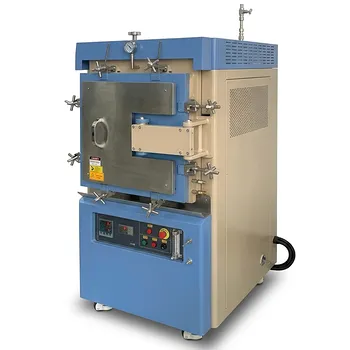
Atmosphere Controlled Muffle Furnace 1700C Maximum Temperature 80L High Capacity Vacuum Inert Gas Box Furnace
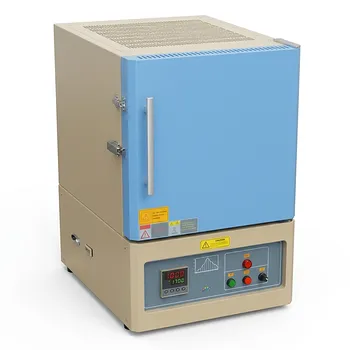
Large Bench Top 1700C High Temperature Muffle Furnace with 19L Chamber for Advanced Material Sintering and Annealing
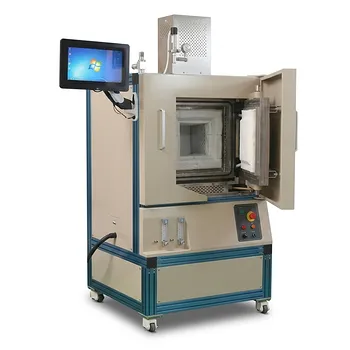
High Temperature Oxygen and Inert Atmosphere Controlled Furnace 8 Liter 1700C Sintering System for Advanced Materials RD
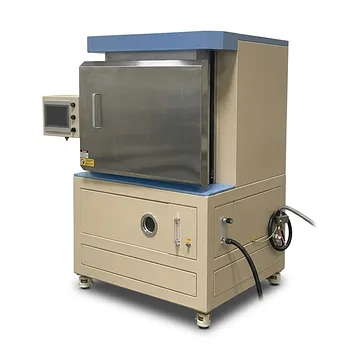
1650C High Temperature Atmosphere Controlled Box Furnace with 65L Chamber for Advanced Material Sintering and Industrial Heat Treatment
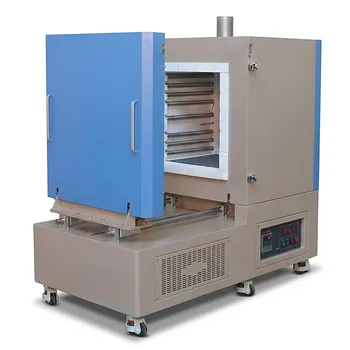
1200C Five Side Heating Muffle Furnace with Sliding Door 125L Volume High Temperature Heat Treatment System for Large Scale Sintering and Annealing
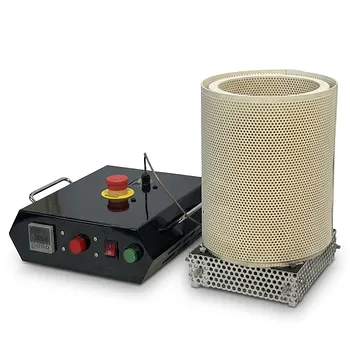
1250 C Compact Vertical Box Furnace for Glovebox Material Research Air Sensitive Samples
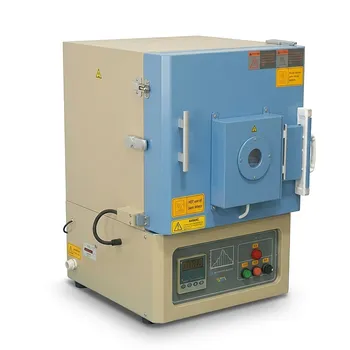
High Temperature Benchtop Muffle Furnace 1500C with 3.6L Chamber and Quartz Observation Window

High Temperature 1700C Benchtop Tube Furnace with 5 Inch Heating Zone High Purity Alumina Tube and Vacuum Sealing Flanges
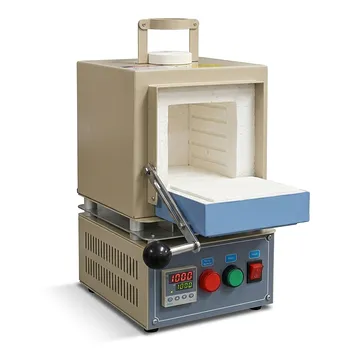
Compact 1000C Muffle Furnace with Programmable Controller and 2 Inch Top Port for Vacuum and Atmosphere Material Research
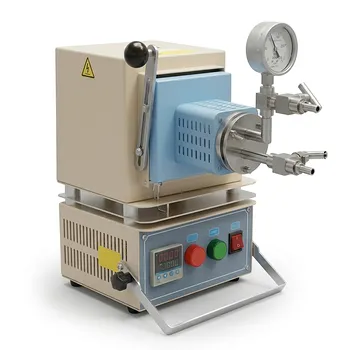
Compact Hybrid Muffle and Tube Furnace for 1000C Controlled Atmosphere Laboratory Material Sintering

Vertical 1700C Vacuum and Atmosphere Tube Furnace with 80mm Alumina Tube