How is microwave energy used to generate plasma within an MPCVD chamber? Precision Control for Pure Diamond Growth
Updated 5 months ago
Microwave energy generates plasma by establishing a high-intensity oscillating electric field that transforms neutral gas into a highly reactive ionized state. This process relies on a frequency of typically 2.45 GHz to accelerate free electrons, which then collide with gas molecules like hydrogen and methane. These collisions trigger a chain reaction of ionization and dissociation, creating the specific atomic fragments required for high-quality diamond growth.
Core Takeaway: MPCVD systems use microwave radiation to decouple energy delivery from physical electrodes, creating a pure environment where gas molecules are precisely fractured into reactive radicals through electron-impact collisions.
The Mechanism of Energy Transfer
Establishing the Oscillating Electric Field
The process begins when microwave radiation is coupled into the vacuum chamber, creating a high-intensity electromagnetic field. Because the field oscillates at 2.45 billion times per second (2.45 GHz), it exerts a rapid, alternating force on any charged particles within the gas.
Electron Acceleration and Kinetic Energy
Small numbers of free electrons, naturally present or induced, are caught in this oscillating field and accelerated to high velocities. These electrons gain significant kinetic energy as they are "whipped" back and forth by the microwave energy before they can recombine with ions.
Inelastic Collisions
These high-energy electrons eventually strike neutral gas molecules (such as $H_2$ or $CH_4$) in what are known as inelastic collisions. During these impacts, the kinetic energy from the electron is transferred to the internal structure of the gas molecule.
Sustaining the Plasma Environment
Ionization and Plasma Maintenance
If the collision energy is high enough, it strips an electron from the neutral gas molecule, a process called ionization. This release of a new electron creates a cascade effect, ensuring there are always enough charged particles to absorb microwave energy and sustain the plasma.
Molecular Dissociation
Beyond ionization, the collisions also cause dissociation, where stable molecules are broken into reactive fragments. In MPCVD, this typically involves breaking $H_2$ into atomic hydrogen and $CH_4$ into hydrocarbon radicals, which are the essential building blocks for depositing diamond films.
The Electrodeless Advantage
Unlike other plasma methods, microwave energy does not require internal metal electrodes to maintain the discharge. This electrodeless design prevents electrode erosion and ensures that no metallic impurities contaminate the growing substrate or the plasma chemistry.
Understanding the Trade-offs
Pressure Sensitivity and Stability
MPCVD plasma is highly sensitive to operating pressures, typically maintained between 1 and 27 kPa. If the pressure is too low, the collision frequency is insufficient to sustain the plasma; if it is too high, the plasma can contract or become unstable, leading to non-uniform film growth.
Power Density vs. Thermal Management
Increasing microwave power can lead to higher growth rates by increasing the density of reactive species. However, this also generates significant heat, requiring sophisticated cooling systems to protect the substrate and ensure that diamond quality is not compromised by excessive temperatures.
Applying This Knowledge to Your Project
Recommendations for Process Control
The effectiveness of your MPCVD process depends on how you balance microwave power with gas dynamics.
- If your primary focus is high-purity single crystals: Prioritize a stable, electrodeless microwave environment to eliminate any possibility of metallic contamination.
- If your primary focus is maximum growth rate: Increase the microwave power density and gas pressure, but ensure your substrate cooling system can handle the resulting thermal load.
- If your primary focus is film uniformity: Carefully tune the microwave frequency and chamber geometry to avoid "hot spots" where the electric field intensity is uneven.
By mastering the interaction between microwave frequency and gas ionization, you can precisely control the chemical environment necessary for advanced material synthesis.
Summary Table:
| Parameter | Specification | Role in Plasma Generation |
|---|---|---|
| Microwave Frequency | 2.45 GHz | Accelerates free electrons to high velocities through oscillating fields. |
| Collision Type | Inelastic | Transfers kinetic energy to gas molecules ($H_2$, $CH_4$) to trigger reaction. |
| Operating Pressure | 1 - 27 kPa | Maintains the balance between collision frequency and plasma stability. |
| Key Reactions | Ionization & Dissociation | Creates reactive radicals and atomic hydrogen for diamond deposition. |
| Design Advantage | Electrodeless | Prevents metallic contamination, ensuring ultra-high material purity. |
Elevate Your Material Research with THERMUNITS Precision Engineering
At THERMUNITS, we specialize in providing state-of-the-art thermal processing solutions for the most demanding applications in material science and industrial R&D. Our expert-engineered CVD/PECVD and MPCVD systems are designed to deliver the contamination-free environment and precise energy control required for high-purity diamond growth and advanced thin-film synthesis.
Why Choose THERMUNITS for Your Laboratory?
- Comprehensive Range: From Muffle, Vacuum, and Tube furnaces to Rotary kilns and Vacuum Induction Melting (VIM) furnaces, we cover all your heat treatment needs.
- Specialized Solutions: We offer dedicated Dental Furnaces, Hot Press systems, and high-quality Thermal Elements for consistent performance.
- R&D Focused: Our equipment is built to help researchers achieve repeatable results and accelerate innovation in material synthesis.
Ready to optimize your MPCVD process or upgrade your laboratory’s thermal capabilities? Contact our technical team today to discover how THERMUNITS can provide the perfect solution for your specific research goals.
Mentioned Products
- Cylindrical Resonator MPCVD Machine System for Microwave Plasma Chemical Vapor Deposition and Lab Diamond Growth
- 915MHz MPCVD Diamond Machine Microwave Plasma Chemical Vapor Deposition System Reactor
- Split Chamber CVD Tube Furnace with Vacuum Station Chemical Vapor Deposition System Machine
- Multi Heating Zones CVD Tube Furnace System for Precision Chemical Vapor Deposition and Advanced Material Synthesis
- Compact High Vacuum Box Furnace 1050C Max 6.2L Ceramic Chamber Stainless Steel Shell Programmable Temperature Controller for Material Science Research
People Also Ask
- How does the high concentration of atomic hydrogen in MPCVD benefit diamond growth? The Key to Gem-Grade Quality.
- What are the typical operating pressure ranges and vacuum requirements for MPCVD systems? Optimize Your Material Growth
- What technical parameters are critical for optimizing the growth of single-crystal diamonds in MPCVD systems? Expert Guide
- What are the technical advantages of the electrodeless plasma design in MPCVD systems? Purity & Precision in Synthesis
- How does the versatility of gas compatibility in MPCVD systems compare to filament-based CVD methods? Purity & Doping.

Tech Team · ThermUnits
Last updated on Apr 14, 2026
Related Products
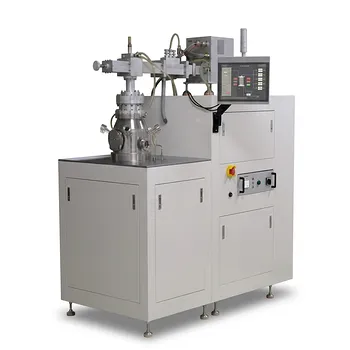
Cylindrical Resonator MPCVD Machine System for Microwave Plasma Chemical Vapor Deposition and Lab Diamond Growth
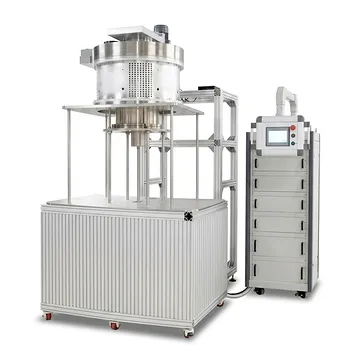
915MHz MPCVD Diamond Machine Microwave Plasma Chemical Vapor Deposition System Reactor
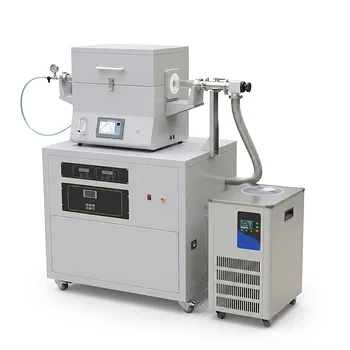
Split Chamber CVD Tube Furnace with Vacuum Station Chemical Vapor Deposition System Machine
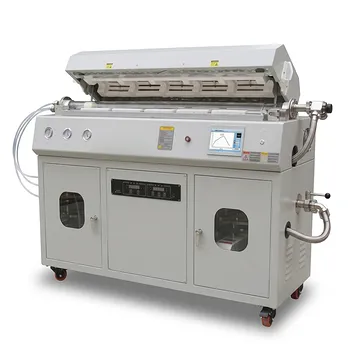
Multi Heating Zones CVD Tube Furnace System for Precision Chemical Vapor Deposition and Advanced Material Synthesis
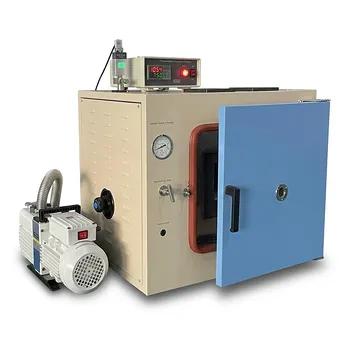
Compact High Vacuum Box Furnace 1050C Max 6.2L Ceramic Chamber Stainless Steel Shell Programmable Temperature Controller for Material Science Research
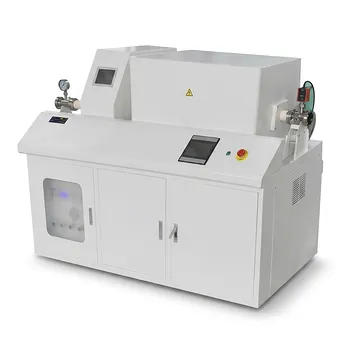
Chemical Vapor Deposition CVD System Slide PECVD Tube Furnace with Liquid Gasifier PECVD Machine
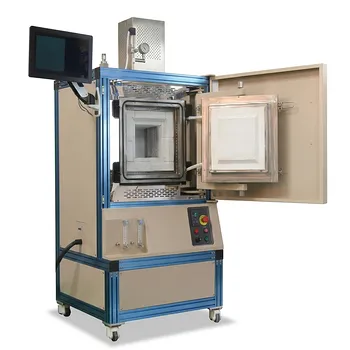
High Temperature Hydrogen Atmosphere Box Furnace 1650C Max Reducing Environment Material Synthesis System 8x8x8 Chamber
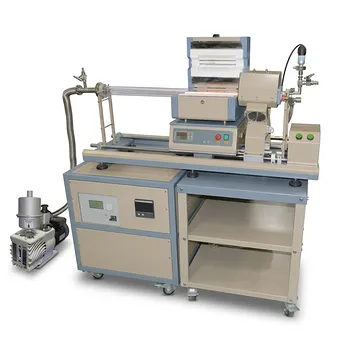
1200C Max Compact Auto-Sliding PECVD Furnace with 2 Inch Tube and Vacuum Pump
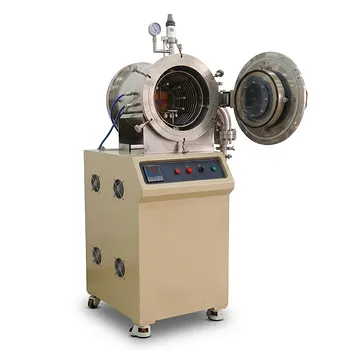
High Temperature Cold Wall High Vacuum Chamber Furnace 1400C for Advanced Material Processing
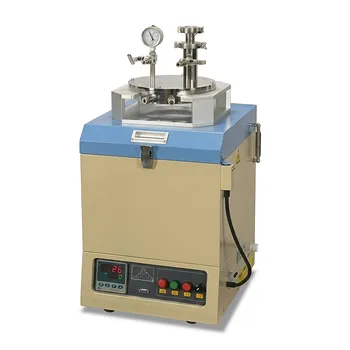
Vertical Vacuum Furnace 1100C High Temperature 8 Inch Quartz Chamber Water Cold Flange System
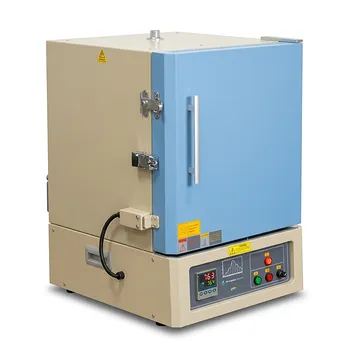
Large Capacity 1200C Muffle Furnace 64 Liter Chamber with Digital PID Controller and Built In Venting Port