In what way does the baffle overlap ratio influence the residence time and back-mixing in calcination furnace design? Guide
Updated 3 months ago
The baffle overlap ratio acts as the primary governor for particle trajectory and flow stability within a calcination furnace. A low overlap ratio (5%) increases residence time by driving particles toward the outer edges of the rotating plates, while increasing the ratio (up to 15%) shortens individual plate residence time but significantly reduces back-mixing. This geometric tuning allows for precise control over the total retention time, ensuring a balance between high production volumes and uniform calcination quality.
The baffle overlap ratio dictates the path length and "leakage" of particles between stages. By optimizing this ratio alongside the baffle angle, designers can minimize back-mixing to ensure every particle receives a consistent thermal treatment.
How Overlap Ratio Governs Particle Dynamics
The Impact of Low Overlap on Residence Time
When the baffle overlap ratio is kept low, typically around 5%, particles are naturally directed toward the outer edges of the plates. This outward migration increases the physical distance a particle must travel across the surface.
Because the path length is extended at the plate's perimeter, the residence time increases. This configuration is often used when a material requires a longer exposure to heat to complete the chemical transformation.
Reducing Back-mixing with Moderate Overlap
Increasing the overlap ratio to a moderate level, such as 15%, changes the flow dynamics by restricting the "random" movement of particles. While this may slightly shorten the time a particle spends on a single plate, it provides much tighter control over the total retention time.
By narrowing the gap between baffles, the furnace effectively reduces back-mixing, where processed particles mix with unprocessed ones. This ensures a more "first-in, first-out" flow, which is critical for maintaining product consistency.
The Role of Radial Velocity and Geometry
Baffle Angle and Particle Trajectory
The baffle angle works in tandem with the overlap ratio to determine the radial velocity of the particles. Research suggests that increasing this angle (e.g., from 40 to 50 degrees) prevents particles from drifting too far toward the plate edges.
Aligning the particle trajectory with the design flow ensures that the material moves predictably through the furnace. This synergy between angle and overlap allows for the optimization of the calcination effect without sacrificing throughput.
Maintaining Flow Predictability
Precise geometric control minimizes the chaotic movement of the catalyst on the plates. When trajectories are well-defined, the furnace can operate closer to its theoretical capacity while maintaining a narrow residence time distribution.
Understanding the Trade-offs
The Efficiency vs. Quality Paradox
A very low overlap ratio maximizes residence time, which can improve calcination depth for difficult materials. However, this often comes at the cost of increased back-mixing, which can lead to over-processing of some particles and under-processing of others.
Mechanical and Throughput Constraints
Higher overlap ratios provide excellent control and minimize back-mixing but may limit the maximum throughput of the furnace. If the overlap is too aggressive, it may create bottlenecks that reduce the total volume of material the furnace can process per hour.
Optimizing Your Furnace Geometry
To achieve the best results, the baffle geometry must be tailored to the specific thermal requirements and flow characteristics of your material.
- If your primary focus is maximizing total residence time: Utilize a lower overlap ratio (near 5%) to force particles toward the plate perimeters, extending their travel path.
- If your primary focus is product uniformity and consistency: Implement a moderate overlap ratio (up to 15%) to minimize back-mixing and ensure a tighter residence time distribution.
- If your primary focus is precision flow control: Increase the baffle angle to approximately 50 degrees to stabilize the radial velocity and align particle movement with the design trajectory.
The strategic calibration of baffle overlap and angle transforms the furnace from a simple heating vessel into a precision instrument for chemical consistency.
Summary Table:
| Feature | Low Overlap (5%) | Moderate Overlap (15%) | High Baffle Angle (50°) |
|---|---|---|---|
| Residence Time | Maximized (longer path) | Controlled/Shortened | Optimized Velocity |
| Back-mixing | Higher (random flow) | Minimized (FIFO flow) | Low (stable trajectory) |
| Primary Benefit | Deep calcination depth | Product uniformity | Predictable throughput |
| Best Application | Difficult-to-transform materials | High-consistency R&D | Precision flow control |
Elevate Your Thermal Research with THERMUNITS
As a leading manufacturer of high-temperature laboratory equipment for material science and industrial R&D, THERMUNITS provides the precision engineering required for advanced calcination. Our comprehensive range of thermal solutions—including Muffle, Vacuum, Atmosphere, Tube, and Rotary furnaces, as well as CVD/PECVD systems and Electric Rotary Kilns—is designed to give you total control over particle dynamics and heat treatment quality.
Don't let inefficient furnace geometry compromise your results. Partner with us to optimize your residence time and eliminate back-mixing for superior material consistency.
Contact THERMUNITS Experts Today to discuss your specific laboratory or industrial heat treatment requirements!
References
- Tiezhuang Zhou, Wenchun Jiang. Impact of Structure Parameters on the Critical Performance of a Novel Calciner—A DEM-Based Study. DOI: 10.2478/pjct-2024-0036
Mentioned Products
- 900°C Max Rotary Tube Furnace with 8 Inch 310S Alloy Tube and Optional Multi Zone Heating for Industrial Material Calcination
- Electric Rotary Kiln Continuous Working Small Rotary Furnace Heating Pyrolysis Plant
- 1750C Compact Muffle Furnace 1.7L Ultra High Temperature Laboratory Sintering System for Advanced Ceramics and Material Science Research
- 1700C Compact Hybrid Furnace with Dual Layer Box Sintering and Controlled Atmosphere Alumina Tubes
- Compact High Temperature 1600C Tube Furnace with 50mm Alumina Tube and Vacuum Flanges for Material Sintering
People Also Ask
- How does a rotary tube furnace improve the processing of granular materials? Enhance Uniformity and Reaction Kinetics
- Why use a rotary tube furnace for FACS carbonization? Ensure uniform morphology and prevent sphere agglomeration.
- Why is the precise optimization of residence time essential in the catalyst calcination process? Maximize Your Yields.
- In what ways do rotary tube furnaces enhance chemical and specialty mineral processing? Drive Precision and Uniformity.
- What parameters must operators control to maintain product quality in a rotary furnace? Master Your Heat Treatment.

Tech Team · ThermUnits
Last updated on Jun 03, 2026
Related Products
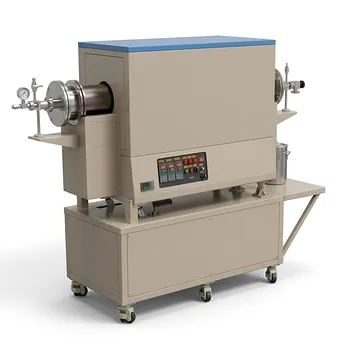
900°C Max Rotary Tube Furnace with 8 Inch 310S Alloy Tube and Optional Multi Zone Heating for Industrial Material Calcination
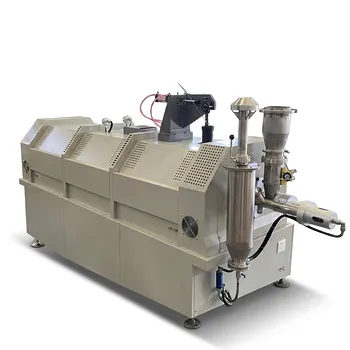
Electric Rotary Kiln Continuous Working Small Rotary Furnace Heating Pyrolysis Plant
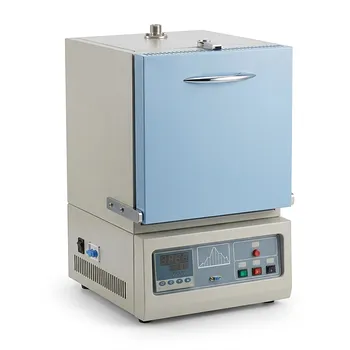
1750C Compact Muffle Furnace 1.7L Ultra High Temperature Laboratory Sintering System for Advanced Ceramics and Material Science Research
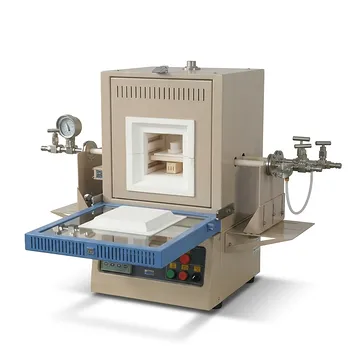
1700C Compact Hybrid Furnace with Dual Layer Box Sintering and Controlled Atmosphere Alumina Tubes

Compact High Temperature 1600C Tube Furnace with 50mm Alumina Tube and Vacuum Flanges for Material Sintering
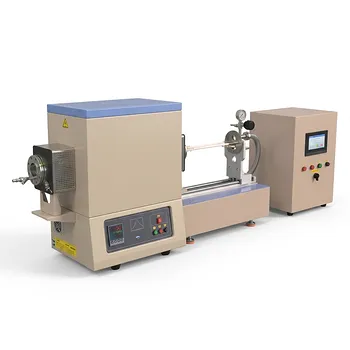
High Temperature Horizontal Electrical Assisted Sintering Furnace with 3KW Programmable Power Source for Advanced Ceramic Materials
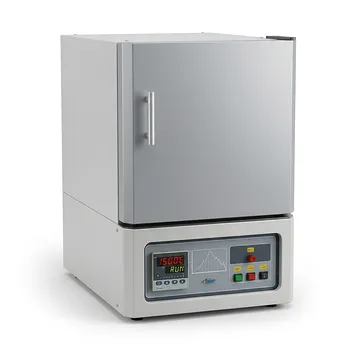
High Temperature 1500C Benchtop Muffle Furnace 3.6L Alumina Fiber Chamber Programmable Controller Sintering Annealing Carbonization Thermal Processing System
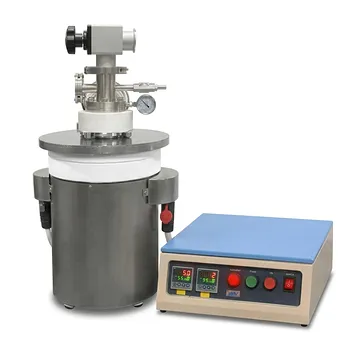
1100C High Temperature Vacuum Crucible Furnace with Quartz Chamber for Thermal Processing and Sintering
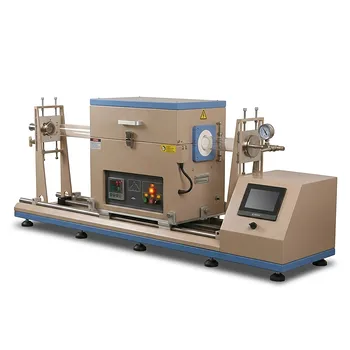
1200C Sliding Tube Furnace for Rapid Thermal Processing and CVD Graphene Growth with 100mm OD Capacity
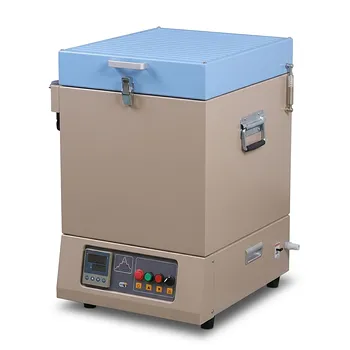
High Temperature Vertical Crucible Furnace with 22L Heating Chamber and 1200C Maximum Temperature
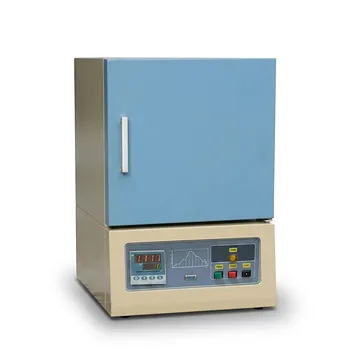
Ultra High Temperature Bench Top Muffle Furnace 1750C Sintering System with Kanthal Super Heating Elements and Precision Digital Control

High Temperature 1700C Benchtop Tube Furnace with 5 Inch Heating Zone High Purity Alumina Tube and Vacuum Sealing Flanges
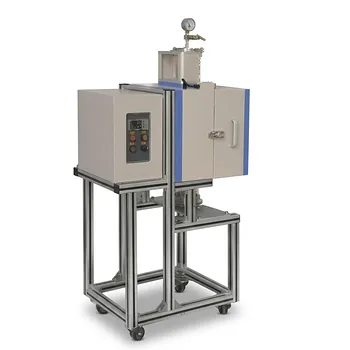
1200°C 5 Inch Vertical Quartz Tube Furnace with Stainless Steel Vacuum Flanges
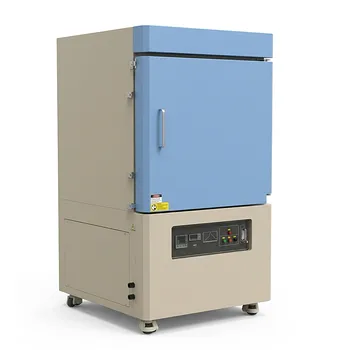
Industrial Large Box Furnace 1700C 216L High Temp Muffle Sintering System

High Temperature 1700C Tube Furnace with High Vacuum Turbomolecular Pump System and Multi Channel Mass Flow Controller Gas Mixer

1800C High Temperature Compact Vacuum Tube Furnace with 60mm OD Alumina Tube and Kanthal MoSi2 Heating Elements
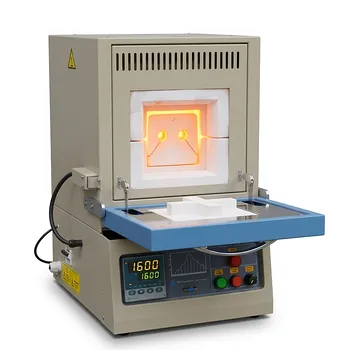
High Temperature Compact Muffle Furnace 1700 C with 30 Segment Programmable Controller and 1.7L Cubic Chamber
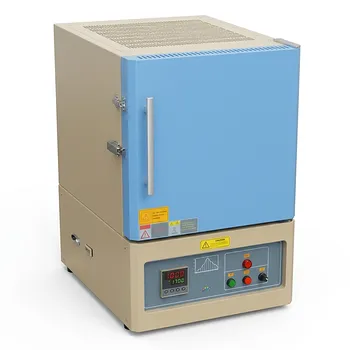
Large Bench Top 1700C High Temperature Muffle Furnace with 19L Chamber for Advanced Material Sintering and Annealing
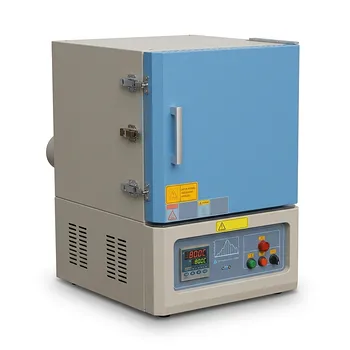
1800C Bench Top Muffle Furnace 18 Liters with Kanthal Super 1900 Heating Elements for High Purity Ceramic Sintering and Material Research